

How to Knit Socks for Beginners: Cast-On to Leg with DPNs
September 14, 2025
Hole-Free Gusset Pick Up and Decreases for Perfectly Fitting Socks
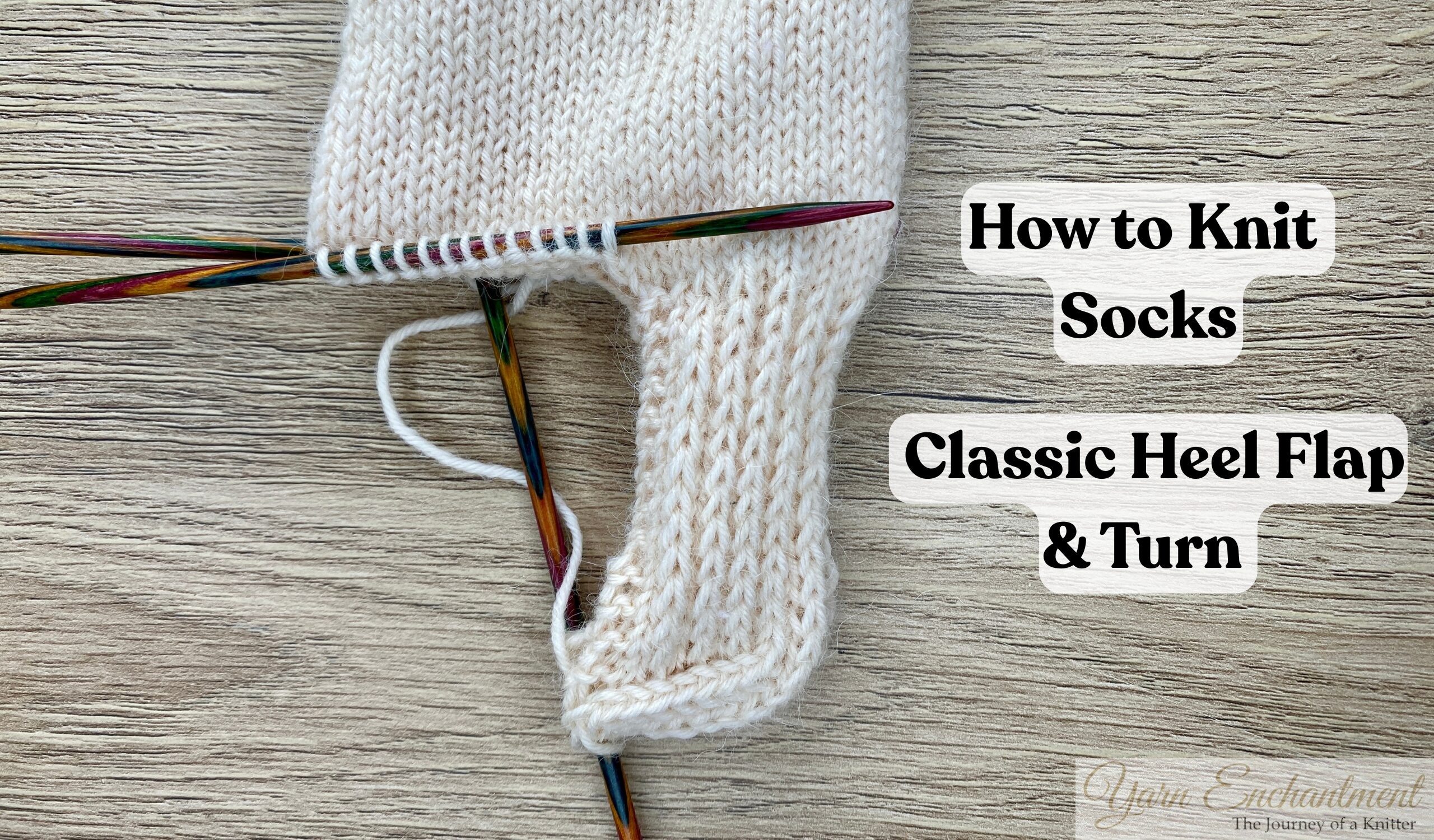
September 22, 2025How to Knit a Classic Heel Flap & Turn (Sock Heel Tutorial)
)
Originally published on September 16, 2025
Last time, you learned how to cast on and knit the cuff and leg. In this post, we’ll learn how to knit the classic heel flap and turn. The heel flap and heel turn is one of those timeless sock-knitting techniques that never goes out of style - it keeps showing up in patterns and knit chats for good reason. For generations, sock knitters have relied on this classic method because it delivers a durable, cushioned, and highly adaptable heel that stands up beautifully to everyday wear. Personally, it was the first heel I ever learned, and even today, it remains the best-fitting heel for my feet (and I’ve tried plenty!).
What makes this tutorial especially meaningful is its tradition: I learned this exact technique from my husband’s granny, who - at 90 years old and with just six fingers - still knits at least two pairs of socks a month for her children and grandchildren. To me, she’s living proof that there truly are no boundaries when you love what you do, you’ll always find a way. She is, in every sense, 'legen - wait for it - dary!' (HIMYM fans will know what I mean!) She really is amazing.
In this post, I will walk through every step of the heel flap and heel turn, sharing tips for getting a snug, comfortable fit. Next time, we’ll cover gusset pickup, decreases, and two essential techniques for avoiding those pesky holes at the joins - so stay tuned!
  |
How to Knit the Classic Heel |
Table of Contents
- Why Choose the Classic Heel Flap
- Setting Up the Heel Flap
- Reinforced Slip Stitch Heel Flap
- Turning the Heel (Dutch/Square Method)
- Heel Flap & Turn FAQ
- Conclusion
Why Choose the Classic Heel Flap?
The heel flap is a favorite among knitters because it’s easy to adjust for different feet, makes socks much sturdier, and is simple to fix or reinforce if it ever wears out. That’s why so many knitters love this classic technique when they want socks that are comfy, strong, and built to last.
Customizable Fit for All Feet
A heel flap is easy to adjust to fit different feet. You can make it deeper or wider as needed, so your socks are comfy - whether someone has high arches, narrow heels, or wide feet. This means you can knit socks that fit just right for anyone in the family.
Reinforced for Extra Durability
Knitting the heel flap with a “slip one, knit one” pattern makes the fabric thicker and tougher. This helps protect the heel, the part of the sock that gets the most wear, so your socks are less likely to get holes and last much longer
Snug, Comfortable Fit with the Gusset
When you use a heel flap and gusset, your sock fits closely around the back of your heel and under your arch, giving your foot a gentle “hug.” This stops the sock from feeling loose at the heel or too tight at the arch, so your socks feel comfortable and stay in place all day.
Simple Repair and Maintenance
One big plus: because the heel is built as a separate part, it’s easy to reinforce, repair, or even swap out if it gets worn. That means your favorite socks can last much longer with just a little care, one of the reasons knitters who love practical and classic socks keep coming back to this style.
  |
Classic heel Flap + Heel turn |
Setting Up the Heel Flap
Once the leg of the sock is complete, it's time to begin the traditional heel flap. Work the heel flap flat across half of your total stitches - typically over the back half of the sock. If using double-pointed needles (DPNs), this means you’ll knit the heel flap over stitches from needles 4 and 1, setting the remaining stitches aside (either on a holder or left resting on the other two needles) until the flap is finished.
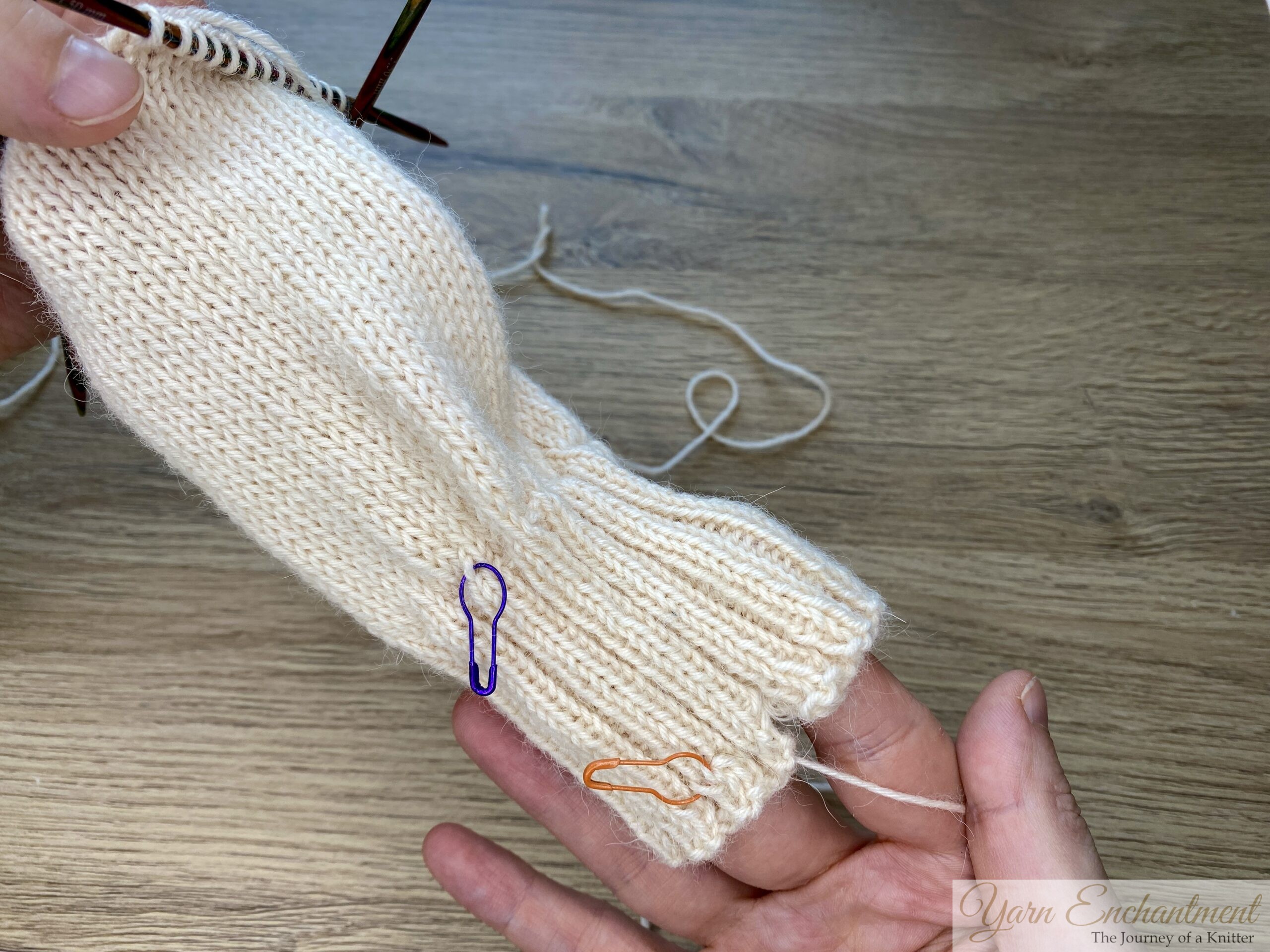  |
The little yarn tail usually marks the back of the sock, which is how I learned it. However, other methods or constructions may use a different marker for the back - for example, some patterns work the heel over needles one and two instead. |
After finishing the leg portion, orient your work so you’re ready to begin the heel. For a classic flap-and-gusset sock heel, work across needles 1, 2, and 3 as usual in the round. When you reach needle 4, start the slip-stitch heel pattern; this section is worked flat, using the stitches from needle 4 and then continuing with needle 1. The remaining stitches (from needles 2 and 3) can be set aside, either held on a stitch holder or slipped onto a circular needle, until the heel is complete. You can also leave them on needles 2 and 3.
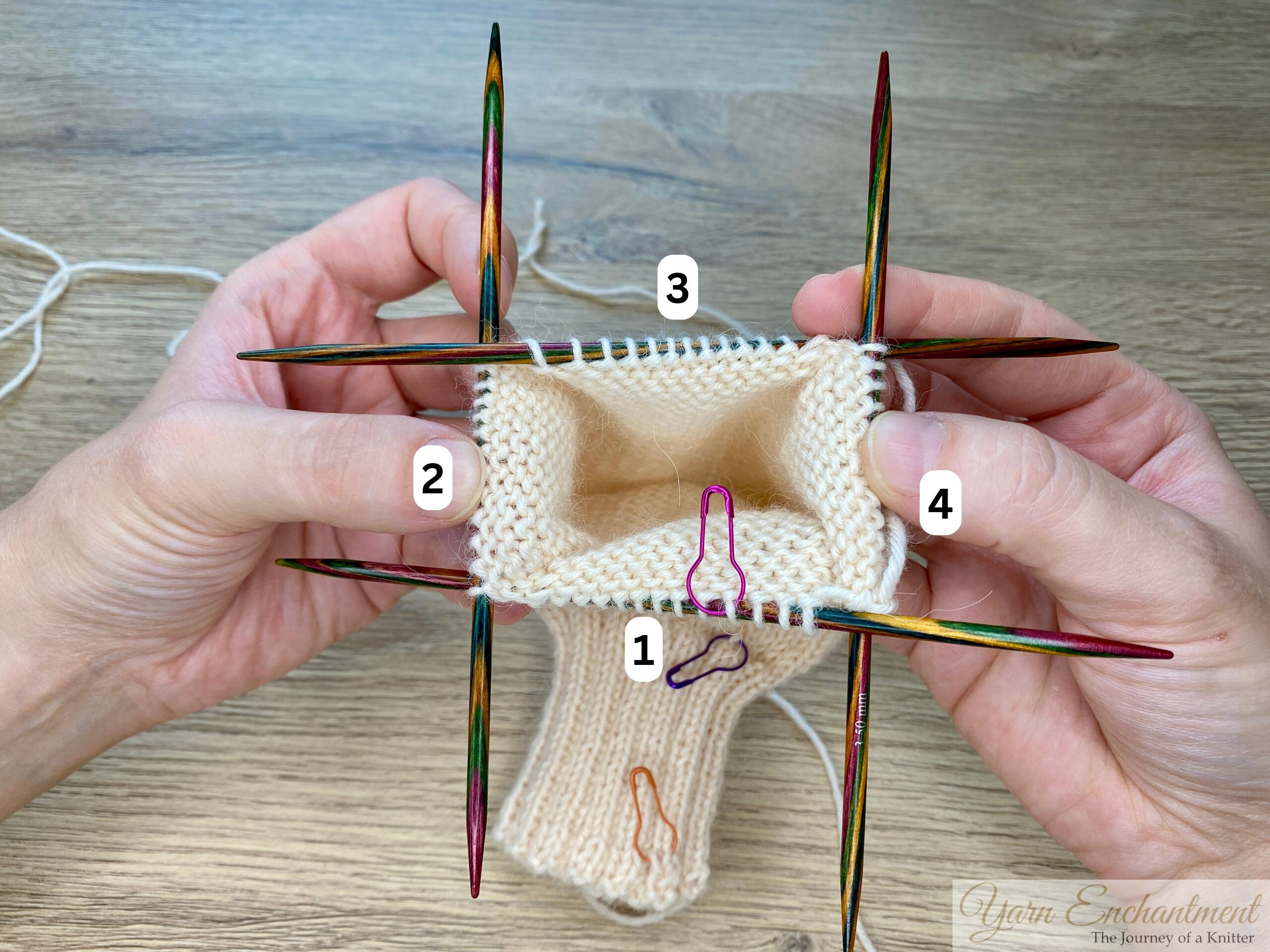  | 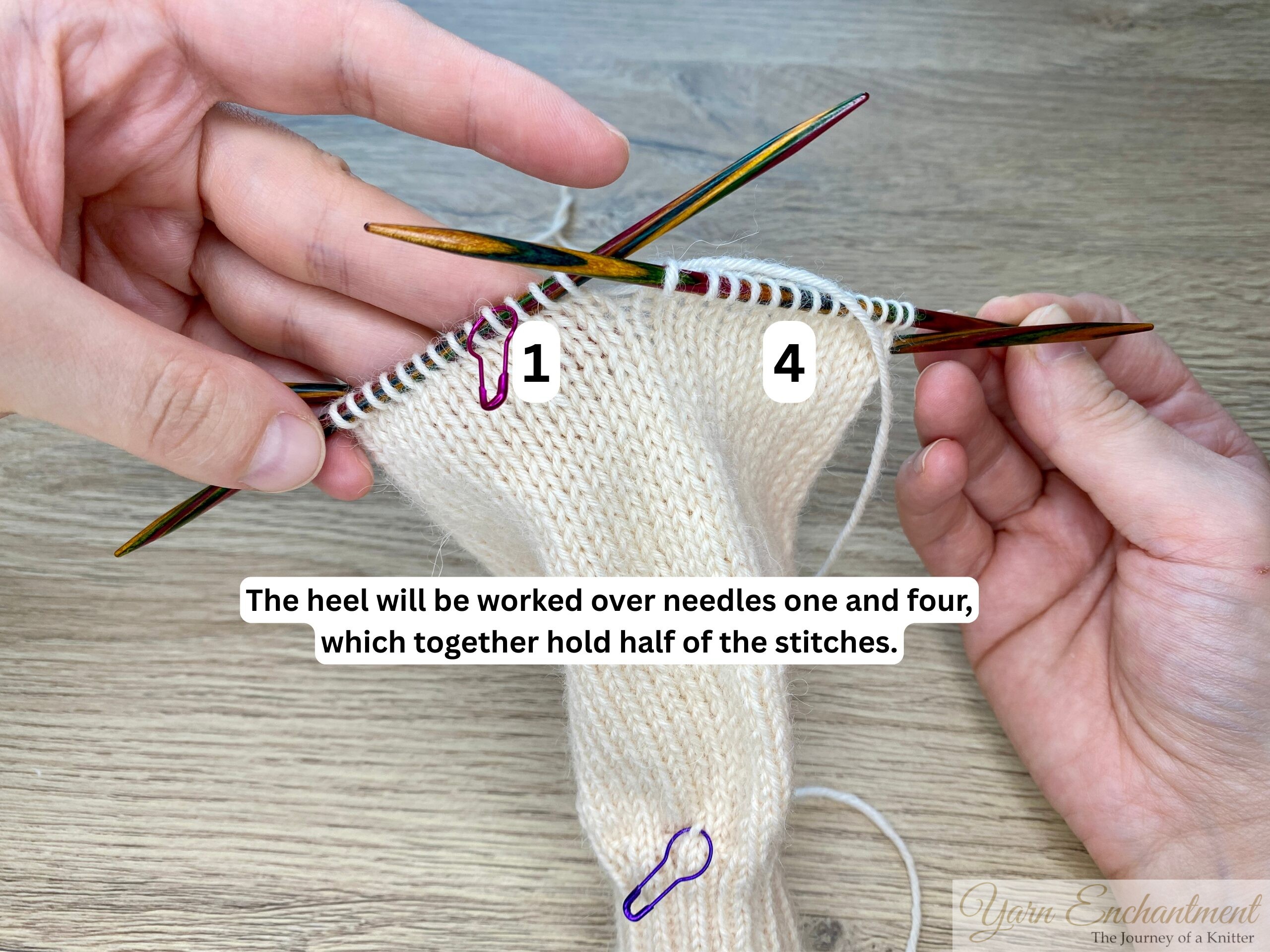  |
The stitch marker marks your first needle; from this needle, count clockwise. | The heel will be worked over needles one and four, which together hold half of the stitches. |
Reinforced Slip Stitch Heel Flap: Step-by-Step
Garter Stitch Edges:
Knit the first and last two stitches on every heel row; this creates a tidy border, making the later gusset pickup super simple.
Use the free printable sock tracker to easily check off each heel row so your socks always turn out just right.
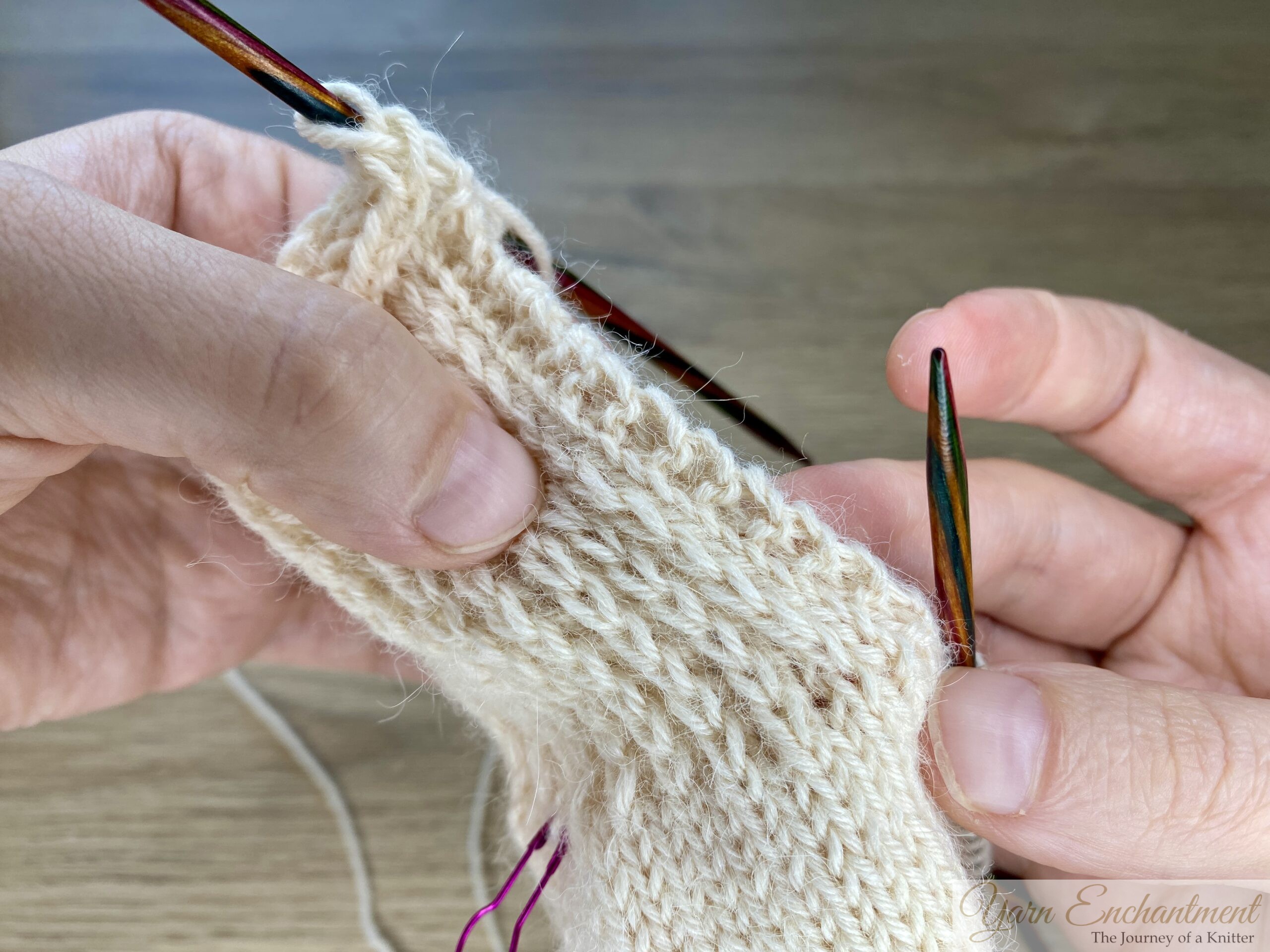  | 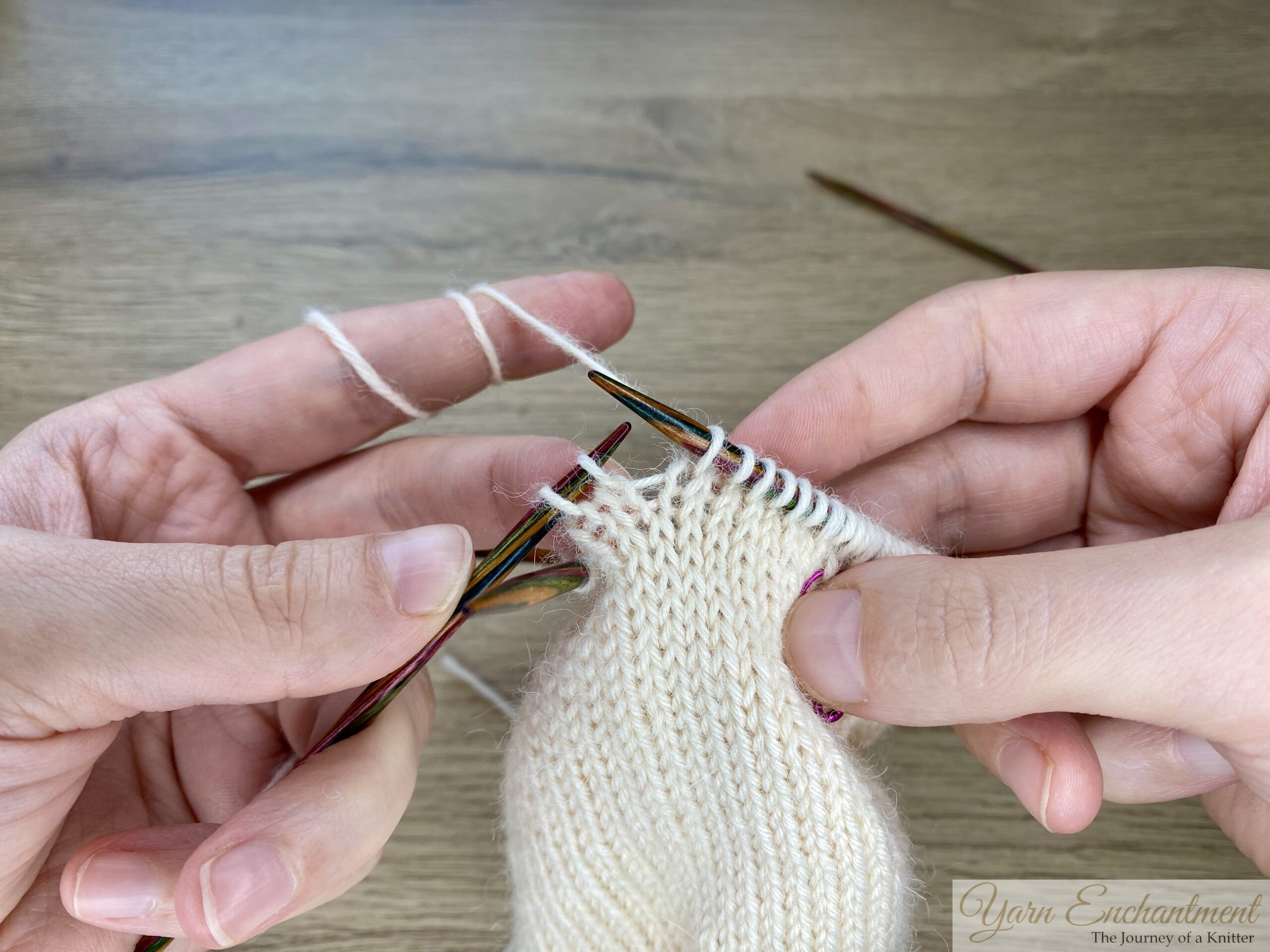  |
In order to create this garter stitch edge for picking up stitches later when working the gusset, | knit the first two and last two stitches of every row, on both the right and wrong sides. |
Slip Stitch Heel Flap
Row 1: Knit all stitches, turn your work
Row 2: Knit 2 stitches (edge), purl across to last 2 stitches, knit 2. Turn work.
Row 1 (RS): Knit 2 stitches (for the edge), *knit 1, slip 1 as if to purl with yarn in back; repeat from * to the last 2 stitches, knit 2. Turn work.
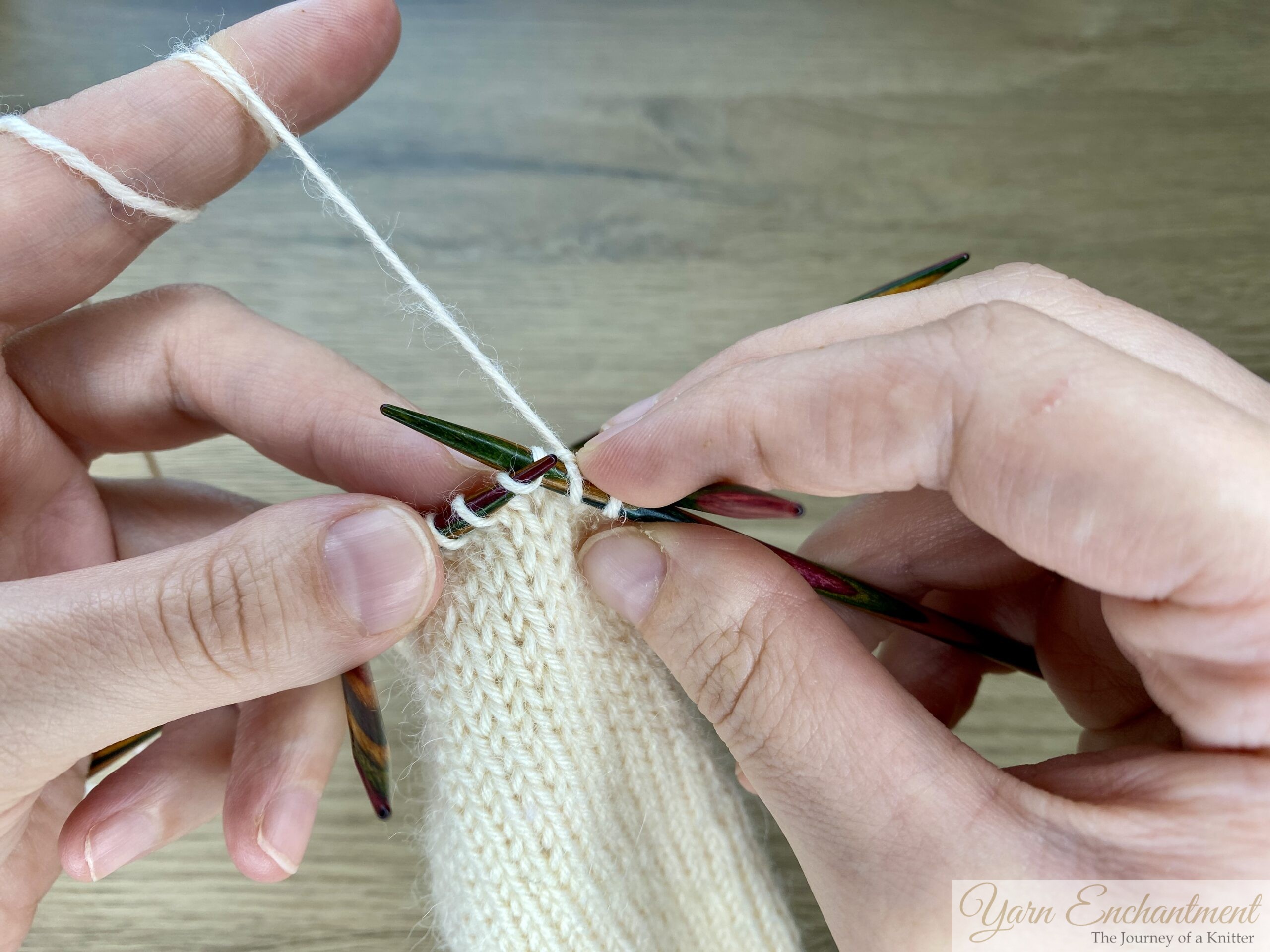  | 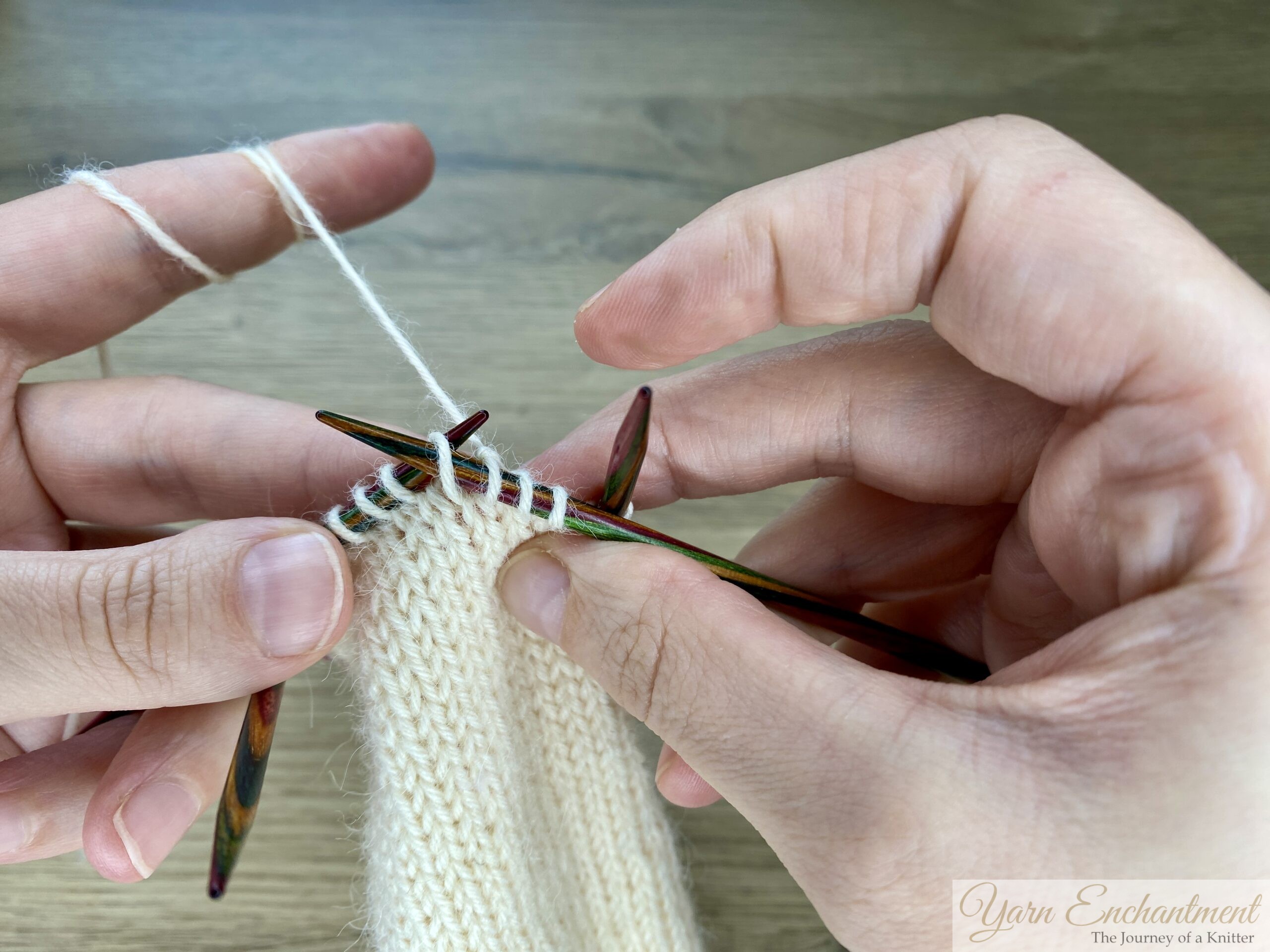  |
After working the two edge stitches, begin your slip stitch pattern by knitting one stitch... | ...then slip one stitch purlwise with the yarn held in back. Knit the next stitch, and slip the next one purlwise |
  | 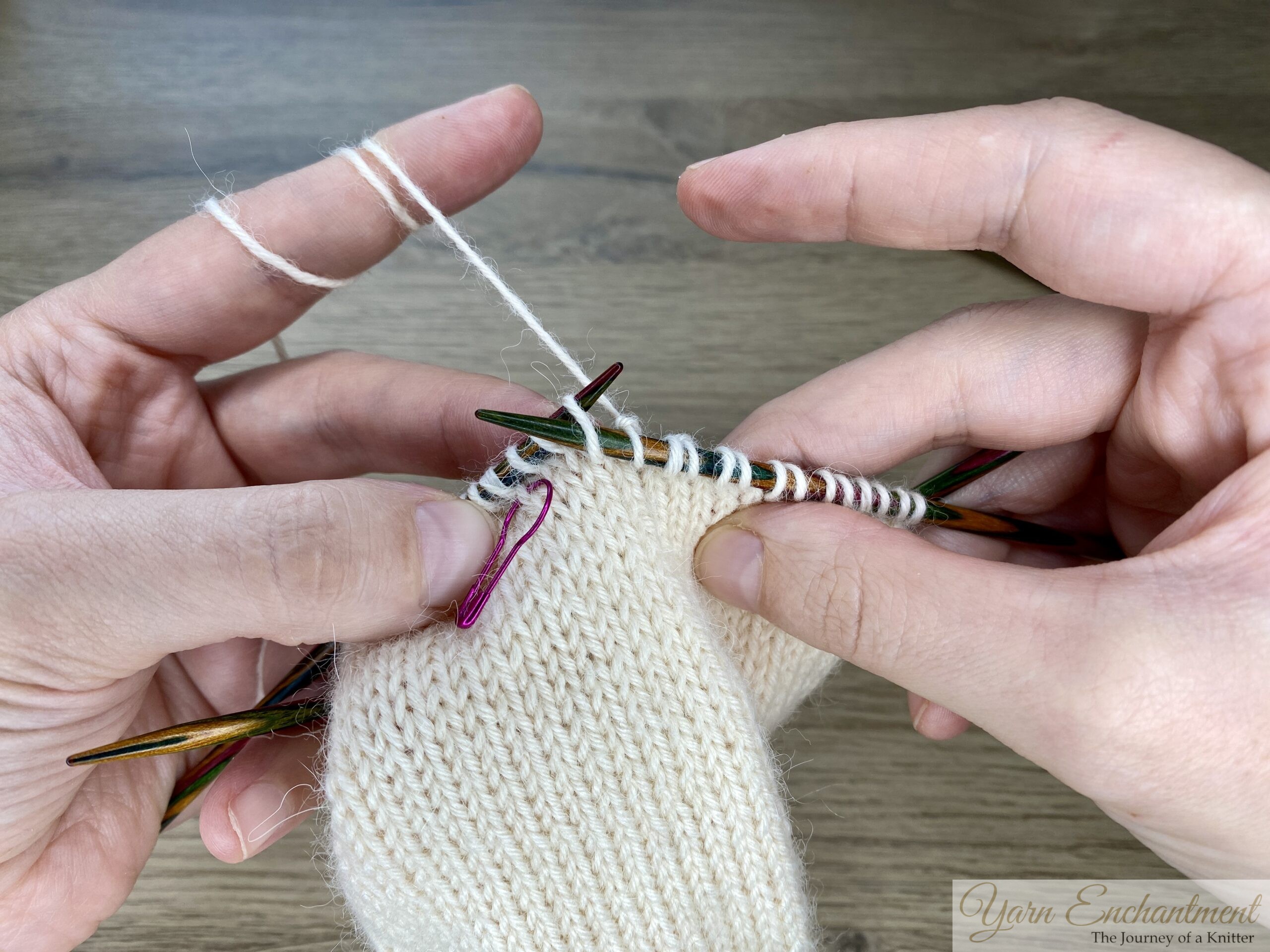  |
When you reach the end of needle 4, set one needle aside... | ...and continue working on needle 1, maintaining your slip stitch pattern. |
Once you’ve finished knitting across needles 4 and 1, you should have half your stitches gathered onto a single needle. At this point, simply turn your work around to get ready for the next step.
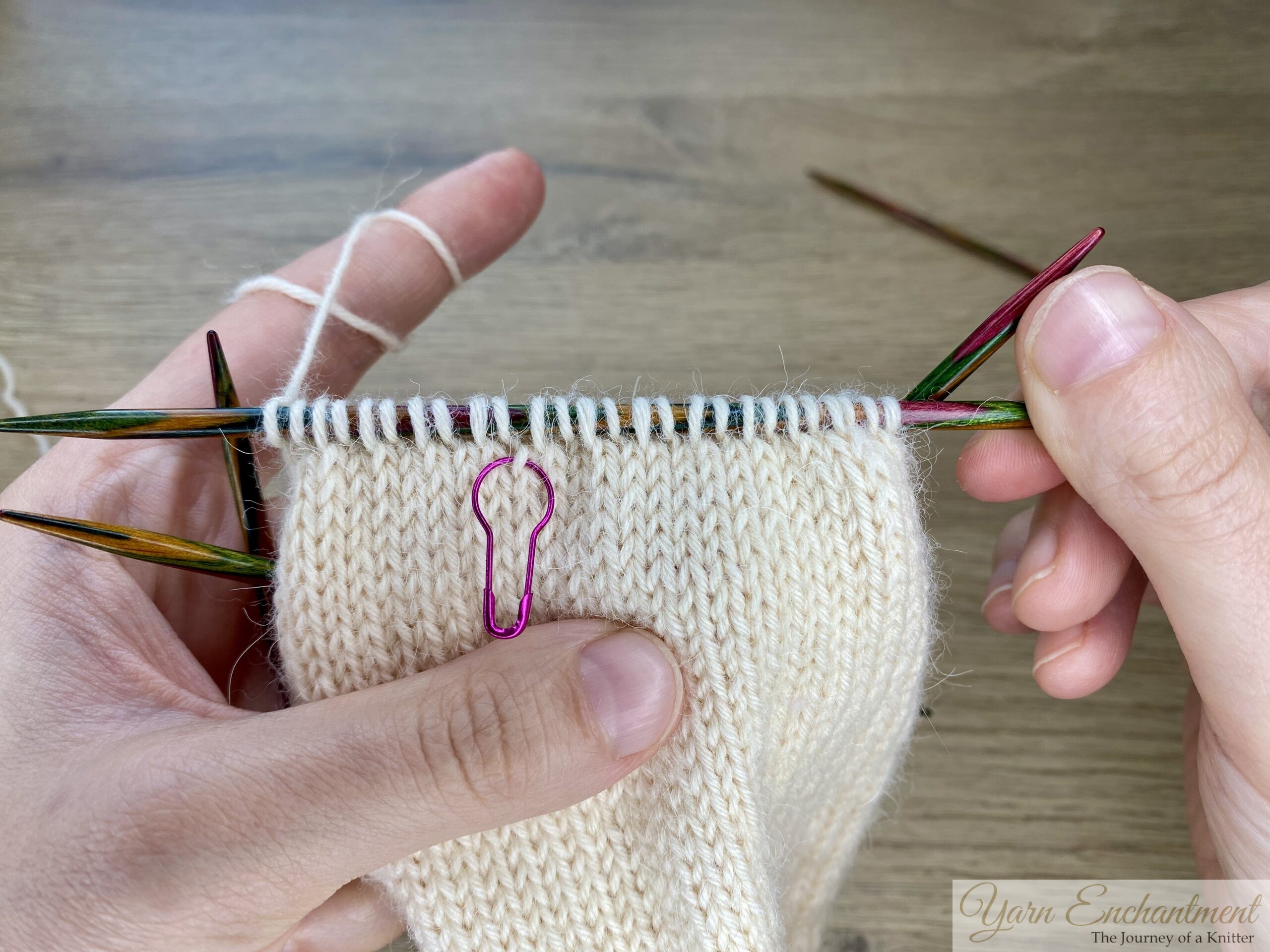  |
All the stitches from needles one and four are now together on a single needle. |
Row 2 (WS): Knit 2 stitches (edge), purl across to last 2 stitches, knit 2. Turn work.
Repeat Rows 1 and 2 until your heel flap is slightly taller than it is wide, typically, work as many rows as you have stitches on your heel flap (for example, 26 rows if you have 26 stitches). This creates a classic reinforced heel fabric that becomes softer and more durable with every wear.
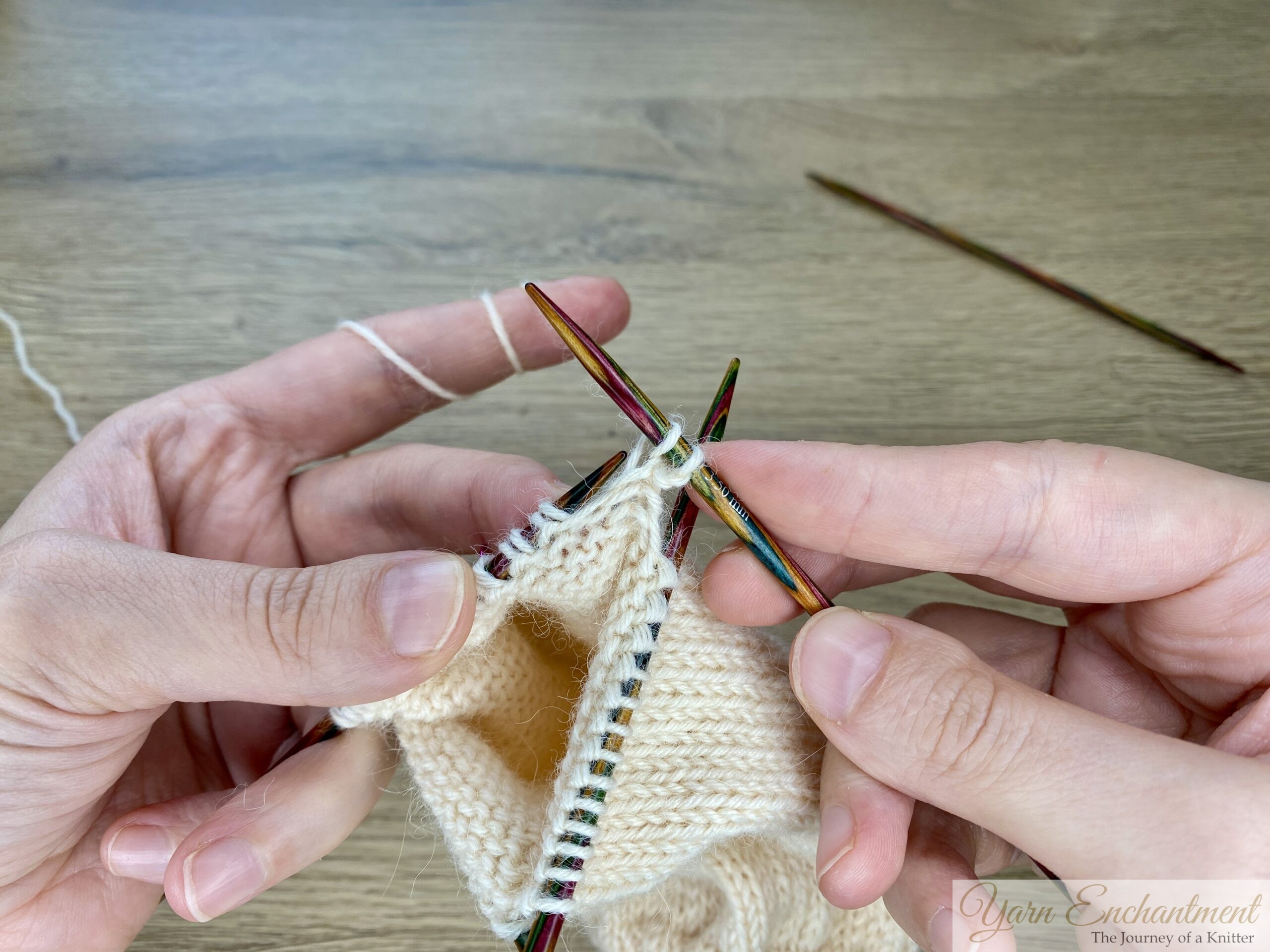  |   |   |
Turn your work, knit the first two edge stitches, ... | ...then purl every stitch until only two stitches remain | Knit these last two stitches to finish the row. |
Bring the resting needle underneath your heel flap needle This helps keep it out of the way so it’s easier to purl the row comfortably.


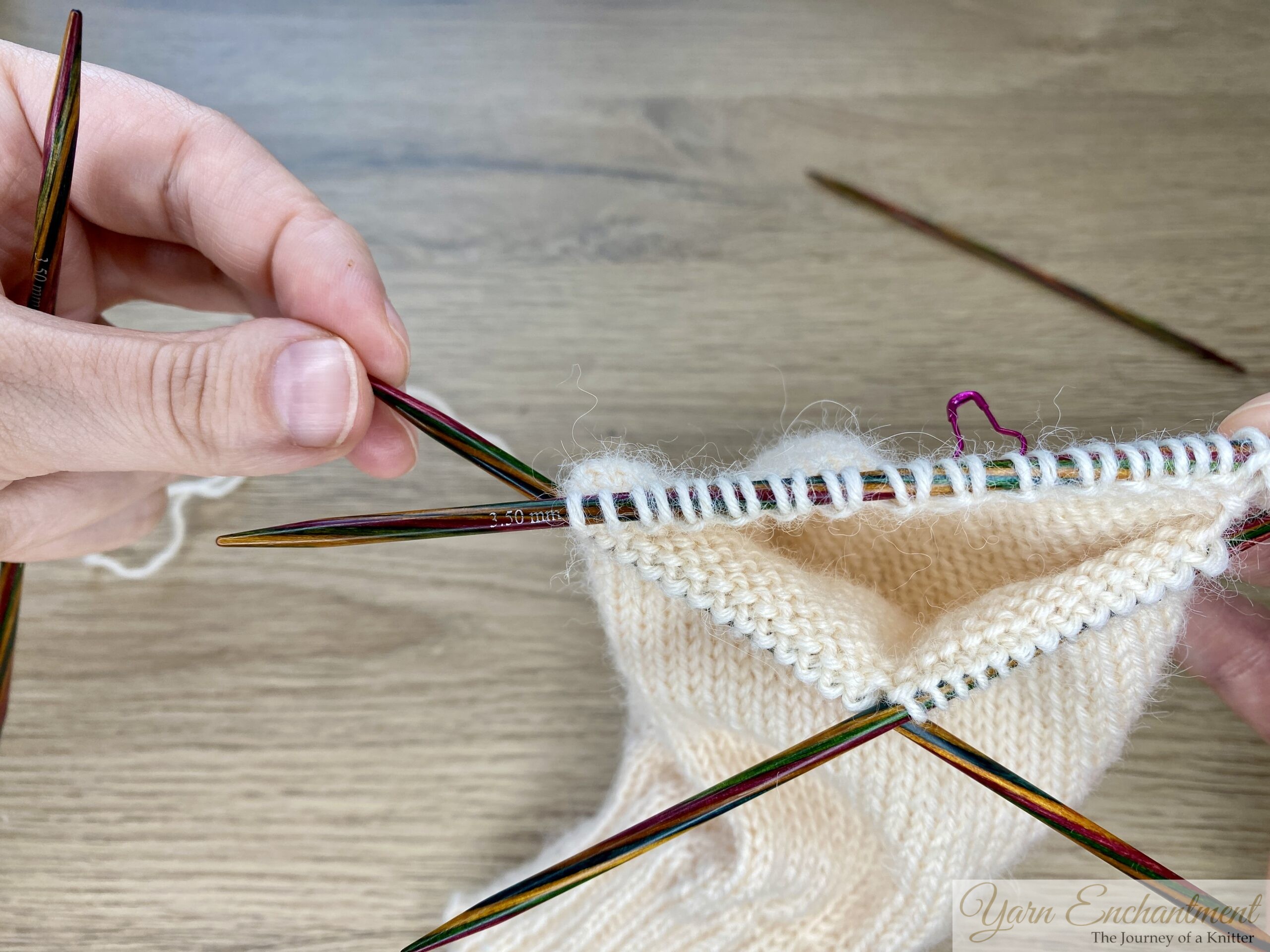

The Finished Heel Flap
When you finish your heel flap, your work should look like this: you’ll see a beautiful slip stitch pattern on the front, and at the wrong side you will notice the small yarn floats from slipping the stitches purlwise, which makes the fabric thicker and more durable.
  |   |
At the front you have this beautiful slip stitch pattern... | ...and at the wrong side you will notice the small yarn floats from slipping the stitches purlwise |
How to Count Rows for a Heel Flap in Sock Knitting
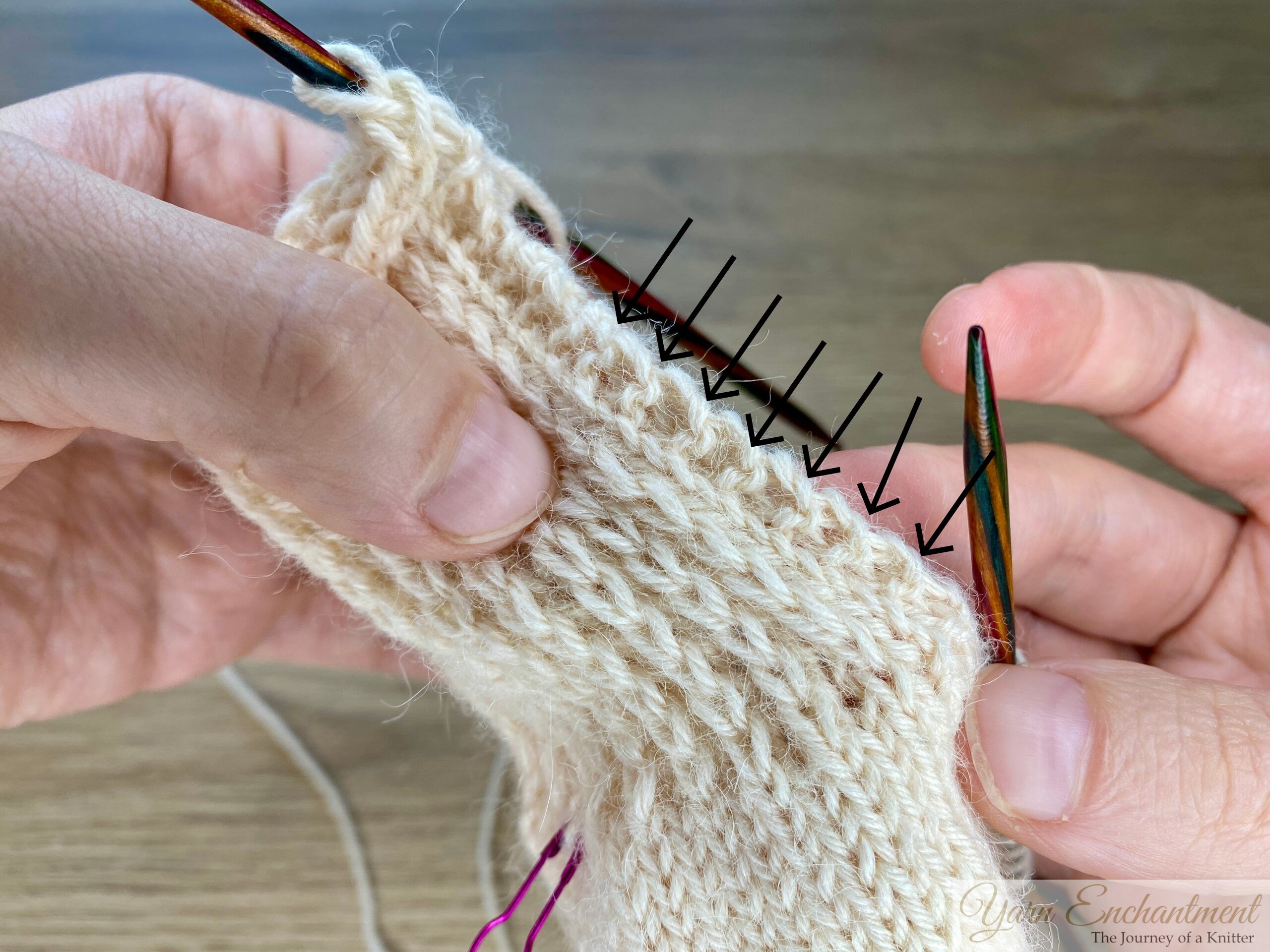
Counting rows on your heel flap is an important step to make sure both socks are the same size and fit perfectly. Most heel flaps have edges worked in garter stitch, which makes it easy to keep track of your rows as you knit. You can also count the slipped stitches from the heel pattern, each one represents two rows. And if you’d like to stay extra organized, don’t forget to download the free Sock Knitting Tracker to keep track of your rows and repeats.
Method 1 – Counting Rows on a Garter Stitch Edge
-
In garter stitch, each visible ridge equals two rows of knitting.
-
To find your row count, simply count the ridges along the edge of the heel flap.
-
Example: 26 rows = 13 garter stitch ridges
-
-
This method is quick and works best if your heel flap has a garter stitch side edge.
Method 2 – Counting Rows on a Reinforced Heel Flap
A reinforced heel flap uses a slip stitch pattern to make the heel stronger and more resistant to wear. The slipped stitches also can be used to count rows.
-
Each slipped stitch on the edge equals two rows of knitting.
-
To count your heel flap rows, simply count the slipped stitches.
-
Example: 26 rows = 13 slipped stitches
-
-
The last slipped stitch may be partially hidden underneath the needle, so look closely to avoid miscounting.
Counting rows on a slipped stitch pattern is simple, just count each slipped stitch all the way. And don’t forget to check right under your knitting needle, as sometimes the last slipped stitch likes to play hide and seek!
Each garter stitch ridge represents 2 rows, so simply count the ridges and double that number to find your total row count.



How to Turn the Heel: Dutch/Square Heel Method
The heel turn is the “magic” part of sock knitting, it transforms your flat heel flap into a neat little curve that cups your heel snugly. Just follow each step, and soon your sock will take on its real shape!
Note: This heel turn is also known as the Dutch or square heel. It’s very easy and works for any stitch count, giving a tidy, comfortable fit.
How Heel Turning Works
To shape the curve at the base of your heel, split your heel stitches into three groups: a left side, a center (the “cup”), and a right side. By shaping mainly in the center, you create a gentle bend in the fabric that hugs the underside of your heel - this is what gives socks their classic, foot-hugging form.
Steps for Dividing Heel Stitches
- Take the total number of heel flap stitches and split them into three as evenly as possible.
- If the stitch count isn’t perfectly divisible by three, put the “extra” stitch or stitches in the center group, this helps shape a nice rounded heel.
- The central group should always be equal to or smaller than the two side groups.
Easy Division Formula
- Use: Total stitches ÷ 3.
- If there’s a remainder, add it to the center section.
- Examples:
- 26 stitches: Left = 9 / Center = 8 / Right = 9.
- 32 stitches: Left = 10 / Center = 12 / Right = 10.
- 27 stitches: Left = 9 / Center = 9 / Right = 9.
If needed, always make the center the smaller or equal part for a comfortable heel shape.
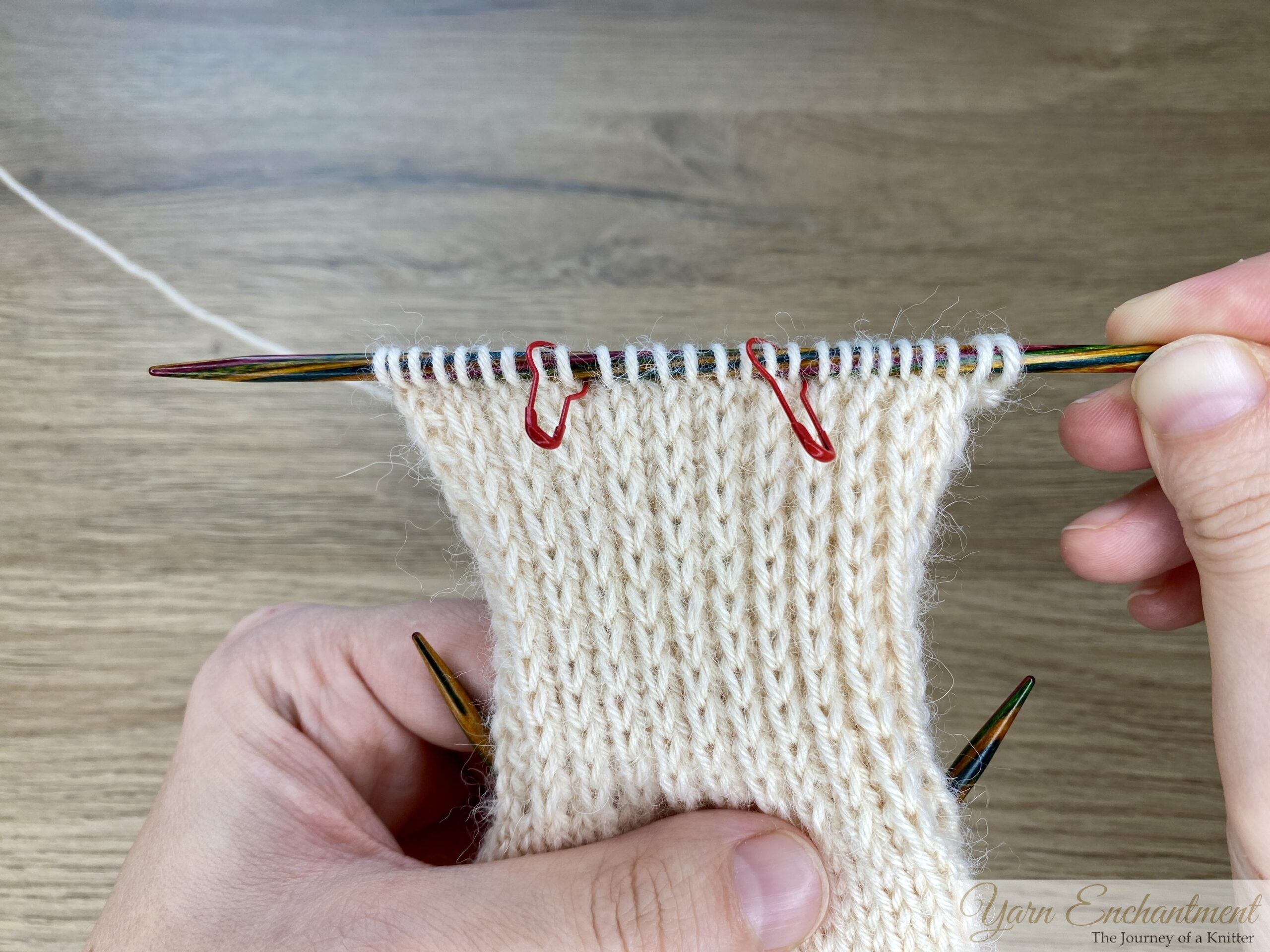  |
I have 26 stitches on my heel. I placed 9 stitches on the left side, 8 stitches in the center, and 9 stitches on the right side. To mark the divisions, count 9 stitches from each end and place a removable stitch marker after each group |
Practical Tips
Step-by-Step: Turning the Sock Heel
Dividing Heel Stitches
Divide your heel stitches into three sections. For 26 stitches, that means 9 for the left, 8 for the center, and 9 for the right. Place a stitch marker between each group to make the sections easy to spot.
Working the Slip-Stitch Pattern
Work in your slip-stitch pattern. On the right side (RS), knit the 2 edge stitches (only for this row), then knit 1, slip the next stitch, and continue this pattern until you reach one stitch before the first marker.
|   |
Divide your heel stitches into three sections: 9 stitches on the left, 8 stitches in the center, and 9 stitches on the right. | Knit to one stitch before the marker (don’t forget to work in your slip-stitch pattern). |
Work your first decrease (RS)
It’s time for an SSK (slip, slip, knit). Slip one stitch knitwise, then remove the marker, slip the next stitch knitwise, return both stitches to the left needle, and knit them together through the back loop. Turn your work - leave the unworked stitches resting on the needle.
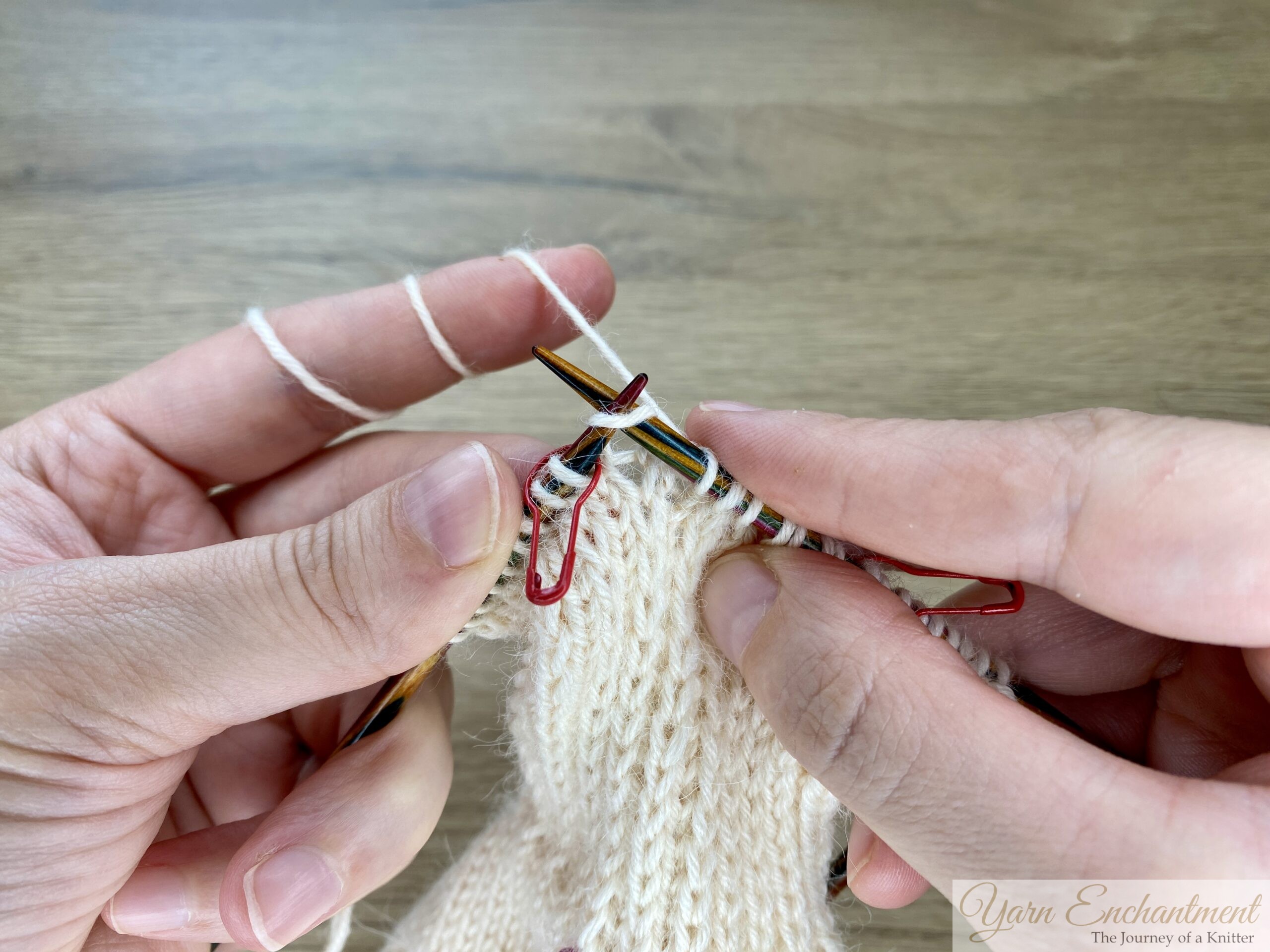  |   |   |
Slip one stitch knitwise | Remove the marker | Slip the next stitch knitwise |
  | 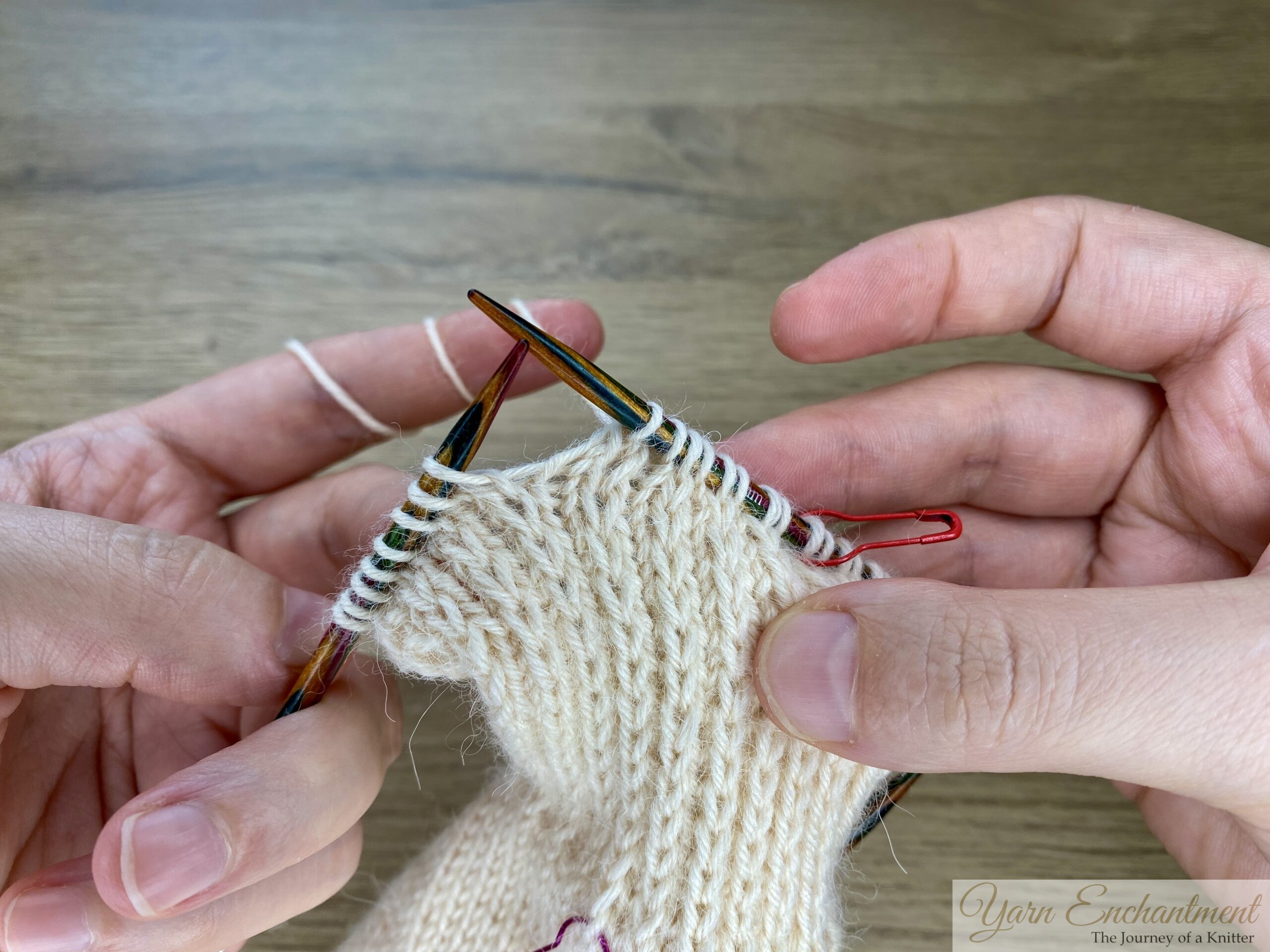  |   |
Slip the next stitch knitwise, return both stitches to the left needle, and knit them together through the back loop. | The stitches on the left needle will remain unworked. | Turn your work around. |
Wrong side (WS)
Slip the first stitch purlwise with the yarn in front, then purl to one stitch before the next marker. Remove the marker, then purl the next two stitches together (p2tog). Turn your work
  |   |   |
With the yarn in front... | ...slip the first stitch purlwise... | ...then purl to one stitch before the next marker. |
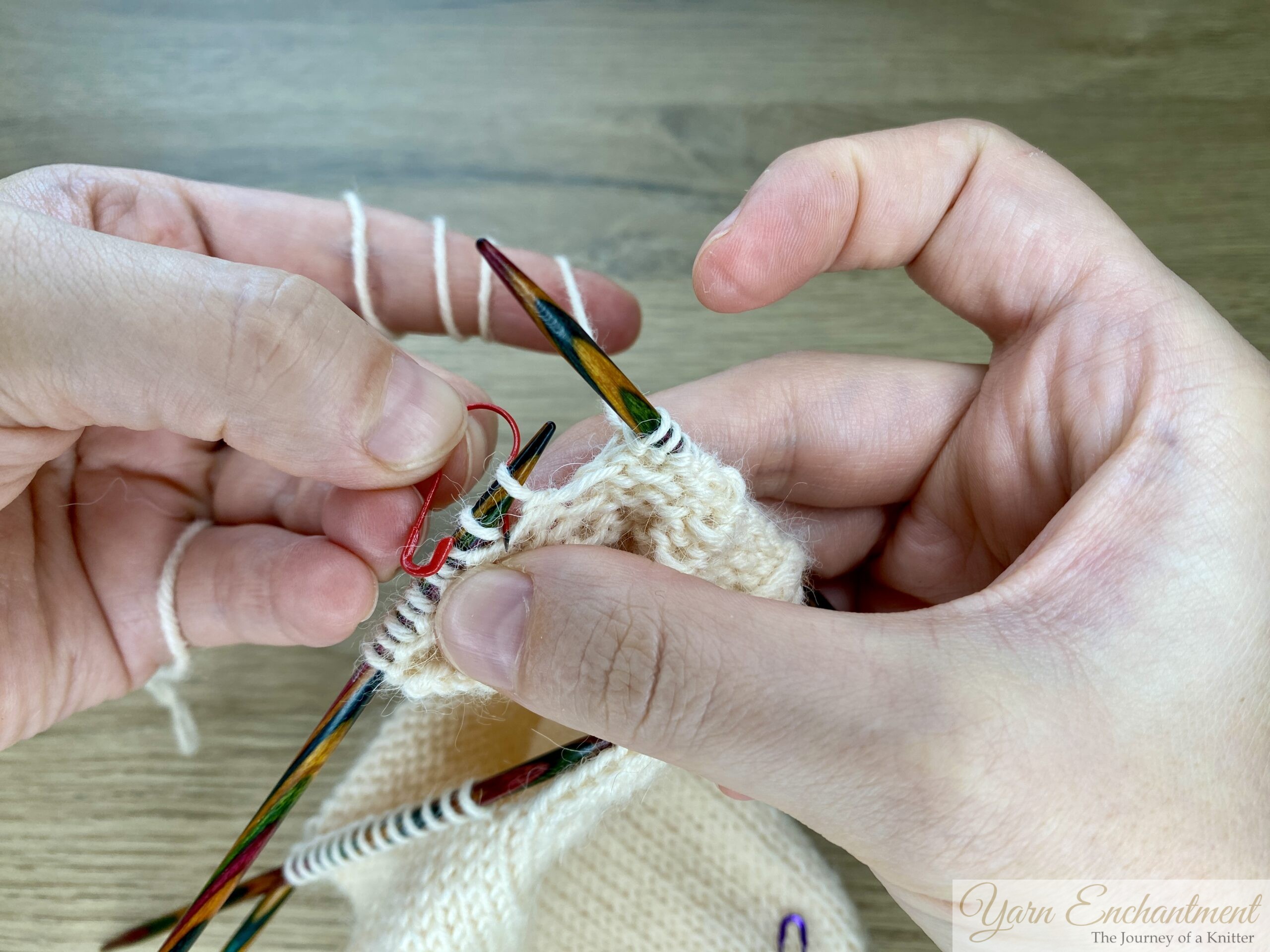  | 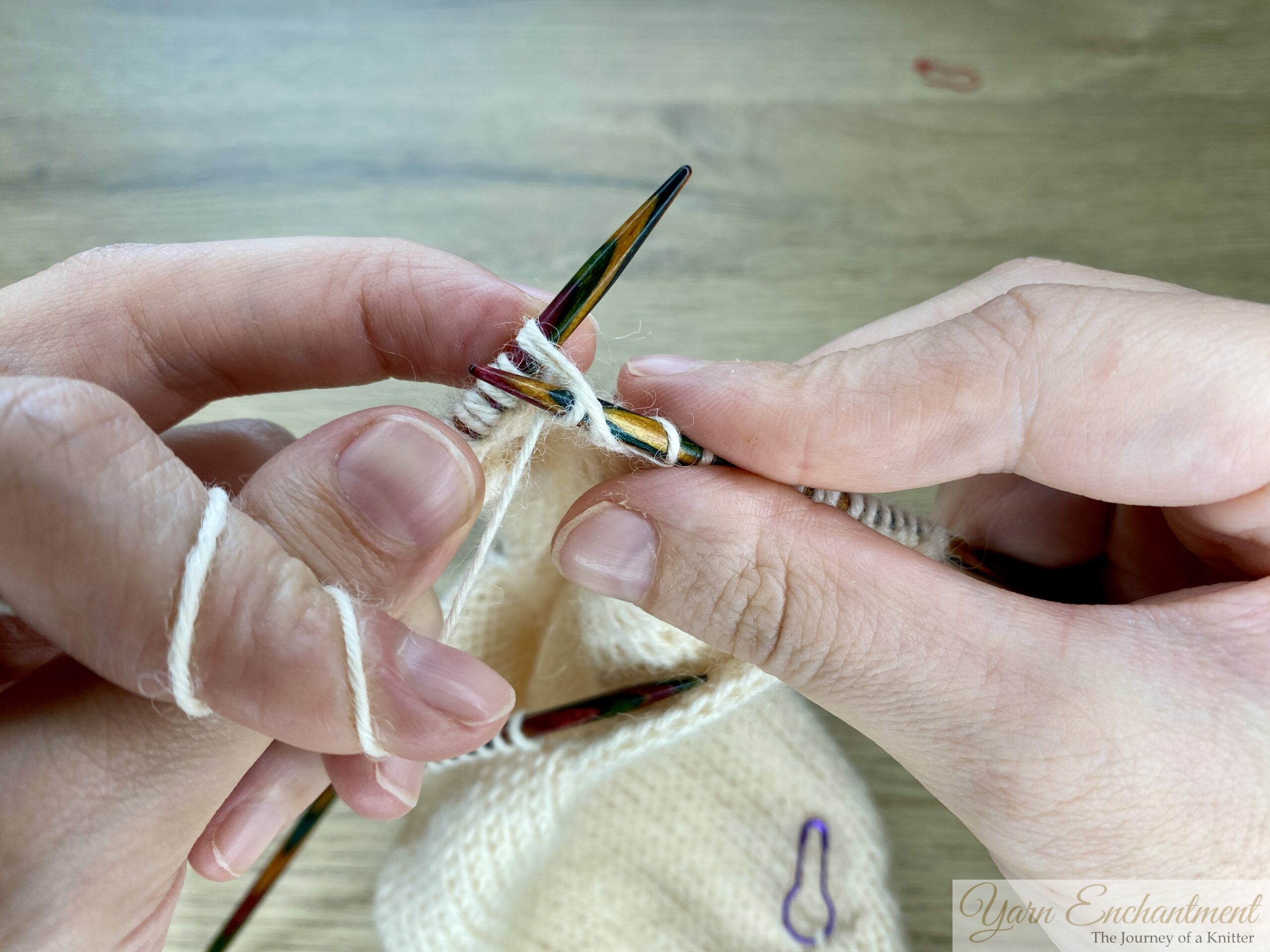  | 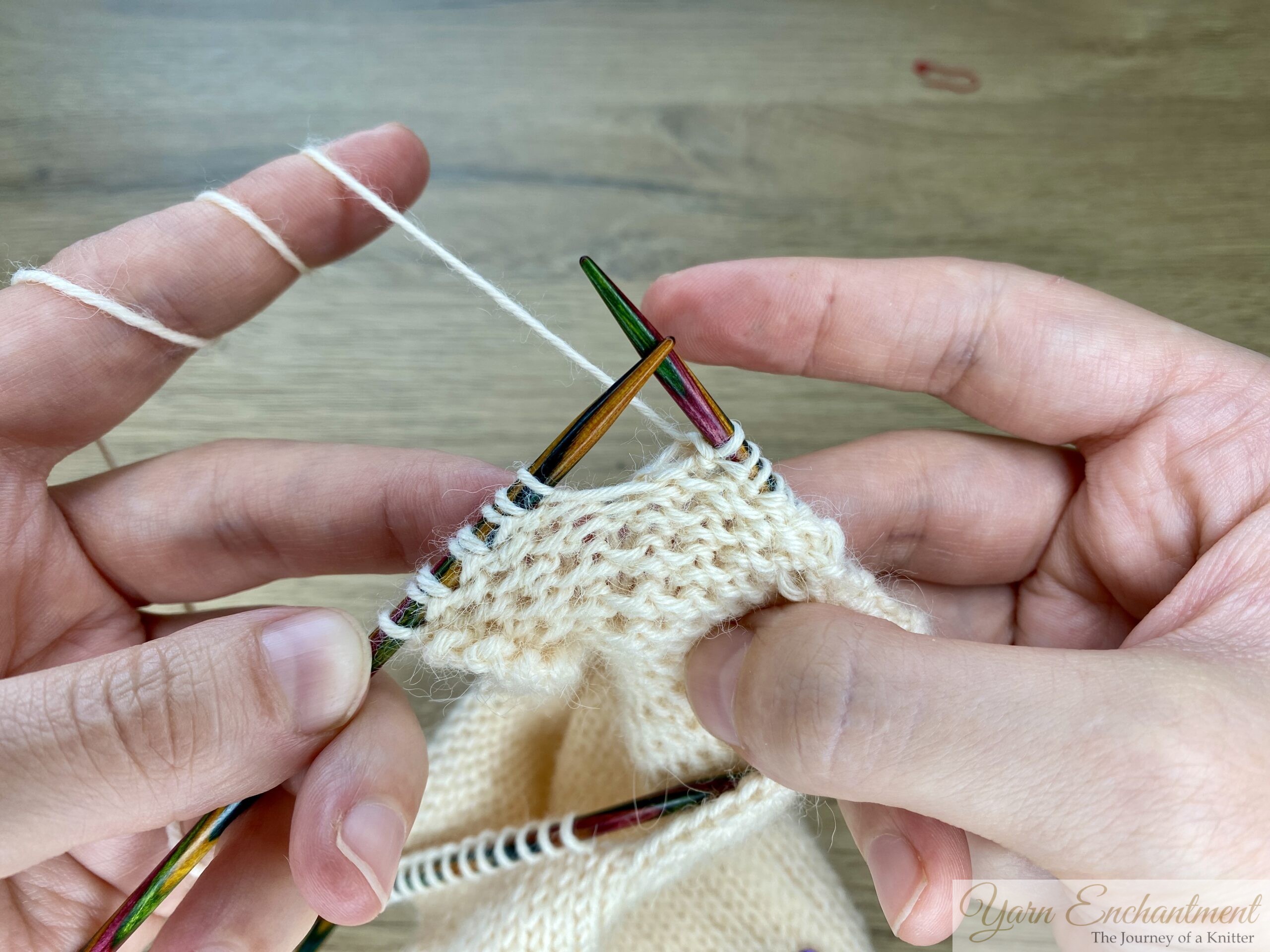  |
Before we can purl the two stitches together, we have to remove the stitch marker | Next, purl the two stitches together (p2tog). | After you work your decrease, turn your work, the stitches on the left needle will remain unworked. |
After turning your work to the right side, you’ll notice a gap where the last SSK and purl two together were made. From now on, always knit to one stitch before the gap, then work an SSK on the right side or a purl two together (p2tog) on the wrong side. You now have a gap on both the right and left sides. Always knit to one stitch before the gap, and then work your decrease, using the stitch before and the stitch after the gap - to shape the heel turn neatly.

Right side (RS)
Slip the first stitch purlwise with the working yarn at the back, then work in your slip-stitch pattern until you reach one stitch before the gap; work an SSK, then turn your work
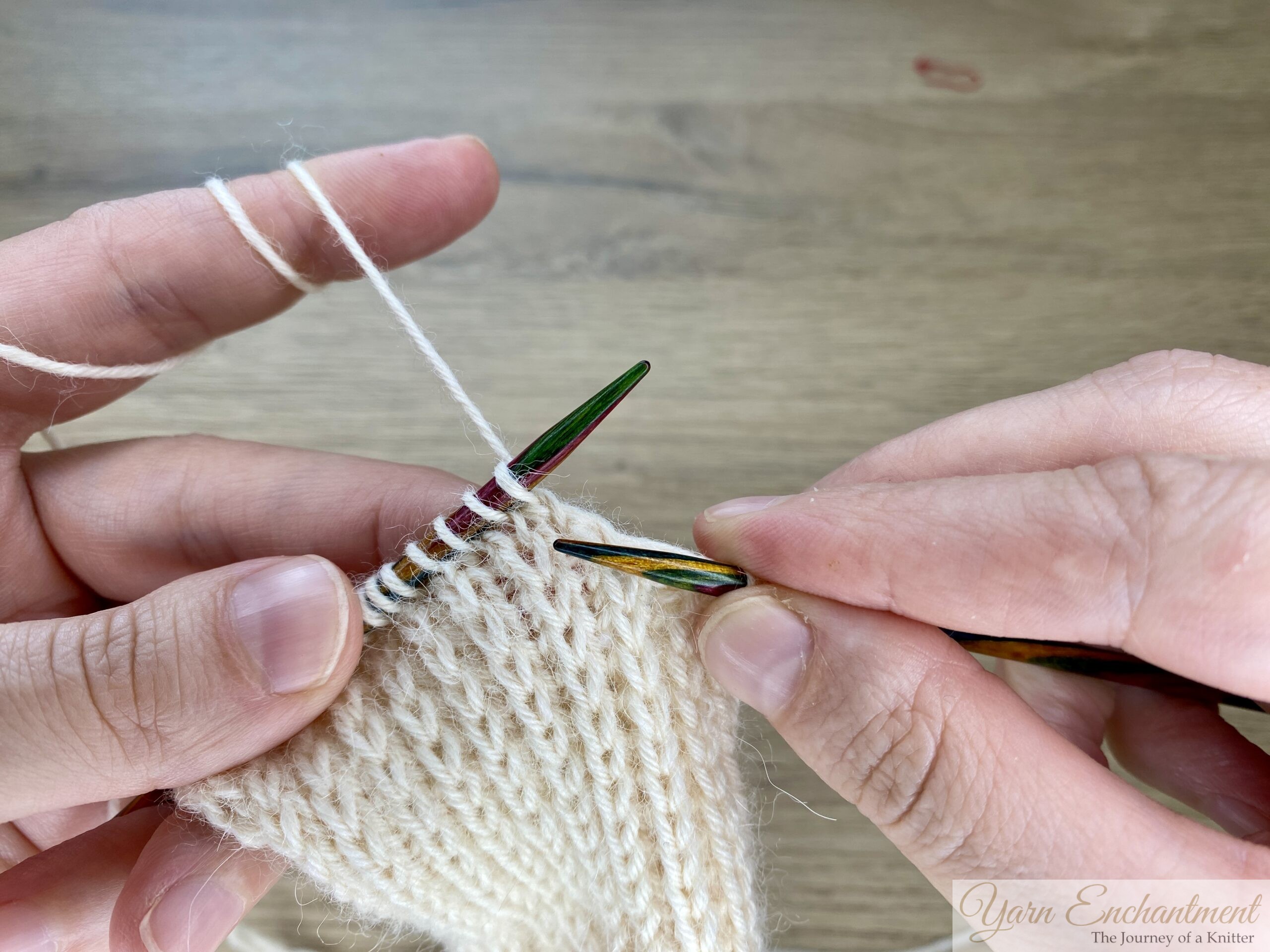  | 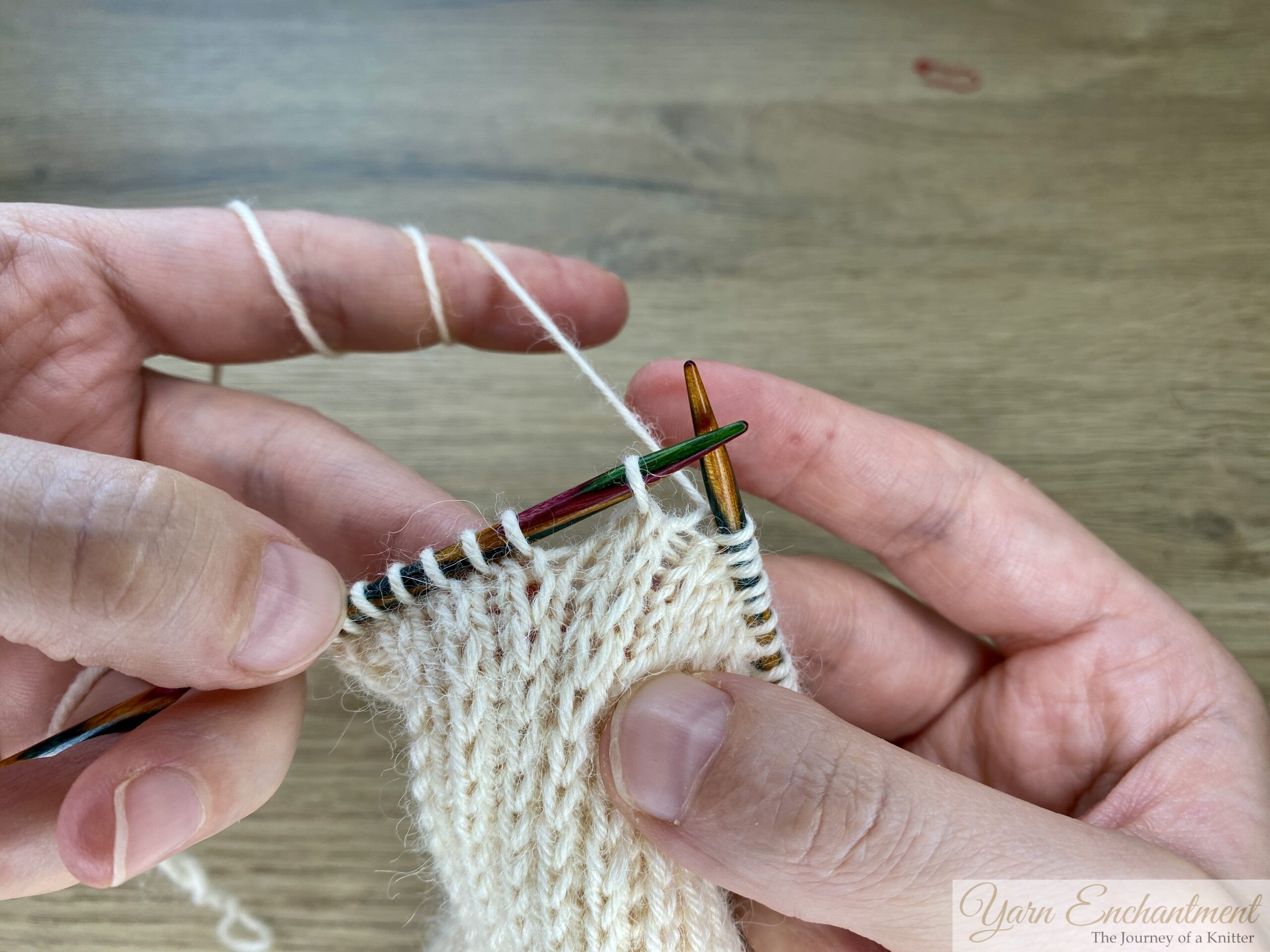  | 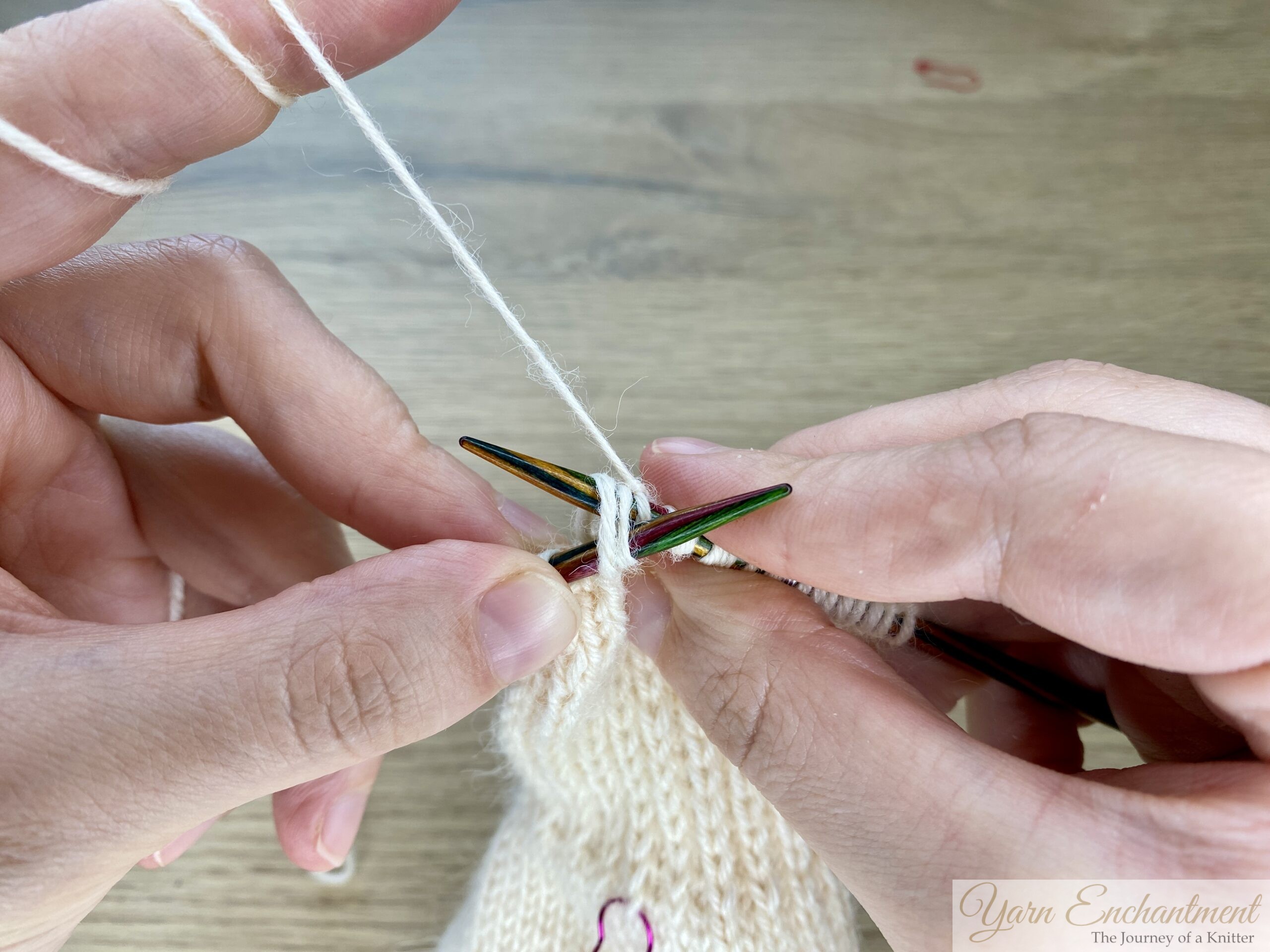  |
Slip the first stitch purlwise with the working yarn held at the back. Continue knitting in your slip-stitch pattern - since slipped stitches appear larger and stand out toward the front, you can easily tell when to slip a stitch or knit it. | Work to one stitch before the gap, then slip that stitch knitwise. Next, slip the stitch after the gap knitwise as well. | Insert the left needle into the front of both slipped stitches and knit them together through the back loop to complete the SSK decrease |
Note: Always slip the first stitch of every row (right side: yarn in back, wrong side: yarn in front).
Repeat those short row turns with decreases
-
- On RS rows: slip the first stitch, knit to one stitch before the “gap” - the space you just created with your turn. Do another SSK over the gap, then turn.
- On WS rows: slip the first stitch, purl to one stitch before the gap, then purl those two stitches together. Turn.
Continue
Keep repeating these steps, always slipping the first stitch and working a decrease at each gap, until all the side stitches have been used up and only the center stitches remain. When you have worked your last SSK and all the stitches from the needle are completed, turn your work. Slip the first stitch purlwise with the yarn in front, purl to the gap, and then purl the last two stitches together.
You’ll see a lovely, cupped heel take shape, ready to fit perfectly!.
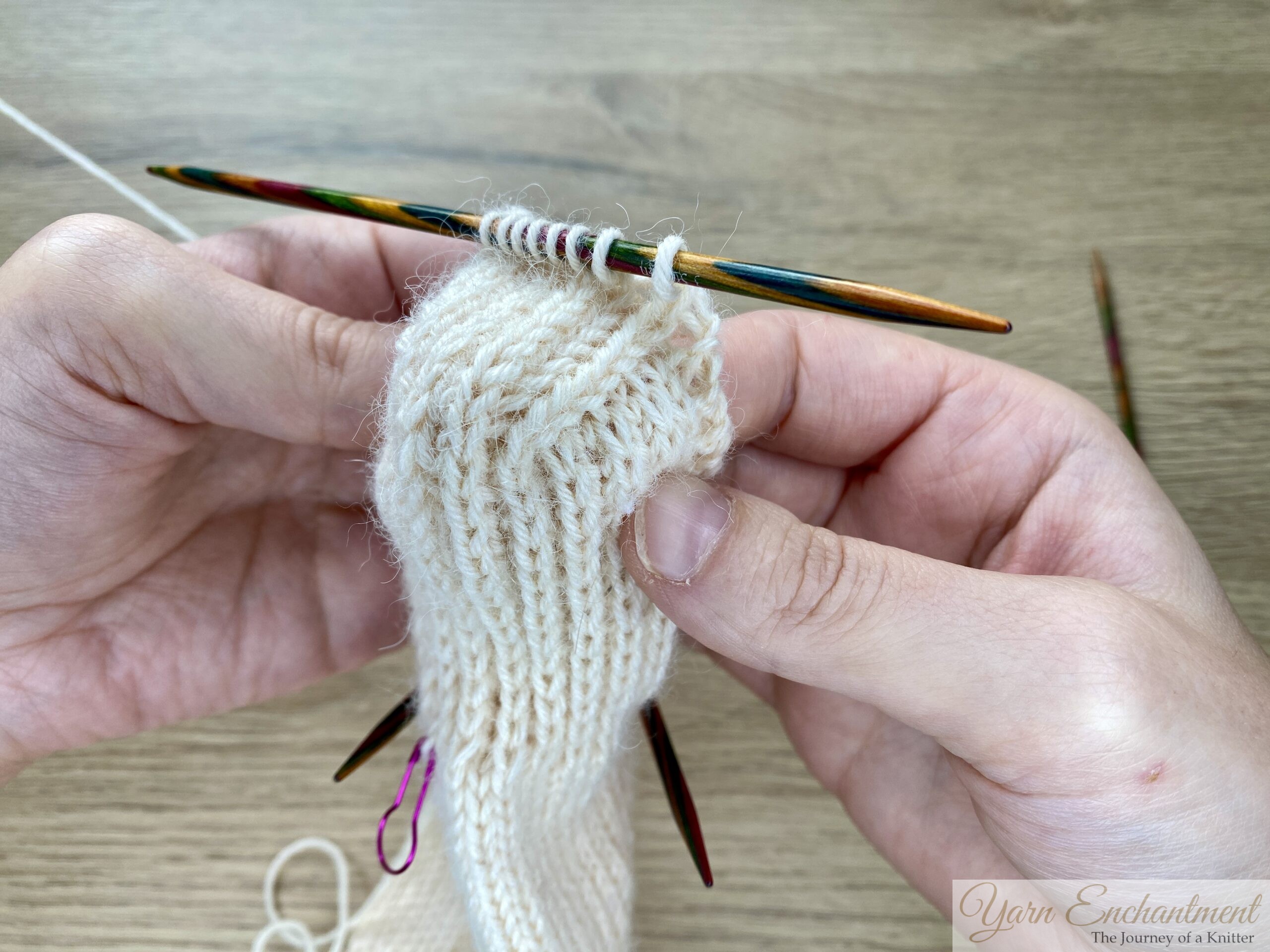  | 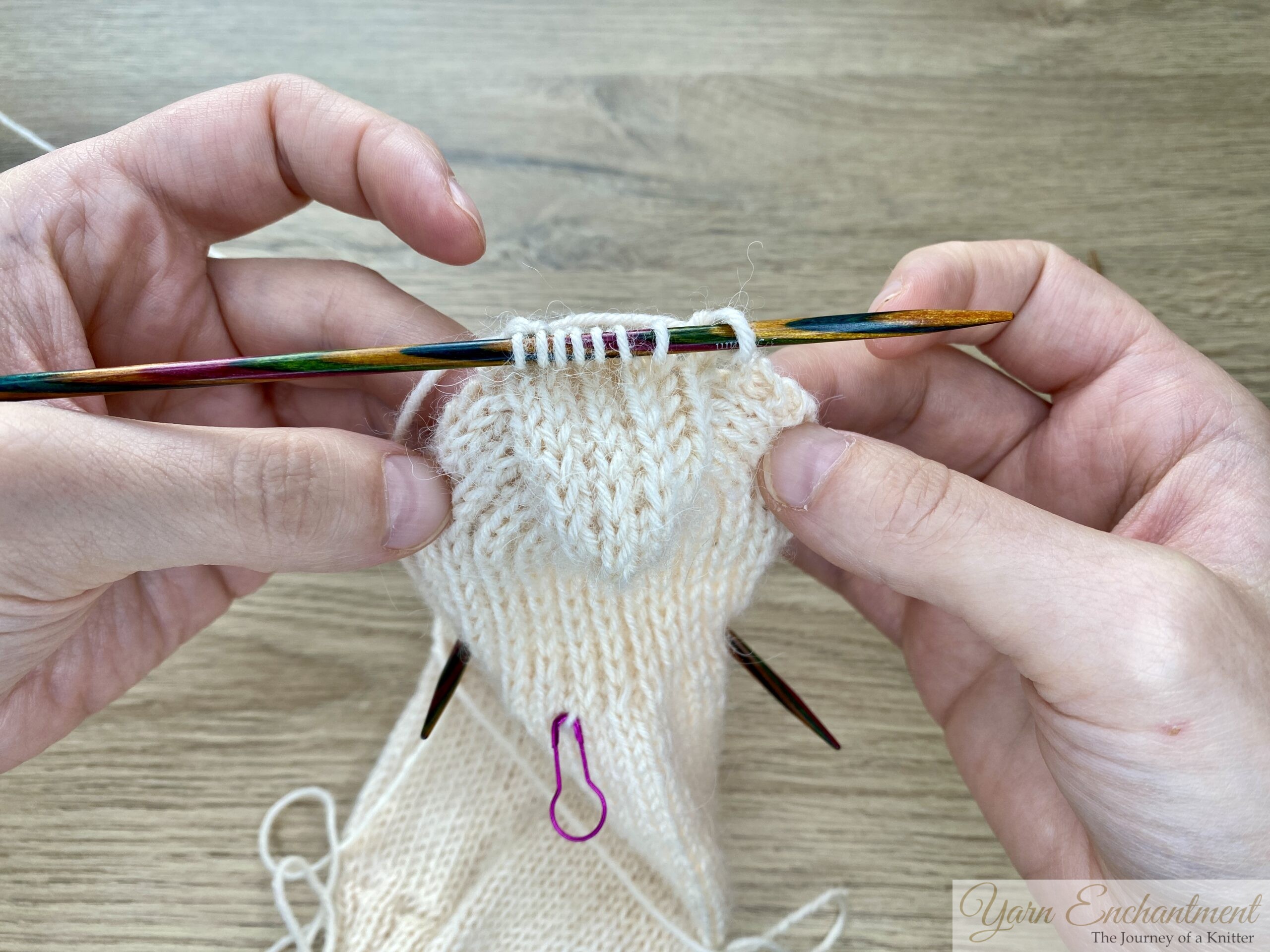  |
We have finished the heel flap and the heel turn, and I have to say I’m really proud of you because, in my opinion, this was the most difficult part. | Only the 8 center stitches remain. These stitches will be divided in two: 4 stitches go on needle four, and the other 4 stitches go on needle one. |
Heel Flap & Turn FAQ
What is a heel flap in sock knitting?
The heel flap is the rectangular piece you knit back and forth on half your sock stitches. It forms the sturdy bit at the back of the sock, where your heel sits, giving extra comfort and durability.
Why use a heel flap instead of a short-row or afterthought heel?
Heel flaps are great if you want socks that fit all kinds of feet, especially higher insteps. They’re easy to adjust and make the heel area stronger, so your socks last longer.
How long should I knit the heel flap?
Knit the heel flap until it’s as long as it is wide, usually you knit about as many rows as you have stitches on your heel needle.
What’s a slip-stitch heel, and why is it good?
Using a slip-stitch pattern (like “slip 1, knit 1”) creates a thicker fabric for the heel flap. This helps prevent holes, so your socks can handle more wear.
How do I “turn the heel”?
Turning the heel means shaping the bottom of the heel flap so it curves under your foot. You do this by working short rows and decreases, don’t worry, the pattern will walk you through it step by step.
I see holes at the edge of the heel flap - what’s happening?
Little gaps can pop up where you pick up stitches for the gusset. To fix this, pick up stitches through both loops of the edge and tighten the first row after picking up.We will talk about this in the next part
What does “turn the heel” mean in a sock pattern?
“Turn the heel” is just the name for creating that curved part under your heel using short rows and decreases, so your sock goes from the heel back to knitting in the round.
Can I make a wider or narrower heel flap?
Absolutely! Add stitches for a wider heel, or remove some for a narrower one. Just be sure to keep the foot and instep balanced in your pattern.
My heel turn feels too shallow or deep - can I fix it?
If your heel cup feels too flat or too rounded, change how many stitches and rows you work for the heel turn. More rows make a deeper cup; fewer make it shallower.
How do I make my heels last longer?
Use a slip-stitch heel pattern or add reinforcing thread - these tricks make your socks even tougher in the spots that get the most wear.
Conclusion
Knitting the heel flap and turn is such a milestone in sock knitting - if you’ve made it this far, you’ve accomplished something wonderful! Many knitters find this step intimidating at first, but with a little practice it quickly becomes second nature. At this point, you have a sturdy, beautifully shaped heel that not only feels great but also connects you to generations of knitters who have trusted this classic method.
If you don’t want to work the slip-stitch heel, you can simply knit it in plain stockinette (knit on the right side, purl on the wrong side). The steps remain the same, you’ll just leave out the slip-stitch pattern. I personally recommend the slip-stitch version because it holds up so much better over time. I’ll be creating a full video tutorial to guide you through it, but that will take me a little more time to finish, since I’m putting this whole sock course together first.
For now, take a moment to admire your work, the hardest part is behind you! Next time, we’ll pick up the gusset stitches. Until then, keep enjoying every stitch, and remember: each pair of socks you knit is a little gift of comfort and love, both to yourself and to those lucky enough to wear them.
Until next time, happy knitting!
A little update! 🧦 A few of you asked if I could put the whole course into one printable PDF - so I did! If you'd like everything in one place, you can find The Enchanted Sock Workbook right here: [The Ultimate Printable Sock Workbook] And don't worry - the blog and videos will always stay free. This is just for those who love having a printed copy by their knitting chair.
Feeling ready for more sock fun?
Jump into the next parts of my Free Sock Knitting Course! Explore topics like:
-
Sock Knitting Needles & Accessories: Complete Guide for Beginners
- How to Measure Your Foot & Calculate Sock Cast-On Size (Knitting Tutorial)
-
How to Knit a Classic Heel Flap & Turn (Sock Heel Tutorial)
- Hole-Free Gusset Pick Up and Decreases for Perfectly Fitting Socks
- Complete Foot and Wedge Toe Sock Guide: Measuring, Sizing & Decreasing
A Little Way to Say Thanks
Yarn Enchantment is my cozy hobby corner on the internet. If something here made your knitting day easier or you simply enjoy reading my posts and would like to say thank you, you can leave a small Ko-fi tip - but only if you truly want to.
My patterns and tutorials stay free for everyone, always. Every little tip just goes toward new yarn and a cup of tea for my cozy knitting evenings.
☕ Support me on Ko-fi
You Might Also Like


 |
|
Join the Cozy Corner Newsletter
Hello, creative soul. Welcome to the Yarn Enchantment Newsletter, a little space where we celebrate all things cozy, crafty, and full of heart. Think of this as your friendly crafting companion, a soft dose of inspiration delivered straight to your inbox, just for you. Each newsletter brings you: ✨ Notifications about new patterns and tutorials – easy knitting patterns and beginner crochet projects you won’t find anywhere else 🧶 Practical yarn tips for new crafters, plus advice on the best yarn for fall, blankets, and handmade gifts 💌 Small stories and adventures from my own workbench, because crafting is as much about the journey as the finished piece Whether you’re knitting by the fire, looking for your next creative spark, or simply wanting a quiet moment with your hooks and needles, this newsletter is here to cheer you on. Crafting isn’t just about the final project. It’s about the joy, the peace, and the stories we weave along the way. So grab a cup of tea or coffee, settle in, and join me. Together we’ll make a little magic, one stitch and one story at a time. I’m so glad you’re here. Let’s create something beautiful together. Sign up below to receive your first email, and feel free to leave a comment on the blog if there’s a topic you’d love to see covered. Your ideas might just become our next newsletter feature. |


3 Comments
Hi! Thanks for the detailed tutorial. I have one note–when beginning to turn the heel, the instructions say to knit to 1 stitch before the first marker before the SSK, but the photo shows that you knit to the 2nd marker. I got pretty confused until I realized I had started decreasing too early in the row.
Hi! Thank you so much for your lovely message and for your kind words about the tutorial. I really appreciate your feedback.
You are absolutely right — it can sometimes be difficult to get a photo that shows the step properly. I’m so sorry that the photo caused confusion when you were turning the heel. That is exactly why I also decided to make a video tutorial.
Thank you again for pointing this out. I am truly grateful for your help.
Hi! I appreciate the response. The thing that caused confusion was that the instruction says to knit to the first marker when it should say to knit to the second marker when beginning the decreases. The picture actually clarified it–it’s a simple fix!