
Elastic Bind-Off Knitting Tutorial | Stretchy & Comfortable Edge
August 27, 2025
Sock Knitting Needles & Best Accessories: A Complete Guide
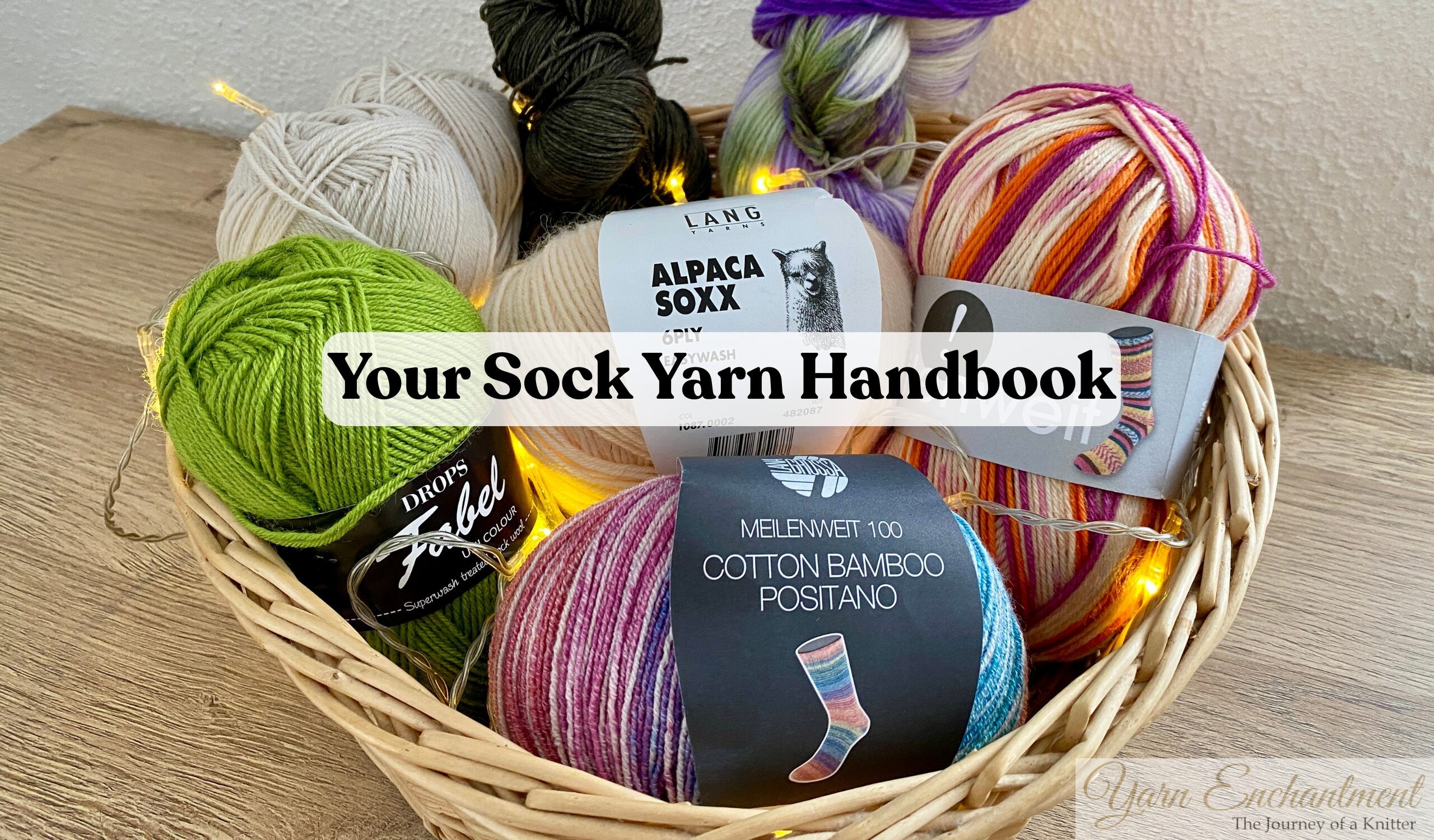
August 31, 2025Your Sock Yarn Handbook: Everything You Need to Know About Sock Yarn

Originally published on August 29, 2025
You may already know that I’m planning to share a full, free sock knitting course, but even if you’re not here for the course, this post is for you too! Before we dive into knitting socks, it’s important to gather the essentials: sock yarn, needles, and an understanding of gauge.
In this blog post, we’ll explore the wonderful world of sock yarn, a really important ingredient in creating cozy, durable socks that are as beautiful as they are practical. To be honest, sock knitting wasn’t always my favorite craft. But over time, I’ve discovered how truly rewarding it is to make socks that stand the test of time, especially when the colder months roll around.
Whether you’re just starting out or you’re a seasoned sock knitter, choosing the right yarn is a crucial first step. So, let’s make sure you’re set up for success with the perfect sock yarn for your next project!
This sock yarn guide covers:
- Sock yarn weights and ply counts
- The best fiber blends for comfort and strength
- Self-striping sock yarn for colorful effects
- How to pick the perfect sock yarn for your handmade socks
By the end, you’ll be fully equipped with sock yarn knowledge to be ready get started!
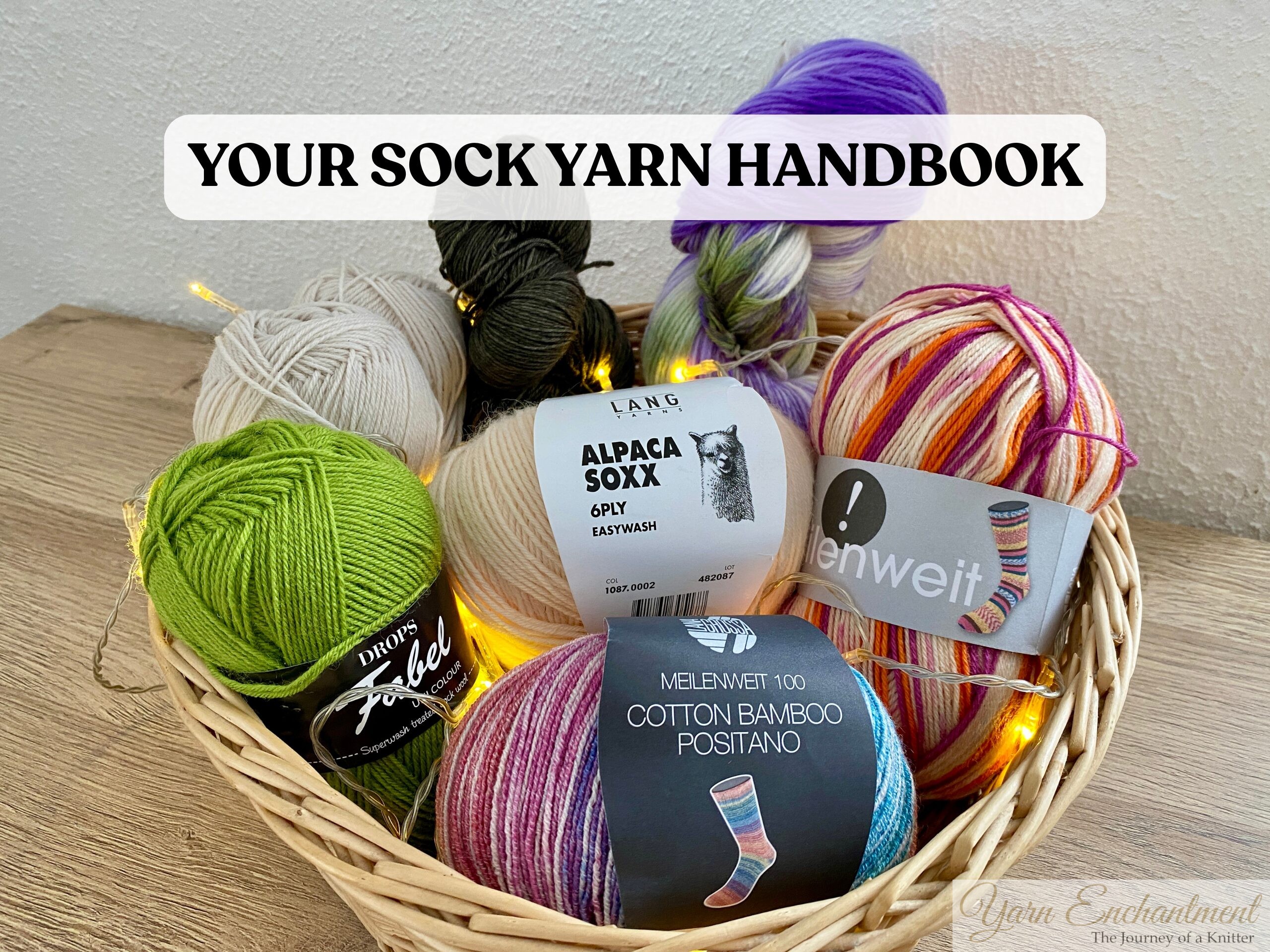  |
Your Sock Yarn Handbook: Everything You Need to Know About Sock Yarn |
Table of Contents
- Sock Yarn Weight Explained
- Sock Yarn Weight Chart
- Sock Yarn Fiber Content: What Works Best?
- All About Self-Striping Sock Yarn
- Sock Knitting Supplies: Needles & Getting the Right Gauge
- How to Care for Your Finished Knitted Socks
- Why Sock Yarn Matters for Knitting Success
- FAQ: Sock Yarn Essentials
- Thank You for Reading
Sock Yarn Weight Explained: Why 4-Ply (Fingering) Is the Standard
Sock yarn is usually fine and thin, often labeled as fingering weight or 4-ply. You may ask yourself: Why so light? Well, heavier, bulky socks are perfect for the sofa and a good movie, but not so much for everyday shoes. 4-ply sock yarn gives you that just-right balance: light enough for comfort, sturdy enough for lots of wear.
Why 4-ply?
- 4-ply (fingering weight) is what you’ll see in most sock patterns and is a favorite with designers thanks to its strength, flexibility, and comfort for daily use.
- A typical 100g ball of a sock yarn contains around 400 meters - enough for most adult socks. For little feet or anklets, a 50g skein will do.
Tip: Always check your sock yarn label for length and weight so you get the right yarn for your project. Typical sock yarn usually has around 400m per skein; the thicker the yarn, the heavier the skein will be.
  | 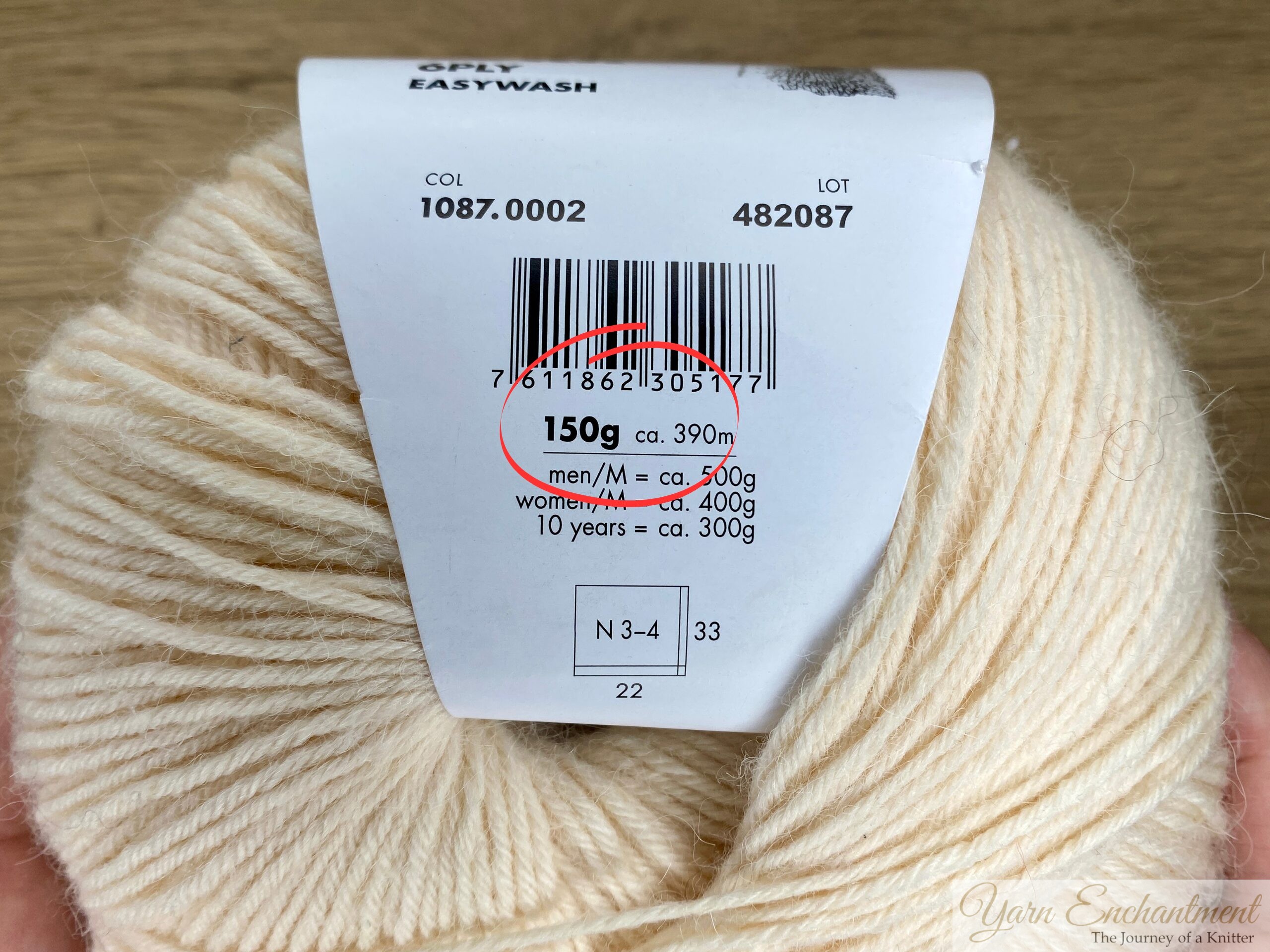  |
This is a 4-ply yarn, and it usually comes in 100g skeins with a yardage of around 420m (459yd). | This is a 6-ply yarn, typically available in 150g skeins with a yardage of approximately 390m (427yd). |
What Does “Ply” Mean?
Let’s clear up what “ply” means while we’re here. Ply is the number of strands twisted together to create the yarn. Higher ply usually means thicker yarn, but that’s not always the whole story - well these days, it can just be a marketing word. Always check the sock yarn’s actual weight or “gauge” (how many stitches and rows fit in an cm or inch) on the label to be certain.
-
Ply refers to how many individual strands (singles) are twisted together - e.g., 2-ply, 4-ply, 6-ply, 8-ply.
-
Plying increases a yarn’s strength and durability; more plies usually mean a rounder, stronger yarn that resists pilling and holds up to wear, ideal for socks and high-use items.
-
Historically, “ply” suggested yarn weight (thickness), but today this isn’t always the case. For example, a 4-ply yarn can actually be finer than a thick, single-ply yarn, especially with modern hand-dyed and specialty yarns.
-
The number of plies affects more than just thickness. It also impacts texture, stitch definition, drape, and the final look of your knitted fabric.
-
In summary: More plies = structure and durability. Fewer plies = loft and drape. Always check actual weight/gauge, not just ply, to match your pattern’s needs.
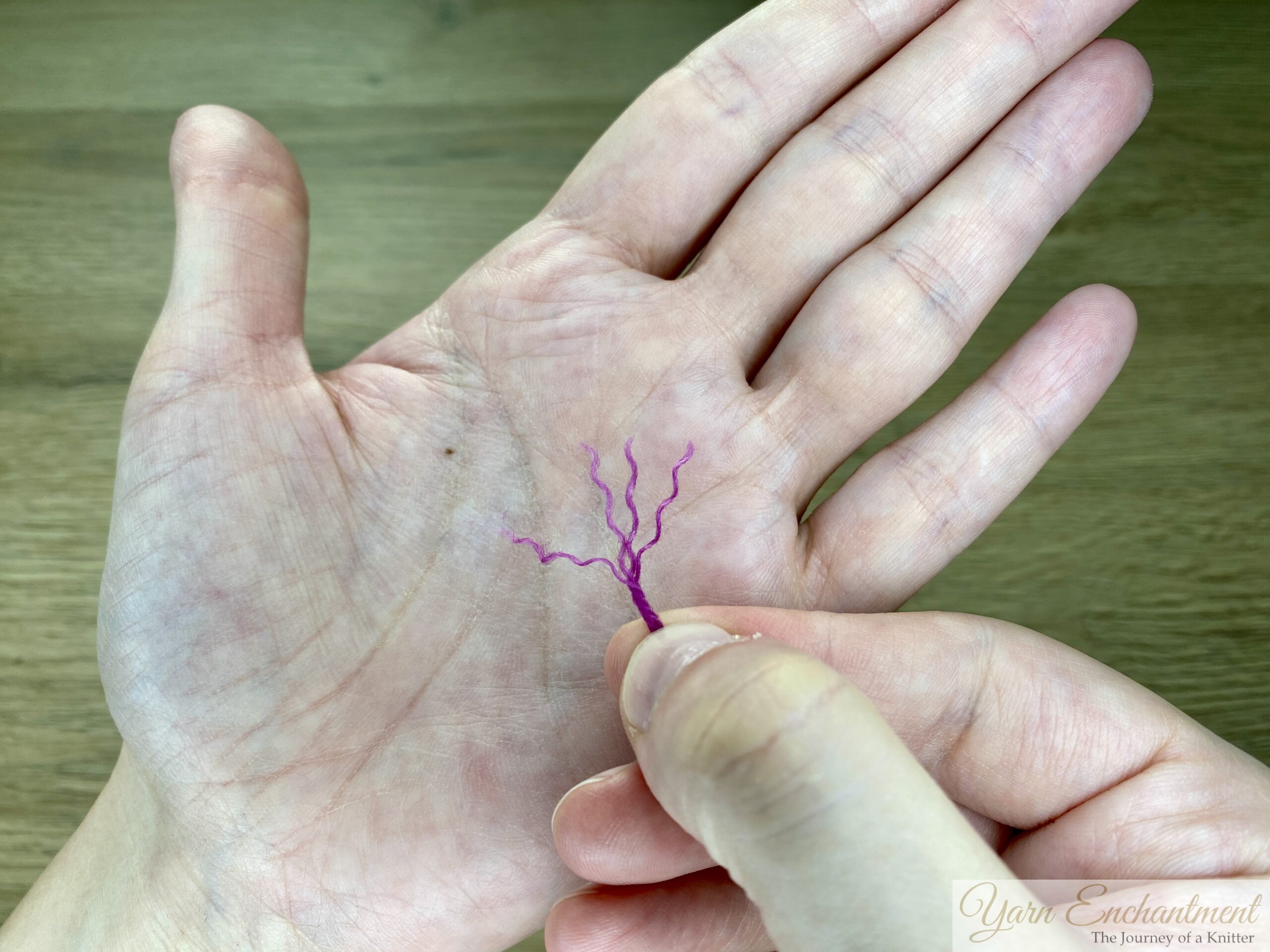  | 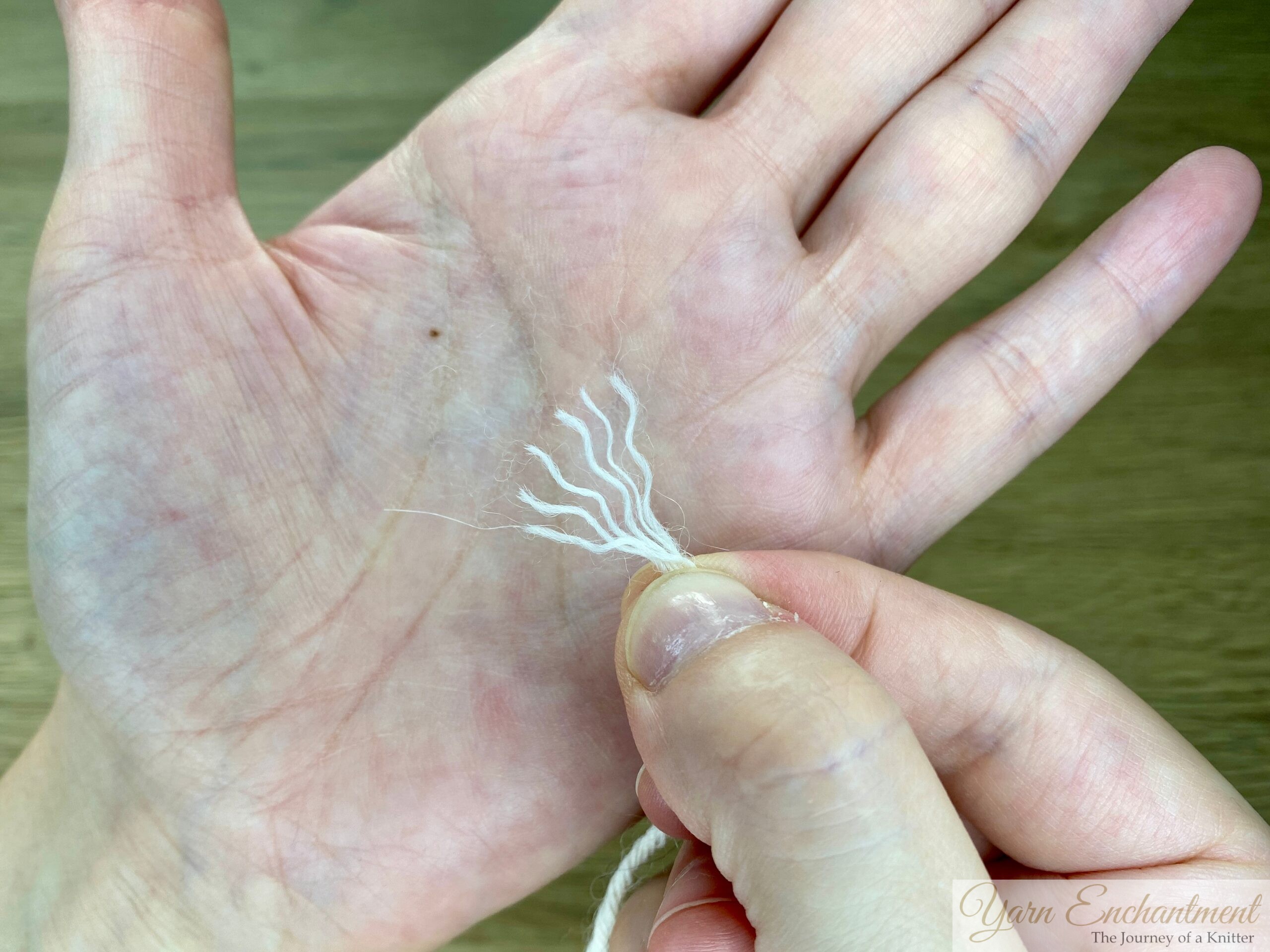  |
In this picture, you can see untwisted 4-ply sock yarn - this yarn is made by twisting together four single strands to create one strong, durable thread. | This picture shows untwisted 6-ply sock yarn, made from six individual strands spun together for extra strength and thickness. |
Sock Yarn Weight Chart
Here’s a handy sock yarn weight chart for easy reference:
|
Yarn Type |
Men’s Socks |
Women’s Socks |
Children’s Socks |
|
Sock Yarn - Fingering weight (4-ply) |
400-600 m |
400 m |
200-400 m |
|
Sock Yarn - Sport - Light DK weight (6-ply) |
350-500 m |
350 m |
300-350 m |
|
Worsted Yarn (8-ply) |
300-350 m |
250-300 m |
250 m |
|
Aran (10 ply) |
250-400 m |
200-250 m |
200 m |
If you are not a fan of wool, there are still other options like bamboo, cotton, and alpaca sock yarn blends. Just keep in mind that 100% natural fibers may wear out a bit sooner. If you want the best sock yarn, a quality wool-nylon blend is the way to go for both ease and durability.
Sock Yarn Fiber Content: What Works Best?
- Wool: Most popular for socks - breathable, keeps feet warm in winter and cool in summer, dries quickly.
- Superwash merino: An extra-soft wool that’s machine washable, making it great for gifts.
- Wool blends: Nylon or acrylic (about 20–25%) are added for extra strength and stretch.
- Cotton: Good for summer, but unless blended with a bit of nylon or elastic, socks can lose their shape.
- Bamboo: Soft and cool, but not heavy-duty, usually blended for socks.
- Synthetic yarns: Affordable and durable, but not as breathable as wool.
  | 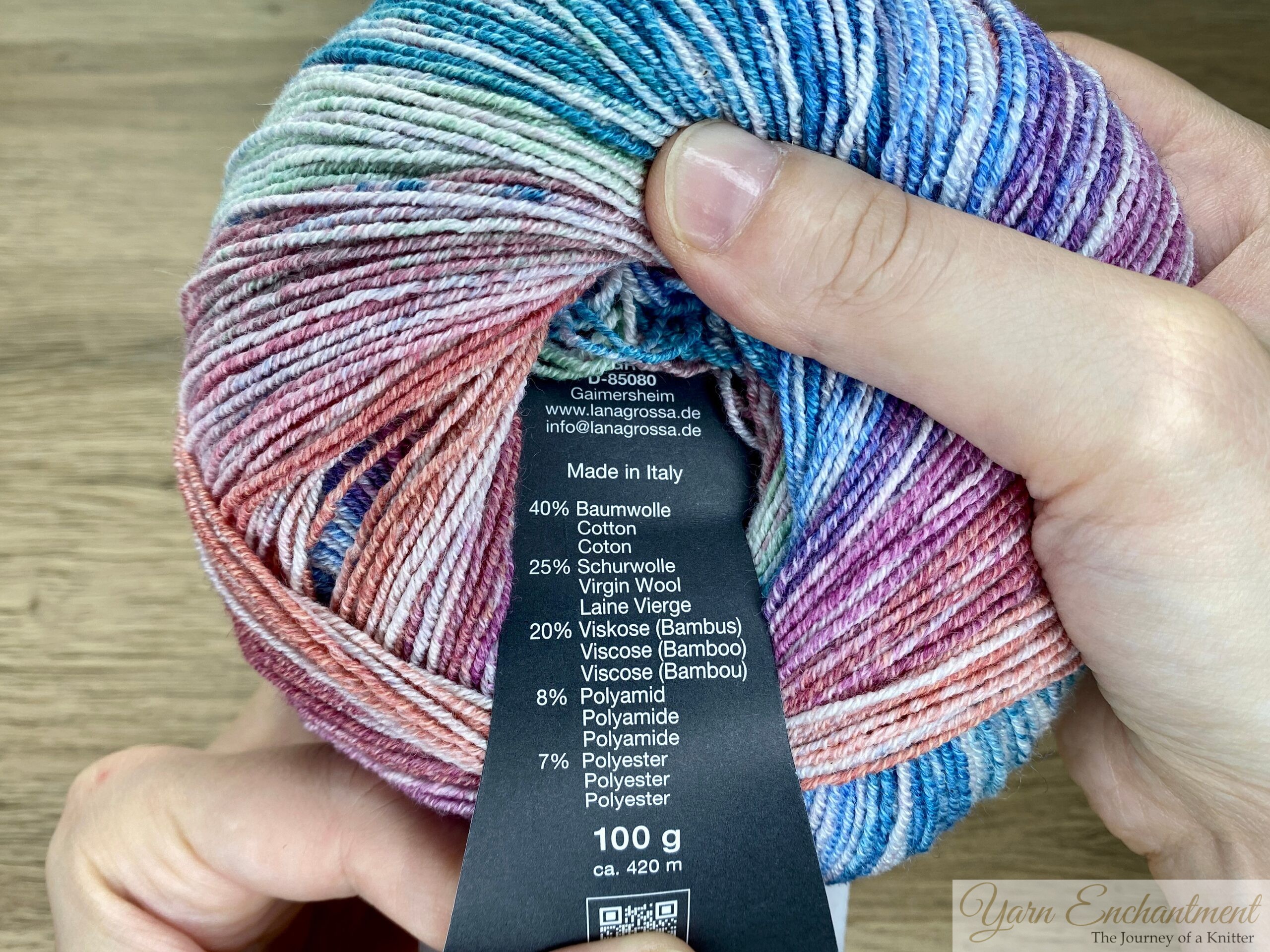  |
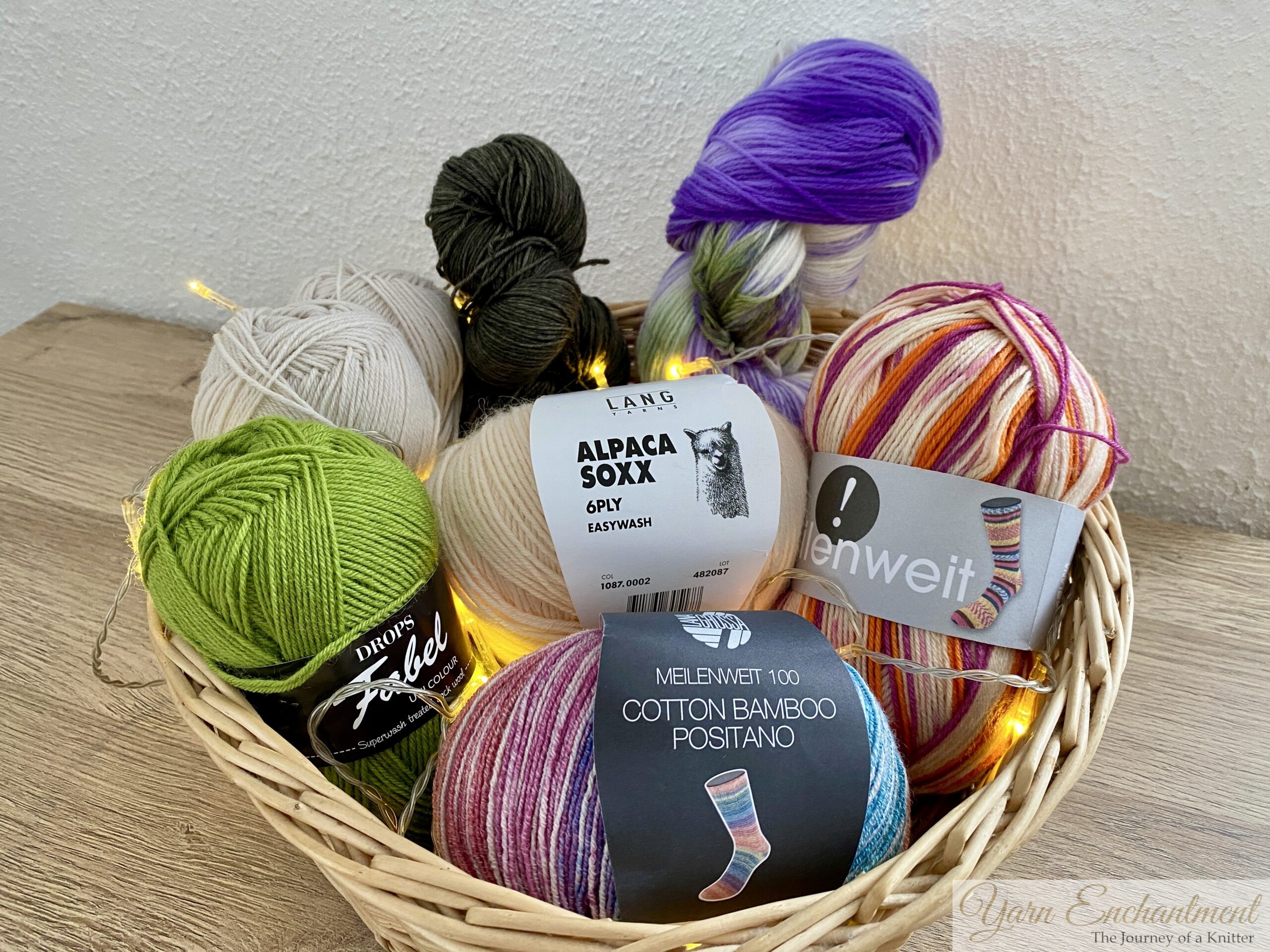
Alpaca sock yarn blend: 70% soft alpaca for warmth, combined with 30% nylon for added durability. | Cotton-bamboo sock yarn blend: This ball mixes cotton, wool, bamboo, polyamide, and polyester for softness, breathability, and strength. |
Sock Yarn Comparison Table: Fiber, Weight, and Key Features
| Yarn Name | Fiber Content | Ply/ Weight |
Yardage/100g | Care | Comment |
|---|---|---|---|---|---|
| Lang Yarns Alpaca Soxx 6-ply Easywash | 70% Superfine Alpaca, 30% Nylon | 6-ply / Sport | 390m/150g | Machine wash | Ultra-soft, warm, easy-care; ideal for winter socks. |
| Lana Grossa Meilenweit 100 Cotton Bamboo Positano | 50% Cotton, 25% Bamboo, 25% Polyamide | 4-ply / Fingering | 420m/100g | Machine wash | Vegan/blend, cool, moisture-wicking, great for summer, soft hand. |
| Lana Grossa Meilenweit | 75% Wool, 25% Polyamide | 4-ply / Fingering | 420m/100g | Machine wash | Classic, durable, wide color range. |
| Regia 4-ply | 75% Superwash Wool, 25% Nylon | 4-ply / Fingering | 420m/100g |
Machine wash | Industry standard, very durable, many patterns. |
| Drops Fabel | 75% Wool, 25% Polyamide | 4-ply / Fingering | 410m/100g (2 Skeins) |
Machine wash | Affordable, broad color range, rustic, hard-wearing. |
| Hand-dyed Yarn | Usually 75% Merino, 25% Nylon | 4-ply / Fingering | ≈400m/100g | Check label | Unique colors, very soft, choose nylon blend for socks. |
| Schoppel Zauberball | 75% Wool, 25% Nylon |
2-ply / light Fingering |
420m/100g | Machine wash | Bold color changes, marled, not as soft as merino. |
| Lana Grossa Landlust Sockenwolle | 80% Merino, 20% Polyamide | 4-ply / Fingering | 420m/100g | Machine wash | Soft, vibrant colors, good for sensitive skin, sturdy. |
| Opal Sock Yarn | 75% Superwash Wool, 25% Polyamide | 4- & 6-ply options | 425m/100g (4-ply); 375m/150g (6-ply) | Machine wash | Long-wearing, huge color range, often self-striping. |
| Hobbii Friends Sock Wool | 75% Superwash Wool, 25% Nylon | 4-ply / Fingering |
420m/100g |
Machine wash | Soft, affordable, bright colors, reliable quality. |
All About Self-Striping Sock Yarn
Want socks that look super-fancy with minimal effort? Self-striping sock yarn or Fjord yarn is your best friend. It creates stripes or and fair isle effect as you knit - even simple patterns like stockinette or basic ribbing will look colorful and impressive.
Not Just Stripes - Automatic Patterns
Yarns like Fjord, Jacquard, or “self-patterning” sock yarn aren’t limited to stripes; they’re dyed to form intricate fair isle, faux isle, or mosaic patterns as you knit, no color changes, charts, or complex techniques required.
How It Works
These yarns are precisely dyed in repeating color sequences that “fall into place” as you knit in the round. This means even the simplest stitches will look like expert-level colorwork.
Project Match
You’ll get the clearest pattern effects when your project uses a similar number of stitches to the example shown on the ball band - perfect for socks, mittens, hats.
“What You See is What You Get”
The label often includes a photo of a sample sock or swatch, so you can preview the pattern your finished project will have.
Tips for Working With These Yarns
- Start both socks at the same point in the color sequence if you want matching pairs. You can wind one 100g skein into two 50g balls and try to line up the colors so your socks look identical - or just embrace the charm of “fraternal” (a pair that matches in color but not in pattern - like siblings, not identical twins) socks, where each one is a little different.
- These yarns are ideal if you want vibrant results with minimal finishing and very few yarn ends to weave in.
  | 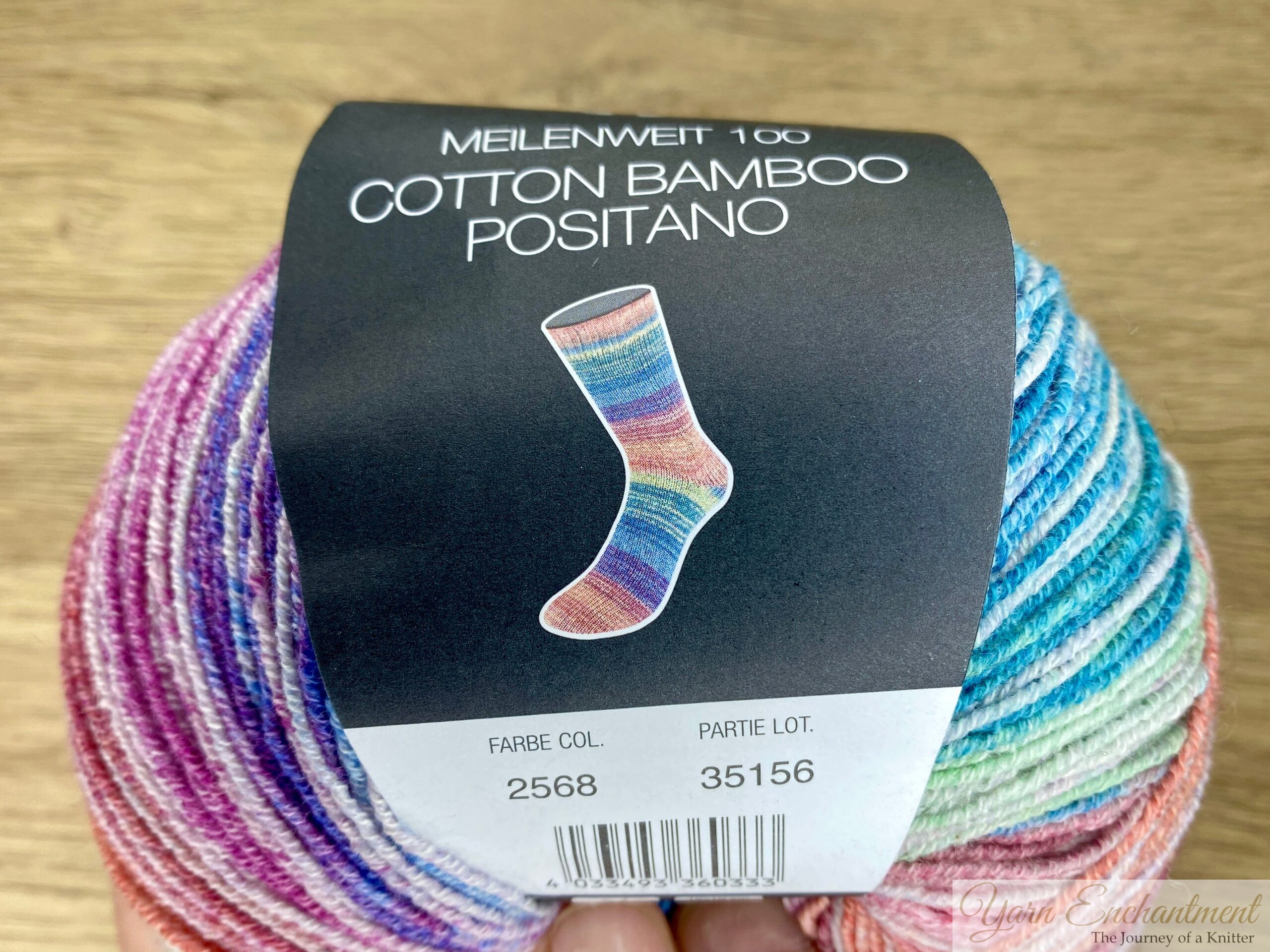  |
Fjord yarn is a self-patterning sock yarn dyed to create detailed fair isle effects as you knit - no color changes or charts needed! | This cotton-bamboo blend sock yarn is self-striping, designed to create colorful stripes on your socks with no extra effort, just knit and let the colors change on their own! |
Sock Knitting Supplies: Needles & Getting the Right Gauge
The right fit starts with the right tools.
Before you begin, knit a small test swatch (about 4 inches/10 cm square) with your chosen yarn and needles. In the main area of your swatch - not at the edges - count how many stitches and rows you get per inch. Most yarn labels show a suggested gauge and needle size; use these as a starting point and adjust your needles as needed. (You’ll get more on how to measure and swatch for perfectly fitted socks in a future post!)
Most sock patterns call for fine needles, usually 2.25mm to 2.5mm.
Tip: If your socks come out too tight, try a bigger needle; if they’re too loose, go down a size. Honestly, I had to knit a few pairs that didn’t fit quite right before I found my perfect needle size for 4-ply (fingering weight) sock yarn.
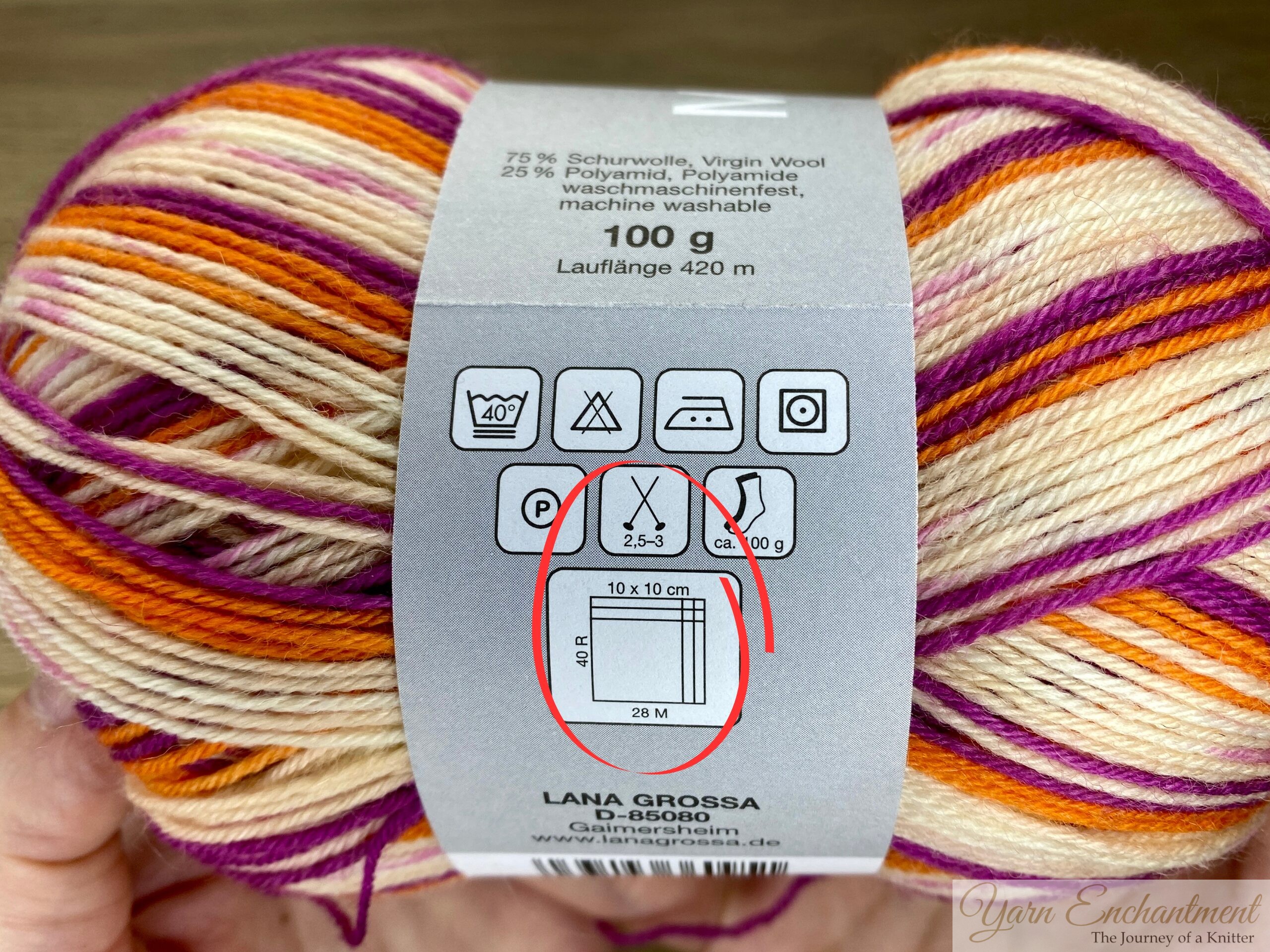  |
Here’s a typical gauge chart found on a sock yarn label, showing recommended needle sizes and the number of stitches and rows for a 10x10 cm swatch. Use this as your starting point for your gauge |
How to Care for Your Finished Knitted Socks
Handmade socks deserve a little extra attention to stay soft, comfortable, and long-lasting. Here’s how to keep your knitted socks in great shape:
Washing
-
Check the yarn label first. Many sock yarns are “superwash,” meaning they can go in the washing machine on a gentle, cold cycle. For non-superwash wool, hand washing is safer to avoid shrinking or felting.
-
Turn socks inside out before washing. This reduces pilling and keeps colors vibrant.
-
Use a gentle wool wash or mild detergent. Never use bleach or fabric softener - they damage fibers.
-
Avoid agitation and heat. For handwashing, let socks soak in lukewarm water, then gently squeeze (but don’t wring) out the water.
Drying
-
Reshape and lay flat to dry. Don’t tumble dry; heat can shrink and damage the yarn. Use a towel to gently press out extra water, then dry on a rack or sock blockers to help your socks hold their shape.
-
Keep away from direct sunlight while drying to avoid fading.
Extra Tips
-
Rotate your socks to prolong wear - hand-knit socks benefit from a gentle break between wears so fibers can recover.
-
Spot clean stains right away using a mild no-rinse wool wash.
-
Darn promptly. Repair thin spots as soon as you notice them to prevent holes and extend sock life.
With the right care, your hand-knit socks will look good, feel great, and keep you warm for many seasons to come!
Here are the meanings of each care symbol on your label:
 |
|
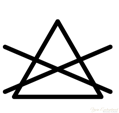 |
Do not bleach: Never use chlorine bleach on this yarn. |
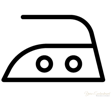 |
Iron at low temperature: If ironing is needed, use a gentle/low setting. |
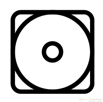 |
Tumble dry: This yarn can be safely dried at low heat in a tumble dryer. |
 |
Professional dry clean: Yarn is suitable for dry cleaning (P symbol). |
  |
Care instructions: Machine wash at 40°C, do not bleach, iron on low heat, tumble dry, and suitable for professional dry cleaning. Always follow the symbols on the yarn label to keep your socks in great shape. |
Why Sock Yarn Matters for Knitting Success
Choosing the right sock yarn is the foundation of amazing, functional and warm socks. With the right fiber content, weight, and a little preparation, you’ll make socks that are not only beautiful but also comfortable and long-lasting too.
Are you eager to take your skills to the next level? Stay tuned for my upcoming free sock knitting course, where I’ll share step-by-step guidance and tips - and it will be free! Everyone deserves to snuggle into their own handmade socks, with hot tea or cocoa, on a cold winter day, watching their favorite movie and knitting a second pair.
FAQ: Sock Yarn Essentials
What is the best yarn for knitting socks?
Most knitters swear by a 75% wool/25% nylon blend for durability and comfort.
Can you use cotton for socks?
Yes, but cotton blends with nylon or elastic are much better than pure cotton, as they provide more stretch, shape, and durability. Pure cotton can lose shape and wear out faster, so try to pick a blend if possible.
How much sock yarn do I need?
Most adult-sized socks will use about 400–600 meters of 4-ply sock yarn for a pair. For kids’ socks, you’ll usually need 200–400 meters, depending on how big those little feet are!
What makes sock yarn different from regular yarn?
Sock yarn is made to be thin, strong, and ready for lots of wear. Most types have some nylon mixed in, so your socks can handle plenty of walking and washing. It’s so sturdy that some knitters even use sock yarn for sweaters and other big projects!
Can I use leftover sock yarn for other projects?
Absolutely! Leftover sock yarn is perfect for baby socks, stripes, scrappy projects, shawls, or even mending older socks. You can get creative and use every last bit!
What’s the difference between self-striping and self-patterning sock yarn?
Self-striping yarn gives you fun, colorful stripes as you knit, no effort required. Self-patterning yarns, like Fjord or Jacquard, are dyed so they magically create fancy patterns that look like fair isle, all without switching colors or using a chart.
Is hand-dyed sock yarn a good choice?
Hand-dyed sock yarns look gorgeous and every skein is a little different, but try to pick ones that have some nylon in the mix so your socks last longer. Just remember, since they’re hand-dyed, the colors can vary from one skein to the next.
Do I need to worry about pooling or color repeats?
With some colorful or self-striping yarns, the colors might bunch together in surprising ways, this is called pooling. If you want to avoid that, knit a small test swatch first to see how the colors land. Or just go with it and enjoy a totally unique look!There are also patterns specifically designed for pooling yarn, such as shawls, for example.
How do I care for hand-knit socks made from different yarns?
Be sure to check the care instructions on your yarn label. If you’re using superwash wool, you can usually toss your socks in the washing machine. For untreated wool or special blends, it’s best to wash them gently by hand to keep them looking their best.
Can sock yarn be used for crochet socks?
Yes, but crocheted socks are always thicker and denser. fingering weight sock yarn works best for a comfortable fit in shoes.
Why do some sock yarns pill or wear out quickly?
Yarns that are blended with nylon or polyamide, and have several strands twisted together, are much stronger and less likely to get fuzzy. A super-soft yarn feels nice on the skin, but they tend to wear out faster - so for long-lasting socks, it’s best to choose a sturdy blend that isn’t too soft.
  |
Thank You for Reading
Thank you so much for spending your time here with me and making it all the way through this mega sock yarn guide! Your support truly means the world to me. If you have favorite brands or stories to share, drop them in the comments - I love hearing from you. Got a question? Ask away and let’s help each other out. Don’t forget to subscribe for news on my free sock knitting course and fresh patterns. Wishing you joyful knitting, happy feet, and plenty of cozy socks to come!
Until then, happy knitting!
  |
A little update! 🧦 A few of you asked if I could put the whole course into one printable PDF - so I did! If you'd like everything in one place, you can find The Enchanted Sock Workbook right here: [The Ultimate Printable Sock Workbook] And don't worry - the blog and videos will always stay free. This is just for those who love having a printed copy by their knitting chair.
Feeling ready for more sock fun?
Jump into the next parts of my Free Sock Knitting Course! Explore topics like:
- Sock Yarn Guide: Types, Weights & How Much You Need
-
Sock Knitting Needles & Accessories: Complete Guide for Beginners
-
How to Measure Your Foot & Calculate Sock Cast-On Size (Knitting Tutorial)
- How to Knit Socks for Beginners: Cast-On to Leg with DPNs
- How to Knit a Classic Heel Flap & Turn
-
Hole-Free Gusset Pick Up and Decreases for Perfectly Fitting Socks
- Complete Foot and Wedge Toe Sock Guide: Measuring, Sizing & Decreasing
A Little Way to Say Thanks
Yarn Enchantment is my cozy hobby corner on the internet. If something here made your knitting day easier or you simply enjoy reading my posts and would like to say thank you, you can leave a small Ko-fi tip - but only if you truly want to.
My patterns and tutorials stay free for everyone, always. Every little tip just goes toward new yarn and a cup of tea for my cozy knitting evenings.
☕ Support me on Ko-fi
You Might Also Like

 |
|
Join the Cozy Corner Newsletter
Hello, creative soul. Welcome to the Yarn Enchantment Newsletter, a little space where we celebrate all things cozy, crafty, and full of heart. Think of this as your friendly crafting companion, a soft dose of inspiration delivered straight to your inbox, just for you. Each newsletter brings you: ✨ Notifications about new patterns and tutorials – easy knitting patterns and beginner crochet projects you won’t find anywhere else 🧶 Practical yarn tips for new crafters, plus advice on the best yarn for fall, blankets, and handmade gifts 💌 Small stories and adventures from my own workbench, because crafting is as much about the journey as the finished piece Whether you’re knitting by the fire, looking for your next creative spark, or simply wanting a quiet moment with your hooks and needles, this newsletter is here to cheer you on. Crafting isn’t just about the final project. It’s about the joy, the peace, and the stories we weave along the way. So grab a cup of tea or coffee, settle in, and join me. Together we’ll make a little magic, one stitch and one story at a time. I’m so glad you’re here. Let’s create something beautiful together. Sign up below to receive your first email, and feel free to leave a comment on the blog if there’s a topic you’d love to see covered. Your ideas might just become our next newsletter feature. |