The Complete Guide to the Knit Stitch: Start Your Knitting Journey Today
July 22, 2025
The Complete Guide to the Purl Stitch: Take Your Knitting to the Next Level
August 6, 2025What Do "Beginner," "Intermediate," and "Advanced" Mean for Knitters?

Originally published on August 3, 2025
Knitting is one of those crafts that grows with you. Whether you’re picking up needles for the first time or mastering intricate lacework, understanding your skill level can help you choose projects that match your abilities, and keep things fun instead of frustrating. Patterns are typically grouped into three categories: beginner, intermediate, and advanced. But don’t worry, these labels aren’t rigid rules. They’re more like gentle guideposts to help you navigate your creative journey.
From Beginner to Master: Explore Your Path in Knitting

Table of Contents
- Understanding Knitting Skill Levels
- The Beginner Knitter: Building a Strong Foundation
- Mistakes Are Your Biggest Teacher
- Level up: Advanced Beginner
- The Intermediate Knitter: Stepping Up Your Game
- The Advanced Knitter: Pushing Boundaries
- The Master Knitter: The Pinnacle of Knitting
- Quick Reference Table
- Where Do You Fit In?
Understanding Knitting Skill Levels
Skill levels in patterns are just suggestions, not rules you have to follow exactly. Many knitters find themselves “between” levels, maybe you can cable in your sleep, but colorwork makes you sweat. That’s totally normal! These categories are simply there to help you pick projects that will grow your skills without driving you crazy.
When I was just starting out and eager to push my skills, I decided to try an “intermediate” pattern, convinced I was ready to take the next step in my knitting journey. Boy, was I wrong. The frustration was so overwhelming that I cried and stopped knitting altogether, for an entire year. At the time, I blamed myself, convinced I just wasn’t good enough. Looking back, I realize it wasn’t entirely my fault. The pattern was poorly written, with confusing instructions that left me second-guessing every step.
Patterns can be unclear, or designers might assume you know techniques they haven’t explained. That’s why resources like Ravelry have been a game-changer for me. Now, before starting a new project, I always check other knitters’ project pages and feedback to see if there are any red flags, or helpful tips to make the process smoother. After all, patterns can be pricey, and we should feel confident that we’ll be able to knit them. What are your thoughts on this?


The Beginner Knitter: Building a Strong Foundation
If you’re new to knitting, or still learning the basics, beginner patterns are made for you. These projects are straightforward, repetitive, and designed to build your confidence.
What Beginner Patterns Usually Include
- Techniques like casting on, the knit and purl stitches, binding off, and weaving in ends.
- Simple projects: scarves, dishcloths, basic hats (usually flat or with minimal shaping).
- Goals like achieving even tension, reading written instructions, and practicing basic seaming.
Skills Every Beginner Should Practice
- Making a slip knot and casting on (practice makes perfect!).
- The knit and purl stitches.
- Working garter, stockinette, and ribbed fabric.
- Simple increases (like kfb) and decreases (like k2tog).
- Binding off and sewing in ends neatly.
- Using a crochet hook to rescue a dropped stitch.
Tips from Someone Who’s Been There
- Use light-colored, inexpensive yarn so you can easily see your stitches.
- Try wood or bamboo needles (size 4.0–5.0mm/US 6–8) for better control over slippery yarn.
- Start small: scarves and washcloths are great practice and low-commitment.
- Most importantly: expect mistakes, celebrate your progress, and have fun!
Starting your knitting journey with a garter stitch is always a good idea.


Mistakes Are Your Biggest Teacher
I firmly believe that making mistakes is one of the most powerful ways to grow your skills. In fact, we only truly learn when things don’t go as planned. So many articles are titled "10 Mistakes You Should Avoid" - but why avoid them? Instead, embrace them! Make those mistakes, then research how to fix them. That’s where real progress happens.
For example, have you ever dropped a stitch and panicked? Or accidentally added an extra row of increases, working an accidental short row? These moments might feel frustrating at first, but they’re actually golden opportunities to deepen your understanding of knitting. When you figure out how to fix a dropped stitch or recognize a decrease or a yarn over, you’re not just solving a problem, you’re building confidence and resilience.
Here’s my advice: Don’t shy away from challenging patterns because you’re afraid of messing up. Dive in, make mistakes, and trust that each one will teach you something valuable. After all, every knitter has been there, ripping out rows, frogging projects, and starting over. It’s all part of the journey. (Just make sure that the pattern is actually knitable)
Fixing dropped stitches is one of the essential skills you need to know.

Level Up: Advanced Beginner
Definition: An advanced beginner is someone who has mastered the basics and is ready to tackle slightly more complex techniques. They can follow simple patterns with ease and are beginning to experiment with texture, color, and shaping.
Skills You Should Know as an Advanced Beginner:
- Reading and following simple written patterns.
- Techniques for neater edges (e.g., slipping the first stitch purlwise).
- Directional increases and decreases (e.g., M1R, M1L, SSK, k2tog).
- Simple cables using a cable needle.
- Basic colorwork techniques (e.g., stripes, or simple Fair Isle).
- Knitting small projects in the round (using magic loop or double-pointed needles).
Typical Projects for Advanced Beginners:
- Hats with simple ribbing or cables.
- Fingerless gloves or mittens.
- Scarves with textured stitch patterns.
- Dishcloths featuring basic lace or cables.
Tips for Growing as an Advanced Beginner
- Practice swatching to test new techniques before starting a project.
- Experiment with combining stitches (e.g., adding cables to a stockinette fabric).
- Start small - choose accessories that let you try new skills without committing to a large garment.
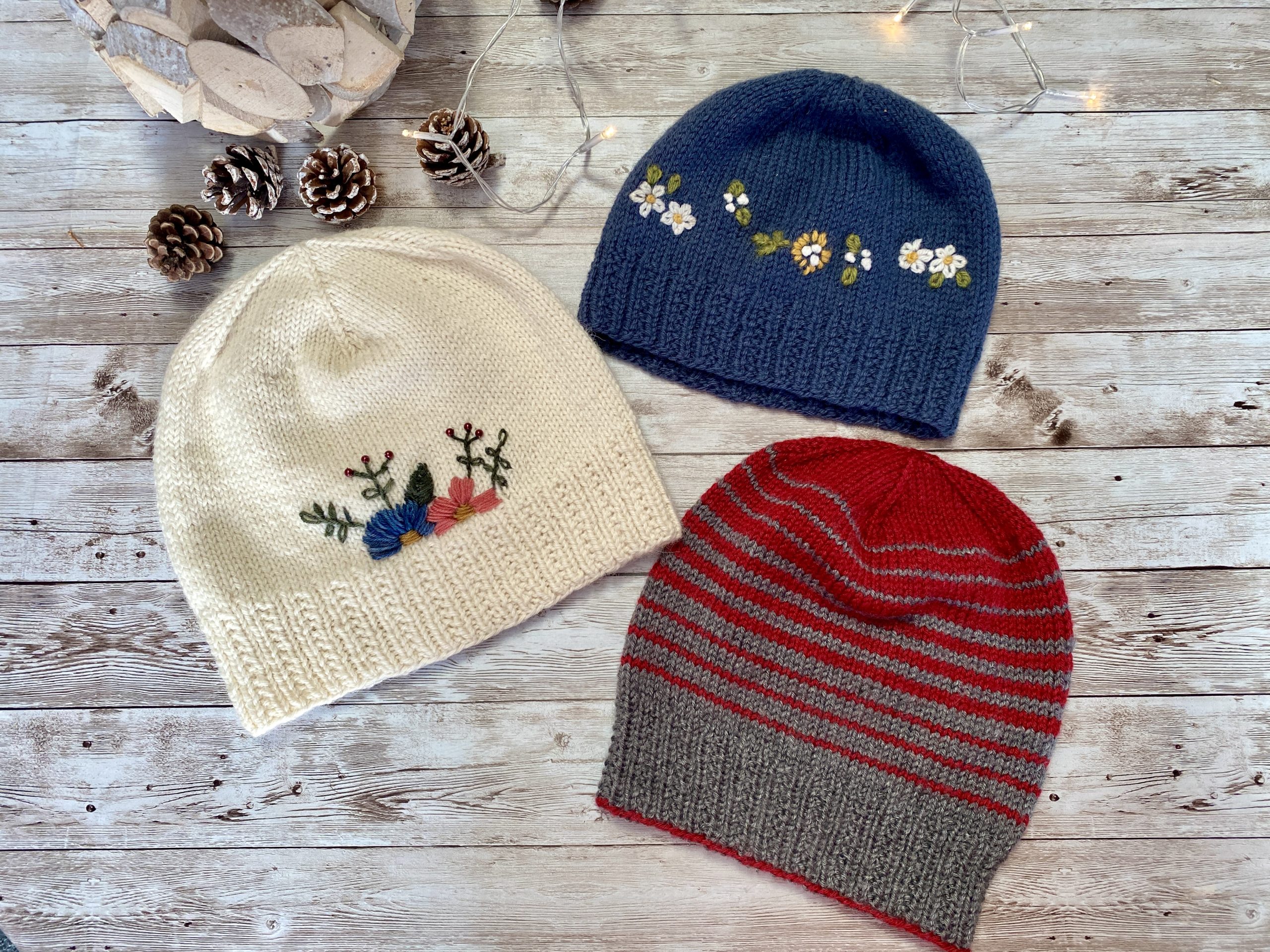
Easy hats with decreases for the crown or working some stripes - this is definitely something you can do!

The Intermediate Knitter: Stepping Up Your Game
Once the basics feel second nature, you’re ready to branch out. Intermediate patterns introduce more complex techniques and ask you to use your growing skills in new ways.
What Intermediate Patterns Often Feature
- Techniques like basic lace, cables, knitting in the round, magic loop, intricate increases/decreases, and simpler colorwork (hello, Fair Isle and Intarsia!).
- More ambitious projects: socks, mittens, shaped hats, and your first sweaters.
- Comfort with double-pointed or circular needles.
- Following written instructions and charts.
- Troubleshooting simple mistakes on your own.
Classic Skills and Projects at This Stage
- Knitting cables (they’re rarely as intimidating as they look).
- Reading charts for lace or colorwork.
- Short-row shaping (the secret sauce behind perfect fitting sweaters).
- Modular knitting.
- Working with two colors.
This is where you start “getting” how knitting patterns fit together - and why certain steps exist. You’ll begin challenging yourself, and suddenly, the idea of making a whole sweater doesn’t seem so wild!
My first lace shawl was the Agram Shawl. The pattern was very clear, making it perfect for beginners trying lace knitting.
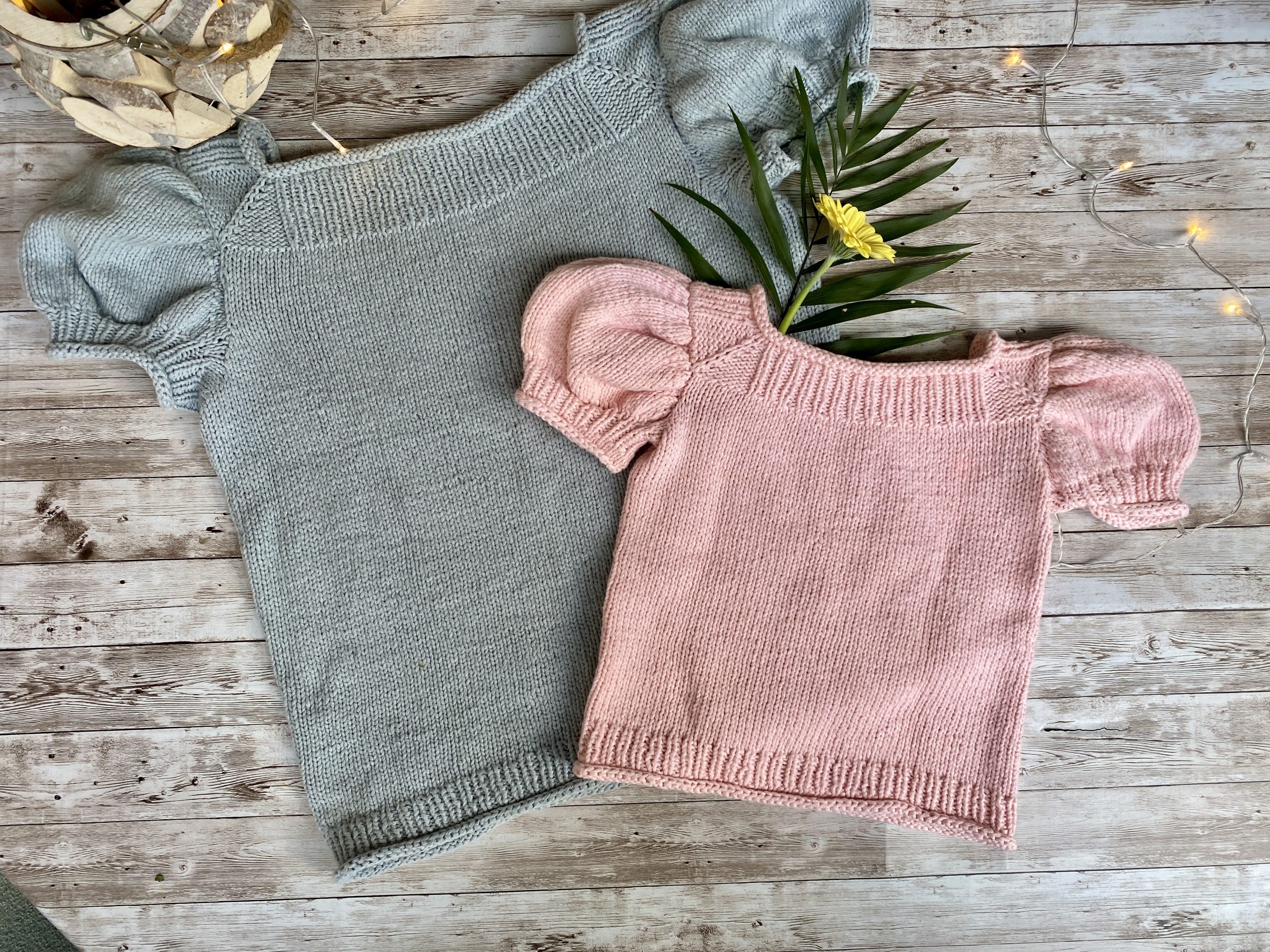
The Anne Sweater was the first knitted sweater I made for myself. The puff sleeves are created by knitting short rows. The designer’s pattern is very clear and includes a lot of helpful video tutorials. So, if you’re searching for your first knit sweater and this is your style, I would highly recommend the Anne Sweater!



The Advanced Knitter: Pushing Boundaries
Now it gets really interesting! Advanced patterns are a choose-your-own-adventure for the brave at heart. These projects combine specialized skills, intricate shaping, and often require savvy pattern modifications. They demand both creativity and laser focus.
Advanced Techniques Might Include
- Complex lace with tiny needles.
- Intricate cables and twisted stitches.
- Brioche knitting and double knitting (for the warmest, squishiest fabrics).
- Steeking (yes, cutting your knitting - don’t panic you can always practise on a small swatch!).
- Knitting with beads, crazy colorwork, and fine laceweight yarn.
Typical Projects
- Cardigans with intricate cablework.
- Sweaters with wild constructions (sideways, bottom-up, steeked).
- Masterful double-knits or patterns of your own design.
At this stage:
- You troubleshoot on the fly.
- You combine multiple challenging techniques without batting an eye.
- You probably need a quiet space (and the ability to mutter “just one more row” ten times an hour).
As one wise knitter said: Turn off the TV, silence your phone, and warn your family you’re deep in the zone.
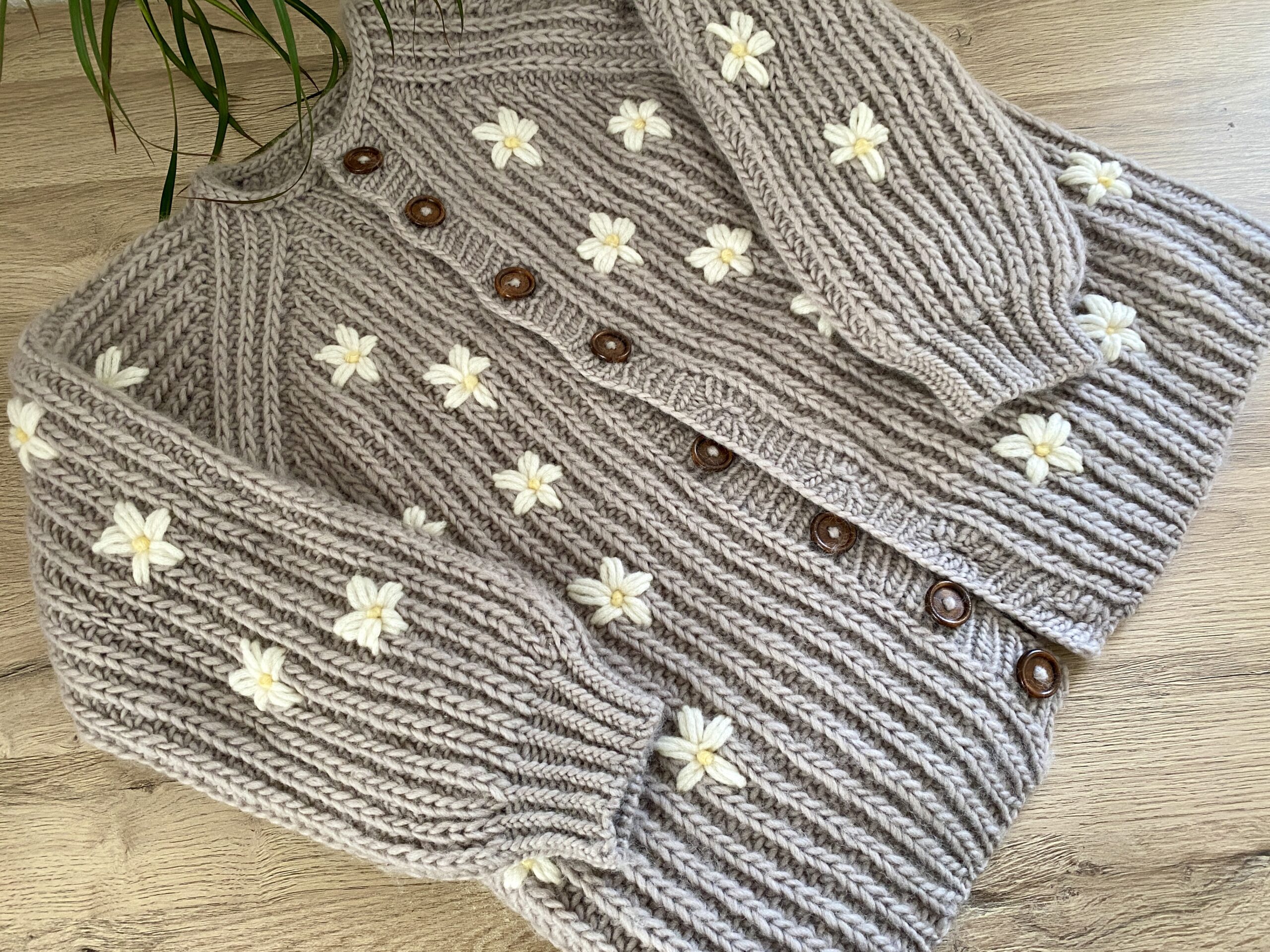
The Fluffy Daisy Cardigan is worked in a half brioche stitch. The embroidery is optional.
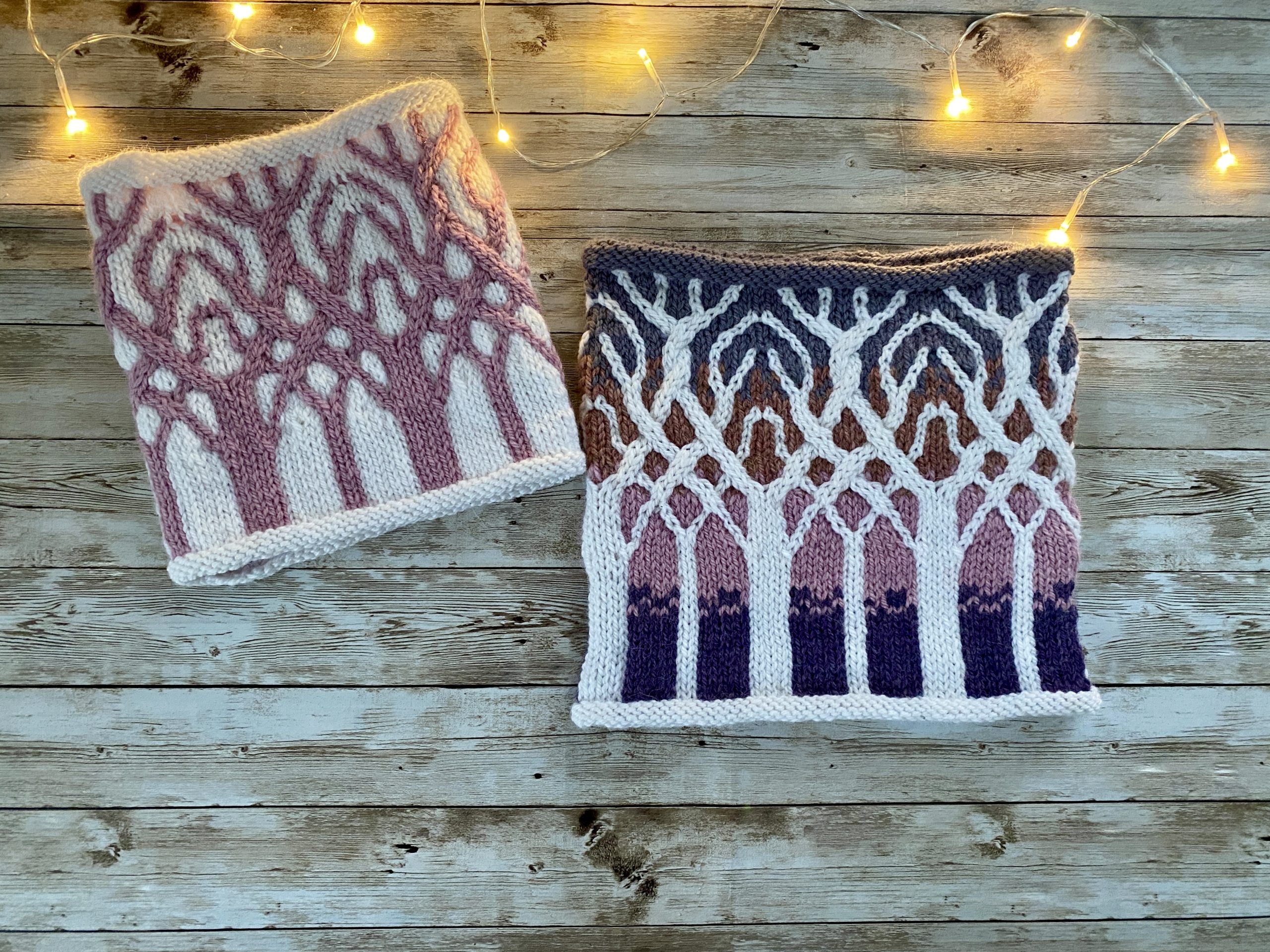
The FOA Cowl is worked in colorwork with cable details that form tree motifs. It’s a fun yet challenging project that combines vibrant colors and intricate textures, making it a rewarding choice for knitters looking to expand their skills.


The Master Knitter: The Pinnacle of Knitting
A master knitter is someone who embodies a deep, intuitive understanding of knitting. Picture this: sitting in front of the TV, knitting sweaters without even looking at the piece - and after just one week, a whole sweater magically jumps from the needles, neatly sewn together and ready to wear. Sounds like magic, right? For master knitters, this level of skill and confidence is often the result of years (or decades) of passion, practice, and creativity.
This reminds me of my granny. She always knitted clothes for my dolls - pants, cardigans, socks, jumpers, hats, mittens - you name it, she made it. And she rarely used a pattern. If she did follow a pattern, it was only for inspiration. Most of the time, she’d just grab her needles and yarn and create something beautiful out of thin air.
To me, that’s what being a master knitter means. It’s not just about technical skill, it’s about an effortless connection to the craft. I think master knitters see knitting as a form of self-expression. They can adapt, innovate, and create with ease, often without needing patterns because they’ve internalized the principles of knitting so completely. They understand how stitches, shapes, and textures work together harmoniously, and they use that knowledge to bring their ideas to life.
Master knitters also have a knack for teaching and mentoring others. Whether it’s helping a beginner fix a dropped stitch or guiding an intermediate knitter through their first lace project, they share their expertise generously and patiently. Their love for knitting inspires those around them to grow and explore the craft.
Becoming a master knitter doesn’t happen overnight, it’s a journey fueled by curiosity, dedication, and joy. And even then, there’s always more to learn! As one wise knitter once said, “There’s no end to knitting; there’s only deeper exploration.”
I am far away from being a master knitter, but I hope someday I will reach that level. So, do you know a master knitter in your life? What qualities do they embody that inspire you?
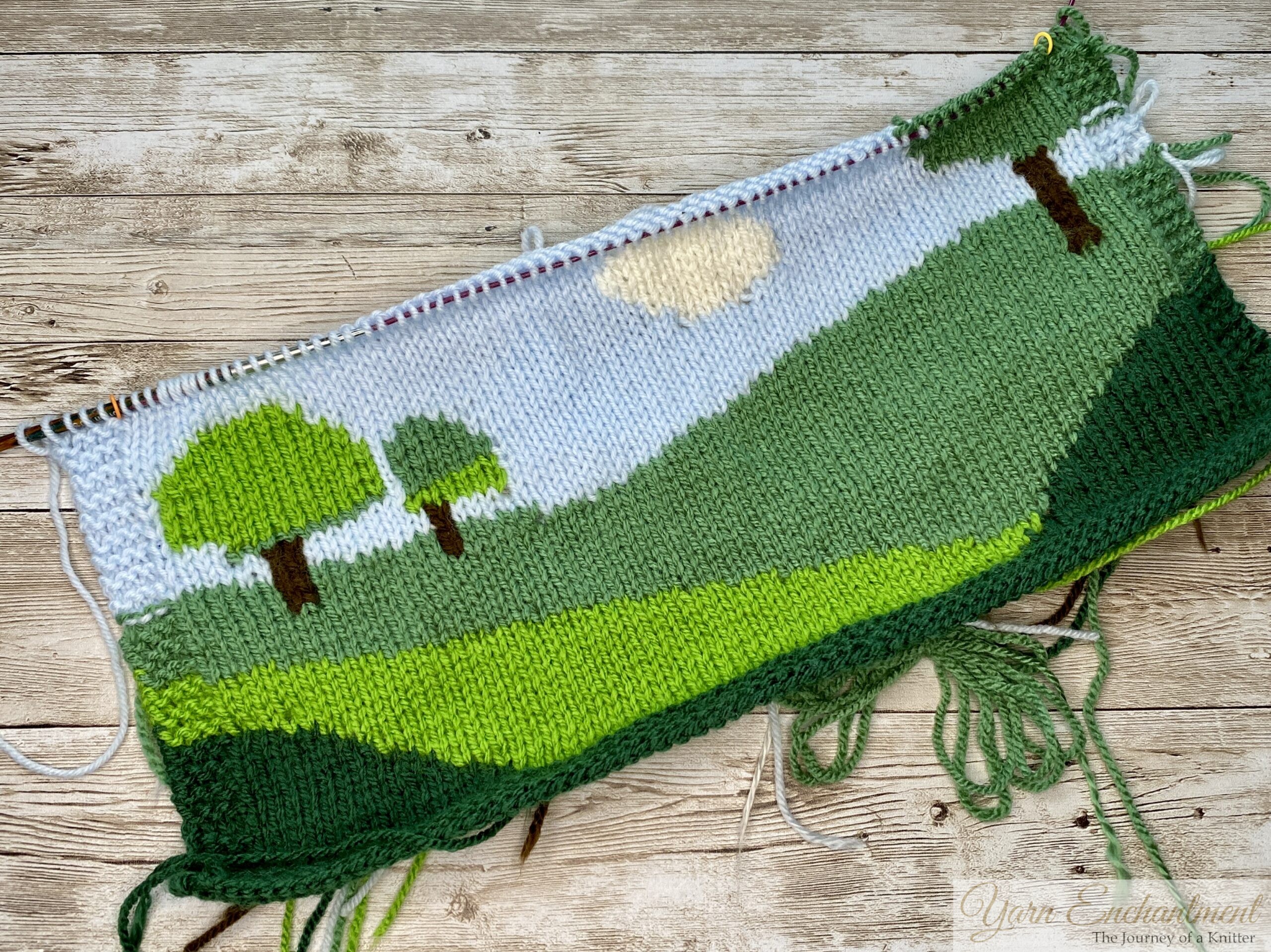
This intarsia pattern was inspired by a childhood drawing from my son. Creating your own knitting patterns is always fun!

Skill Level Overview Table
|
Skill Level |
Key Skills & Techniques |
Typical Projects |
|
Beginner |
Cast on/off, knit, purl, basic increases/decreases |
Scarf, washcloth, simple hat |
|
Advanced Beginner |
Directional inc/dec, simple cables, colorwork |
Hats, fingerless gloves, textured scarves |
|
Intermediate |
Cables, lace, charts, colorwork, in the round |
Socks, mittens, sweaters |
|
Advanced |
Brioche, steeking, beads, advanced lace/colorwork |
Intricate garments, double knitting |
|
Master |
Intuitive design, teaching, pattern adaptation |
Custom or improvised masterpieces |
Where Do You Fit In?
Here’s the beautiful truth about knitting: it’s not about perfection - it’s about growth, joy, and a little sprinkle of adventure. Whether you’re just starting out or have needles that seem to move on their own, there’s always something new to discover.
- If you’re a beginner: Take a deep breath and celebrate the fact that you’ve taken the first step. Focus on learning the basics at your own pace and enjoy the magic of watching simple stitches come together. Confidence grows with every row, you’ve got this!
- If you’re intermediate: You’re in the sweet spot where creativity meets challenge. This is where things start to get really exciting. Try out new techniques, play with colorwork, or dive into your first sweater. Embrace the complexity, it’s all part of the journey.
- If you’re advanced: Well, you know the drill: push boundaries, experiment fearlessly, and let your imagination run wild. Why not design your own pattern or tackle that project you’ve been eyeing for years? The sky’s the limit when you’re this far along.
Here’s the best part: don’t worry too much about fitting neatly into one category. Knitting isn’t about boxes, it’s about exploring what makes your heart happy. The real magic happens when you step just slightly outside your comfort zone (and yes, make a few glorious mistakes along the way, this is part of your journey!)
So grab those needles, pick a project that makes your heart skip a beat, and keep stitching. Trust me, you’ll be amazed at how far you can go - one cozy stitch at a time.
Until then, happy knitting!
A Little Way to Say Thanks
Yarn Enchantment is my cozy hobby corner on the internet. If something here made your knitting day easier or you simply enjoy reading my posts and would like to say thank you, you can leave a small Ko-fi tip - but only if you truly want to.
My patterns and tutorials stay free for everyone, always. Every little tip just goes toward new yarn and a cup of tea for my cozy knitting evenings.
☕ Support me on Ko-fi
You Might Also Like


 |
|
Join the Cozy Corner Newsletter
Hello, creative soul. Welcome to the Yarn Enchantment Newsletter, a little space where we celebrate all things cozy, crafty, and full of heart. Think of this as your friendly crafting companion, a soft dose of inspiration delivered straight to your inbox, just for you. Each newsletter brings you: ✨ Notifications about new patterns and tutorials – easy knitting patterns and beginner crochet projects you won’t find anywhere else 🧶 Practical yarn tips for new crafters, plus advice on the best yarn for fall, blankets, and handmade gifts 💌 Small stories and adventures from my own workbench, because crafting is as much about the journey as the finished piece Whether you’re knitting by the fire, looking for your next creative spark, or simply wanting a quiet moment with your hooks and needles, this newsletter is here to cheer you on. Crafting isn’t just about the final project. It’s about the joy, the peace, and the stories we weave along the way. So grab a cup of tea or coffee, settle in, and join me. Together we’ll make a little magic, one stitch and one story at a time. I’m so glad you’re here. Let’s create something beautiful together. Sign up below to receive your first email, and feel free to leave a comment on the blog if there’s a topic you’d love to see covered. Your ideas might just become our next newsletter feature. |