How to Knit the Perfect Brioche Stitch Edge for Neat and Tidy Edges | Step-by-Step Guide
July 4, 2025
How to Cast On with DPNs without Twisting Stitches | Beginner-Friendly
July 14, 2025How to Fix a Dropped Stitch in Stockinette Stitch (With & Without a Crochet Hook)
)
Originally published on July 7, 2025
When I was a beginner, a dropped stitch was a nightmare for me. Back then, I didn’t know how to fix them, so a dropped stitch meant unraveling my whole project and starting over. But since then, I’ve learned a lot - so much so that I’m now even able to fix brioche stitches or cable patterns. However, in today’s blog post, I want to take it back to the basics and share with you just how easy it can be to fix a dropped stitch in stockinette stitch. By the end of this post, you’ll feel confident tackling this common knitting mishap - and if you’d like a visual guide, you can find a detailed video tutorial at the end.
Knitting is a relaxing and rewarding craft, but dropping a stitch can happen to even the most experienced knitters. If you’ve ever found yourself staring at a dropped stitch in your project, don’t panic! In this blog post, I’ll walk you through two simple methods to fix a dropped stitch: with a crochet hook and without one. Whether you’re a beginner or a seasoned knitter, these step-by-step instructions will help you save your project and keep knitting with confidence.
  |
Table of Contents
- What Is a Dropped Stitch in Knitting?
- Understanding "Ladders" in Knitting
- How to Fix a Dropped Stitch in Stockinette Stitch
What Is a Dropped Stitch in Knitting?
A dropped stitch in knitting happens when a loop of yarn accidentally slips off your needle and is not knitted into the fabric as intended. Instead of forming a neat, connected row, the stitch falls and unravels down your work, leaving a visible gap or hole in the fabric.
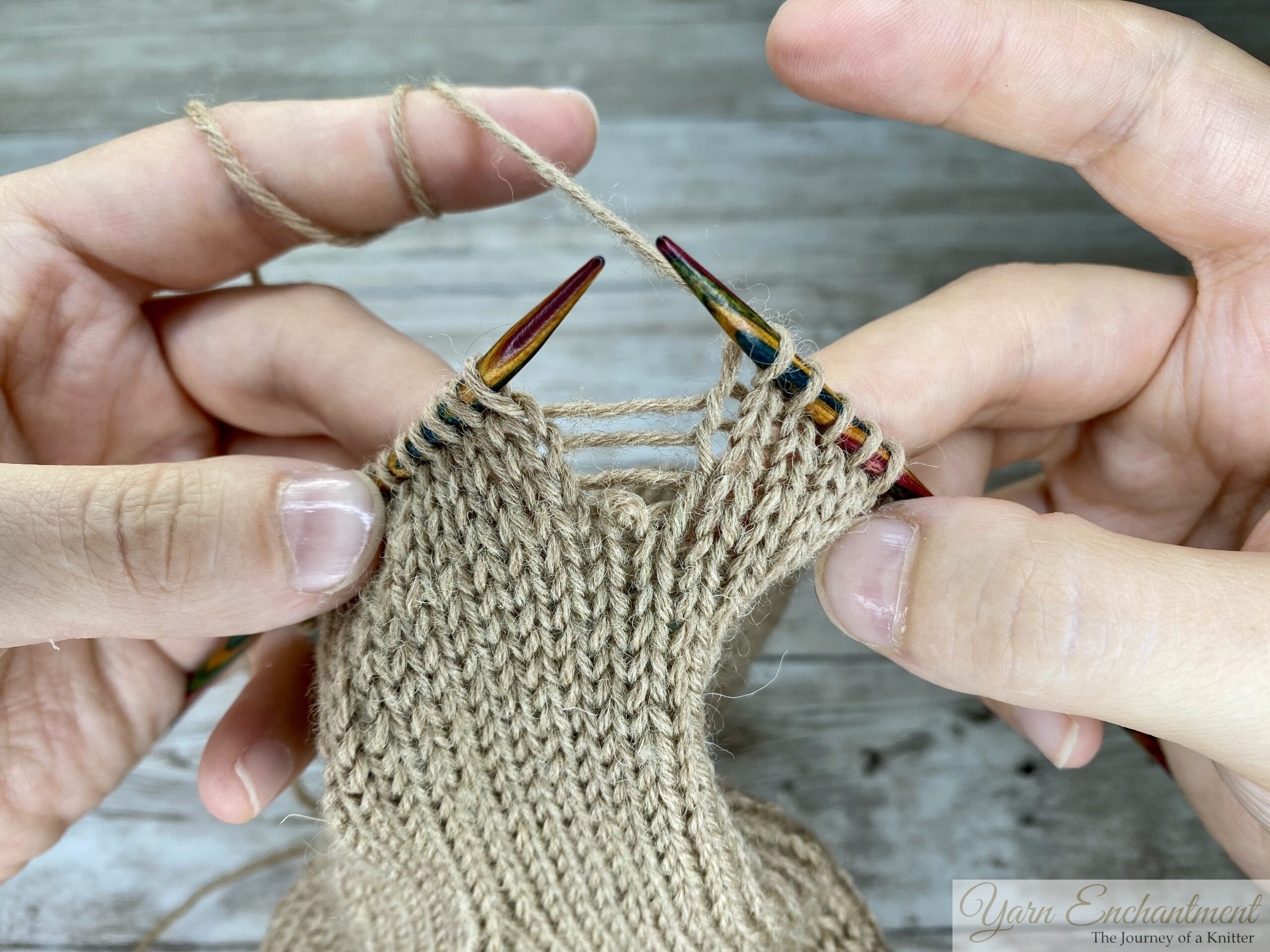  |
Here’s what happens when a stitch drops - see how it unravels down several rows, leaving behind a noticeable gap in the fabric? |
Understanding "Ladders" in Knitting
When a stitch drops, the yarn strands that run horizontally above the dropped stitch are called ladders. These look like the rungs of a ladder and show where the stitch has unraveled. Each "rung" represents a row of knitting that the stitch has fallen through. You can fix a dropped stitch by using a crochet hook to pull the stitch back up, row by row, using the ladders.
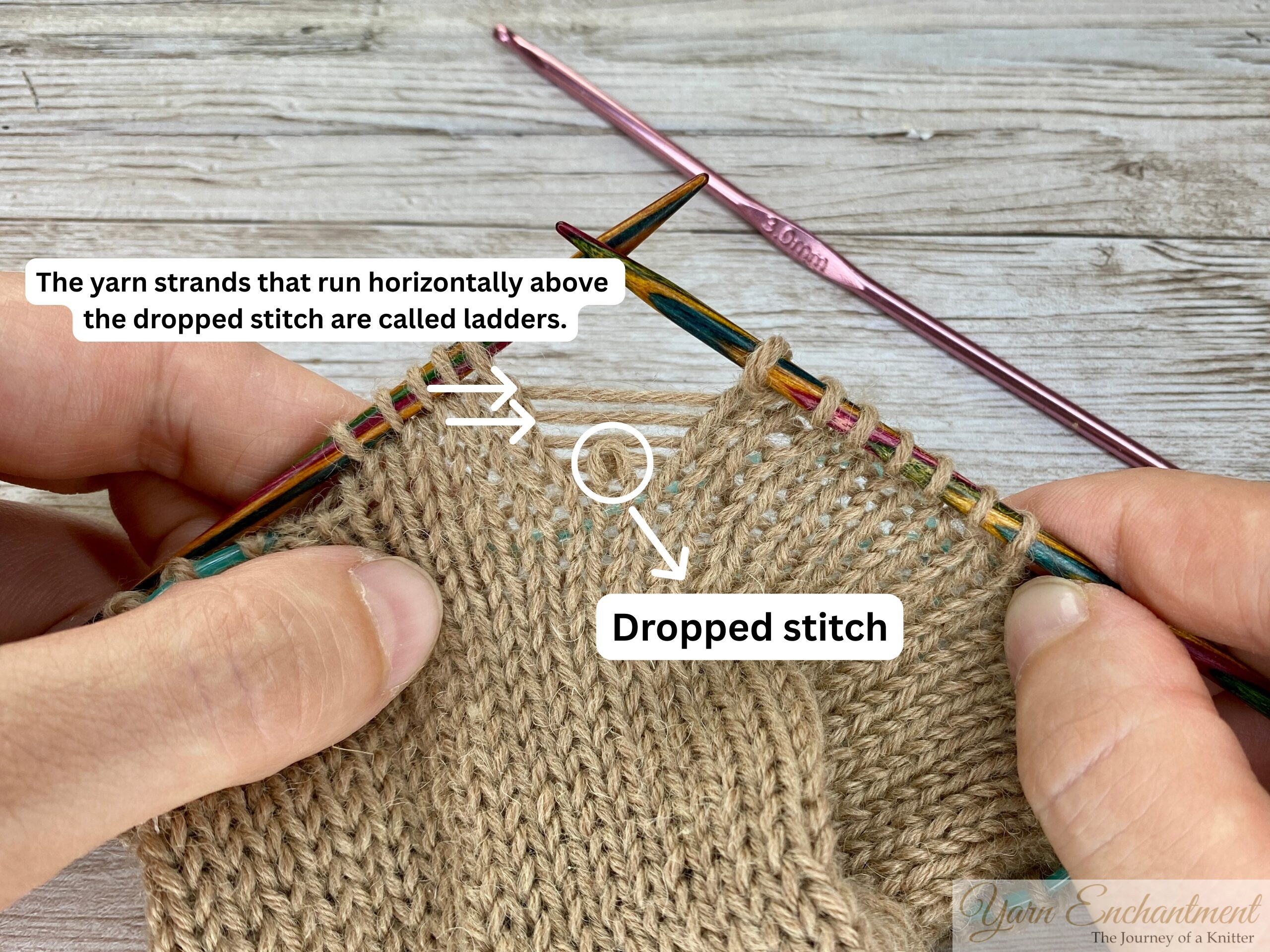  |
In this picture, you can see the ladder-like strands directly above the dropped stitch. Each strand represents one row or one stitch that we’ll pick up; don’t worry, it’s easier than it looks! |
How to Fix a Dropped Stitch in Stockinette Stitch
Method 1: Using a Crochet Hook Step-by-Step Instruction
Step 1: Identify the Dropped Stitch
- Locate the dropped stitch at the bottom of the ladder. To prevent it from unraveling further, secure the stitch using a stitch saver or a spare knitting needle.
- Gently pull on the loop to make it slightly bigger. This helps you see the stitch more clearly and ensures it isn’t twisted when you pick it up.
- Double-check that the stitch is oriented correctly, you want to insert your crochet hook from front to back so that the left leg is facing you and the right leg should be away from you.
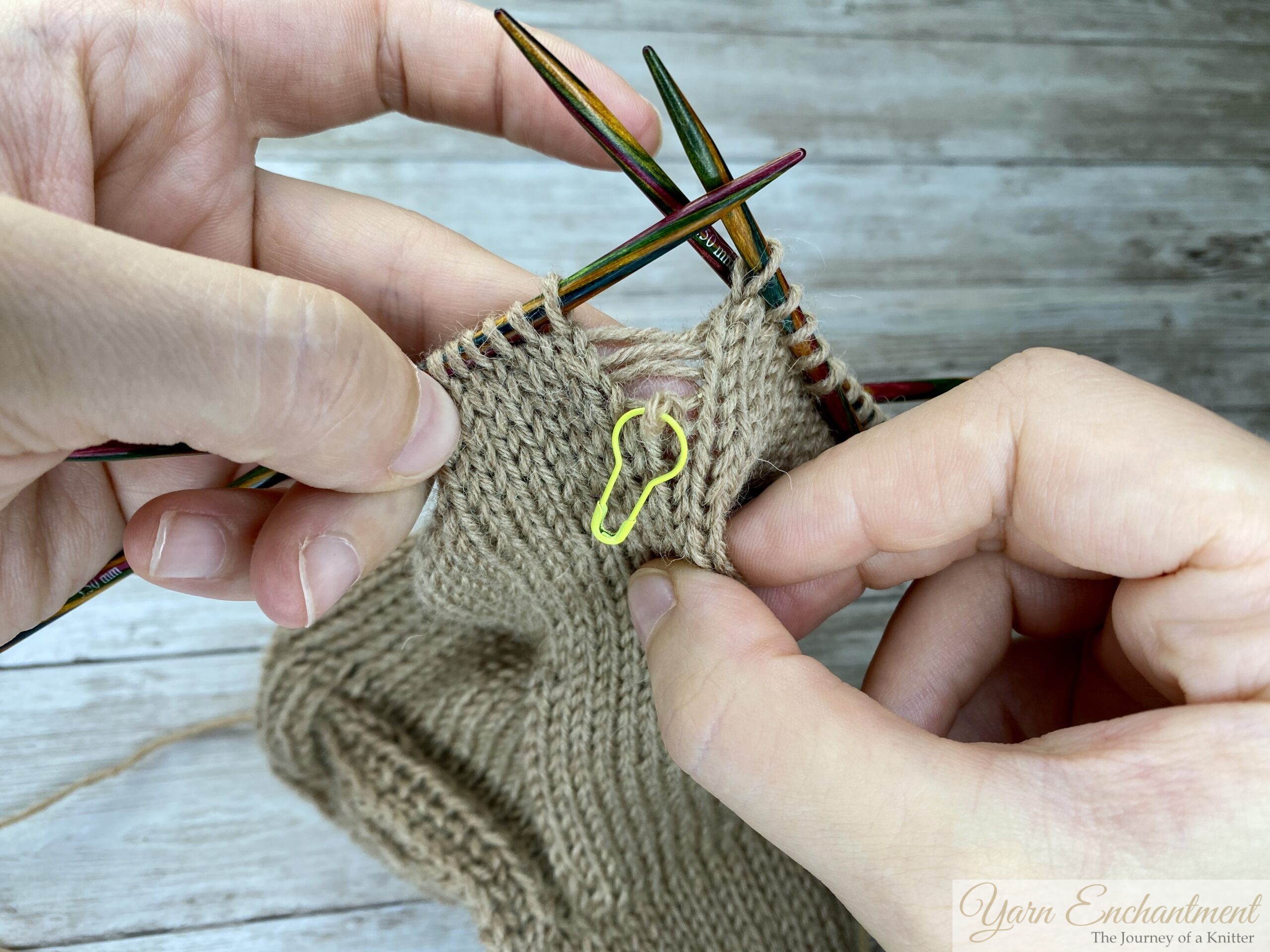  | 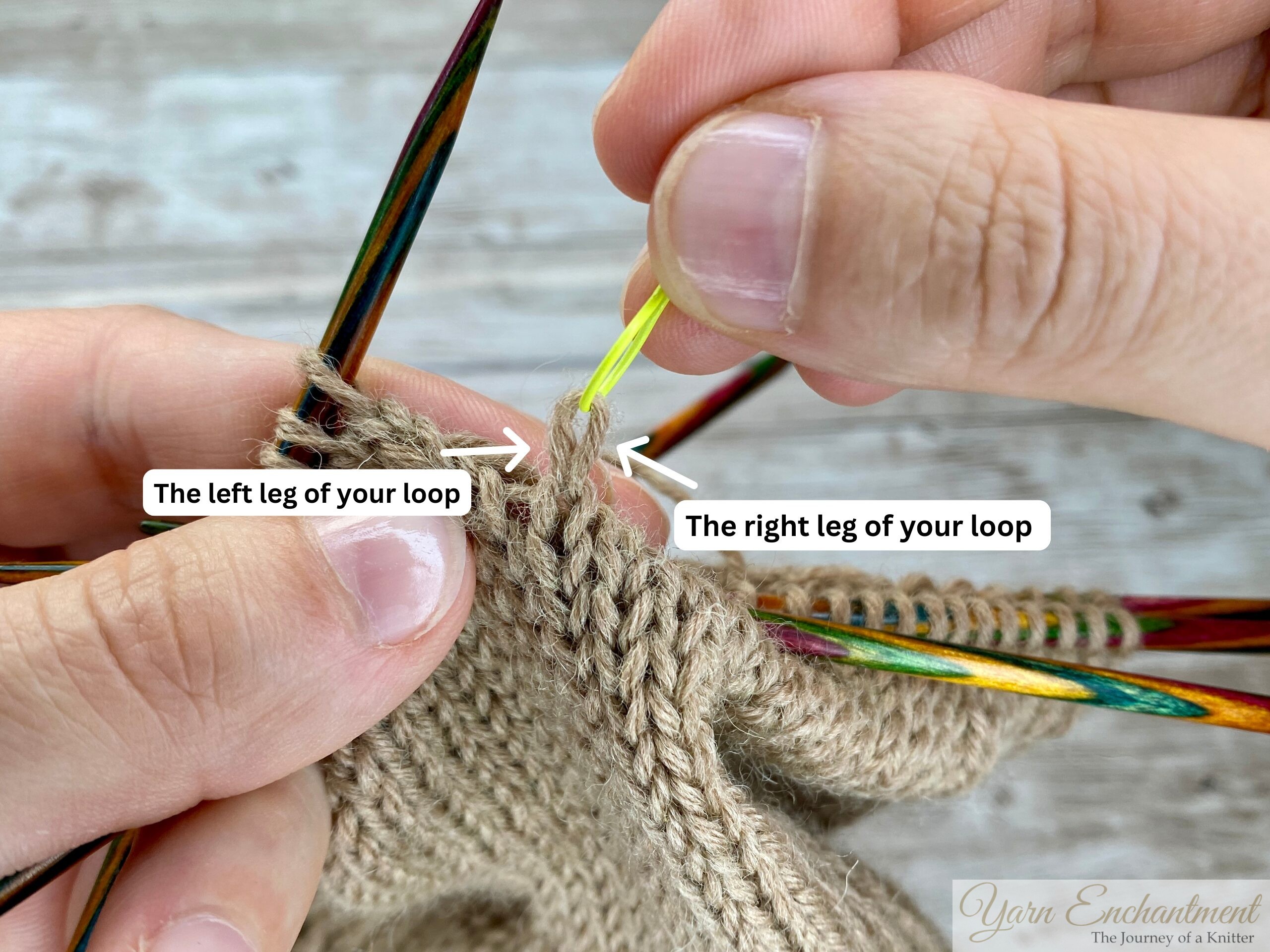  | 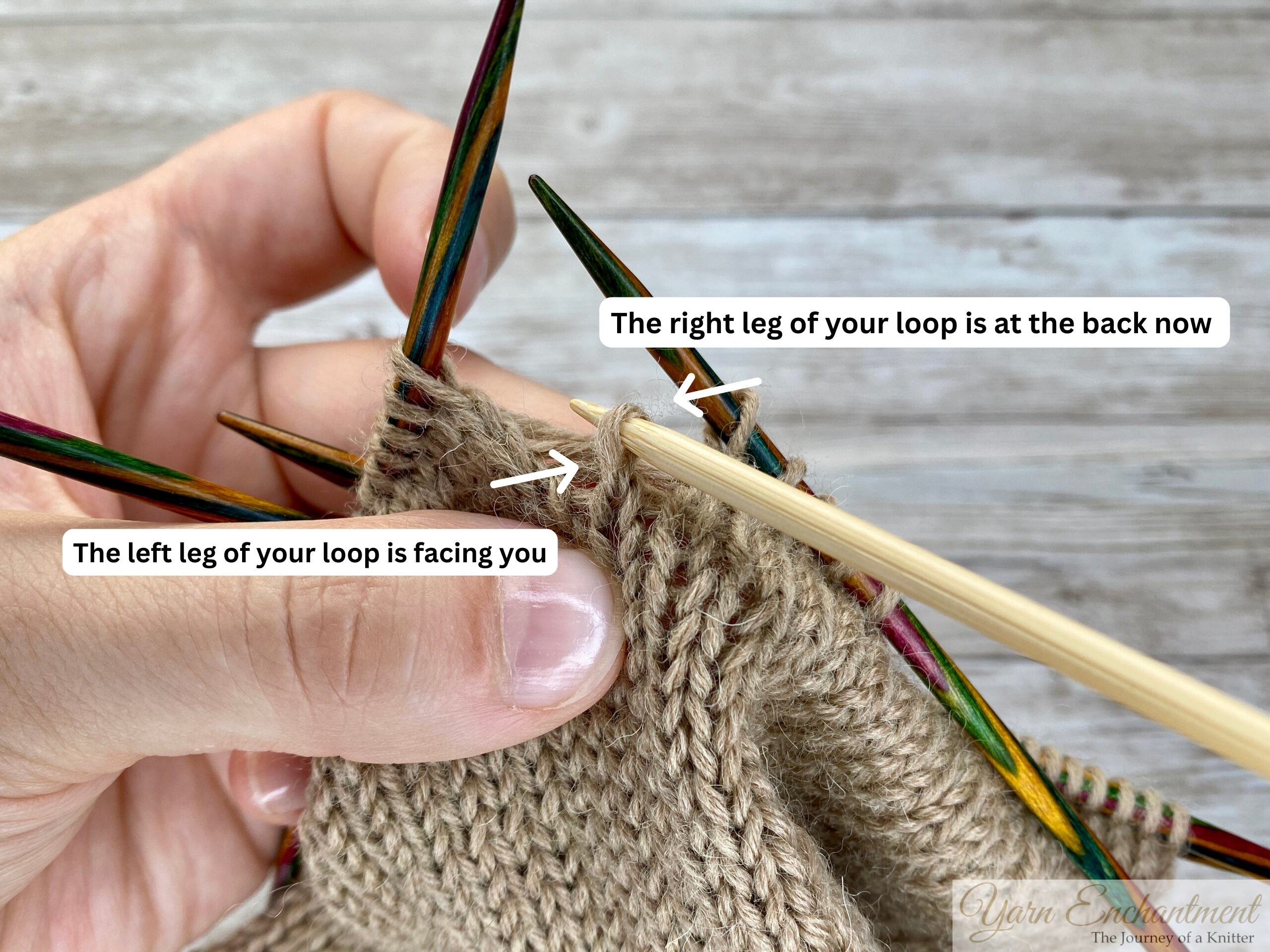  |
To prevent it from unraveling further, you can secure the stitch using a stitch saver | Gently pull the loop upward to make it larger and easier to work with. | Next, insert your crochet hook (or knitting needle) from front to back through the loop. This step ensures the stitch isn’t twisted. |
Step 2: Find the First Bar
- Look for the first horizontal strand (bar) directly above the dropped stitch. I like to look at the left side, because the yarn strads are easier to spot that way
- Insert the crochet hook from the back under the first horizontal strand (ladder rung). Pull this strand through the dropped stitch to make a new knit stitch.
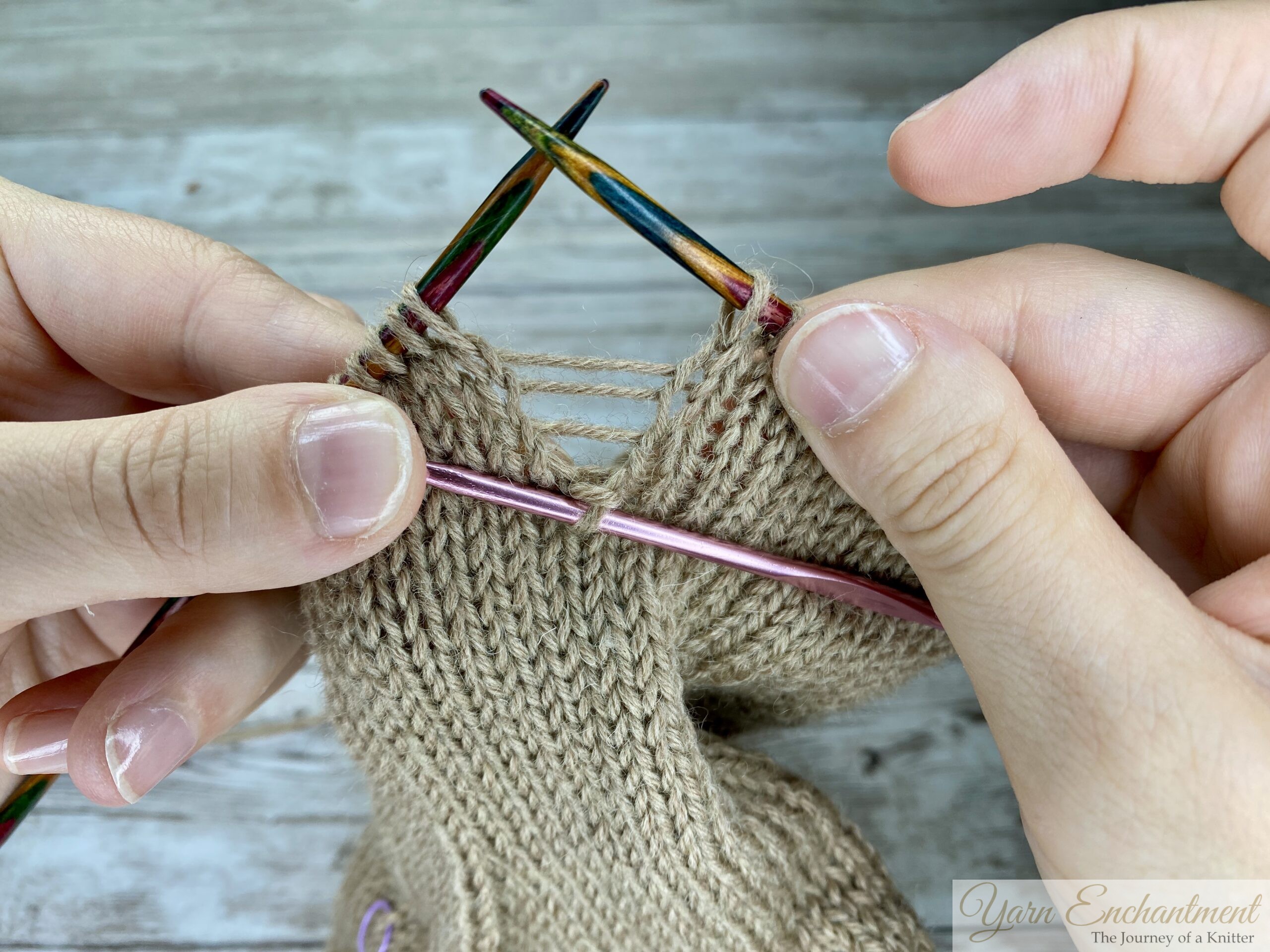  | 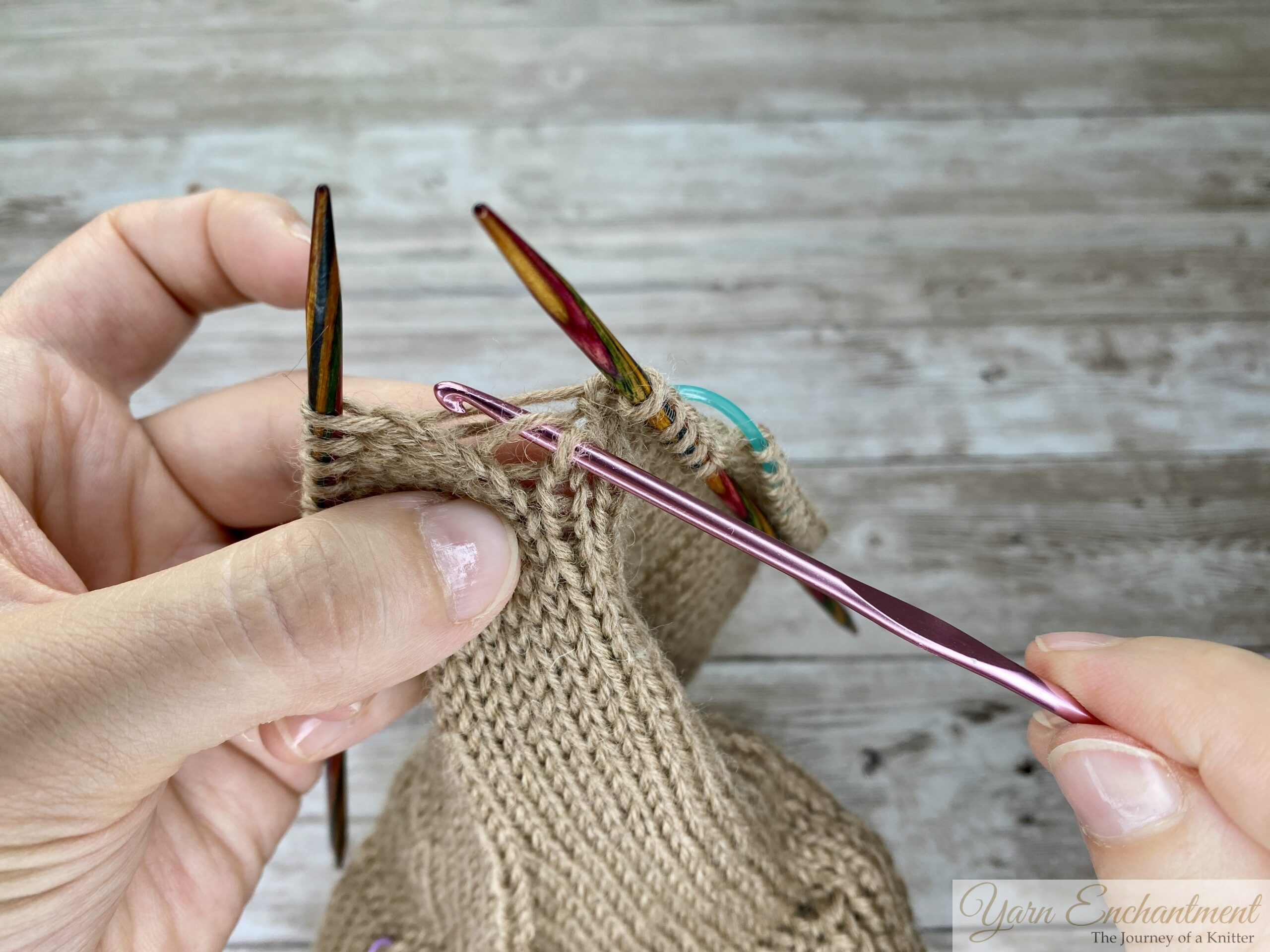  | 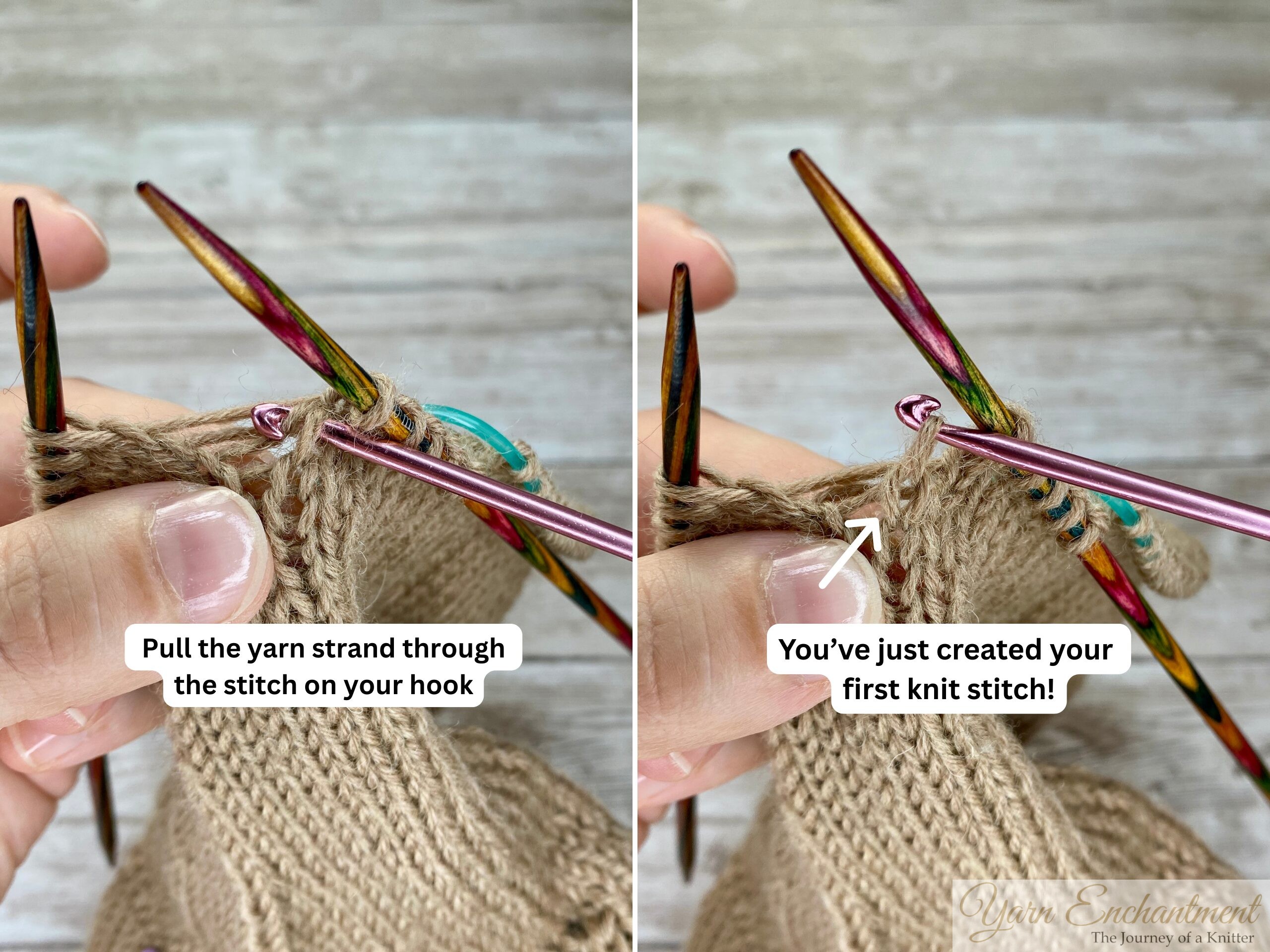  |
Look for the first horizontal strand (bar) directly above the dropped stitch. | Insert the crochet hook from the back under the first horizontal strand (ladder rung) | Pull this strand through the dropped stitch to make a new knit stitch |
Step 3: Repeat for Each Bar
- Move up to the next bar and repeat the process:
- Insert the crochet hook under the bar.
- Pull the bar through the stitch on your hook to form another knit stitch.
- Continue working your way up, one bar at a time, until you’ve repaired all the rows.
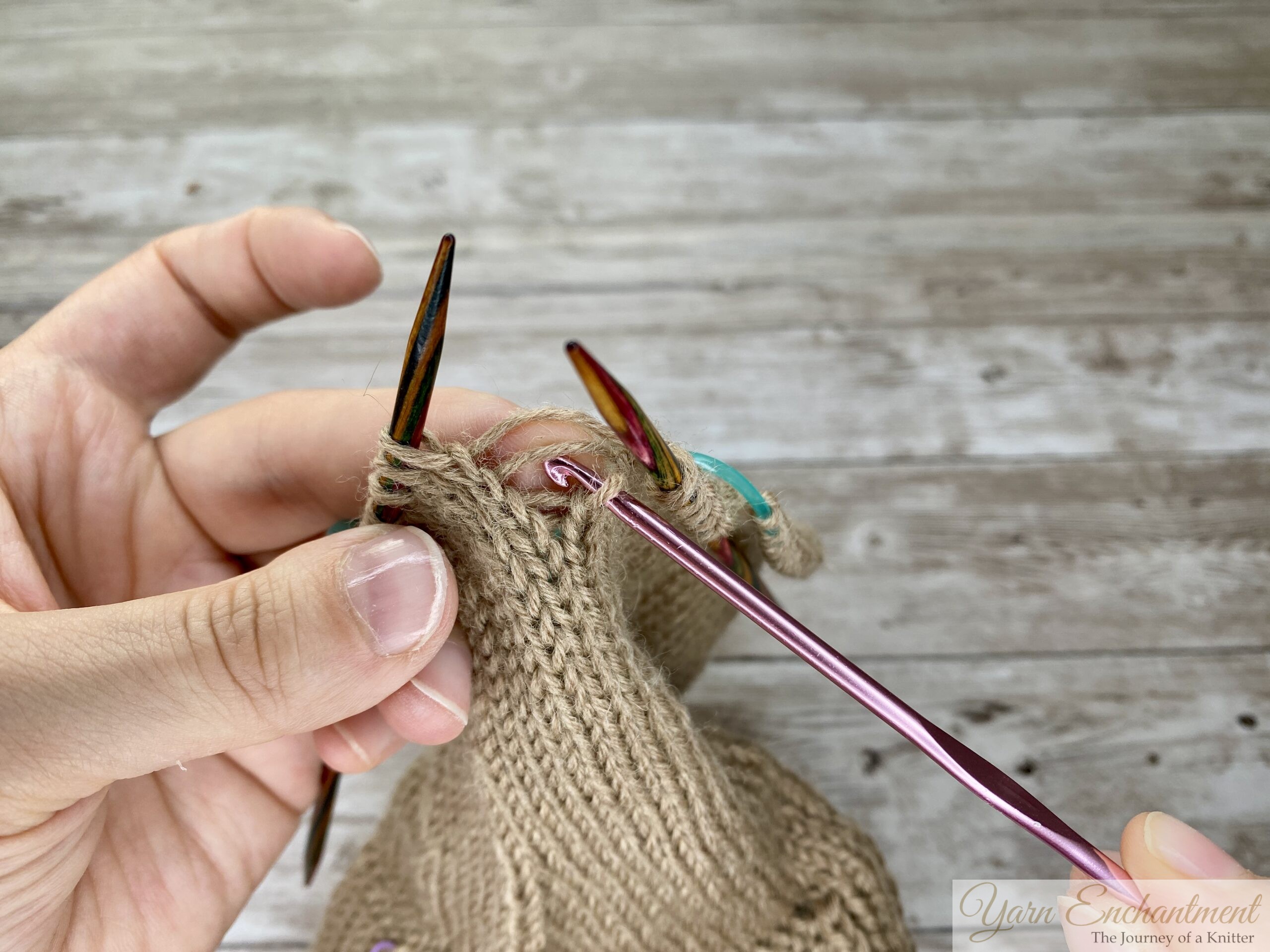  | 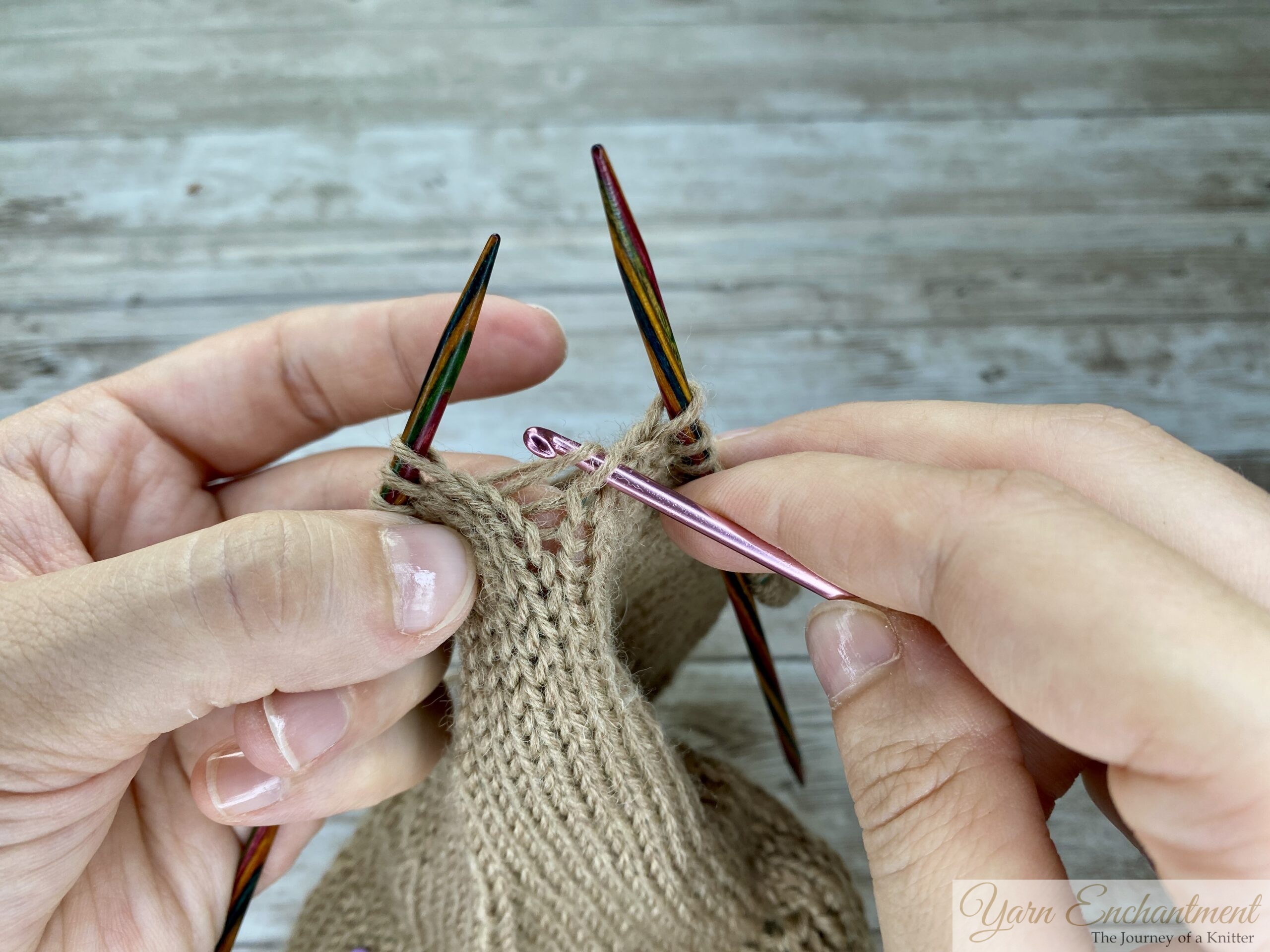  | 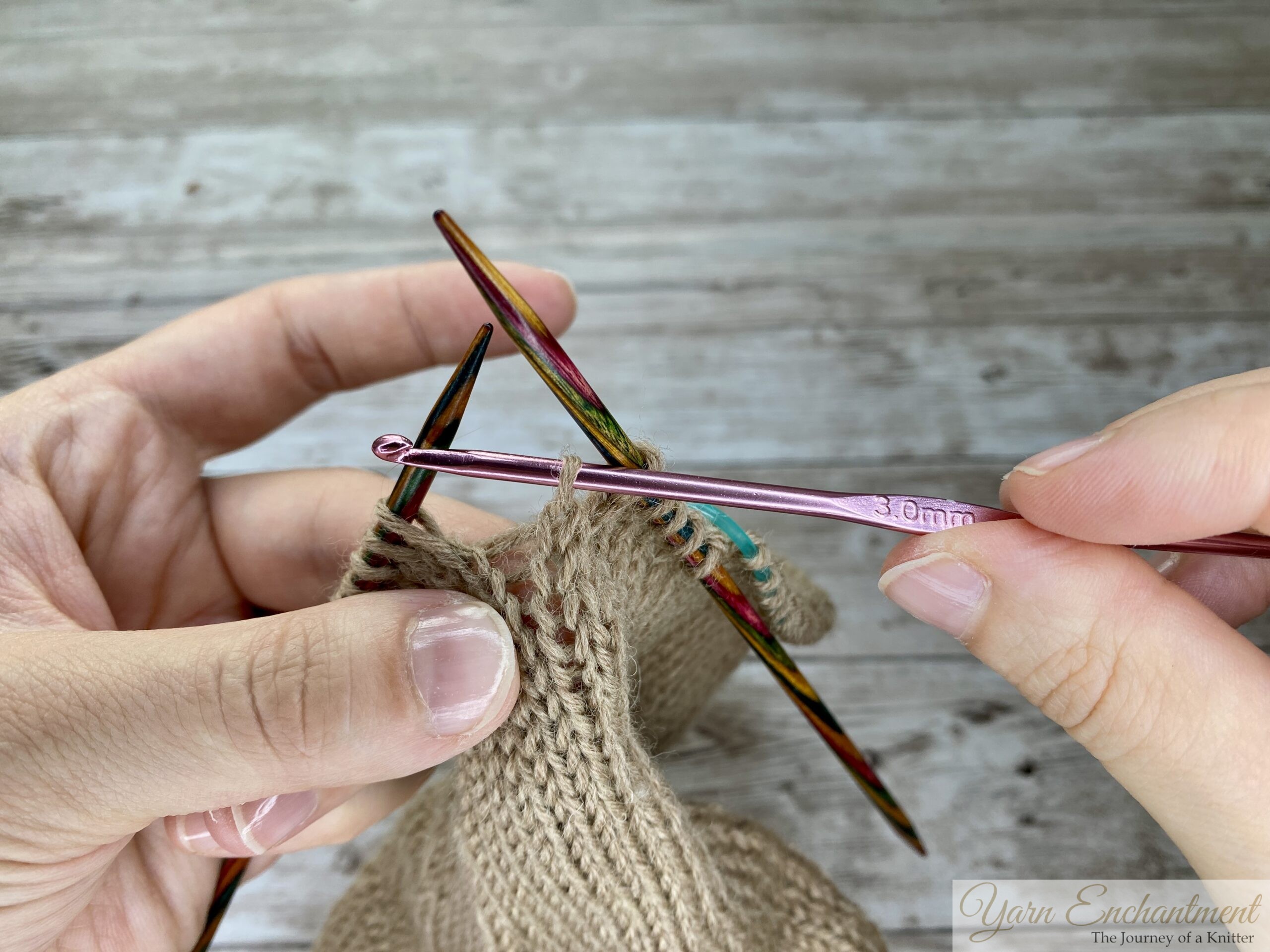  |
Move up to the next bar and repeat the process | Insert the crochet hook under the bar, and pull the bar through the stitch on your hook... | ...to form another knit stitch. |
Knitting Tip: This ensures your knitting stays even and you don’t accidentally add or miss a stitch. Counting ladders before you start will help you confidently restore your work row by row. For every ladder, you need to work one stitch back up
When fixing a dropped stitch, always count the number of horizontal strands (ladders) above the dropped stitch. Each ladder represents a row that the stitch has unraveled.
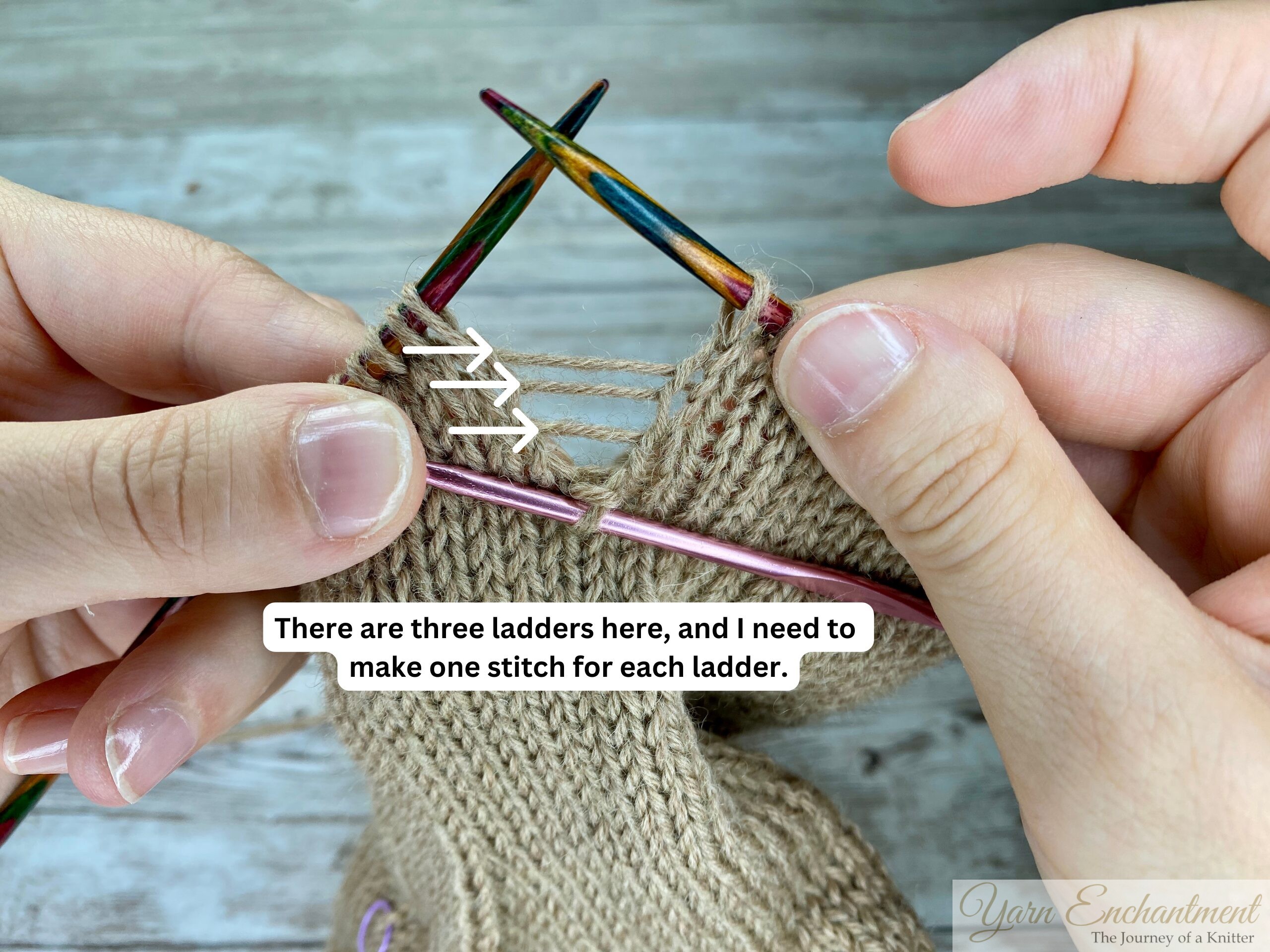

Step 4: Transfer Back to the Needle
- Once you’ve reached the top, carefully transfer the repaired stitch back onto your knitting needle.
- Insert the needle through the back of the stitch to ensure it sits correctly on the needle and isn’t twisted. Lift it back onto your left knitting needle so you can continue knitting your row.
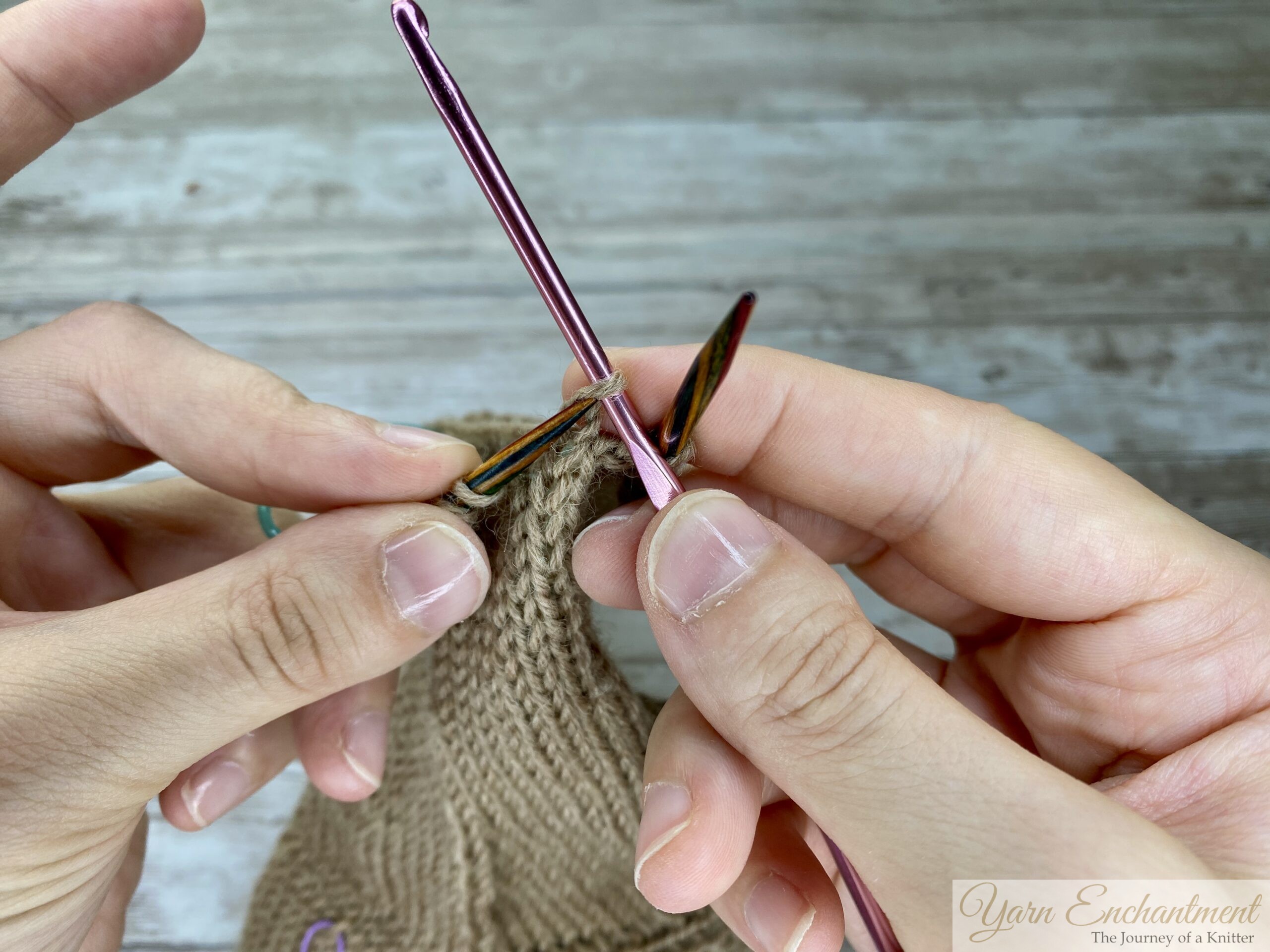  | 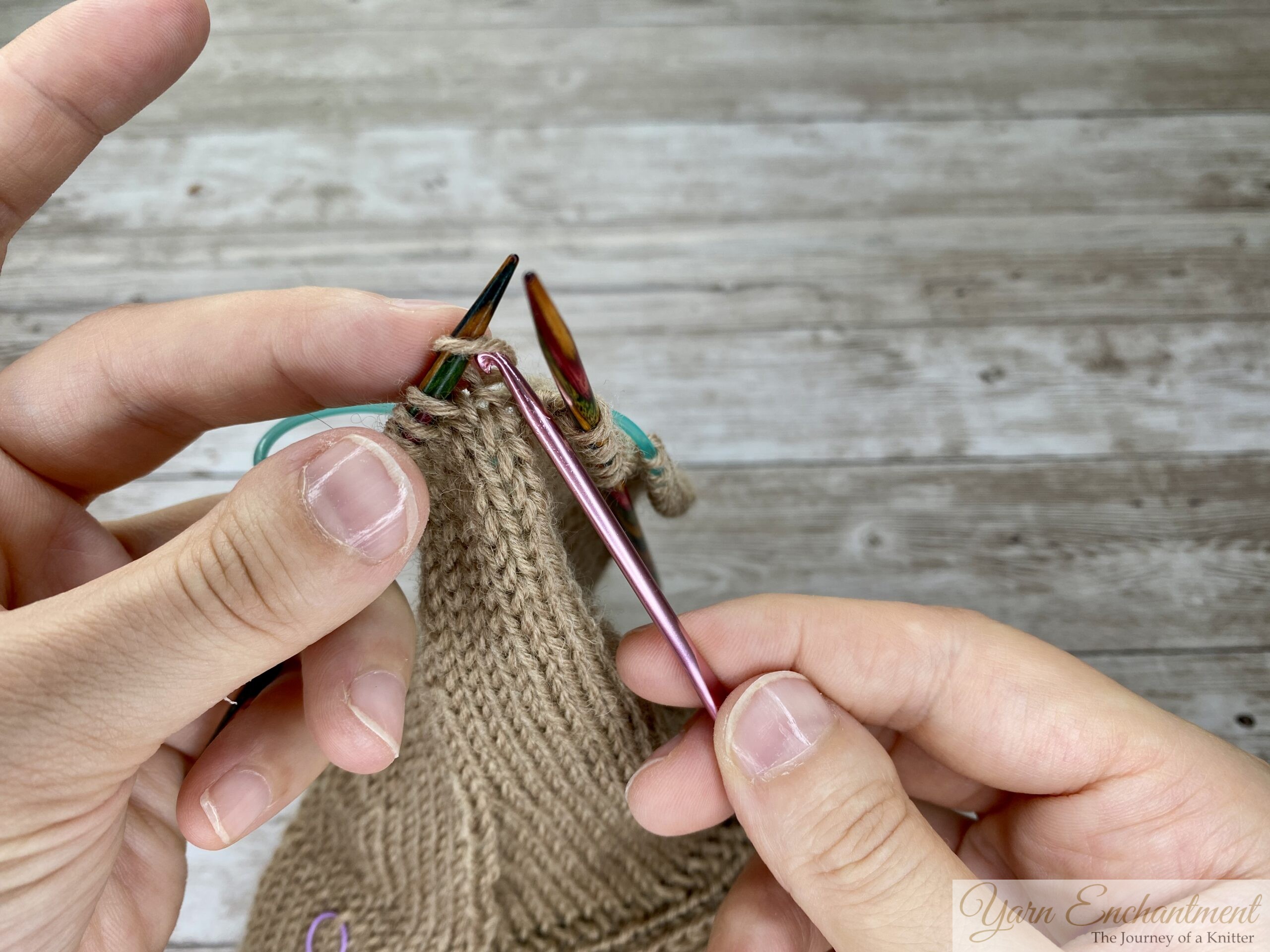  | 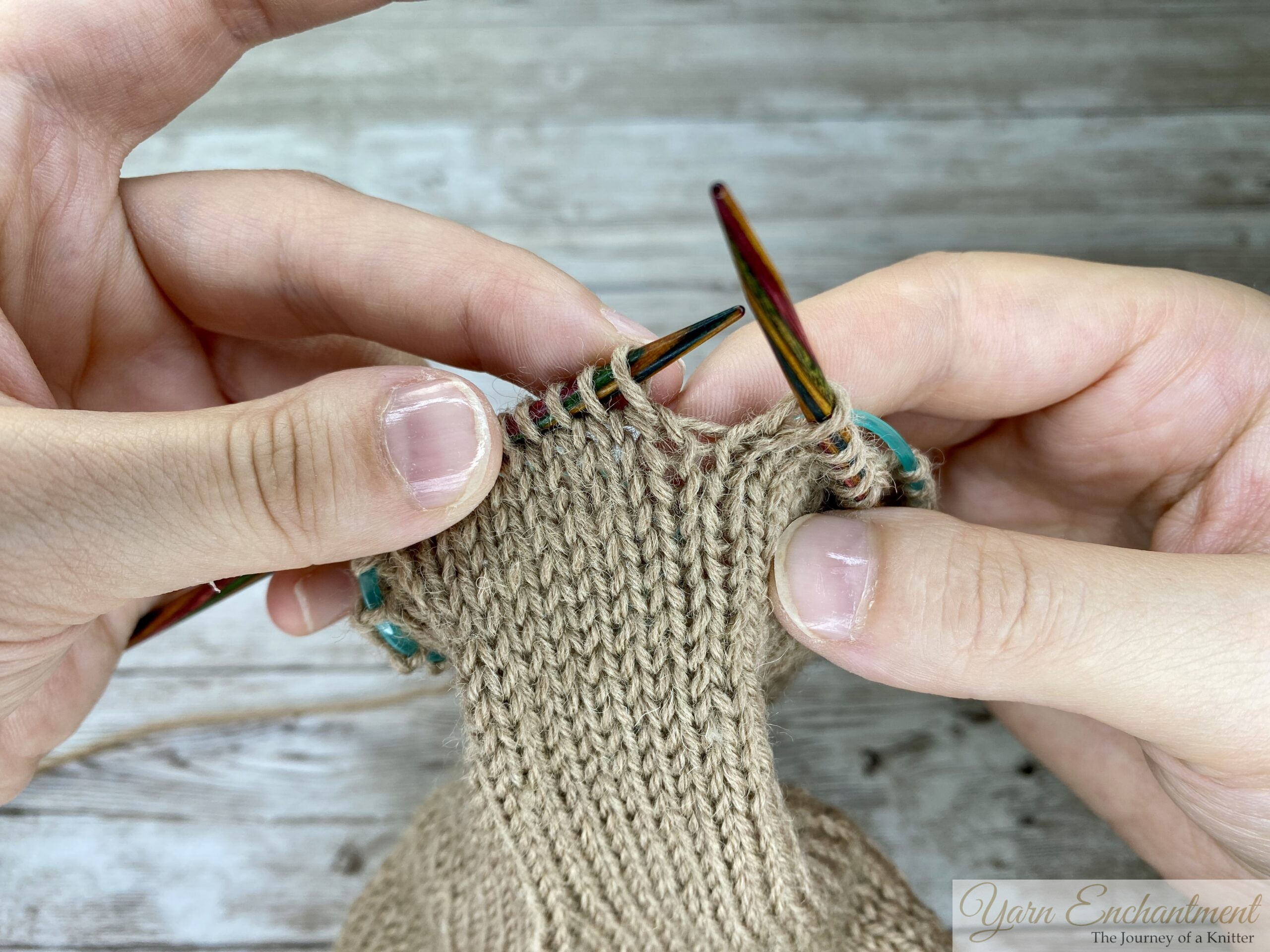  |
Insert the needle through the back of the stitch to ensure it sits correctly on the needle and isn’t twisted | Lift it back onto your left knitting needle so you can continue knitting your row. | All the stitches are neat and tidy, and you can’t tell that there was ever a dropped stitch. |
Method 2: Fixing a Dropped Stitch Without Tools
If you don’t have a crochet hook, don’t worry, you can still fix a dropped stitch using just your knitting needles. This method is simple, effective, and perfect for situations where you’re away from your crafting tools. Follow these steps to repair your stitch seamlessly.
Step 1: Optional - Secure the Dropped Stitch
- For beginners or those who prefer extra security: Use a stitch saver to prevent it from unraveling further.
- For more experienced knitters: You can skip the stitch saver and proceed directly to picking up the stitch.
- Gently pull on the loop to make it slightly larger, as this will make it easier to work with and ensure the stitch isn’t twisted when you pick it up. This step is identical to what we covered in the first method.
| |
Use a stitch saver to prevent it from unraveling further. | Gently pull on the loop to make it slightly larger, as this will make it easier to work with and ensure the stitch isn’t twisted when you pick it up. |
Step 2: Pick Up the Stitch and Work the First Bar
- Use your right-hand knitting needle to pick up the dropped stitch from front to back. This ensures the stitch is oriented correctly (the left leg should face forward, and the right leg should face backward).
- Look for the first horizontal strand (bar) directly above the dropped stitch.
- Insert the tip of your right-hand needle under the bar from front to back.
- Use your left-hand needle to lift the stitch over the bar, creating a new knit stitch.
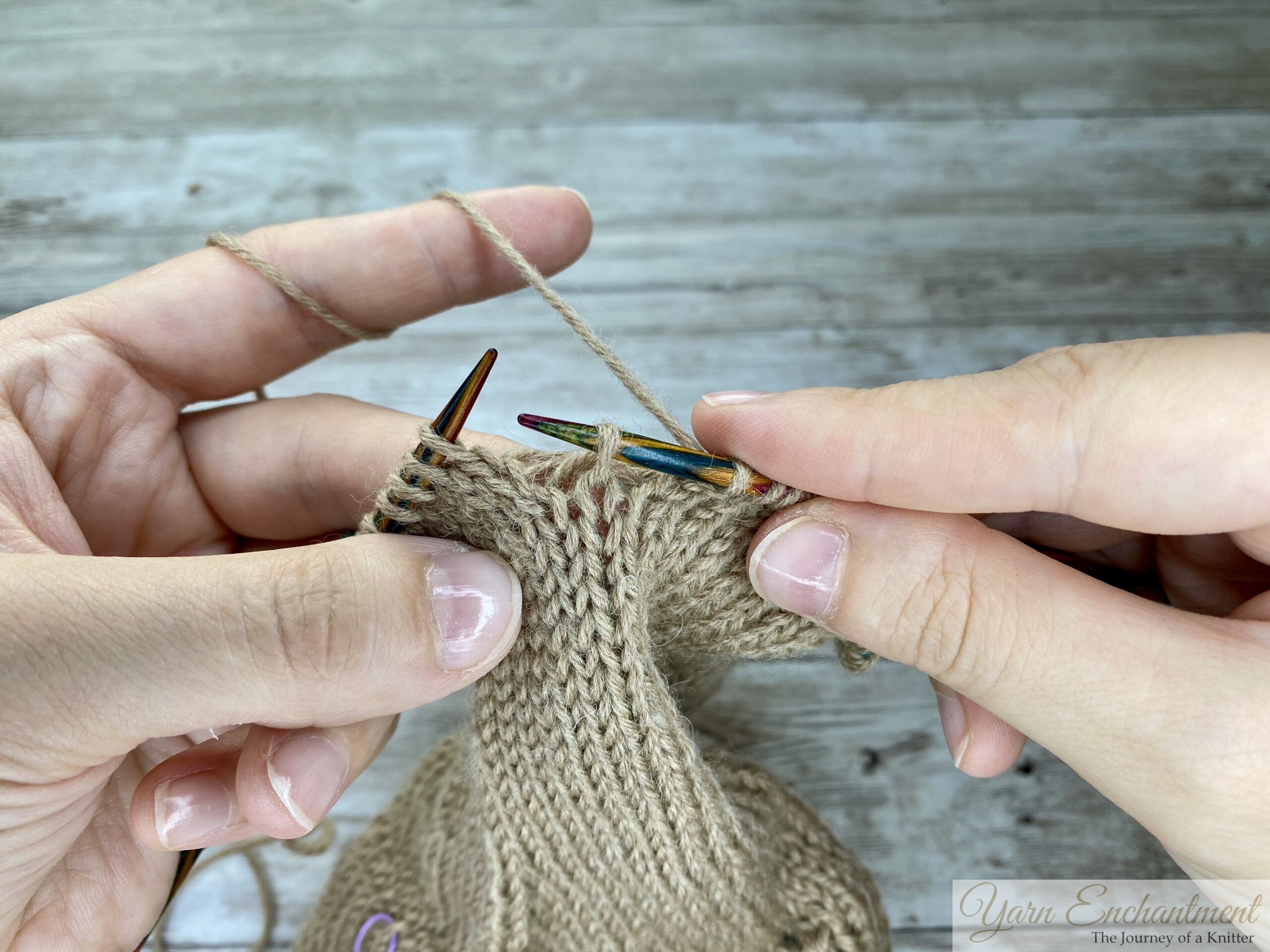  | 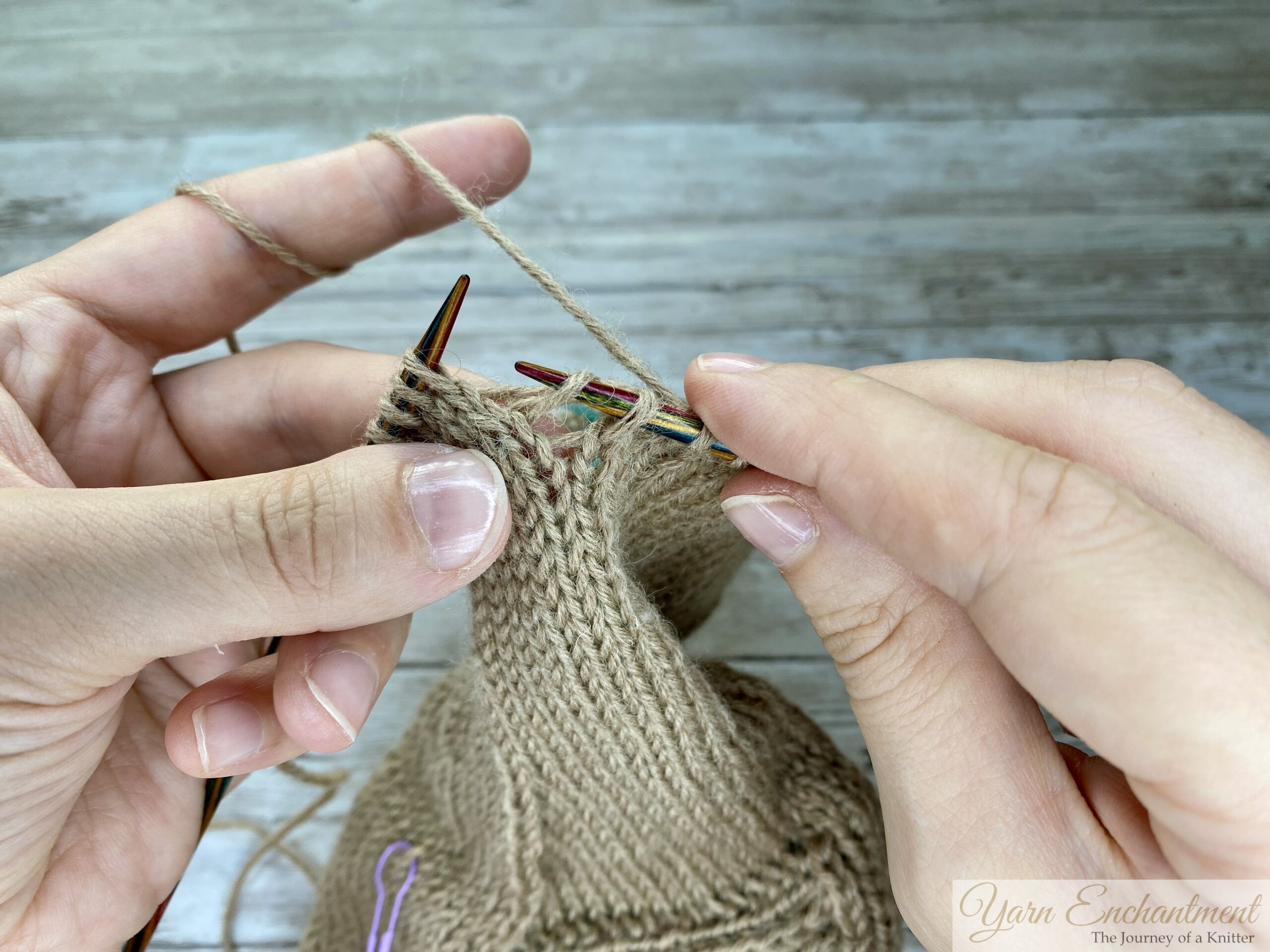  | 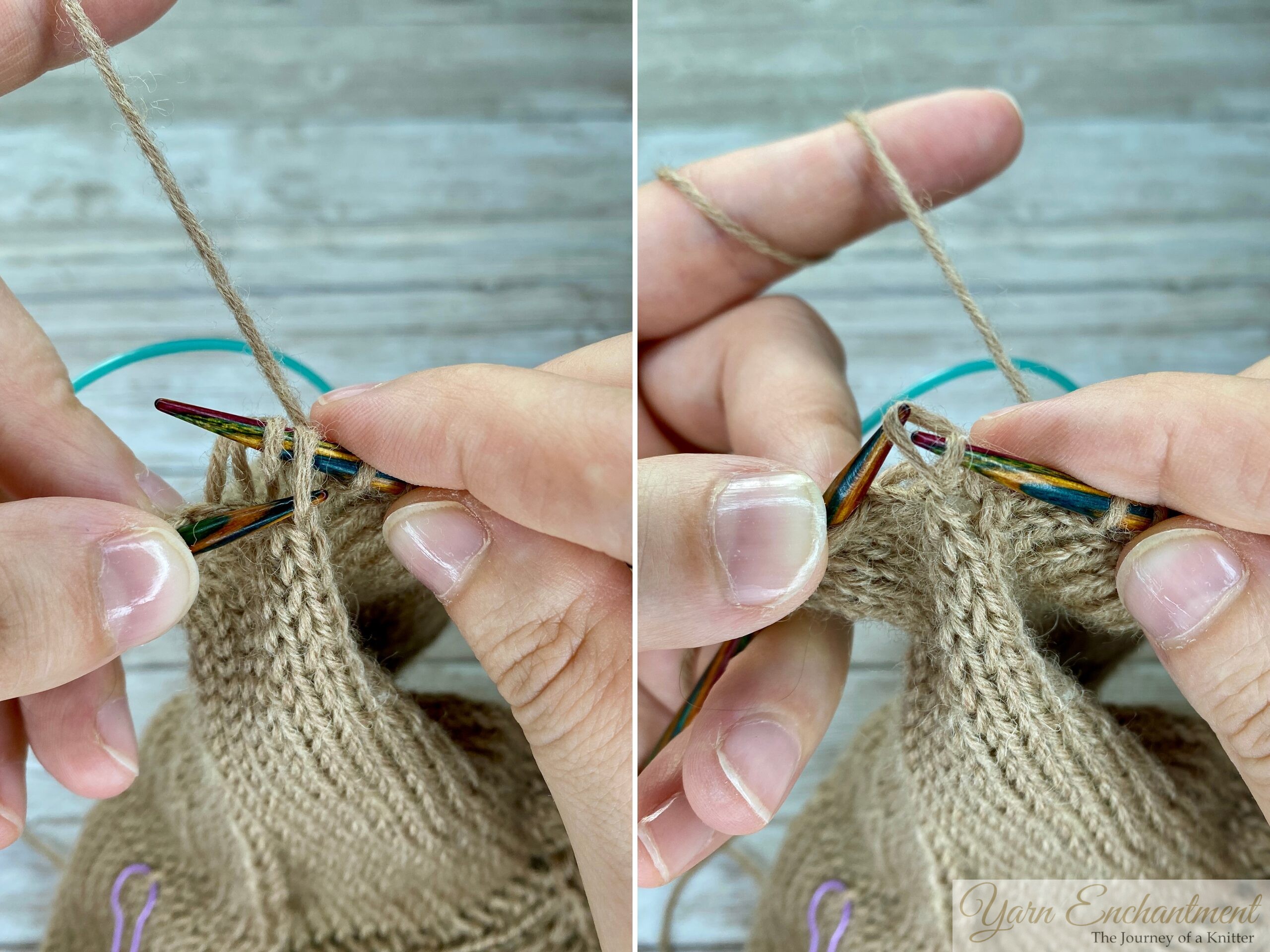  |
Use your right-hand knitting needle to pick up the dropped stitch from front to back | Look for the first horizontal strand (bar) directly above the dropped stitch. Insert the tip of your right-hand needle under the bar from front to back | Use your left-hand needle to lift the stitch over the bar, creating a new knit stitch. |
Step 3: Repeat for Each Bar
- Move up to the next bar and repeat the process:
- Insert the right-hand needle under the bar.
- Use the left-hand needle to lift the stitch over the bar.
- Continue working your way up, one bar at a time, until you’ve repaired all the rows.
Step 4: Transfer Back to the Needle
- Once you’ve reached the top, slide the repaired stitch back onto your left-hand needle .
- Insert the needle through the back of the stitch to ensure it sits correctly on the needle and isn’t twisted. Lift it back onto your left knitting needle so you can continue knitting your row.
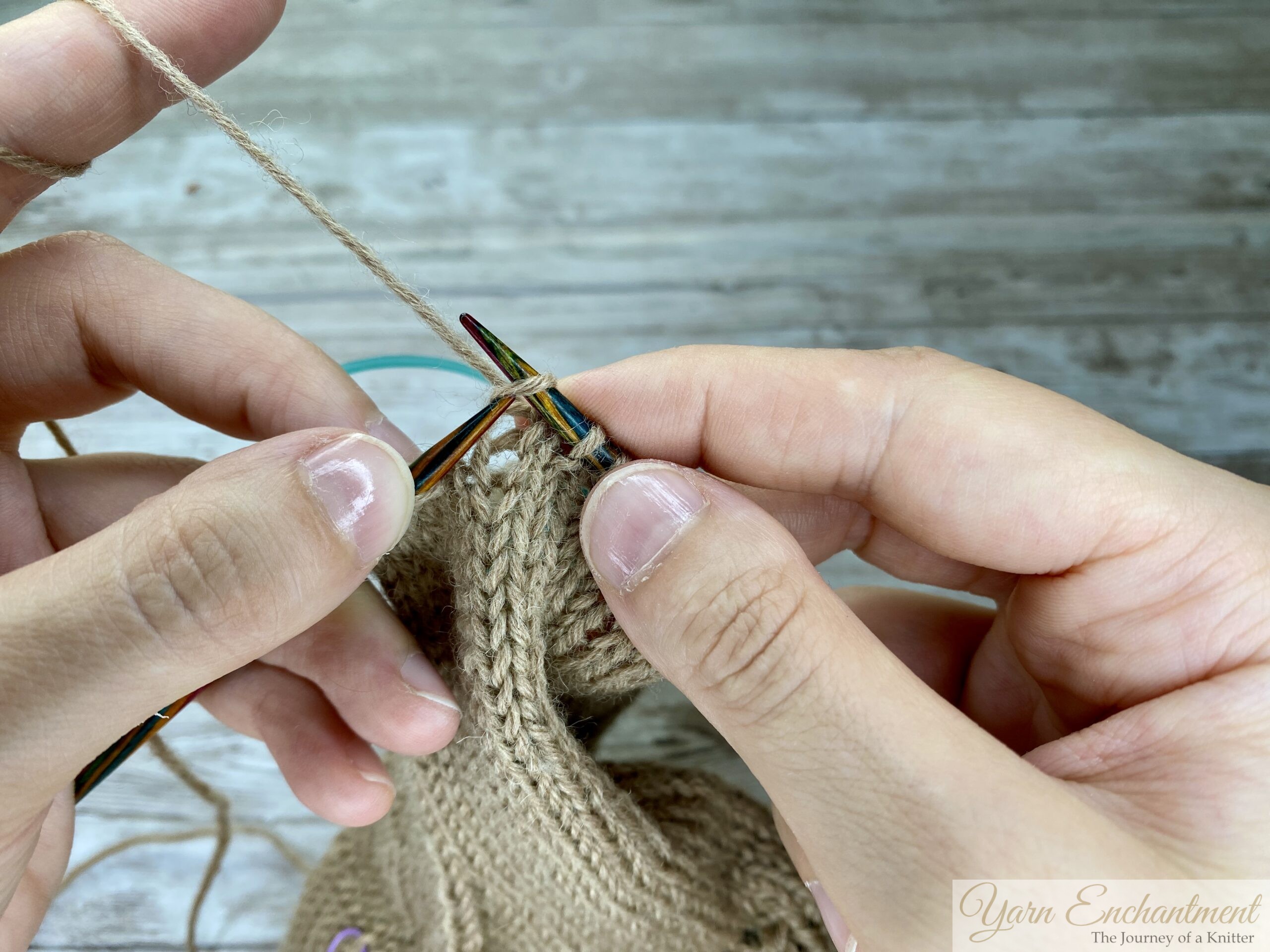  | 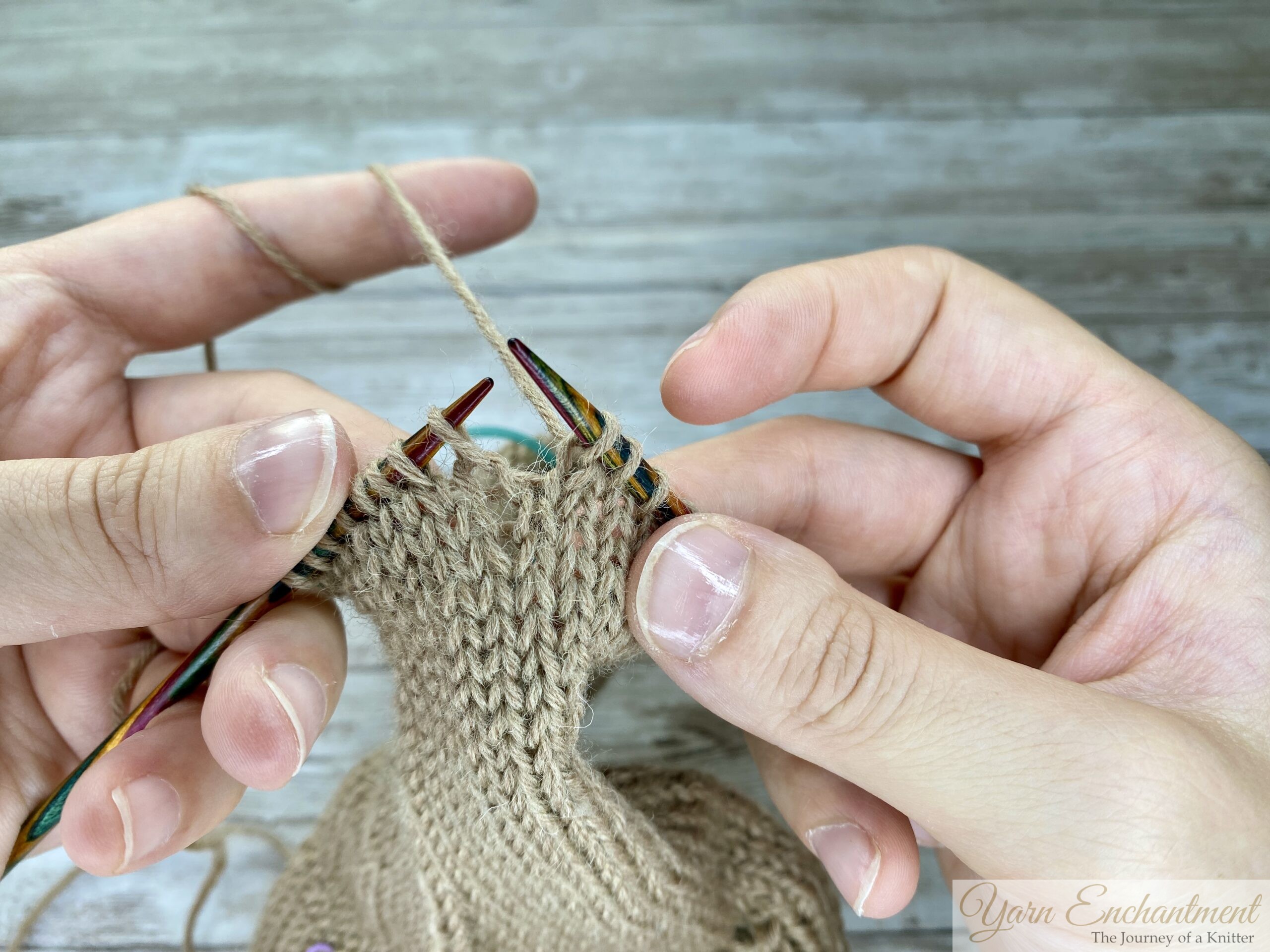  |
Insert the needle through the back of the stitch to ensure it sits correctly on the needle and isn’t twisted. | Lift it back onto your left knitting needle so you can continue knitting your row. |
Tips for Success
Make sure to create one new stitch for each horizontal strand (or ladder) above the dropped stitch. This ensures your stitch count stays correct and your project remains consistent.
Always insert your needle so the stitch sits correctly on the needle and isn’t twisted.
Avoid pulling too hard on the fabric, as this can stretch or distort your stitches.
Don’t be too hard on yourself if it doesn’t work perfectly the first time. Knitting up a few swatches and practicing this method will build your confidence. With time and patience, you’ll master the technique!
A Little Way to Say Thanks
Yarn Enchantment is my cozy hobby corner on the internet. If something here made your knitting day easier or you simply enjoy reading my posts and would like to say thank you, you can leave a small Ko-fi tip - but only if you truly want to.
My patterns and tutorials stay free for everyone, always. Every little tip just goes toward new yarn and a cup of tea for my cozy knitting evenings.
☕ Support me on Ko-fi
You Might Also Like


 |
|
Join the Cozy Corner Newsletter
Hello, creative soul. Welcome to the Yarn Enchantment Newsletter, a little space where we celebrate all things cozy, crafty, and full of heart. Think of this as your friendly crafting companion, a soft dose of inspiration delivered straight to your inbox, just for you. Each newsletter brings you: ✨ Notifications about new patterns and tutorials – easy knitting patterns and beginner crochet projects you won’t find anywhere else 🧶 Practical yarn tips for new crafters, plus advice on the best yarn for fall, blankets, and handmade gifts 💌 Small stories and adventures from my own workbench, because crafting is as much about the journey as the finished piece Whether you’re knitting by the fire, looking for your next creative spark, or simply wanting a quiet moment with your hooks and needles, this newsletter is here to cheer you on. Crafting isn’t just about the final project. It’s about the joy, the peace, and the stories we weave along the way. So grab a cup of tea or coffee, settle in, and join me. Together we’ll make a little magic, one stitch and one story at a time. I’m so glad you’re here. Let’s create something beautiful together. Sign up below to receive your first email, and feel free to leave a comment on the blog if there’s a topic you’d love to see covered. Your ideas might just become our next newsletter feature. |