

Double Folded Edge with Crochet Hook
February 13, 2025
The Magic of Books and a Knitted Bookmark
February 23, 2025Knit Two Together (k2tog)
)
Originally published on February 17, 2025
The "knit two together" (abbreviated as k2tog) is one of the most commonly used knitting decreases. There isn't any pattern out there that doesn't use this decrease. It is a simple and beginner-friendly technique that creates a right-leaning decrease. This method is widely used in patterns for shaping garments, lacework, and other projects where a clean, slanted decrease is required. You can often find it in combination with the SSK (slip, slip knit decrease) because these two complement each other perfectly.
In this blog post, you will learn:
(Click on the links below to jump to the corresponding sections)
  |
k2tog on the left side |
What is k2tog?
K2tog is a decrease technique that involves knitting two stitches together as if they were one. This reduces the stitch count by one and creates a right-leaning slant. It is one of the easiest decreases to learn, making it a favorite among beginner and experienced knitters alike.
This decrease is often used in patterns for shaping areas like armholes, necklines, and crown shaping in hats. It is also a key technique in lace knitting, where directional decreases are essential for creating intricate patterns.

How to Knit k2tog
Here’s a step-by-step guide to working the k2tog decrease:
-
Insert the right-hand needle into the first two stitches on the left-hand needle, as if to knit, from left to right.
-
Wrap the working yarn around the right-hand needle.
-
Pull the yarn through both stitches, creating a single stitch on the right-hand needle.
-
Slide the two original stitches off the left-hand needle.
  |   |   |
Insert the right-hand needle into the first two stitches on the left-hand needle... | ...from left to right. | Close up from behind |
  |   |   |
Yarn Over | Pull the yarn through both stitches, creating a single stitch | Slide the two original stitches off the left-hand needle. |
A visual comparison
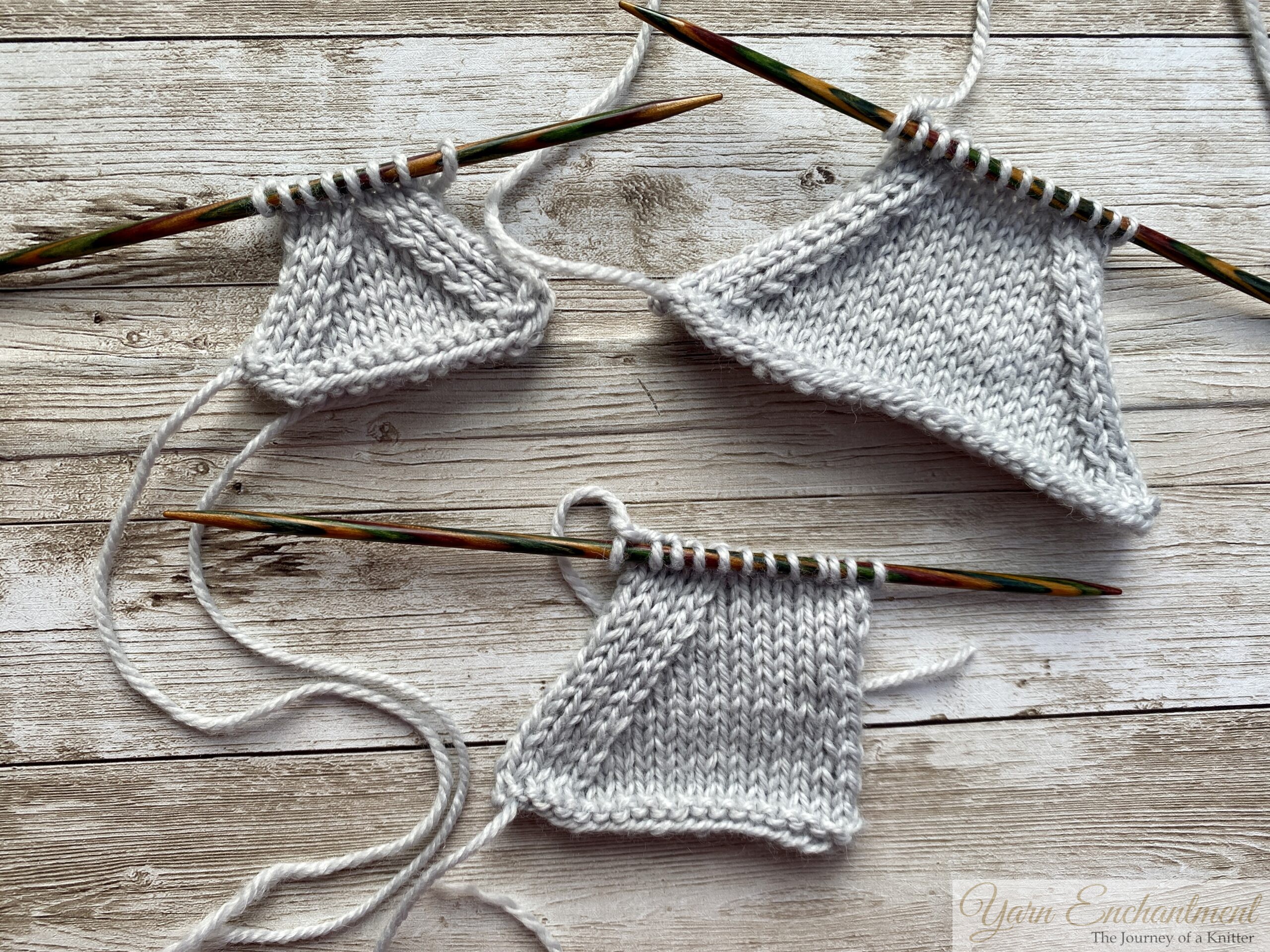
k2tog is one of several decrease techniques in knitting. Here’s the right-leaning k2tog and a left-leaning decrease look together:
-
k2tog vs. SSK: While k2tog creates a right-leaning decrease, SSK (slip, slip, knit) creates a left-leaning decrease. These two techniques are often used together in patterns to create symmetrical shaping.
-
k2tog vs. k2tog tbl: Both techniques involve knitting two stitches together, but the difference lies in how the stitches are worked. k2tog is worked through the front loops, creating a right-leaning slant, while k2tog tbl (through the back loop) is worked through the back loops, creating a left-leaning slant with a slight twist.
The choice between these decreases depends on the desired look and the pattern requirements.
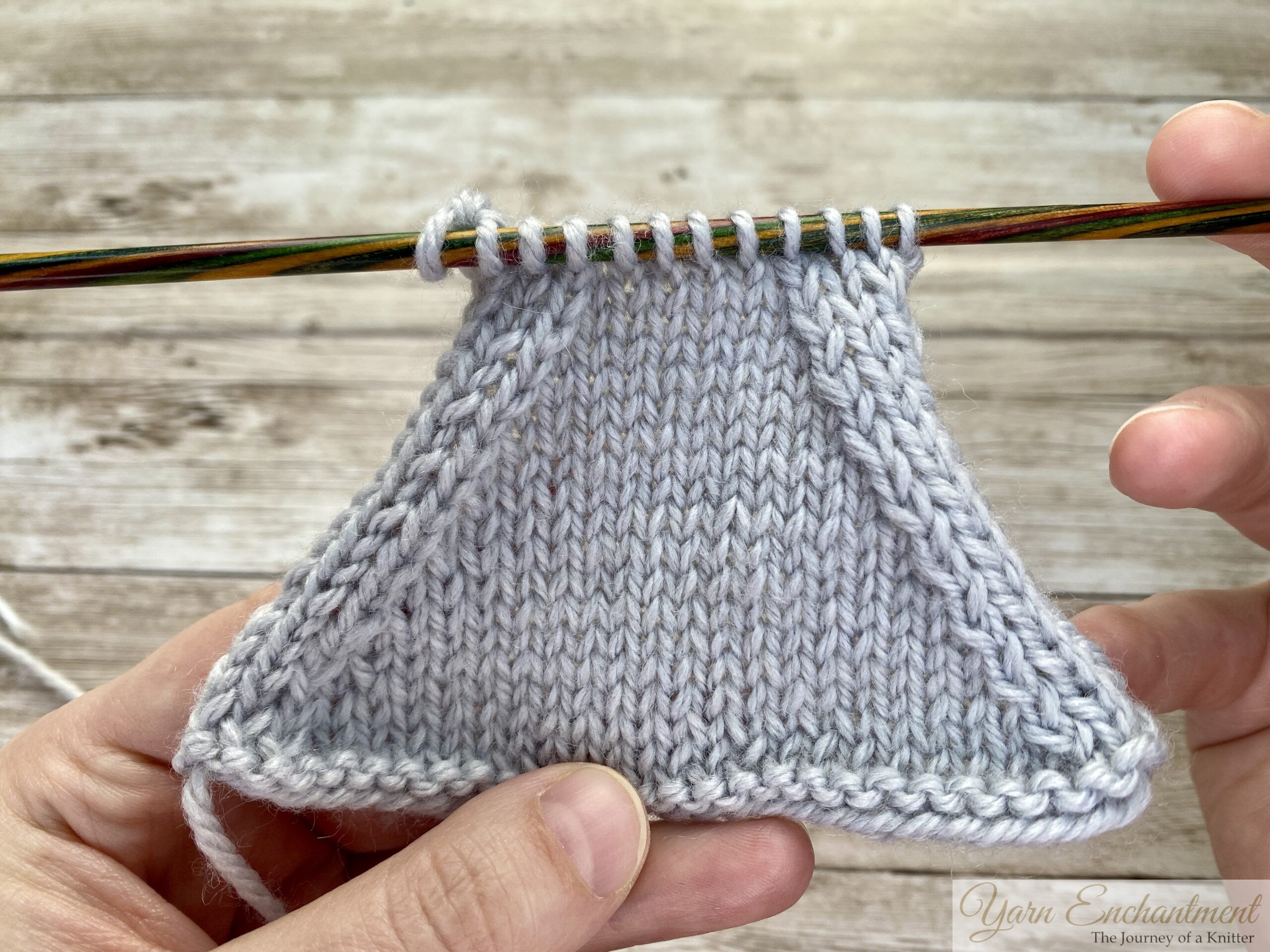  | 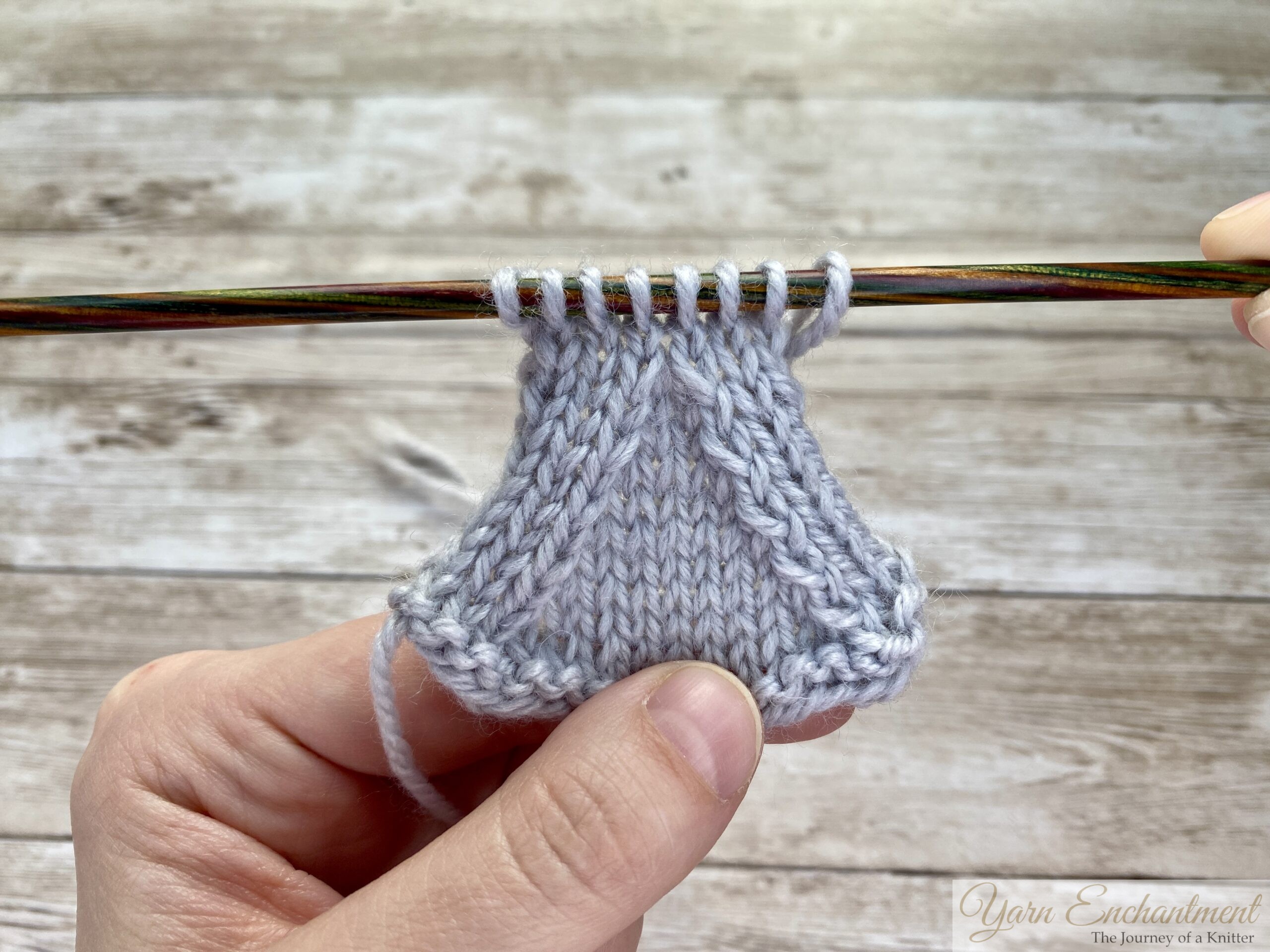  |
On the left side, I worked a k2tog decrease, and on the right side, you can see the left leaning ssk decrease. | On the left side, I worked a k2tog decrease, and on the right side, a left leaning k2tog tbl decrease. |
Tips for the k2tog
Here are some tips to help you perfect the k2tog decrease:
-
Keep your tension consistent: Avoid pulling the yarn too tightly, as this can distort the stitches.
-
Use sharp-pointed needles: This makes it easier to insert the needle through two stitches at once. If the stitches are still too tight, you can insert your needle purlwise and gently loosen them.
-
Practice on a swatch: Before incorporating k2tog into a project, practice the technique on a small swatch to get comfortable with the motion.
-
Pay attention to stitch orientation: Ensure that the stitches are not twisted on the needle before working the decrease.
  |
Insert your needle purlwise and gently the stitches. |
Common Uses in Knitting Patterns
k2tog is one of the most used decrease that in knitting projects. You can incooperate the k2tog everywhere where you need to decrease by one stitch. Here are some common applications:
-
Shaping Garments: k2tog is often used for shaping armholes, necklines, and other areas where a right-leaning decrease is needed.
-
Crown Shaping in Hats: This decrease is frequently used in the final rounds of hat patterns to shape the crown.
-
Lace Knitting: k2tog is essential in lace patterns to create directional decreases. You can often find it there together with the SSK decreases.
-
Socks: It is commonly used in sock patterns to shape the gusset area. I am using the slip knit pass slipped stitch over together with the k2tog for the socks toes and Gussets
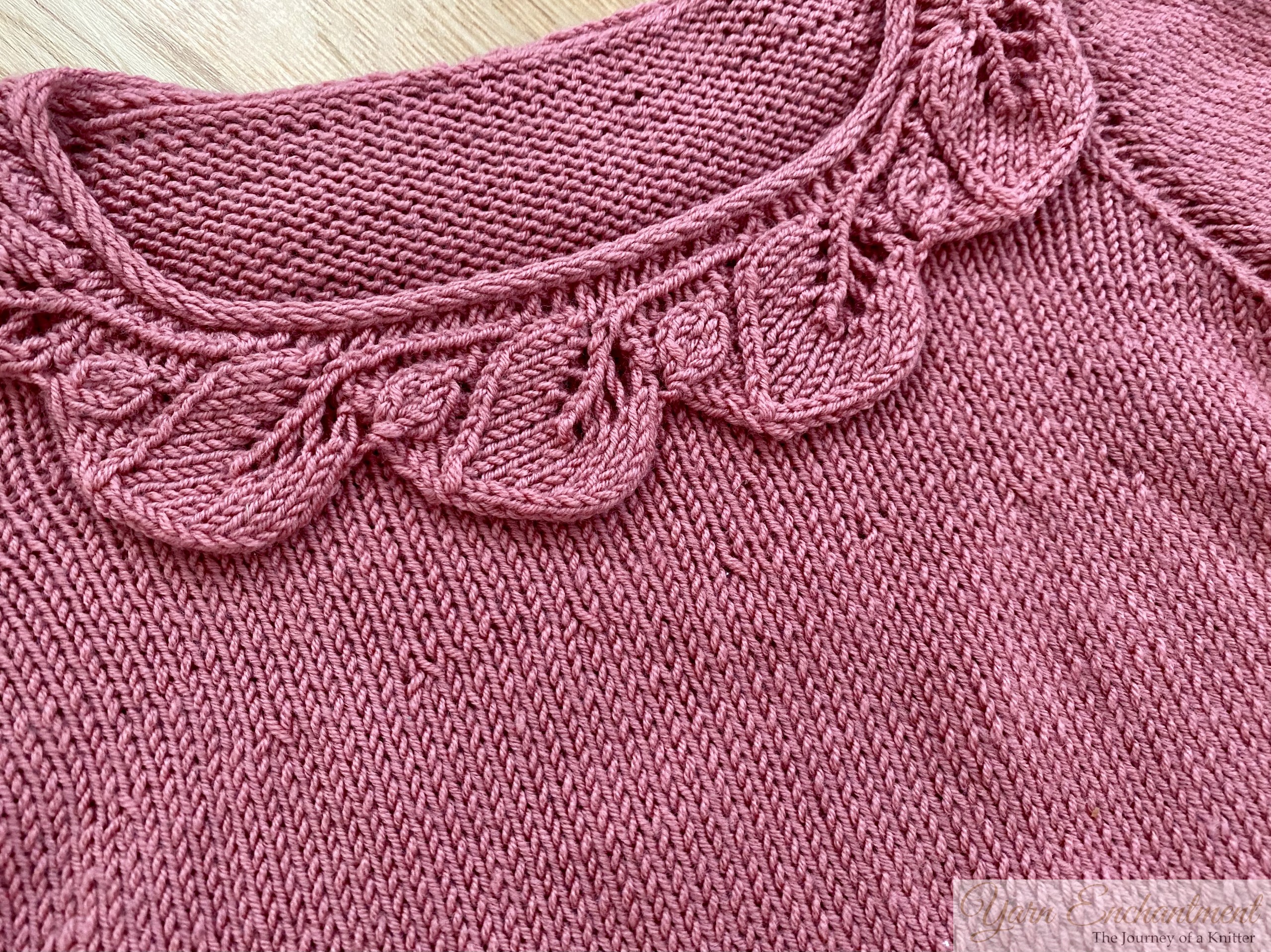  |
This is a great example of the use of decreases and increases in knitting. Along the leaf edges, you can see techniques such as SSK , M1L, and M1R increases, as well as k2tog, p2tog, KFB , and K1 S1 PSSO decreases. |
Conclusion
k2tog is a simple yet very powerful decrease that creates a right-leaning slant. It’s easy to learn and incredibly versatile, making it a must-know technique for knitters of all skill levels. Whether you’re shaping garments, working on lace patterns, or finishing a hat, k2tog is a reliable and effective way to reduce stitches.
In my personal opinion, k2tog is one of the most intuitive decreases to learn, and it’s a great starting point for beginners who are just getting comfortable with shaping their knitting projects. You will need this decrease for almost all of you patterns.
So, grab your needles and give it a try!
Until then, happy knitting!
A Little Way to Say Thanks
Yarn Enchantment is my cozy hobby corner on the internet. If something here made your knitting day easier or you simply enjoy reading my posts and would like to say thank you, you can leave a small Ko-fi tip - but only if you truly want to.
My patterns and tutorials stay free for everyone, always. Every little tip just goes toward new yarn and a cup of tea for my cozy knitting evenings.
☕ Support me on Ko-fi
You Might Also Like


 |
|
Join the Cozy Corner Newsletter
Hello, creative soul. Welcome to the Yarn Enchantment Newsletter, a little space where we celebrate all things cozy, crafty, and full of heart. Think of this as your friendly crafting companion, a soft dose of inspiration delivered straight to your inbox, just for you. Each newsletter brings you: ✨ Notifications about new patterns and tutorials – easy knitting patterns and beginner crochet projects you won’t find anywhere else 🧶 Practical yarn tips for new crafters, plus advice on the best yarn for fall, blankets, and handmade gifts 💌 Small stories and adventures from my own workbench, because crafting is as much about the journey as the finished piece Whether you’re knitting by the fire, looking for your next creative spark, or simply wanting a quiet moment with your hooks and needles, this newsletter is here to cheer you on. Crafting isn’t just about the final project. It’s about the joy, the peace, and the stories we weave along the way. So grab a cup of tea or coffee, settle in, and join me. Together we’ll make a little magic, one stitch and one story at a time. I’m so glad you’re here. Let’s create something beautiful together. Sign up below to receive your first email, and feel free to leave a comment on the blog if there’s a topic you’d love to see covered. Your ideas might just become our next newsletter feature. |


