
What Is Socktober? The Heartwarming Story Behind It
October 16, 2026
Socktober Socks: Ruffled Knit Socks for My Daughter
October 31, 2026Second Sock Syndrome: How I Finally Finished the Second Sock (My Honest Tips)

Originally published on October 30, 2026
I love knitting socks. I love everything about them: the small, portable project, the cozy wool, and most of all that warm, snuggly feeling around my feet when it gets cold outside. Most of the time I knit vanilla socks, because they go fast and there is not much to think about. You can knit and watch a movie, or chat, or just let your hands do their thing.
But there is one problem with socks, and if you knit socks, you probably know it already: the second sock.
Here is my confession: when I start the first sock, I am super motivated. I finish it within a day or two. And after I bind off, I immediately cast on the second one, just like all the advice says you should.
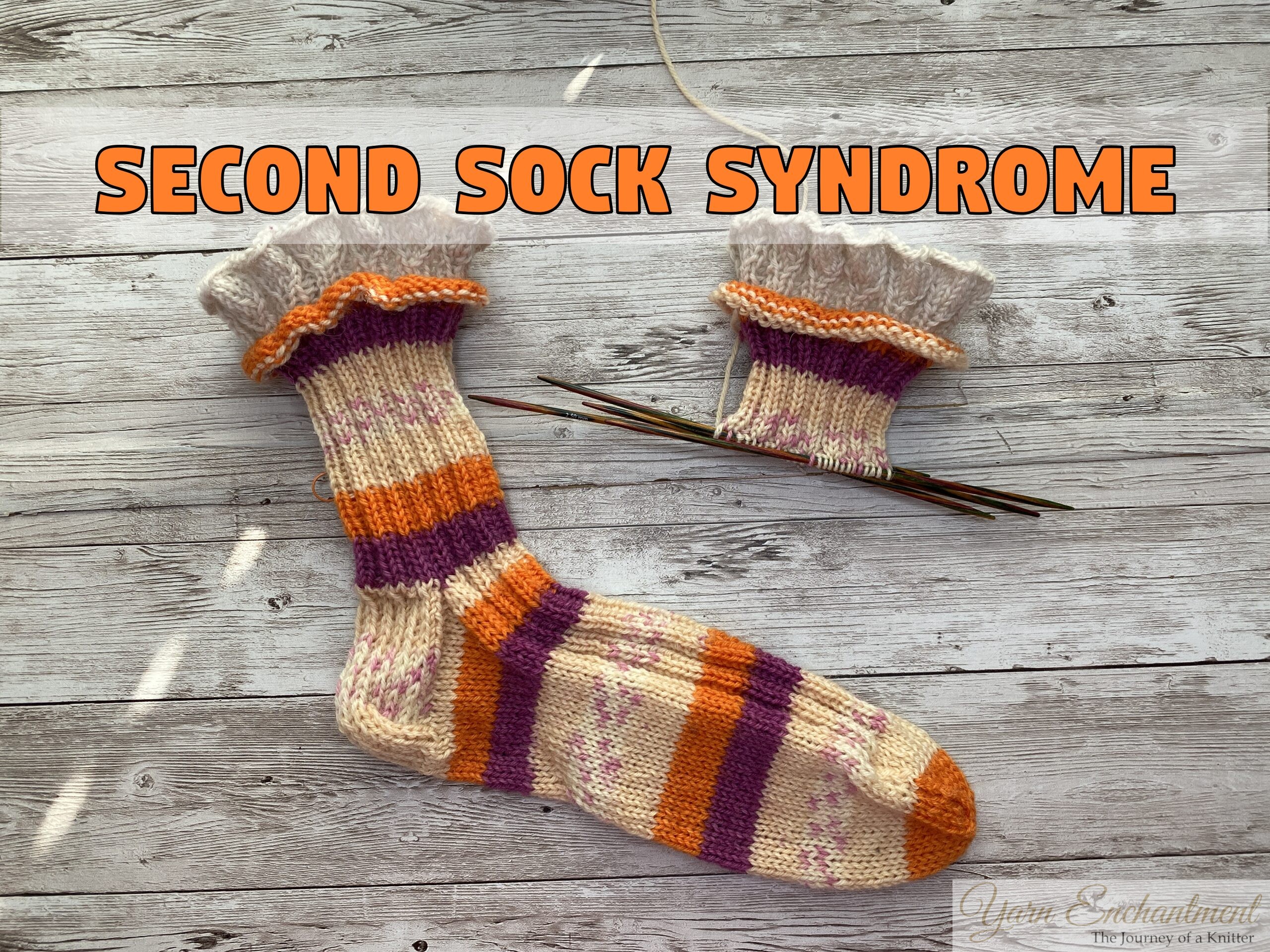
And then... the second sock for my daughter sat in my project bag for a whole week. Untouched. Even though I knew I could finish it fast. Even though the yarn was still sitting right there next to the couch.
If that sounds familiar, you have second sock syndrome. And today I want to share what actually helped me get the second sock done: my own tips, the ones I really tried, including the ones that did not work for me. Grab a cozy drink and let me tell you all about it.
Second Sock Syndrome: How I Finally Finished the Second Sock (My Honest Tips)

What Is Second Sock Syndrome? (And Why Does It Happen?)
Second sock syndrome is a common knitting phenomenon: a knitter finishes the first sock full of enthusiasm, but loses all motivation to knit the matching second one. It happens because the novelty of the yarn and the pattern wears off, and what is left is repetitive work.
And it does not only happen with socks. The second sleeve of a sweater, the second mitten, the second glove: same syndrome, different project. The result is a drawer full of beautiful single socks. Or, like in my case, one finished sock and one project bag that quietly stares at you from the corner.
Why Vanilla Socks Make It Worse
Here is the thing I kept asking myself while my daughter's second sock lay untouched in the bag: I mostly knit vanilla socks because they are fast and there is not much to think about.
But what if that is exactly the problem?
The first sock is exciting: a new yarn, a new project, watching the heel turn come together. The second plain stockinette sock is... the exact same thing again. No new discoveries, no surprises, just a repeat. And a repeat of a plain vanilla sock is maybe the least exciting thing a knitter can do.
So maybe it is not that I am lazy. Maybe vanilla socks are simply not interesting enough to survive being knit twice in a row. With that thought in mind, I collected my tips, and I can honestly say I have tried every single one of them myself.
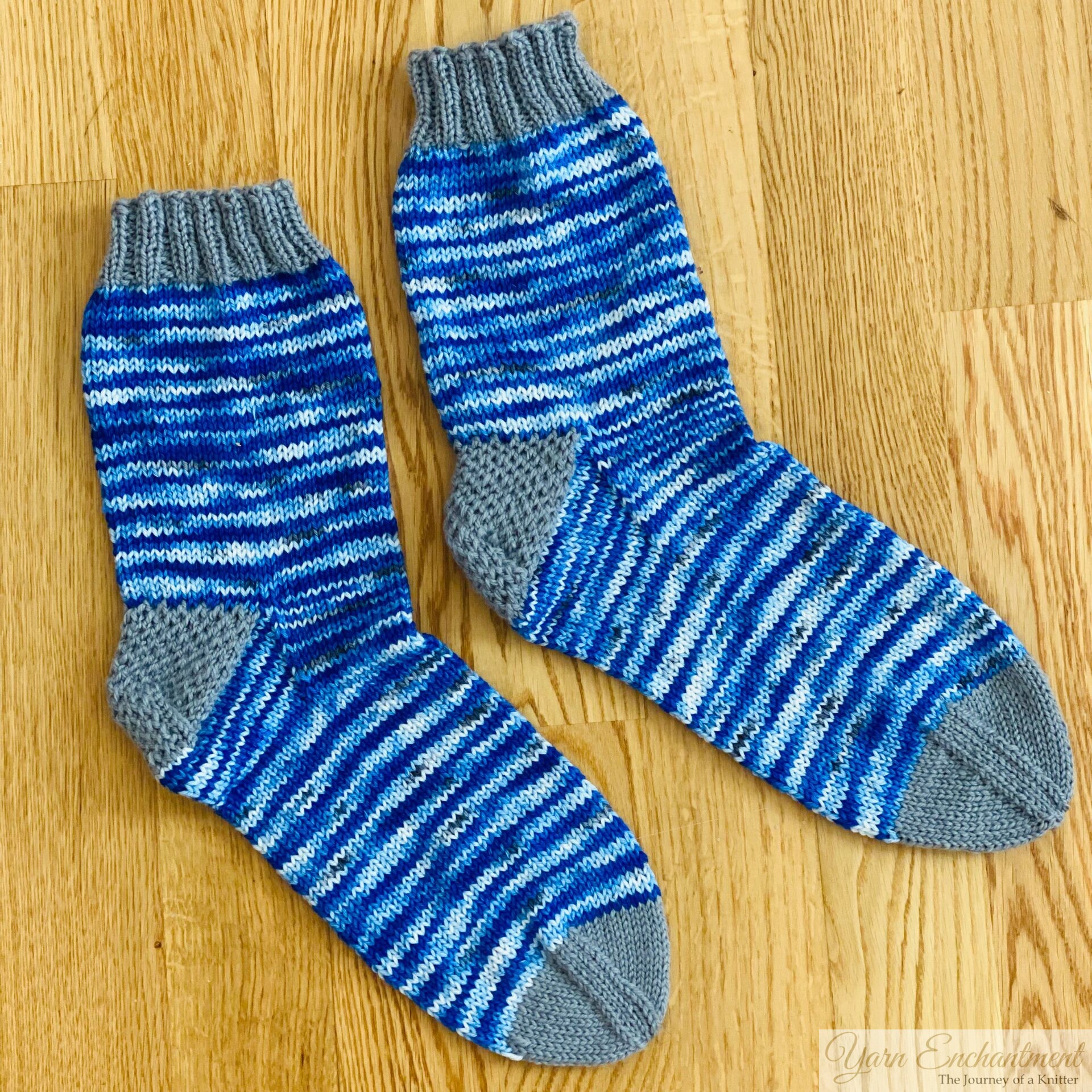  |
A pair of socks for my husband. He has big feet, so EU size 46, that's about a US men's size 12.5. I changed the colors for the ribbing, heel, and toes to make them a bit more interesting, but I still needed two months to finish them. 🙂 |
8 Honest Tips to Finish Your Second Sock
1. Cast On Immediately (Break the Friction)
This is the tip you will read everywhere, and I do it every single time: the moment the first sock comes off the needles, I cast on the second one.
But here is my honest experience: casting on is not magic. I cast on right away, and the sock still sat in my project bag for a week. Casting on immediately is a good first step because it breaks the biggest hurdle, but it does not knit the sock for you. You will need the other tips too.
2. Place Progress Stitch Markers Every 10 Rows
This is my quiet little trick: I place a stitch marker every ten rows on the leg.
Why? Because a plain leg can feel like it never ends. But when you look down and see four markers already, you can see your progress. Suddenly the leg is not one endless gray block of stockinette, it is a series of small finishable chunks. And small chunks get knit.
3. Choose Self-Striping or Color-Morphing Yarn
This one I have tried, and it works: with a self-striping yarn, part of the fun is simply watching what the next stripe will look like. "Just one more stripe" is a dangerous sentence, in the best way.
One important thing I learned though: you have to pay attention that the second sock comes out the same way. Check where the color repeat starts before you cast on, so both socks match. (Or, if you are relaxed about it, embrace the mismatch. But ask your sock's future owner first, especially if that owner is a kid. Kids notice everything.)
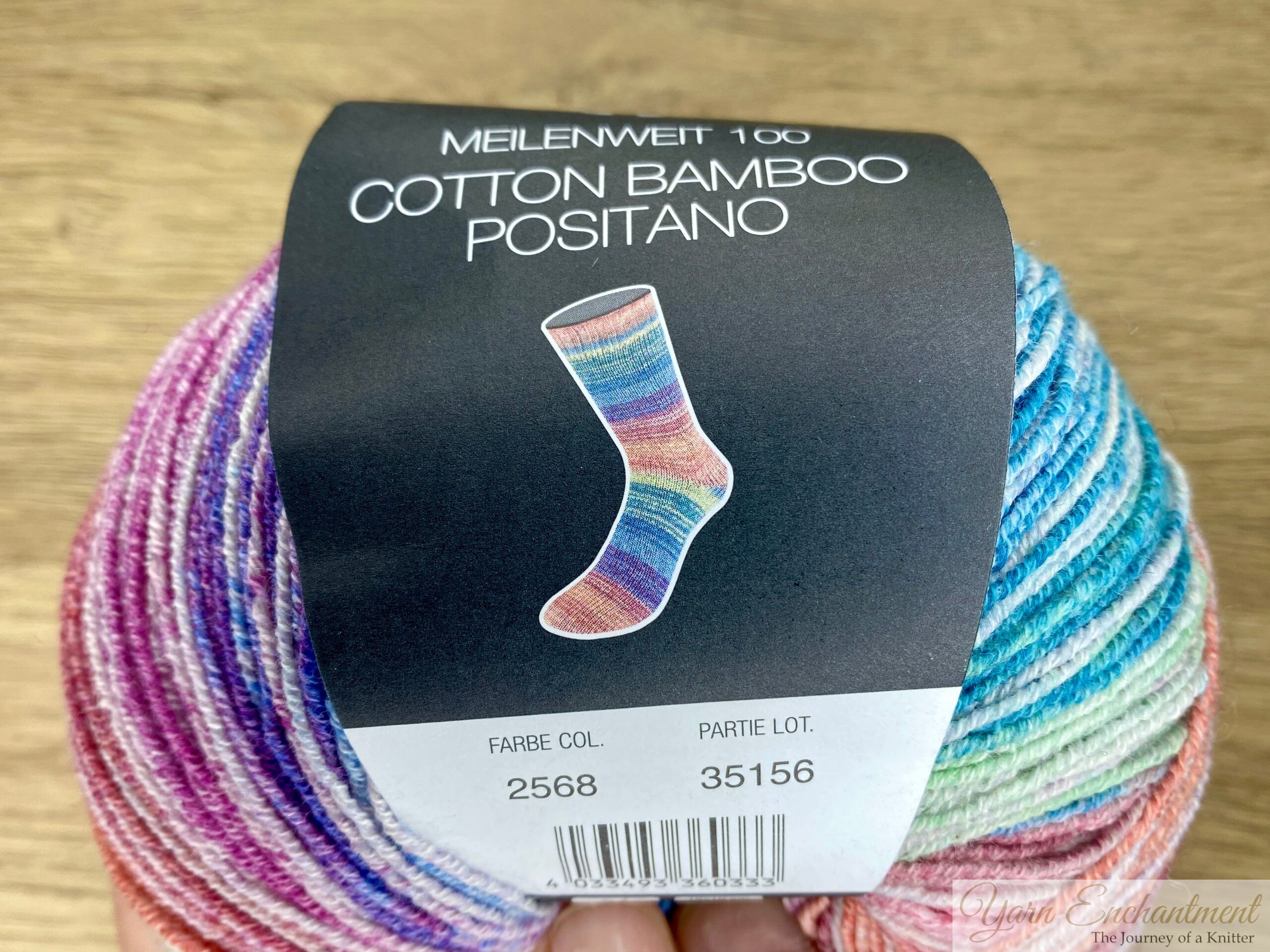
And look at this lovely skein of self-striping yarn! I think it would be really interesting to mismatch the colors on purpose.

4. Keep Exact Row Notes & Use a Progress Tracker
If you pause between the two socks, notes are what saves you. Where did I start the heel? How many rows until the toe? Nothing kills the motivation to pick a sock back up like having to count decreases on the finished sock to figure out what you did.
I always keep notes, and I use a progress tracker for it. I even made one you can download for free right here on the blog: Progress tracker free download
5. Try a Knitalong or Sock Partner (If You Like Accountability)
Knitting together with others, or having a sock partner who checks in on your progress, can be a real motivator. You set goals together, you show each other your progress, and nobody wants to be the one still on sock number one.
6. The Two-at-a-Time (TAAT) Magic Loop Method: Is It Worth It?
The logical extreme of "never knit a lonely second sock" is knitting both socks at the same time, on one long circular needle, with the magic loop method.
I tried it. For me personally, it gets too tangled, and it was not fun at all. I spend my sock knitting time untangling two balls of yarn and two cables instead of relaxing. If you are curious, give it a try, some knitters swear by it and finish perfect pairs. But if you try it and feel like you are wrestling an octopus, that is allowed too. Put it down and go back to one sock at a time.
(One practical note I discovered while reading up on this: knitting in sections on two separate needles, cuff of sock one, cuff of sock two, then the heels, avoids the tangle. But it needs two sets of needles, and not everyone can afford that just for one tip.)
7. Avoid the "Pile of Single Socks" Trap
This one comes up as advice sometimes: "If you struggle with second socks, just deliberately knit a few single socks, and go back for the pairs later."
I tried that. And I will never do it again. I ended up with single socks, and for that project, I never cast on the second sock at all. Instead of beating second sock syndrome, I made it permanent.
Learn from me: the second sock does not get easier by waiting. The distance between sock one and sock two only grows.
8. Add Brain-Stimulating Texture or Colorwork (The #1 Cure)
And here is my number one tip, the one that works the best for me: knit socks where the work itself is interesting.
I notice it every time: with complicated patterns, like colorwork, I finish my socks without losing any time. My knee-high Christmas stockings? Knitted them in about 1.5 weeks, without a single pause. Because working a pattern where the progress does not get boring pulls you forward. There is always the next round of the chart to look forward to, and your hands are too busy to get bored.
For my vanilla socks, this means something simple: if plain stockinette is what makes my second socks stall, I can add something small. A bit of texture on the leg, a simple stitch pattern, anything that gives my brain a little job to do. Because the truth I learned from my Christmas stockings is this: second sock syndrome is rarely about the second sock. It is about boredom. Bored socks are slow socks, no matter which number they are.
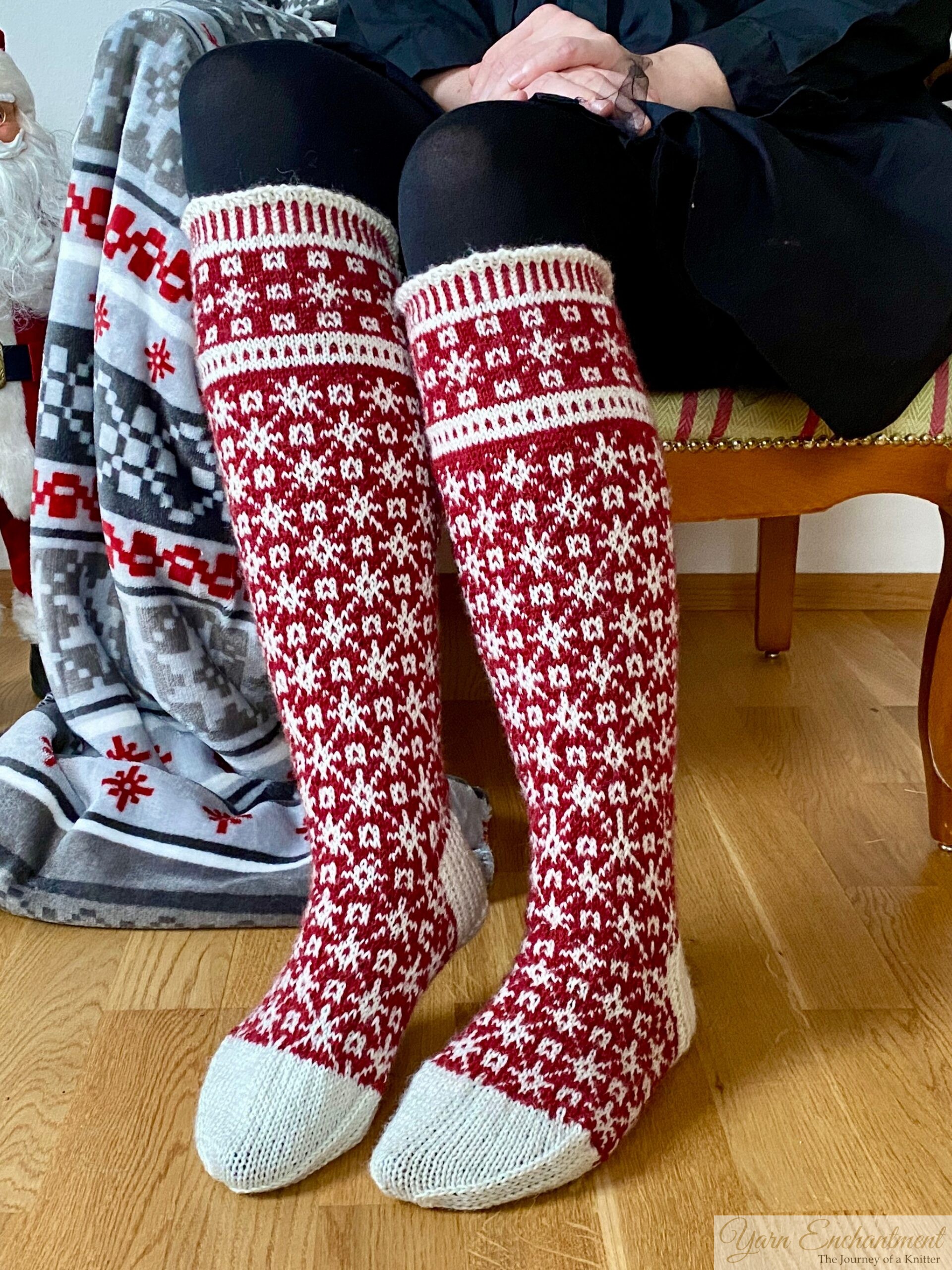  |
I only needed one and a half weeks for these Christmas stockings. They were so much fun to knit that I could not stop at all. |
The Untested Idea: Subtle Mismatches & Inverted Colors
While researching, I found a tip that sounds really good, but I have to be honest: I have not tried it myself so far. The idea is to make small changes on the second sock: swap the two colors, or knit the cuff and heel of sock two in opposite colors, so the second sock is not a pure repeat, and you only notice the difference at second glance.
It sounds like a lovely way to bring back the feeling of something new without losing the pair. Maybe on my next pair I will swap the colors on sock two, and then I will tell you how it went. 🙂
Frequently Asked Questions (FAQ)
What does vanilla socks mean in knitting?
Vanilla socks are plain socks knit in simple stockinette stitch, without lace, cables, or color charts. They are perfect for relaxing, mindless knitting, which is exactly why I love them. But that same simplicity is also why the second vanilla sock can feel like a chore.
Does two-at-a-time (TAAT) sock knitting cure second sock syndrome?
It can, because both socks are finished at the same time, so a lonely second sock never exists. But it is not for everyone: when I tried TAAT on magic loop, it got too tangled for me and was not fun. Some knitters love it, others (like me) are happier knitting one sock at a time with the tips above.
How do you track rows on socks so they match?
Keep exact row notes in a sock tracker, place locking stitch markers every 10 rows, or use a row counter. I combine notes with a progress tracker, and you can download my tracker for free right here on the blog.
Celebrate the Finished Pair & Share Yours!
I hope this post helps people. I really wanted to share my honest feelings about it: what I have tried, what worked, and what did not work for me at all.
And now, the happy ending: the second sock for my daughter? It got finished. The pair is done, and I want to be honest, there is no better feeling than holding up two finished, matching, cozy socks and knowing that both feet will be warm this winter.
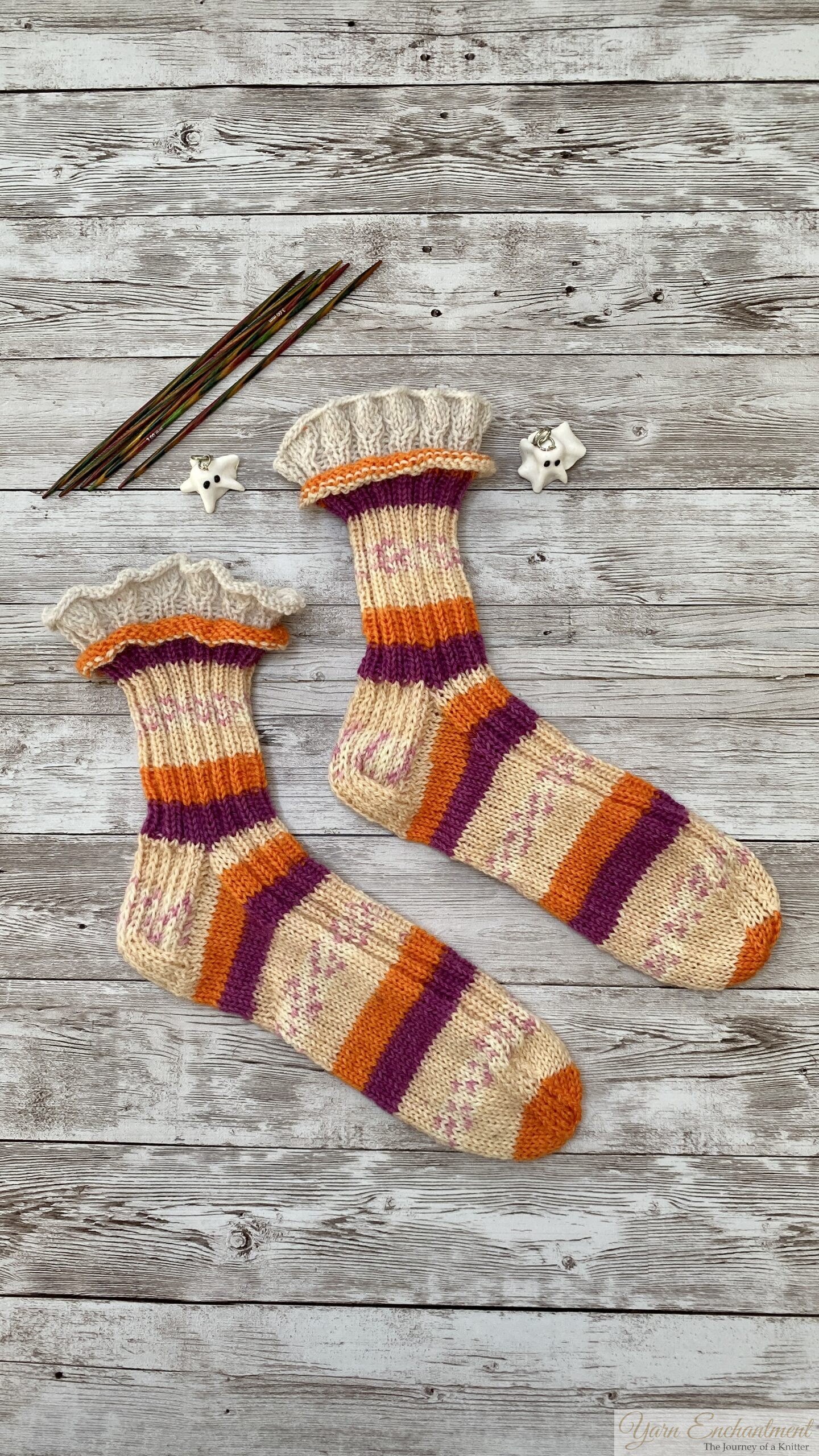
I did make only one pair of socks this Socktober, but I am proud of it, because I added a new touch like the ruffles. If you want to learn how I did that, I have a tutorial about it. And it took me three whole weeks to finish them, haha. 🙂 Apparently my own tips have limits too!
The first sock proves you can do it. The second sock is just the same thing, and this time you already know all the tricks. And when your second sock is done too, treat yourself. You earned it.
Do you also struggle with the second sock? What is your best trick to get it done? Tell me in the comments, and you can now attach a photo directly in the comments, I would love to see your finished pairs (or your beautiful lonely socks)! 🧦
Until next time, happy knitting!
Socktober, complete: ruffles, ribbing, and autumn stripes, guarded by two little clay ghosts. If you'd like to make some spooky stitch markers of your own, you can find my tutorial [Spooky Fimo Clay Stitch Markers]! 👻

More Sock Goodness for You
If this post put you in a sock mood, here is where to go next:
[Free step-by-step sock knitting course]
[Tutorial for casting on DPNs without twisting your stitches]
[How to knit a decorative ruffle sock cuff]
[What Is Socktober? The Real Story Behind the Name]
A Little Way to Say Thanks
Yarn Enchantment is my cozy hobby corner on the internet. If something here made your knitting day easier or you simply enjoy reading my posts and would like to say thank you, you can leave a small Ko-fi tip - but only if you truly want to.
My patterns and tutorials stay free for everyone, always. Every little tip just goes toward new yarn and a cup of tea for my cozy knitting evenings.
☕ Support me on Ko-fiYou Might Also Like



 |
|
Join the Cozy Corner Newsletter
Hello, creative soul. Welcome to the Yarn Enchantment Newsletter, a little space where we celebrate all things cozy, crafty, and full of heart. Think of this as your friendly crafting companion, a soft dose of inspiration delivered straight to your inbox, just for you. Each newsletter brings you: ✨ Notifications about new patterns and tutorials – easy knitting patterns and beginner crochet projects you won’t find anywhere else 🧶 Practical yarn tips for new crafters, plus advice on the best yarn for fall, blankets, and handmade gifts 💌 Small stories and adventures from my own workbench, because crafting is as much about the journey as the finished piece Whether you’re knitting by the fire, looking for your next creative spark, or simply wanting a quiet moment with your hooks and needles, this newsletter is here to cheer you on. Crafting isn’t just about the final project. It’s about the joy, the peace, and the stories we weave along the way. So grab a cup of tea or coffee, settle in, and join me. Together we’ll make a little magic, one stitch and one story at a time. I’m so glad you’re here. Let’s create something beautiful together. Sign up below to receive your first email, and feel free to leave a comment on the blog if there’s a topic you’d love to see covered. Your ideas might just become our next newsletter feature. |