Durable Friendship Shawl
February 14, 2024
Birthdays, Spring’s Early Arrival, and Completed Projects
February 20, 2024Color Work Chronicles: Part 2
)
Originally published on February 16, 2024
What Is Stranded Colorwork?
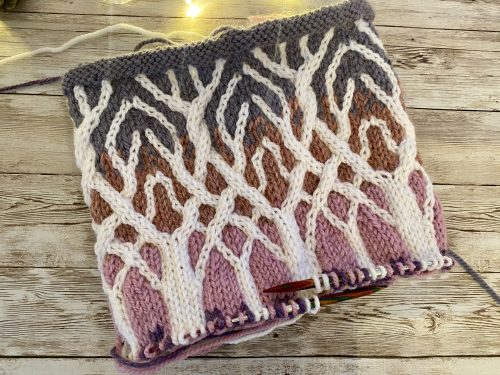
Stranded color work, a knitting technique, involves using multiple strands of colored yarn in the same round to create intricate patterns, ranging from simple geometric designs to highly detailed motifs inspired by nature. Many knitters hesitate to try this technique due to the perceived challenge of managing multiple colors. However, with the right approach and plenty of practice, stranded color work is easier than it seems and incredibly enjoyable to knit.
Typically worked in the round, stranded knitting primarily consists of knit stitches, with the right side of the fabric always facing you. Designs are executed by switching between colors according to the chart, with the unused yarn strand carried along the wrong side of the fabric until needed again. This creates 'floats' or strands on the wrong side, resulting in a dense, double-layered fabric that enhances warmth and texture.
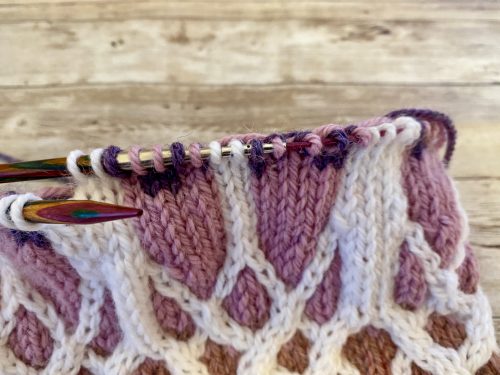
Spread out your stitches!
Take regular breaks to spread out the stitches on your right needle as you progress (the ones you've just knitted). This helps to ensure that your strands maintain the right length, allowing them to fall smoothly on the wrong side of the work, thereby avoiding any bunching on the right side of the fabric.
Understanding Color Dominance
In Fair Isle knitting, colors are typically categorized into background colors and foreground colors, also known as pattern colors. As you strand these colors along your work, you'll observe that one color (the left strand or dominant color) is carried below the other. Consequently, stitches made with this color appear slightly taller and more prominent than those worked with the upper strand (the right strand). This variation occurs because the upper yarn must travel a slightly longer distance, resulting in less yarn for the stitch and gently pulling it into the fabric.
Consistently holding your yarns in the same positions allows you to leverage this difference to your advantage. By consistently positioning your pattern color to the left of the background color, you ensure that it emerges from below, subtly elevating its stitches and enhancing the prominence of the pattern color.
Note: Your dominant color is always left to your background color.
Tip: I always set my dominant/pattern color yarn down on my left side and the non-dominant/background color one on my right.
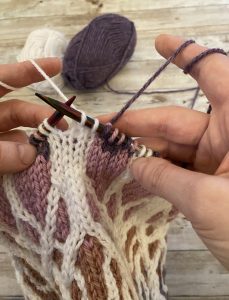
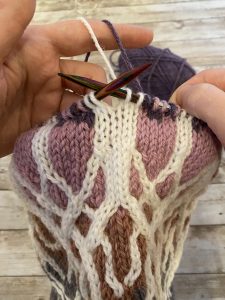
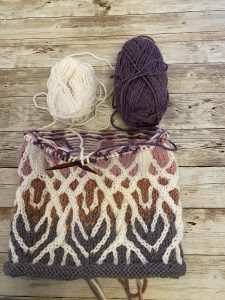
| One strand in each hand | Holding two strands in the left hand | Dropping the yarn and picking up the strand you need to work with |
|---|---|---|
 |
 |
 |
|
Dominant color on your left hand, background color on your right hand. |
Dominant color on the left side of the background color. |
Dominant color on the left, background color on the right side. |
Yarn-Holding Techniques for Stranded Colorwork
1. Holding two strands in the left hand
If you typically knit with the yarn in your left hand, holding both yarns in this hand might be the most comfortable option for you. For Fair Isle knitting, you hold both yarns in your left hand, with the foreground color typically to the left of the background color, so the foreground color becomes more dominant. In my experience, I've encountered difficulties in managing the floats, often resulting in them being too tight or the yarn slipping from my finger.
2.One strand in each hand (English and Continental):
If you struggle with managing both yarns in one hand, you may want to explore combination knitting, where one yarn is held in each hand. Holding your yarns in separate hands prevents tangling, unless you switch their positions and alter yarn dominance. The dominant color is held in the left hand, while the background color is in the right hand. Although holding the yarn in my right hand poses challenges, I find this method enjoyable, particularly for two or three stitches.
3.Dropping the yarn and picking up the strand you need to work with:
This is my preferred method for knitting stranded color work. While it may seem that dropping the yarn and picking it up again slows you down significantly, in my experience, I find it to be faster. Additionally, maintaining tension is easier, and there's minimal risk of tangling, resulting in smoother progress.
4.Holding two strands in the right hand:
I'm a continental knitter and find it challenging to hold the yarn with my right hand. Therefore, I'm unable to demonstrate the technique of “Holding two strands with the right hand”. However, I recommend watching a talented knitter on YouTube
Final Thoughts
In conclusion, stranded color work may seem daunting at first, with its intricate patterns and multiple colors. However, armed with the right techniques and practice, it can be a highly enjoyable and rewarding knitting experience. By mastering yarn management, understanding color dominance, and maintaining proper tension, you can create stunning designs with confidence. So, spread out your stitches, experiment with different yarn-holding methods, and don't be afraid to dive into the world of stranded color work knitting. With patience and perseverance, you'll soon be crafting beautiful double-layered fabrics adorned with captivating patterns.
Until then, happy knitting!
A Little Way to Say Thanks
Yarn Enchantment is my cozy hobby corner on the internet. If something here made your knitting day easier or you simply enjoy reading my posts and would like to say thank you, you can leave a small Ko-fi tip - but only if you truly want to.
My patterns and tutorials stay free for everyone, always. Every little tip just goes toward new yarn and a cup of tea for my cozy knitting evenings.
☕ Support me on Ko-fi
You Might Also Like


 |
|
Join the Cozy Corner Newsletter
Hello, creative soul. Welcome to the Yarn Enchantment Newsletter, a little space where we celebrate all things cozy, crafty, and full of heart. Think of this as your friendly crafting companion, a soft dose of inspiration delivered straight to your inbox, just for you. Each newsletter brings you: ✨ Notifications about new patterns and tutorials – easy knitting patterns and beginner crochet projects you won’t find anywhere else 🧶 Practical yarn tips for new crafters, plus advice on the best yarn for fall, blankets, and handmade gifts 💌 Small stories and adventures from my own workbench, because crafting is as much about the journey as the finished piece Whether you’re knitting by the fire, looking for your next creative spark, or simply wanting a quiet moment with your hooks and needles, this newsletter is here to cheer you on. Crafting isn’t just about the final project. It’s about the joy, the peace, and the stories we weave along the way. So grab a cup of tea or coffee, settle in, and join me. Together we’ll make a little magic, one stitch and one story at a time. I’m so glad you’re here. Let’s create something beautiful together. Sign up below to receive your first email, and feel free to leave a comment on the blog if there’s a topic you’d love to see covered. Your ideas might just become our next newsletter feature. |