

My First Intarsia Knitting Project
February 11, 2025
Knit 2 Together (k2tog)
February 17, 2025How to Knit a Double-Folded Edge Using a Crochet Hook: Technique, Pros, and Cons

Originally published on February 13, 2025
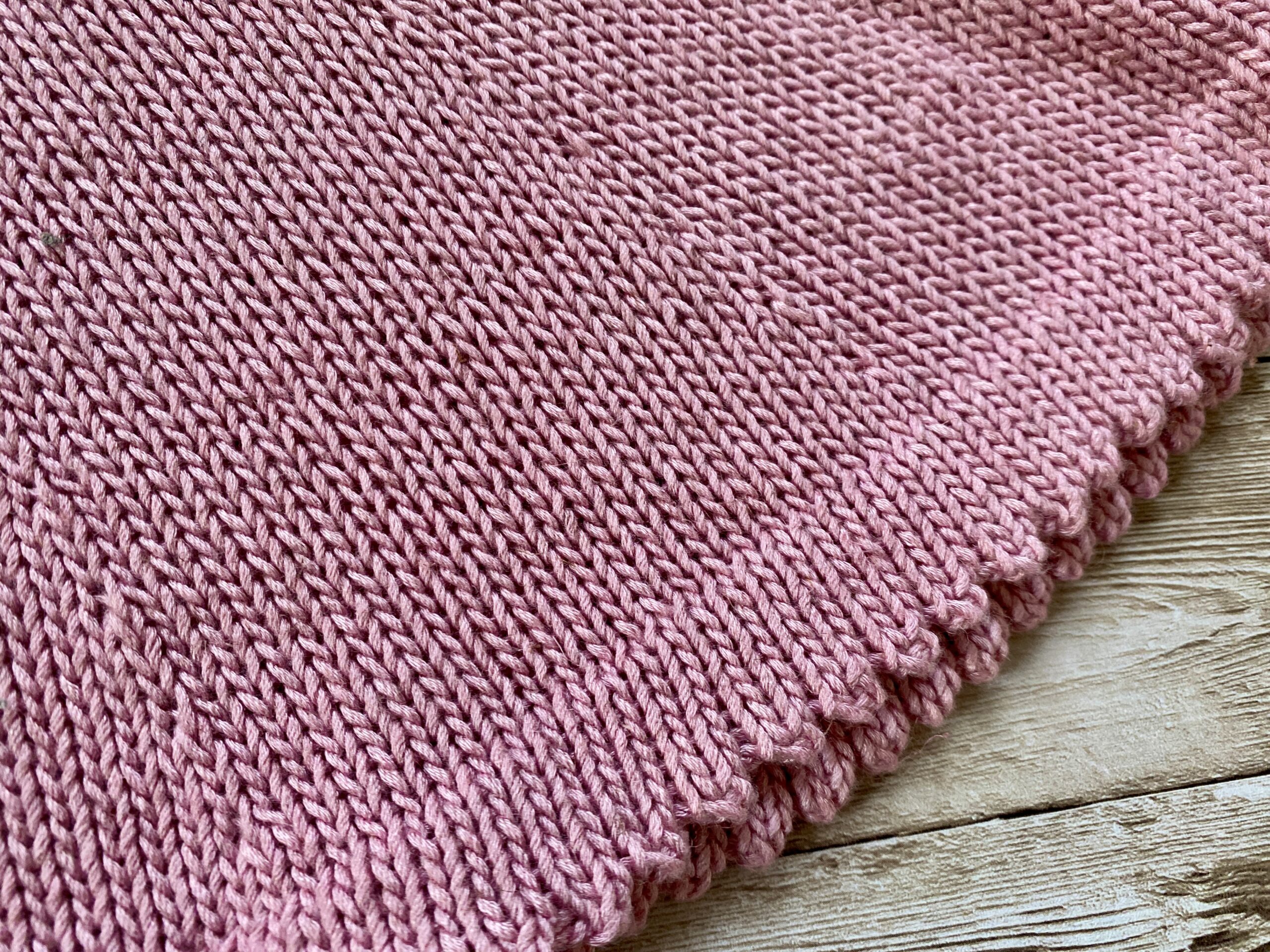
A double-folded edge adds a clean, professional finish to knitting projects. It’s especially popular for garments like sweaters, hats, or socks because it not only looks polished but also provides extra stability and durability. In this blog post, I’ll show you how to create a double-folded edge as a bind-off method using a crochet hook, and we’ll discuss the pros and cons of this technique.
 |
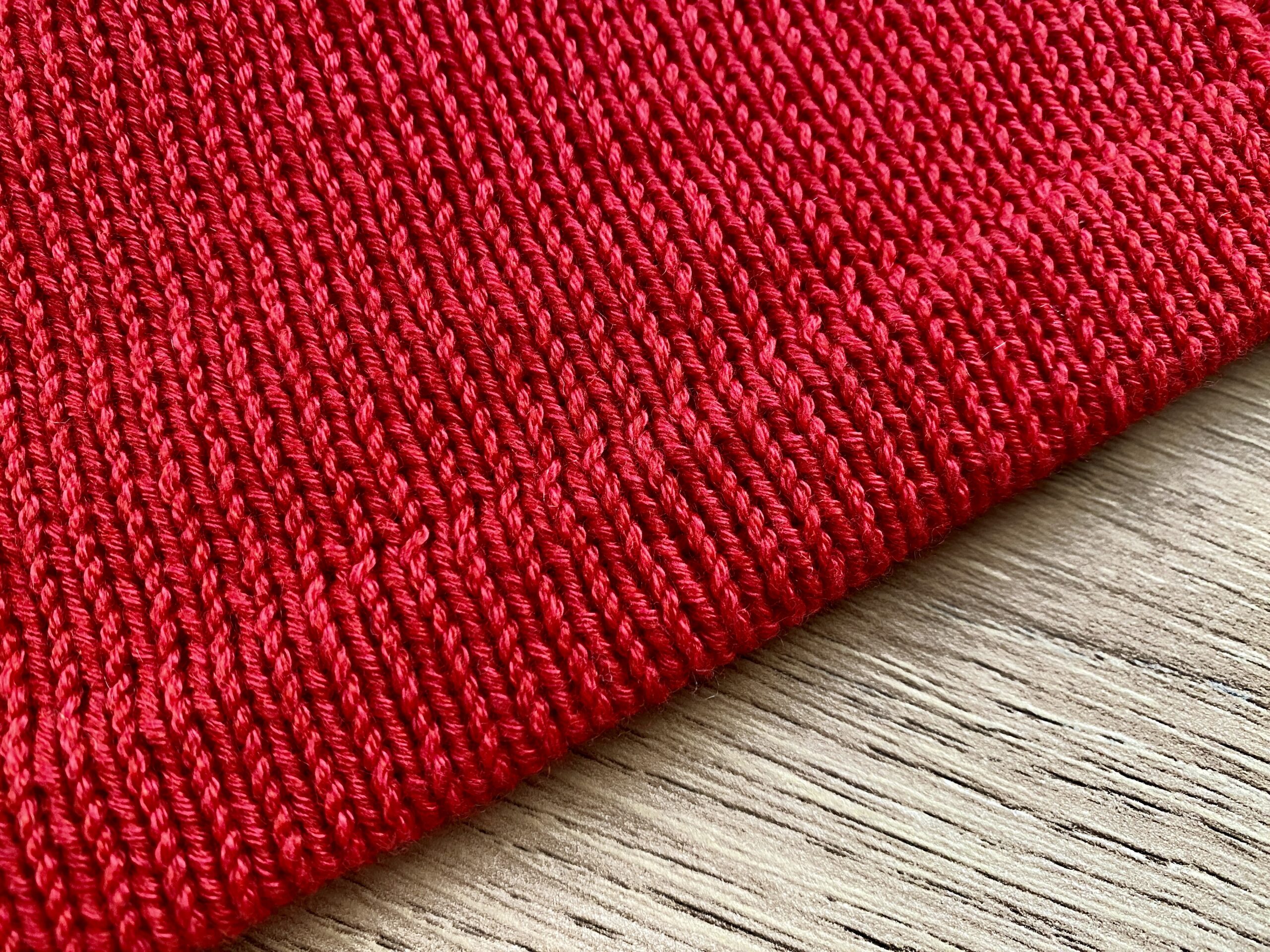 |
| Double-folded picot edge, secured using a whip stitch for a neat and decorative finish. | Double-folded edge created with a provisional cast-on, at the beginning of the project |
What Is a Double-Folded Edge?
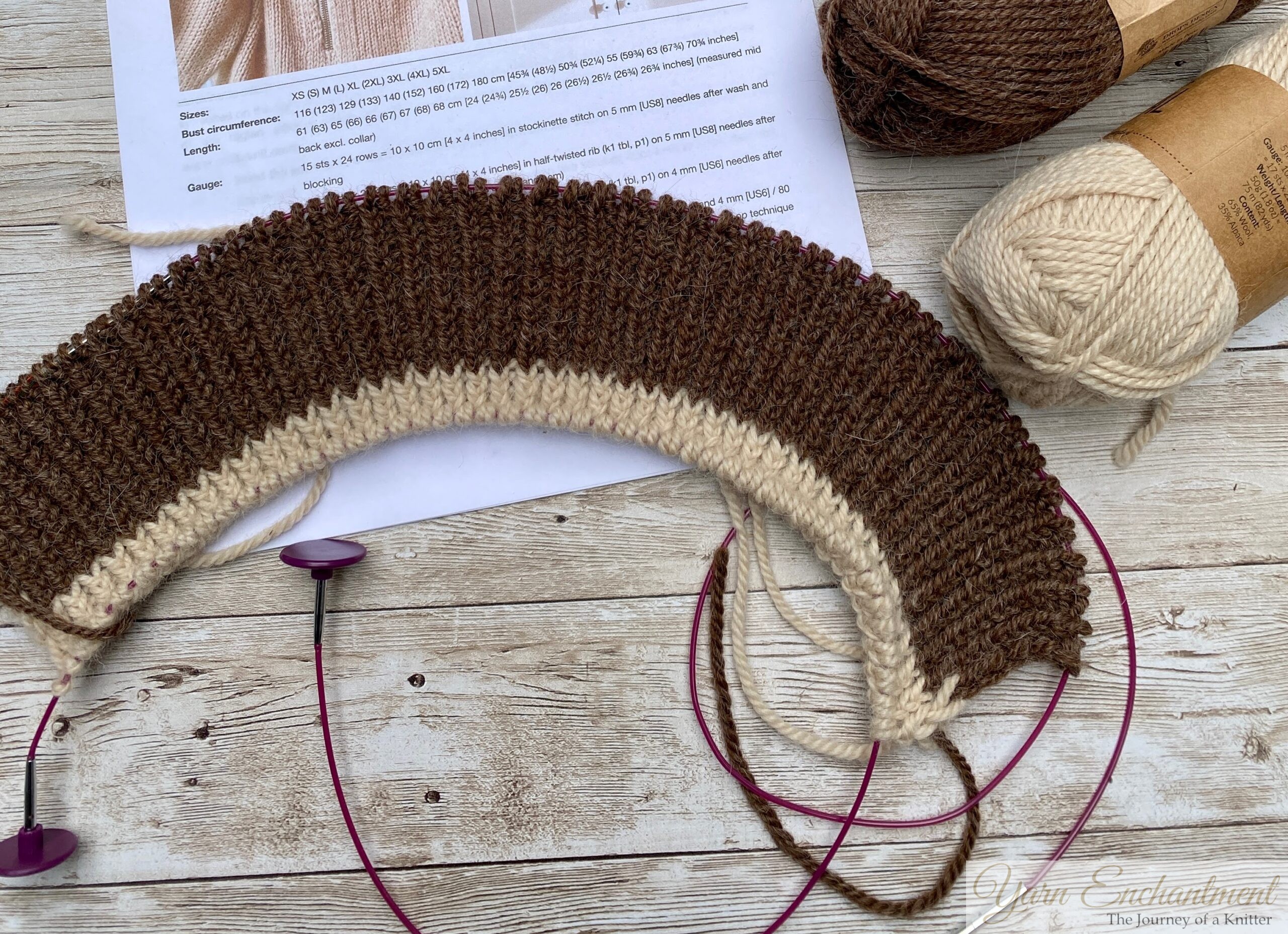
A double-folded edge is created by folding the edge of a knitted piece inward and securing it. This can be done in various ways. You can either start with a provisional cast-on to create a double-folded edge at the beginning of your project or use it as a bind-off method. Common bind-off methods include sewing with the Kitchener stitch or whip stitch. However, using a crochet hook offers a simple and effective way to close the edge without creating knots or worrying about running out of yarn. Alternatively, you can use Judy’s Magic Cast-On at the beginning of your project. This method keeps the cast-on edge open, on a spare needle, making it easy to fold and join the edge later without needing a provisional cast-on.
 |
|
You can see that Judy’s Magic Cast-On was made on a spare cable.
I only needed to attach a needle, fold it in half, and knit the stitches together.
|
Step-by-Step Guide: Double-Folded Edge with a Crochet Hook
What You’ll Need:
- Your knitted piece, prepared with a lifeline (this makes it easier to spot the row).
- A crochet hook that matches your yarn weight.
- The same yarn you used for your project.
Instructions:
- Prepare Your Knitting:
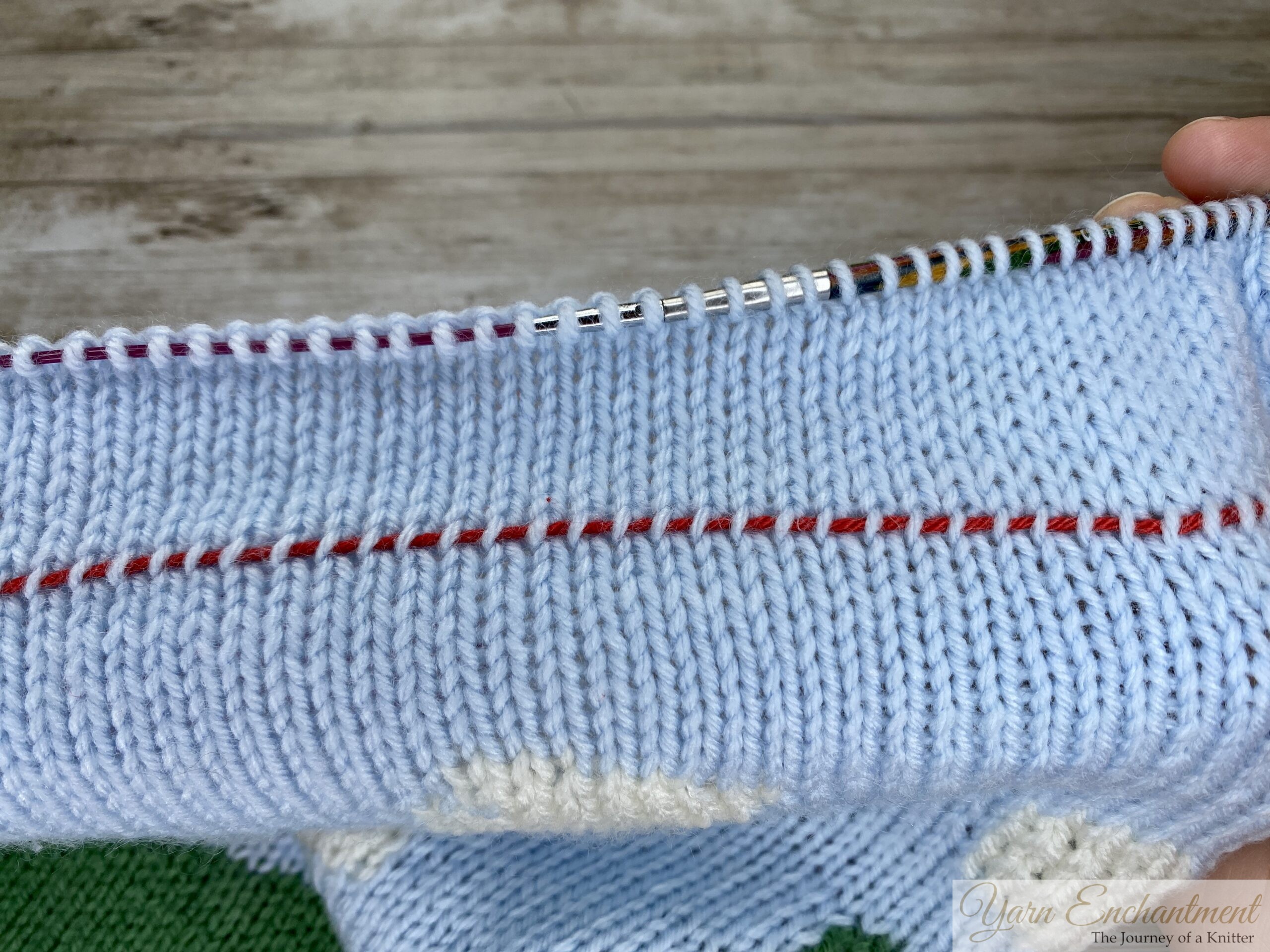
Thread a lifeline into the row where you want to start your folded edge. Then, knit the number of rows needed for your double-folded edge. For example, if you want your double-folded edge to be 5 cm, you need to knit 10 cm. When folded in half, it will measure 5 cm. - Insert the Crochet Hook:
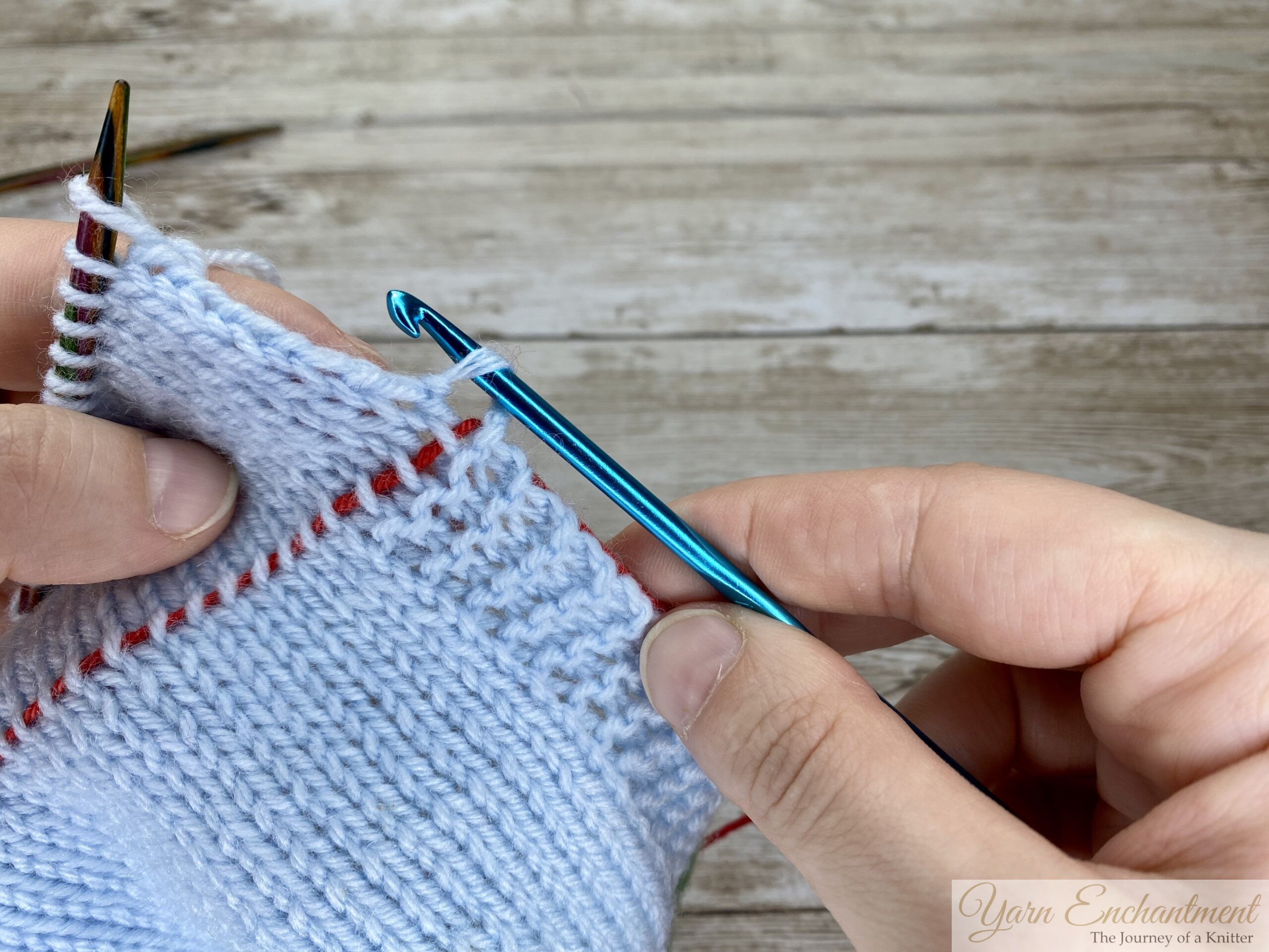
Insert the crochet hook through the first stitch from the row with the lifeline (make sure it is the edge stitch) and the corresponding stitch from the live stitches on your needle, purlwise. Slip the stitch off the needle. - Join the Stitches:
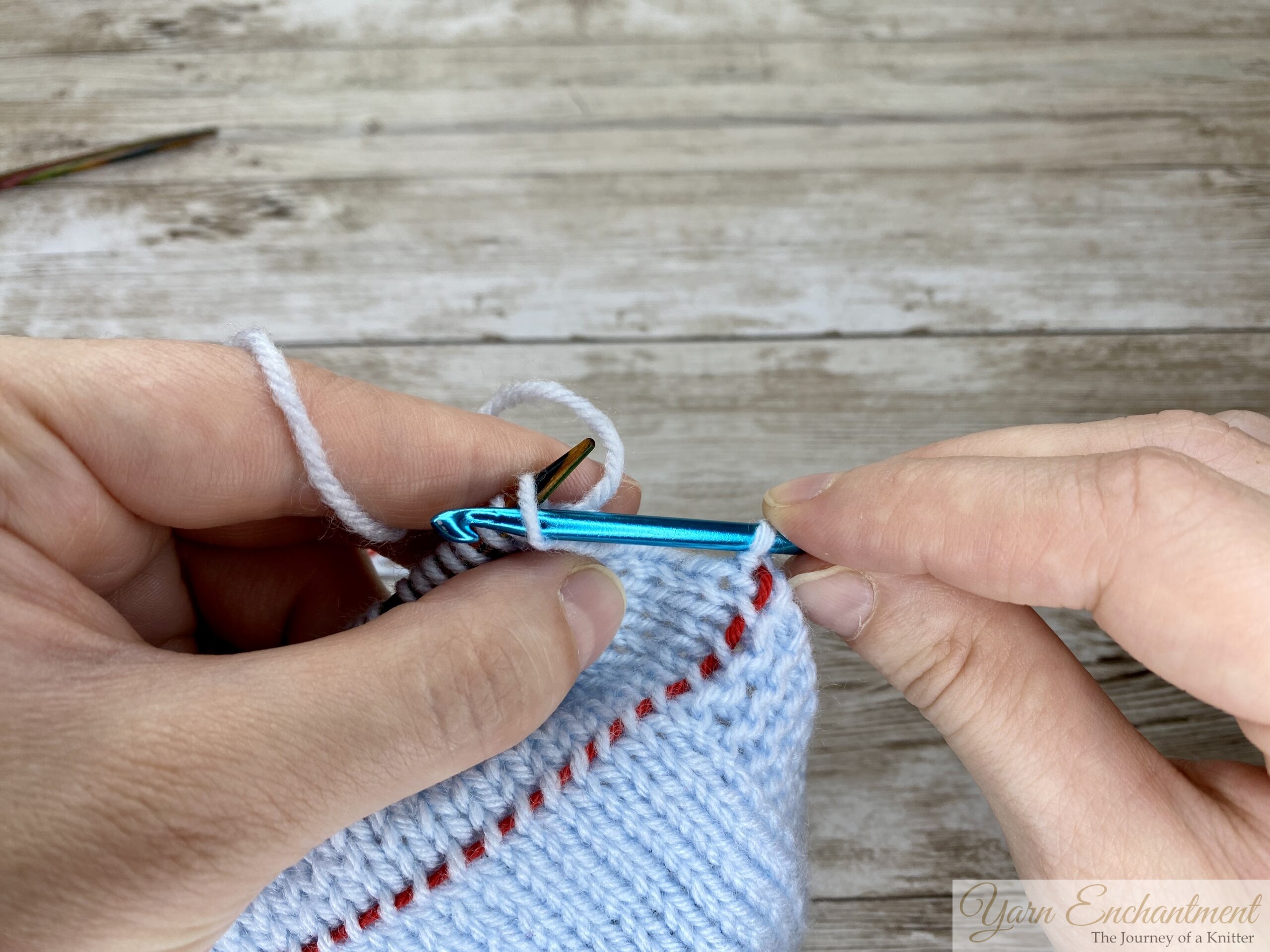
Yarn over and pull the working yarn through both the stitch and the knitted fabric, to create our first stitch
 |
 |
 |
| Thread a lifeline into the row where you want to start your folded edge | Insert the crochet hook through the first stitch from the row with the lifeline | Insert your hook purlwise into the stitch on your needle |
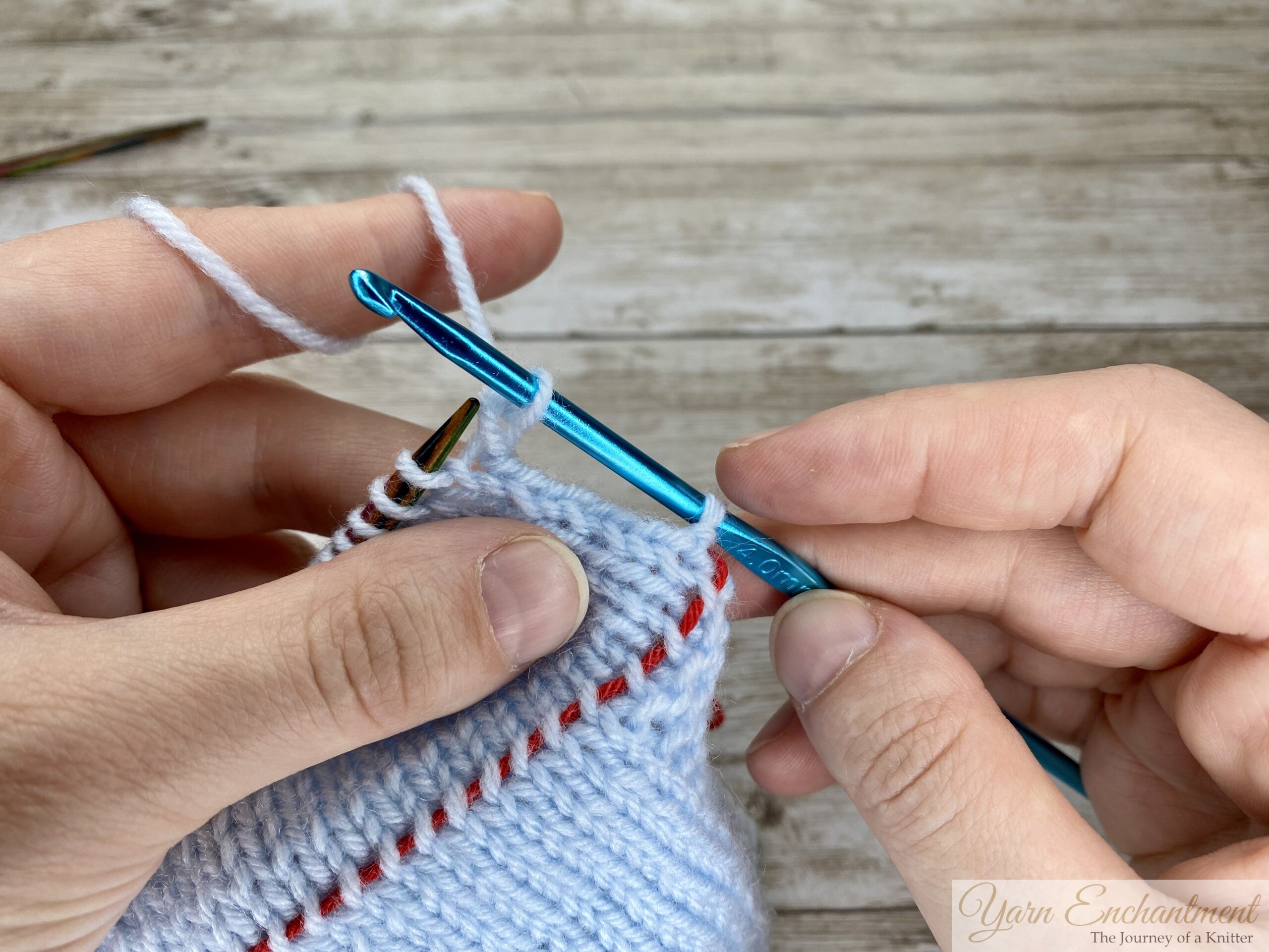 |
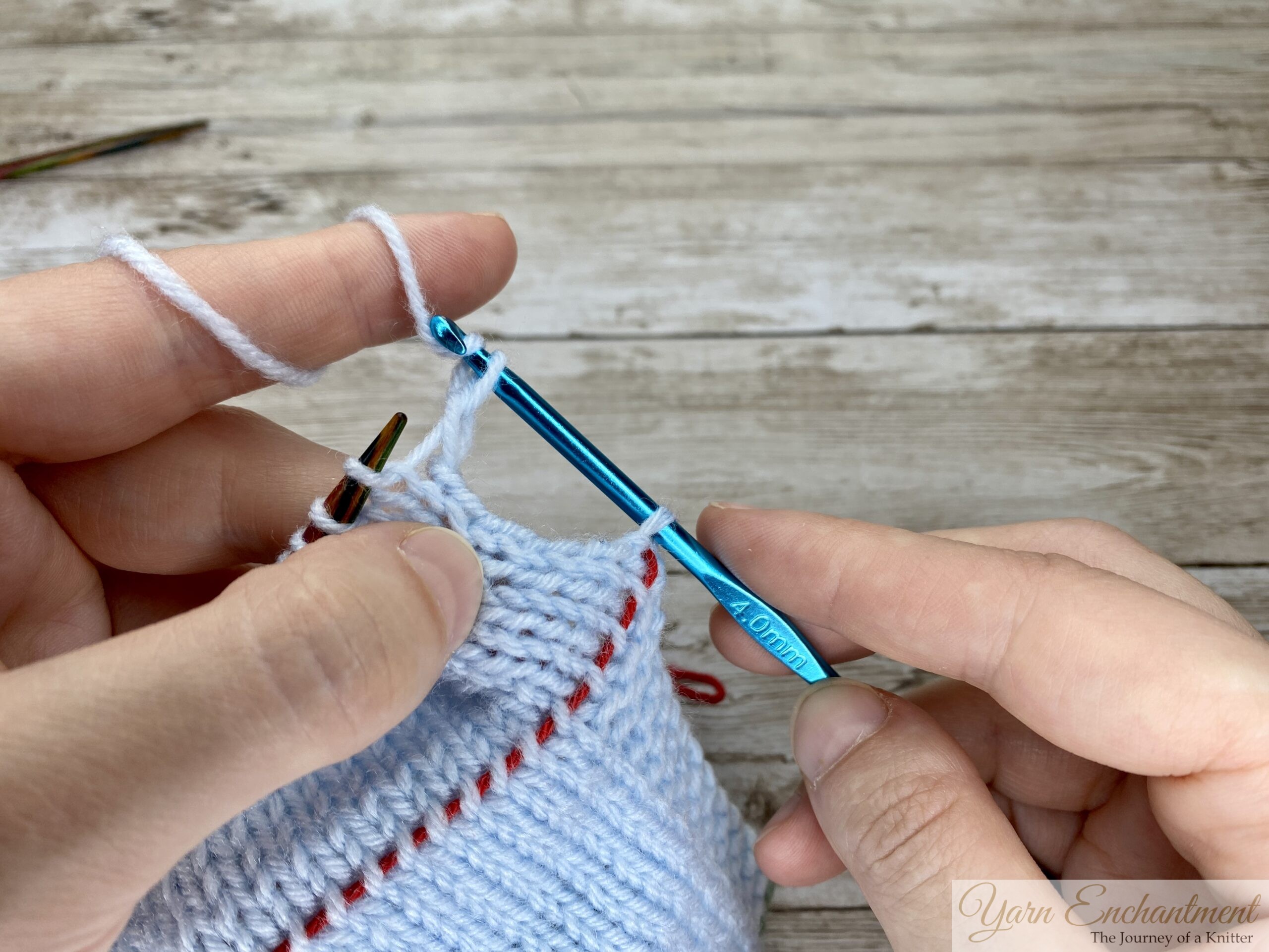 |
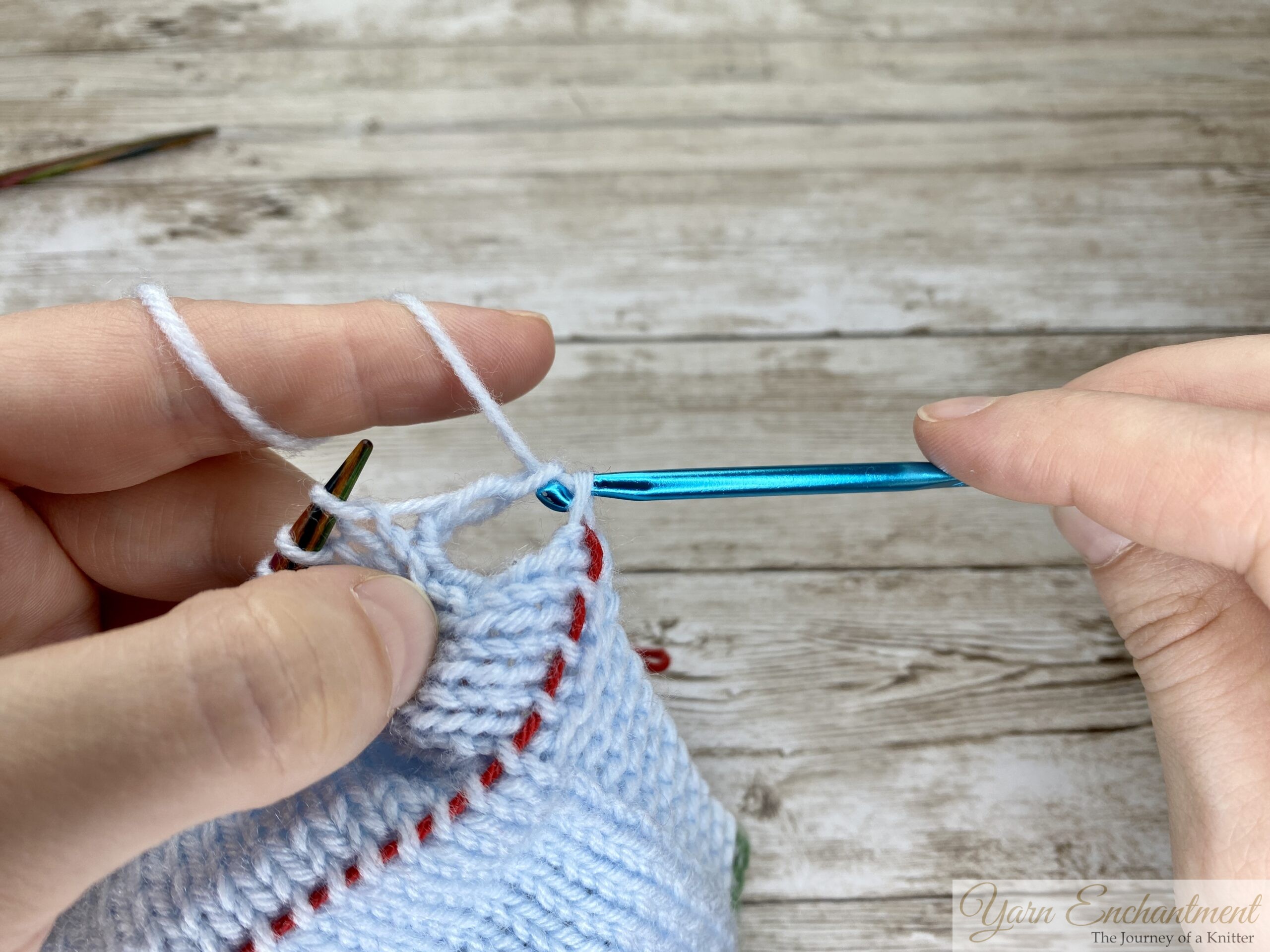 |
| And slip this stitch off | Yarn over | Pull the yarn through the live stitch and the edge stitch (1 stitch on your hook) |
Repeat:
- Insert your hook through the next stitch on the row with the lifeline and slip the live stitch off your knitting needle purlwise. Yarn over and pull through all the loops on your crochet hook to create a slip stitch.
- Finish Off:
Cut the yarn and pull it through the final loop to secure the edge. Weave in the ends neatly.
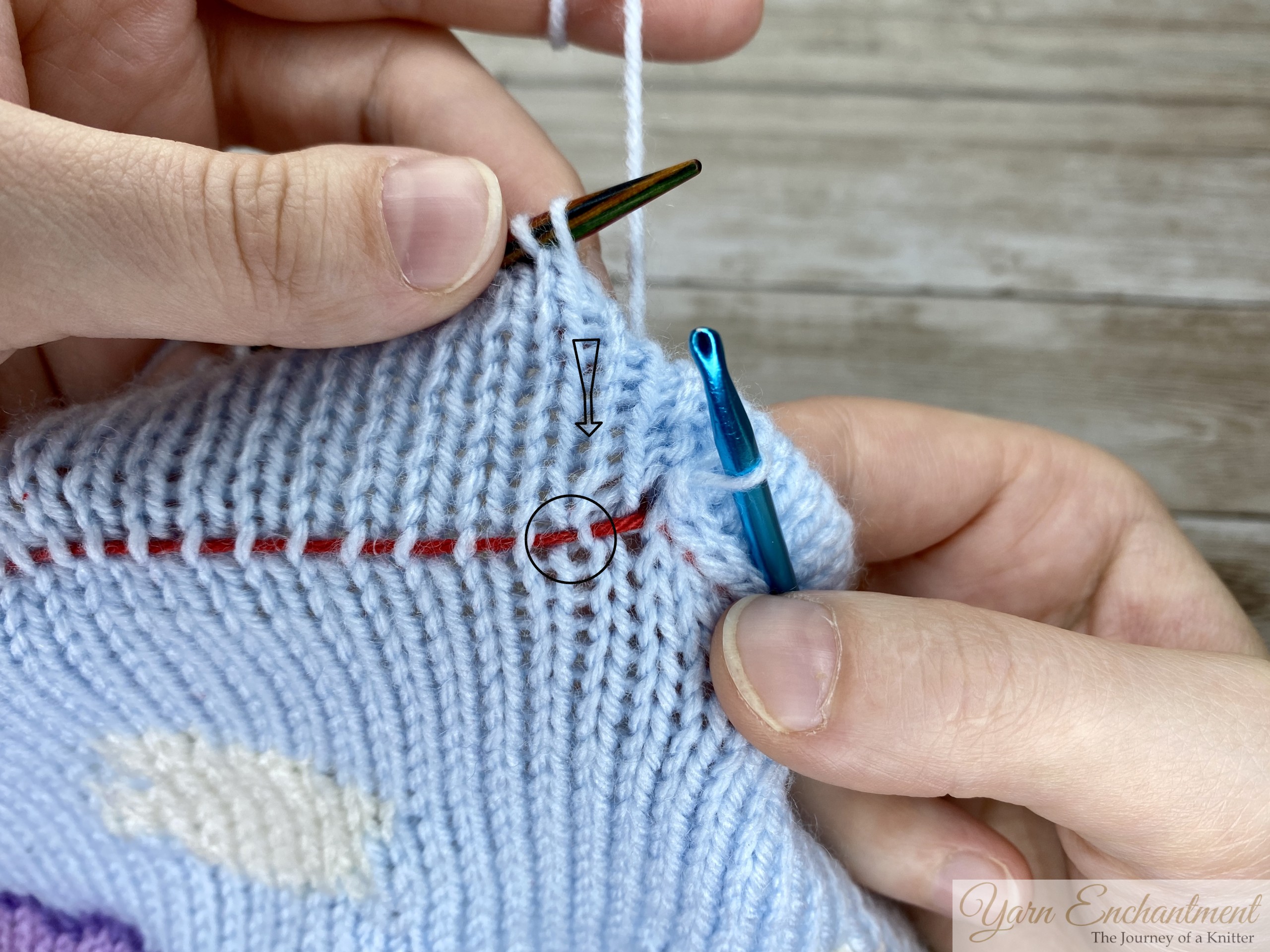 |
 |
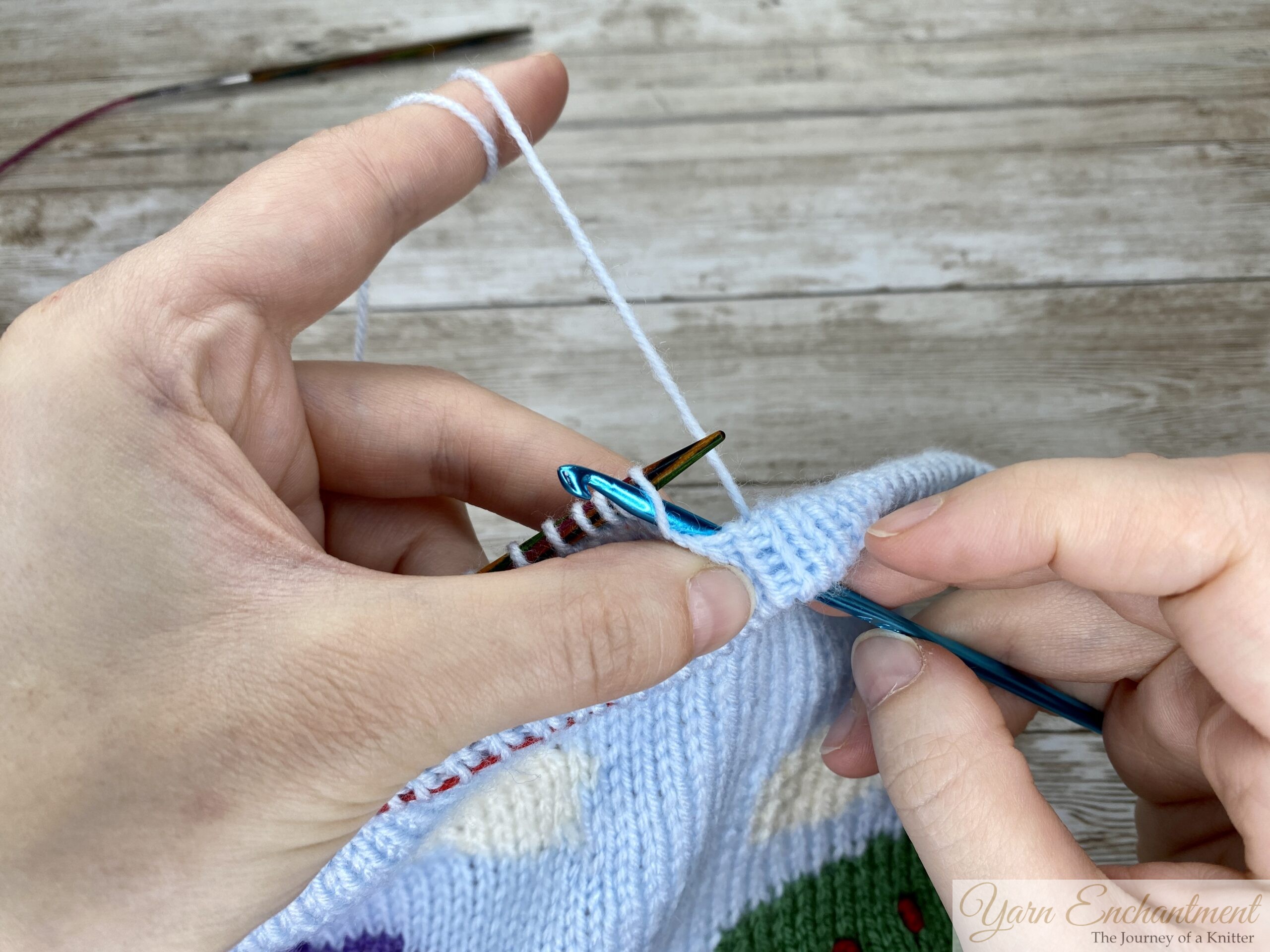 |
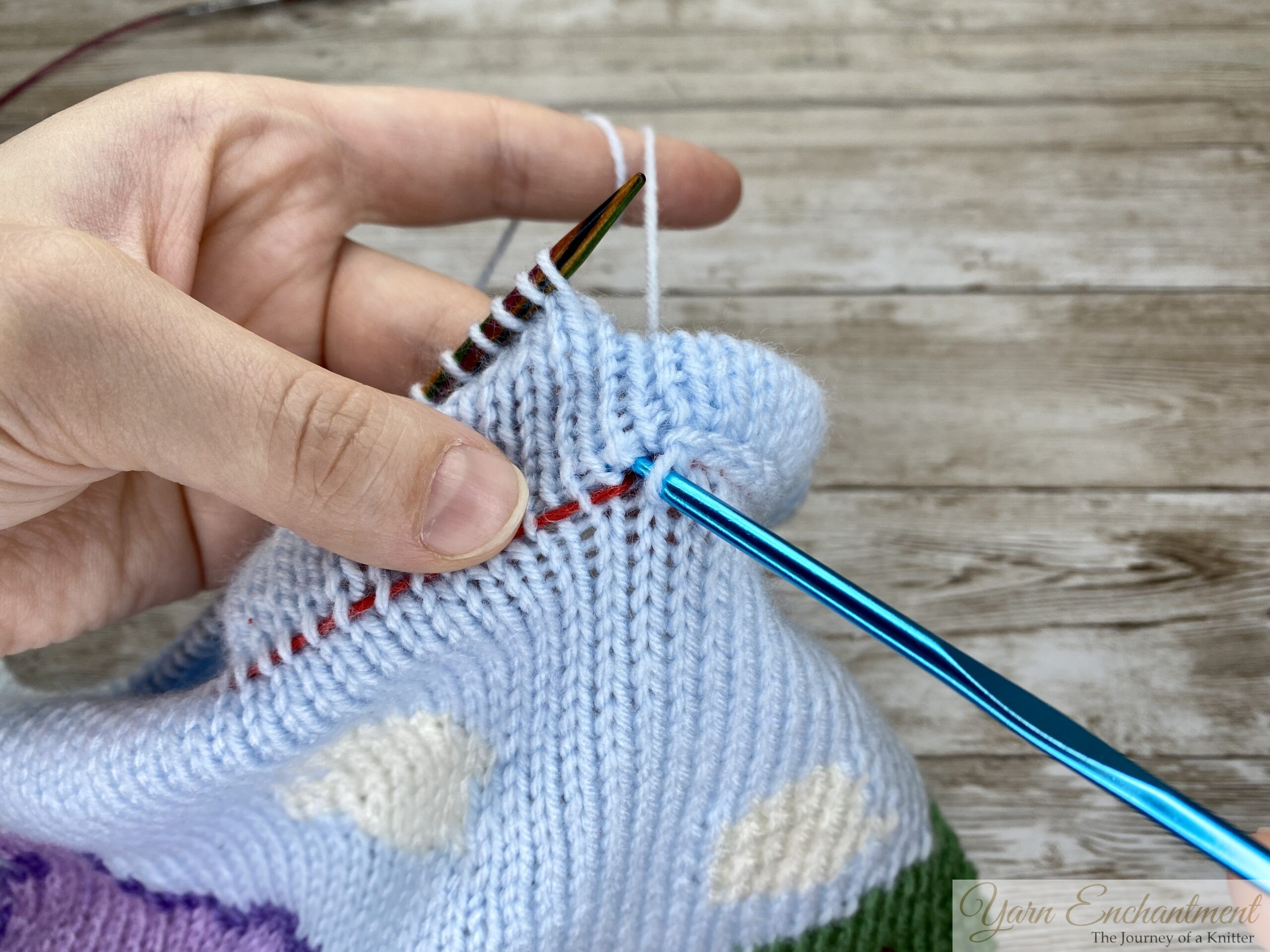
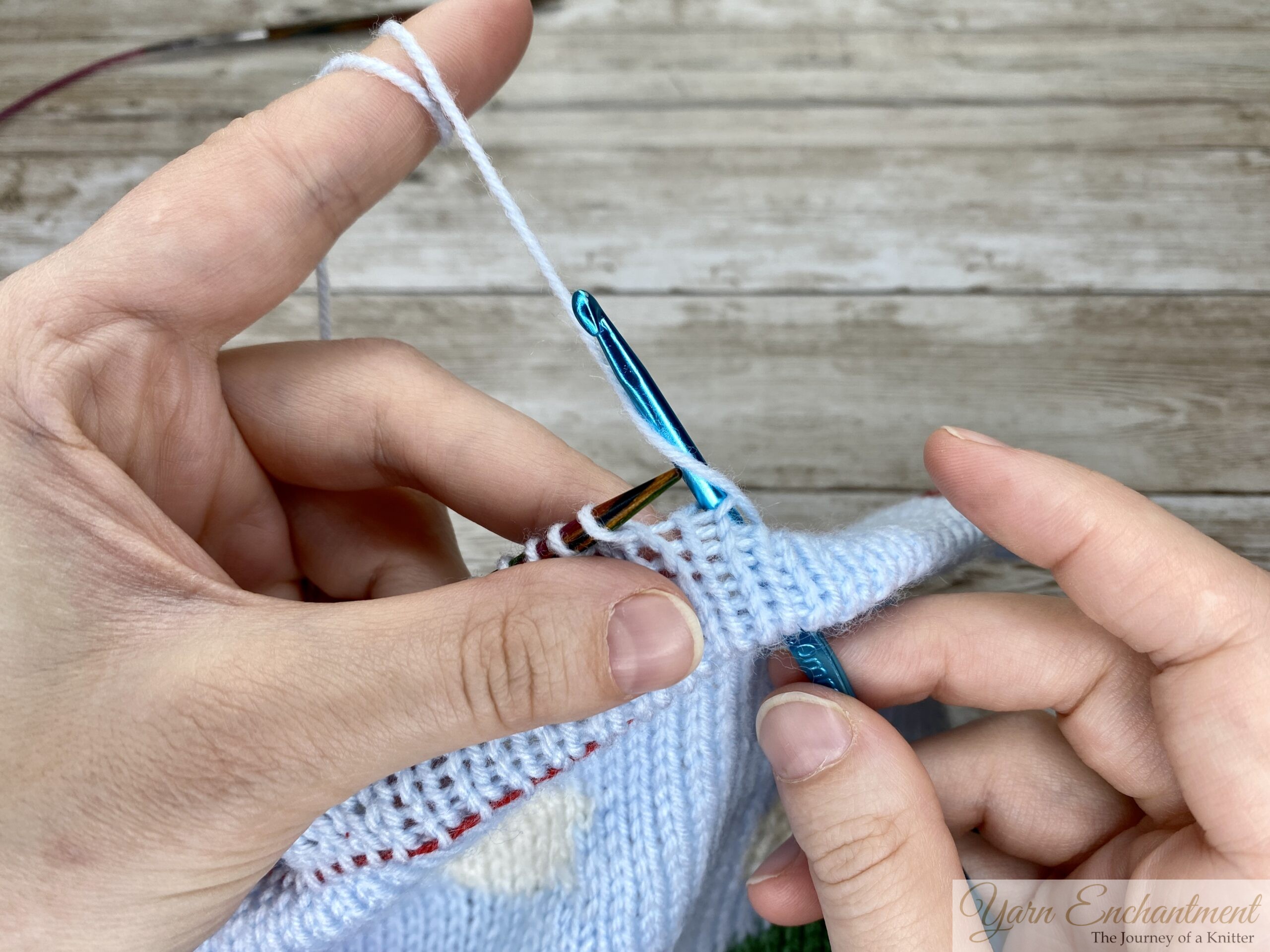
| To ensure you have the correct corresponding stitch, use your fingers to trace the column of stitches down to the row with the lifeline. This will help you align your hook with the right stitch. | Insert your hook into the next stitch on the row with the lifeline. | Insert your hook purlwise into the stitch on your needle and slip it off |
 |
 |
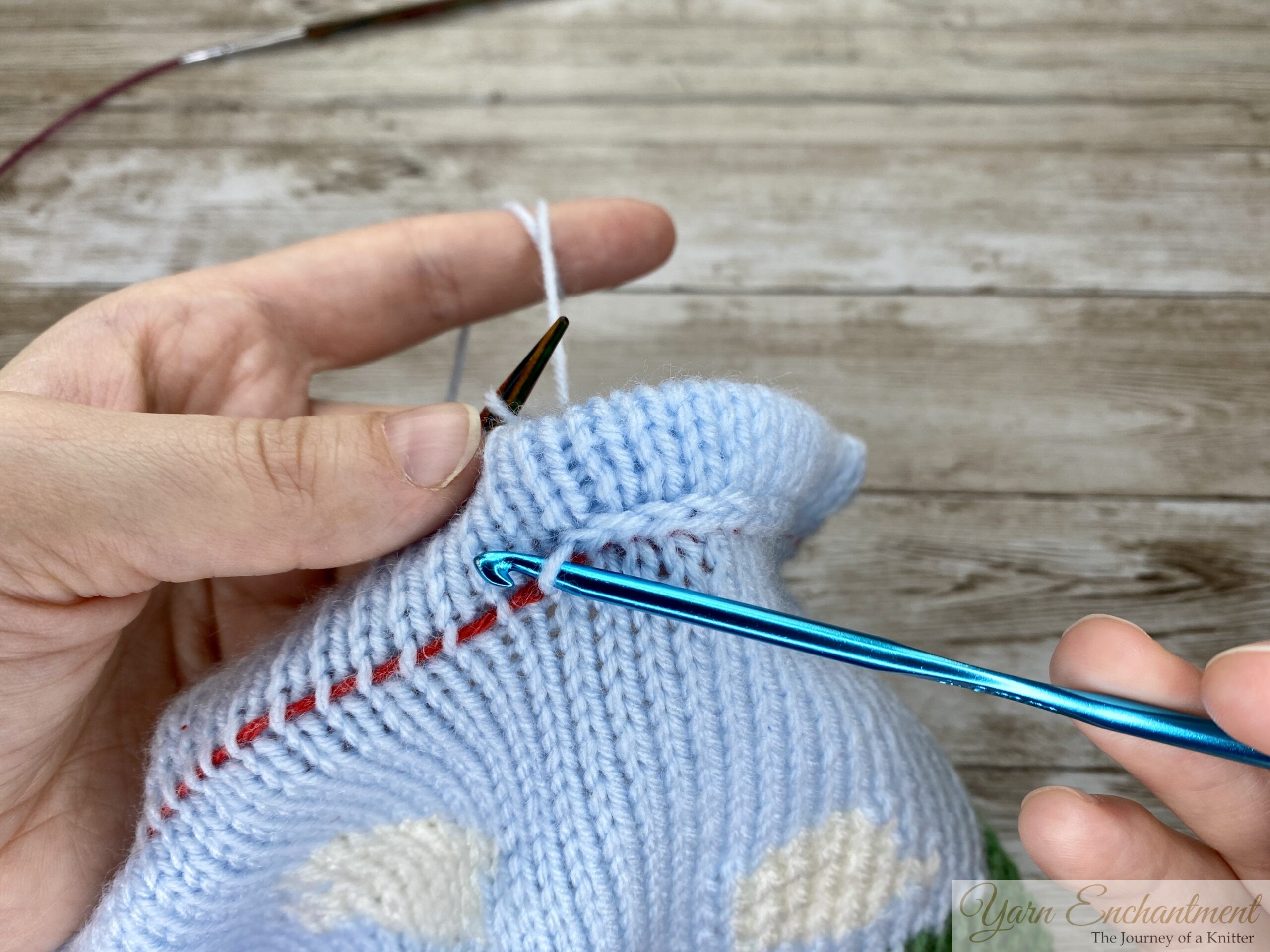 |
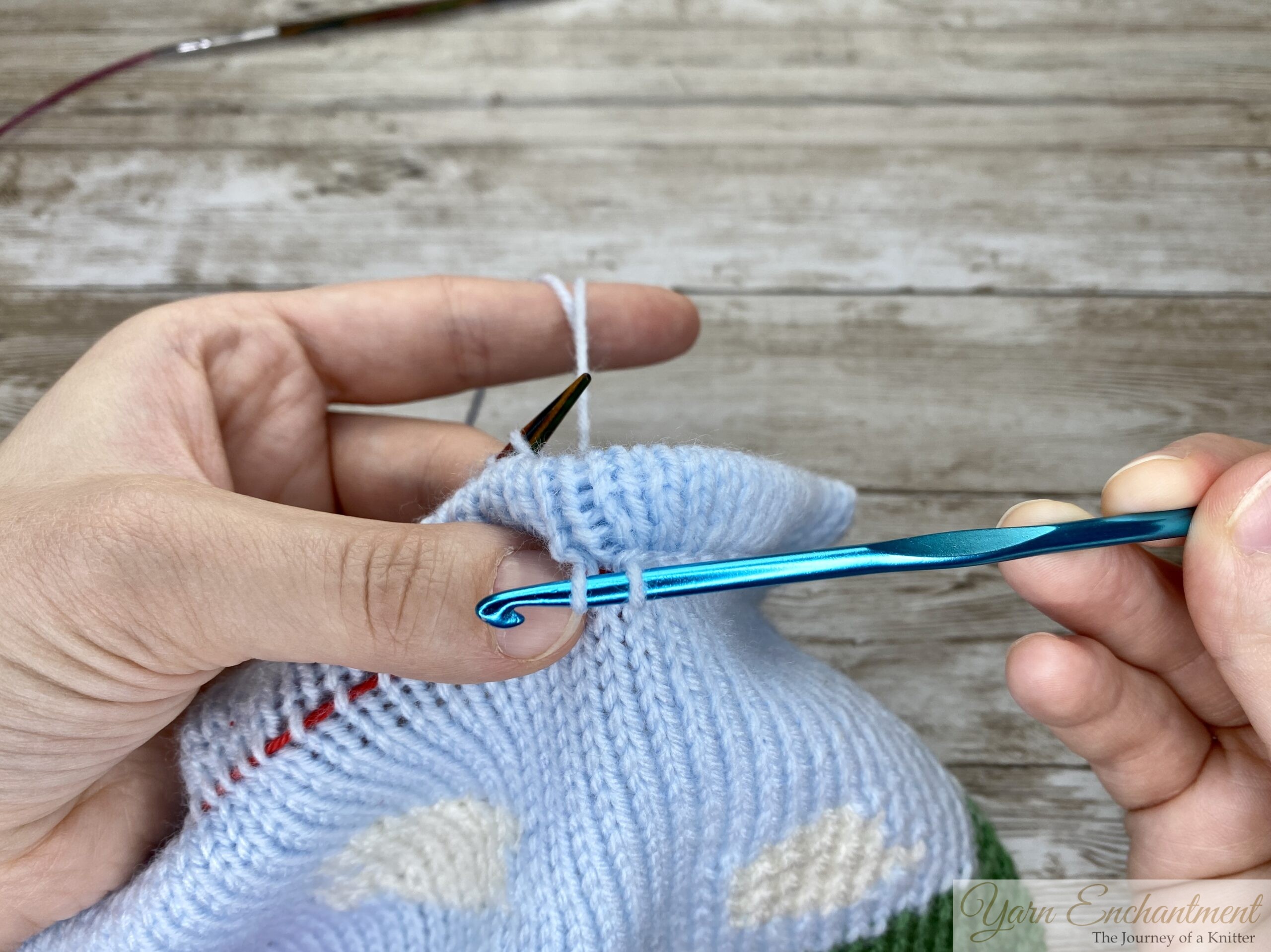
| Yarn over and pull it through the stitch and the fabric | You now have 2 loops on your crochet hook. Slip the first loop on your crochet hook through the second loop. |
This creates a slip stitch. |
Pros of Using a Crochet Hook for a Double-Folded Edge
- No Knots or Loose Ends: Unlike the Kitchener stitch or whip stitch, this method avoids knots and eliminates the risk of running out of yarn mid-seam.
- Durability: The crocheted join is strong and long-lasting, making it ideal for edges that will experience wear and tear.
- Ease of Use: This technique is straightforward and doesn’t require advanced sewing skills.
- Time-Saving: Compared to other methods, using a crochet hook is often faster.
Cons of Using a Crochet Hook for a Double-Folded Edge
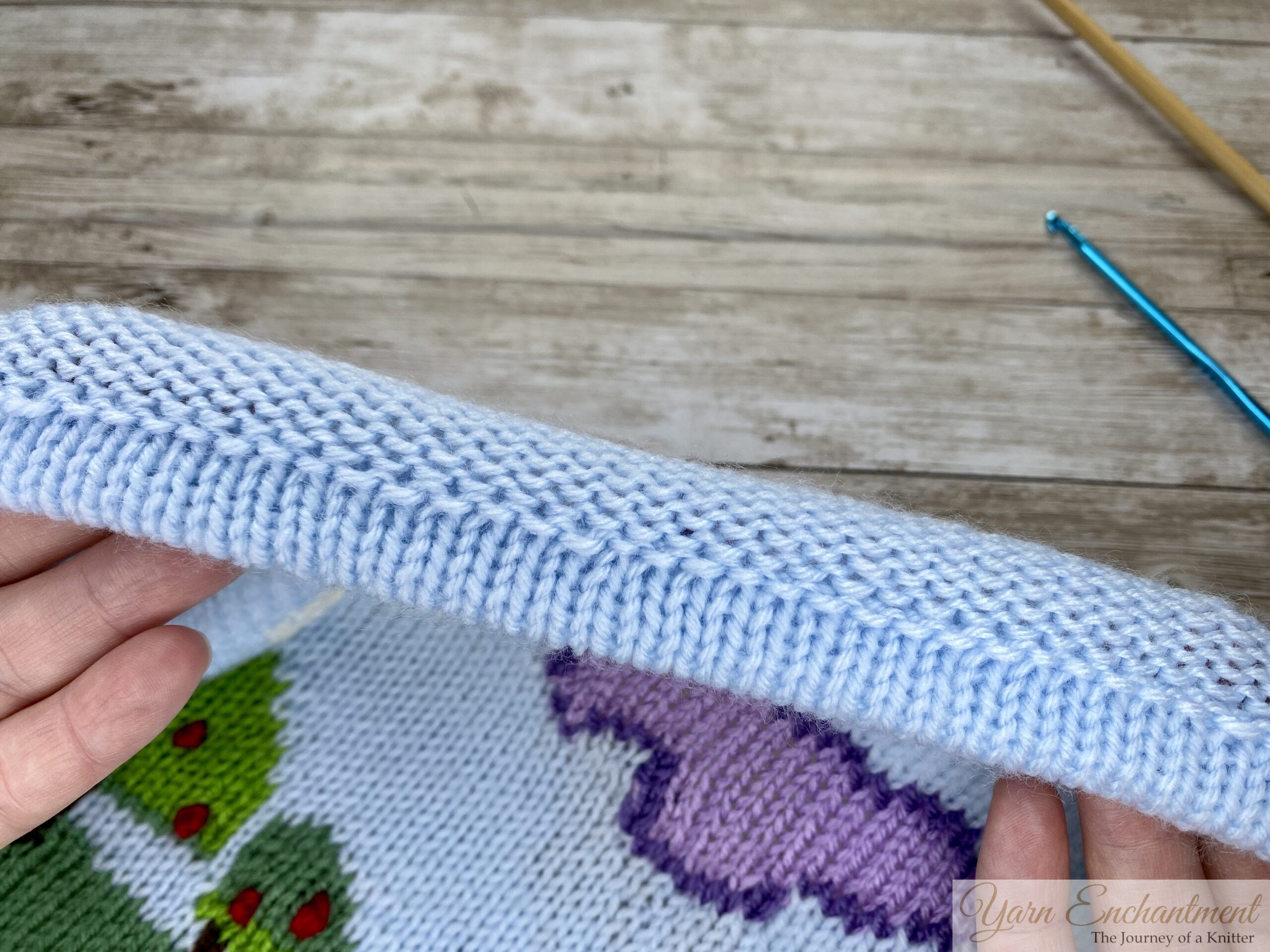
- Visible Slip Stitch Line: On the front side of the fabric, a visible line of slip stitches may appear, which some knitters find less appealing. This is especially noticeable in solid-colored projects.
- Less Elastic: The crocheted join is less stretchy than a sewn edge, which might be an issue for projects like socks or cuffs.
- Requires Precision: To achieve a neat result, the stitches must align perfectly, which can take some practice.
 |
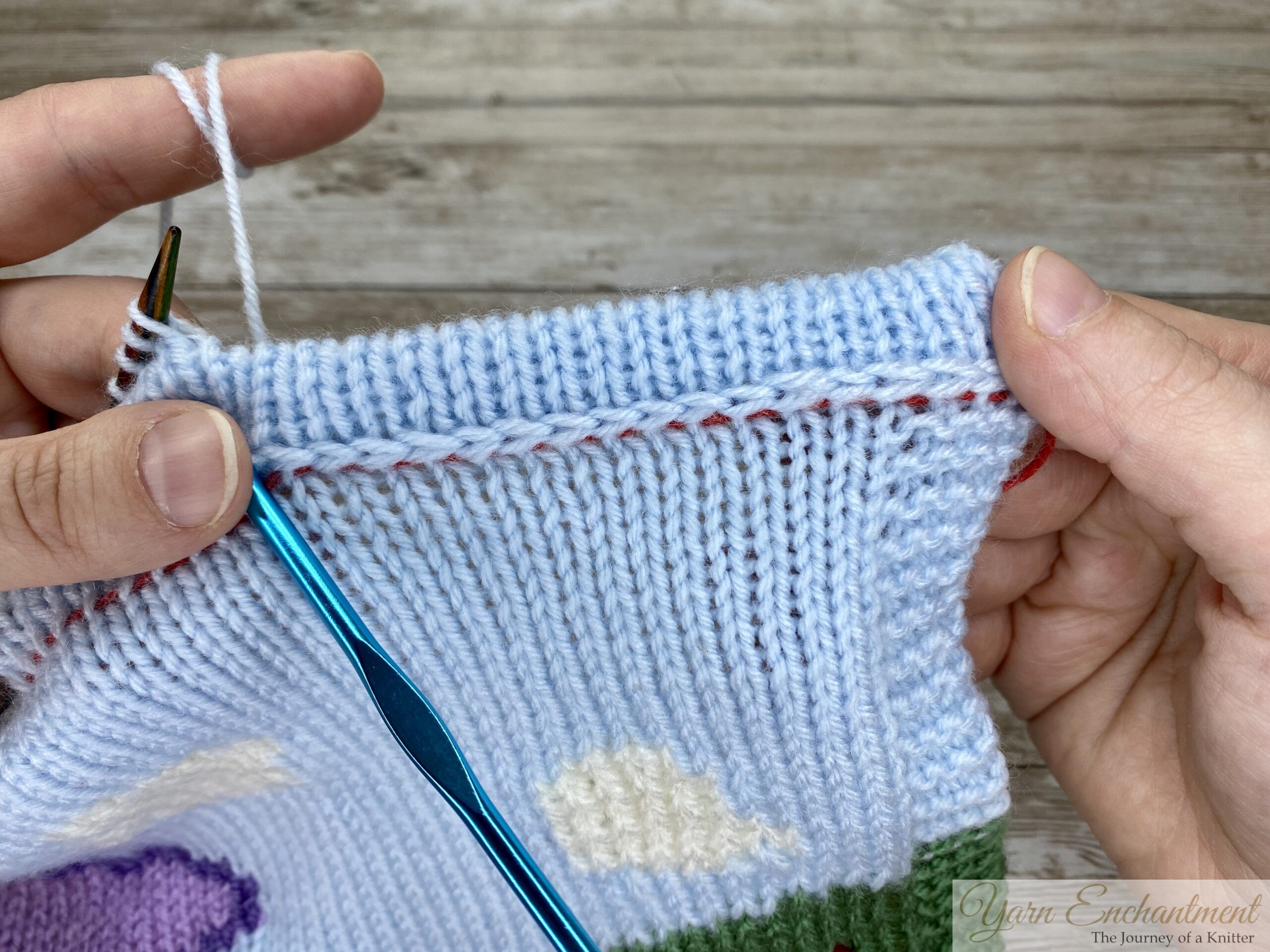 |
| Double folded edge from the Back | Double folded edge from the front |
Conclusion
Using a crochet hook to create a double-folded edge is a practical and effective technique. While the visible slip stitch line on the front may be a drawback for some, the benefits, such as avoiding knots and the ease of execution, make this method worth trying. With a bit of practice, you can incorporate this technique into many of your knitting projects for a polished, professional look.
Have you tried this technique before? Share your experiences and tips in the comments below! 😊
Until next time, happy knitting!
A Little Way to Say Thanks
Yarn Enchantment is my cozy hobby corner on the internet. If something here made your knitting day easier or you simply enjoy reading my posts and would like to say thank you, you can leave a small Ko-fi tip - but only if you truly want to.
My patterns and tutorials stay free for everyone, always. Every little tip just goes toward new yarn and a cup of tea for my cozy knitting evenings.
☕ Support me on Ko-fi
You Might Also Like


 |
|
Join the Cozy Corner Newsletter
Hello, creative soul. Welcome to the Yarn Enchantment Newsletter, a little space where we celebrate all things cozy, crafty, and full of heart. Think of this as your friendly crafting companion, a soft dose of inspiration delivered straight to your inbox, just for you. Each newsletter brings you: ✨ Notifications about new patterns and tutorials – easy knitting patterns and beginner crochet projects you won’t find anywhere else 🧶 Practical yarn tips for new crafters, plus advice on the best yarn for fall, blankets, and handmade gifts 💌 Small stories and adventures from my own workbench, because crafting is as much about the journey as the finished piece Whether you’re knitting by the fire, looking for your next creative spark, or simply wanting a quiet moment with your hooks and needles, this newsletter is here to cheer you on. Crafting isn’t just about the final project. It’s about the joy, the peace, and the stories we weave along the way. So grab a cup of tea or coffee, settle in, and join me. Together we’ll make a little magic, one stitch and one story at a time. I’m so glad you’re here. Let’s create something beautiful together. Sign up below to receive your first email, and feel free to leave a comment on the blog if there’s a topic you’d love to see covered. Your ideas might just become our next newsletter feature. |


