
PetiteKnit Sophie Hood Pattern Review & Knitting Tips
November 11, 2025
Any‑Size Crochet Star Stitch Hat in the Round
November 28, 2025Ultimate List of Knitting Abbreviations

Originally published on November 18, 2025
Over the past few months, I’ve been on a mission to create the most complete, friendly guide to knitting abbreviations I could imagine. Normally, you’ll spot a stitch key or a knitting glossary right at the start or end of every knitting pattern. But earlier this year, while I was flipping through a crafting magazine packed with inspiring patterns, I noticed something odd, there was no stitch key at all.
That little surprise made me realize how much we rely on these helpful guides, and it inspired me to put together one resource you can always count on. I’ve tried my best to include everything: from modern knitting terms you see today, all the way back to some vintage abbreviations you might stumble across in older projects.
If you’ve ever paused mid-pattern, wondering exactly what “ssk” or “M1R” means, you are definitely not alone. Knitting patterns can be full of abbreviations and cryptic shorthand, and having a trustworthy glossary by your side can make knitting more fun and less confusing. This guide brings all those must-know knitting abbreviations together in one cozy place, so you can knit confidently, and maybe even discover a few new favorites along the way.
This is a comprehensive guide with over 8000 words! For easy navigation, please use the table of contents below to jump directly to increases, decreases, brioche, and other key knitting sections.
Ultimate Knitting Abbreviations Guide

Table of Contents
What Are Knitting Abbreviations?
Knitting abbreviations are those handy little shortcuts you’ll find throughout almost every knitting pattern. They’re usually just a few letters long, and they stand in for stitches, techniques, or instructions that would otherwise take up a lot of space on the page. Thanks to these abbreviations, patterns stay nice and tidy - making even the trickiest designs much easier to follow.
For example, instead of spelling out “knit two together” every time, your pattern will simply say “k2tog.” You’ll spot abbreviations for all sorts of things, from the basic stitches (“k” for knit, “p” for purl) to tips on repeating sections, special techniques, or even the tools you’ll use (like “pm” for place marker or “dpn” for double-pointed needles).
Most patterns include a little glossary or stitch key to explain the abbreviations being used, but once you get the hang of the basics, you’ll be able to read almost any knitting pattern with confidence, and a lot less head-scratching!
Comprehensive Knitting Abbreviations List
Repeat Pattern Symbols
|
Abbreviation |
Meaning |
Example Pattern Snippet |
Notes / Variants |
|
* |
A single asterisk always signals the starting point for a repeated section within a row or round |
*K2, P2; repeat from * to end of row. |
Asterisks and brackets denote repeats |
|
** |
Repeat the steps between the asterisks however many times your pattern says. |
K6, *K2, P2* to last 6 stitches, K6. |
I’ve also seen some patterns use double quotation marks (“ ”) instead of asterisks to show which steps you should repeat. |
|
( ) [ ] { } |
Pattern instructions inside brackets mean to repeat or group what's inside (such as a sequence of stitches or a combination) as specified by the pattern. |
(K1, P1) 8 times [K2, P2] to last 4 sts {K3, P1} twice |
Brackets, parentheses, or braces keep steps together for repeats or to clarify complex instructions. Some patterns use these instead of asterisks (*). |
|
(repeat symbols) |
Some patterns highlight repeats in other ways |
K2, P2, repeat in bold, or K2, P2, repeat sequence, or "K2, P2" in colored text |
Vintage, international or magazine patterns may use bold, underline, or color to show what to repeat, always check your pattern for designer notes on symbols. |
Tip: Always check which repeat symbol your pattern uses, some designers prefer brackets, others use asterisks. Look for a note or glossary in your pattern for designer-specific symbols and repeats.
Increase Abbreviations in Knitting
|
Abbreviation |
Meaning |
Example Pattern Snippet |
Notes / Variants |
|
M1 |
Make one (increase) |
Knit 10, M1, knit to end of row |
Some designers just write M1 and expect you to use your favorite method; if unsure, M1R is a good option for right side increases. |
|
M1K |
Make one Knitwise |
K5, M1K, K5 (repeat to end of round). Or: K until 3 stitches before marker, M1K, K3, slip marker, K3, M1K, knit to end. |
To work M1K, just lift the little horizontal bar between your last stitch and the next one, place it on your left needle (from front to back), then knit into it |
|
M1T |
Make one towards |
Knit 10, M1T, knit to end of row |
Best for increases when your next stitch is purl, yarn stays in front; mirror image of backwards loop cast on and ideal for purl-side increases |
|
M1A |
Make one away |
Knit 10, M1A, knit to end of row |
Make one away; creates a new stitch by working a new loop with the working yarn held away from you, similar to the backwards loop cast on |
|
M1L / M1LP |
Make one left / Make one left purlwise |
Work to marker, M1L or M1LP, work to end |
Creates a left-leaning increase; M1LP is the purl-side version; perfect for shaping raglan seams or garments where you want the increase to slant left. |
|
M1R / M1RP |
Make one right / Make one right purlwise |
Work to marker, M1R or M1RP, work to end |
Creates a right-leaning increase; M1RP is the purl-side version; commonly used in sweater shaping, sleeve increases, or anywhere you want a neat, right-slanting stitch addition. |
|
kfbf |
Knit front and back |
K10, kfb, knit to end |
Makes one extra stitch by knitting into the front and then the back of the same stitch - leaves a small bar or bump, best for places where a visible increase is not a problem (sleeves, toy shaping, etc.). Very easy for beginners. Sometimes it also refers to K F&B |
|
kfbf |
Knit front, back, front (double increase) |
K10, kfbf, knit to end |
This increase creates two new stitches in one spot by knitting into the front, then the back, then the front again of the same stitch. Leaves a visible bump at the increase point; may be especially noticeable in fine yarns. |
|
kfsb |
Knit front, slip back (one-stitch increase) |
K8, kfsb, knit to end |
This increases one stitch by knitting into the front of the stitch, then slipping the back loop onto the left needle and knitting it. Producing a left-leaning increase that is more subtle and less bulky than kfb. Rare in most patterns but useful. |
|
KLL / LLI |
Knit left loop / Left lifted increase |
KLL or LLI for a raglan shaping |
These are two names for the same left-leaning lifted increase; some designers use KLL (Knit Left Loop), others LLI (Left Lifted Increase) - always check your pattern’s abbreviation list. Produces a neat, nearly invisible increase, great for symmetrical shaping. |
|
KRL / RLI |
Knit right loop / Right lifted increase |
KRL or RLI for a raglan shaping |
Same as above - KRL (Knit Right Loop) and RLI (Right Lifted Increase) both describe the right-leaning version. Use for paired increases, sleeves, or shaping where you want the increase to “point” right. |
|
DI / M2 |
Double increase (“make two” stitches at one spot) |
K6, DI or M2, knit to end |
DI is sometimes called “make 2” - it’s any technique that creates two stitches out of one. Methods include kfbf (knit front, back, front) or a central double increase (CDI). Commonly used in lace, shawls, and center panel shaping. Always check the pattern for the specific method (CDI, kfbf, kfb+p, etc.). |
|
CDI |
Central double increase (creates two new stitches from one central point) |
K7, CDI, knit to end |
This increase is worked by knitting into the front, back, and front of the same stitch, or with a specific “central” increase method shown in lace and shawl patterns. Common at the tips of leaves, points of shawls, or anywhere symmetrical expansion is needed. Sometimes called “center double increase” or abbreviated as CDI; check your pattern for the exact technique (kfbf, special central increase, etc.). |
|
LLPI / PLL / PLLI |
Left lifted purl increase; also called purl left loop (PLL) or purled left loop increase (PLLI) |
K5, LLPI, knit to end of row. |
Stitches leaning to the left on the purl side; it creates a nearly invisible increase. Notated in patterns as LLPI, PLL, or PLLI, but all refer to the same technique. Do not purl through the back loop; simply purl the lifted stitch as normal. The mirrored increase for the knit side is KLL or LLI |
|
RLPI, PRL, PRLI |
Right-lifted purl increase; Also known as purl right loop (PRL), or purled right lifted increase (PRLI). |
K5, RLPI, knit to end of row. |
Used for a right-leaning increase on the purl side; creates a nearly invisible increase Notated as RLPI, PRL, or PRLI; all refer to this right-leaning purl increase technique. The main distinction from LLPI is the direction, This technique slants the new stitch to the right on the fabric’s right side. |
|
PBF |
Purl back and front; purl into the back leg of the stitch, then into the front leg of the same stitch, increasing by one and leaving a small bar on the fabric |
K5, PBF, knit to end of row. |
Produces a horizontal bar on the right side, similar to the more common pfb, but the order is reversed for accessibility. Often used if the standard pfb feels awkward; the fabric result is similar but the movement differs slightly. |
|
PFB |
Purl front and back; purl the front of the stitch, then purl the back of the same stitch, increasing by one, leaving a small bar on the fabric |
K5, PFB, knit to end of row. |
Quick, easy way to increase on the purl side, but creates a visible bar that may affect texture. Can be used anywhere a discreet single increase is needed in purl rows. |
|
PFBF |
Purl front, back, front; a double increase worked by purling the front, back, then front of the same stitch - adds two stitches. |
K5, PFBF, knit to end of row. |
Rarely used, but increases by two and is handy for shaping. Can look uneven if worked tightly - looser tension and sharp needles help. |
|
kYOK / PYOK |
Knit or purl, yarn over, knit or purl into the same stitch; this is a double increase: you make three stitches out of one. |
K5, KYOK, knit to end of row. |
Used most often in lace patterns and shawls, especially for rapid shaping, as it creates two increases and an eyelet at the same spot. Also called “double eyelet increase” since the yarn over forms a decorative hole that suits lacework. The abbreviation may appear in charted lace patterns; instructions often clarify “k1, yo, k1 into the same stitch” |
|
YO |
Yarn over increase; a single increase made by wrapping the yarn around the right needle, which creates a new stitch and/or a decorative hole (eyelet) |
K5, YO, knit to end of row. |
Yarn overs are the most common increases in lace knitting, producing both an extra stitch and a decorative hole. Placement may differ depending on whether YO is between knit, purl, or mixed stitches - refer to the pattern for correct yarn position. If the yarn over is worked through the back loop (twisted on the next row), it closes up the hole and gives a discreet increase without a visible eyelet. |
Increases


Decrease Abbreviations in Knitting
|
Abbreviation |
Meaning |
Example |
Notes / Variants |
|
k2tog |
Knit two stitches together; a single decrease that slants right |
K5, K2tog, knit to end of row. |
The abbreviation K2tog can sometimes be repeated, such as "K2tog twice," meaning you work the decrease two times in a row |
|
ssk |
Slip, slip, knit; a single decrease that slants left |
K5, SSK, knit to end of row. |
Variations include SSSK (for a double decrease) or SSP (for a purl-side decrease). |
|
k2tog tbl |
Knit two stitches together through the back loop; |
K5, k2tog tbl, knit to end of row. |
Produces a left-leaning decrease, often used in place of SSK; a left-leaning decrease that twists the resulting stitch and reduces two stitches to one. Can also be adapted for double or triple decreases (e.g., k3tog tbl). |
|
k3tog |
Knit three stitches together; a double decrease that reduces three stitches to one |
K5, k3tog, knit to end of row. |
The standard k3tog leans right May be tricky with tight knitting or bulky yarn - loosen stitches beforehand if needed. The abbreviation may also appear as "k3tog tbl" (through the back loop) for different visual effects |
|
k3tog tbl |
Knit three stitches together through the back loop; a double decrease that twists and combines three stitches into one |
K5, k3tog tbl, knit to end of row. |
Produces a strong left-leaning decrease, reates a slightly twisted and sometimes tighter appearance than standard k3tog Also seen as "ssk3" or "SSSK" (slip three, knit through back loop) for a similar effect (but via slipped stitches). |
|
cdd |
Centered double decrease; reduces three stitches to one without a left or right slant, leaving the center stitch on top for a perfectly vertical decrease line. |
K5, CDD, knit to end of row. |
Also called "S2KP2", "S2KP", or "central double decrease" in some patterns, all methods keep the center stitch visible for a neat finish |
|
SSP |
Slip, slip, purl; a left-slanting decrease worked on the purl side |
P5, SSP, purl to end of row. |
Creates a left-leaning decrease on the purl side, useful for shaping with symmetry, especially when paired with p2tog. |
|
PSSO |
Pass slipped stitch over; a decrease where a previously slipped stitch is passed over the next stitch just worked |
Sl 1, k1, psso. (Slip one stitch, knit, or purl the next stitch, then pass the slipped stitch over) |
Paired with knit or purl stitches, sometimes used in “skp” (slip, knit, pass slipped stitch over) or “sl1 k2tog psso” for double decreases. |
|
SKP or SKPO |
Slip, knit, pass slipped stitch over; a left-leaning single decrease |
K5, SKP, knit to end of row. |
Produces a left-leaning decrease, visually similar to SSK but worked differently May also be written SKPO (“slip, knit, pass over”) in some instructions. |
|
SK2P or sl1 k2tog psso |
Slip 1, knit 2 together, pass slipped stitch over; a double decrease that reduces three stitches to one, |
K5, SK2P, knit to end of row. |
Also written as "sl1 k2tog psso" - method is identical, abbreviation may differ |
|
SP2P or sl1, p2tog, psso |
Slip, purl two together, pass slipped stitch over; a purl-side double decrease reducing three stitches to one, |
P5, SP2P, purl to end of row. |
Can also be written as "sl1, p2tog, psso" in a knitting pattern. |
|
sssk |
Slip, slip, slip, knit; a double left-leaning decrease - slip three stitches knitwise one at a time, return them to the left needle and knit them together through the back loop |
K5, SSSK, knit to end of row. |
Produces a prominent left-leaning triple decrease for dramatic shaping, |
|
sssp |
Slip, slip, slip, purl; a double left-leaning decrease on the purl side - slip three stitches knitwise, return to the left needle and purl them together through the back loop |
P5, SSSP, purl to end of row. |
SSSP mirrors SSSK for symmetry, especially useful in reversible or double-sided fabrics. |
|
S2KP2 |
Slip two stitches as if to knit, knit one, pass two slipped stitches over |
K5, S2KP2, knit to end of row. |
May be found in patterns as “s2kpo” or "sl2-k1-p2sso" - it refers to the same technique, just different abbreviations. |
|
SSPP2 |
Slip two stitches (first purlwise, then knitwise), return both to the left needle to reorient, slip them together as if to purl two together through back loops, purl one, and pass both slipped stitches over the purled stitch; |
P5, SSPP2, purl to end of row. |
SSPP2 produces a centered, vertical decrease worked on the wrong side Sometimes written as s2pp, "slip two, purl, pass two |
|
p2tog |
Purl two together; |
P5, p2tog, purl to end of row. |
A single right-leaning decrease worked on the purl side |
|
p3tog |
Purl three together; a double decrease |
P5, p3tog, purl to end of row. |
A similar technique is p3tog tbl (through the back loop) for a left-leaning or twisted decrease. |
When you see abbreviations like SSK or SSSK in a pattern, it’s best to slip each stitch knitwise, one at a time - unless the instructions specifically say to slip a group together. Most designers expect you to do them separately, which helps create a neat, consistent look in your finished piece. For the centered decreases (like CDD, S2KP2, SSPP2), it’s common to slip two stitches at once, rather than one at a time. A little explanation - such as “slip two stitches together knitwise” - goes a long way, ensuring the center stitch stays on top and your shaping looks crisp and balanced down the middle. The abbreviation PSSO simply means “pass slipped stitch over.” In many double and triple decreases, you’ll see things like “sl1 k2tog psso” - this is just shorthand for slipping a stitch, working the next one, and then passing the slipped stitch over. It might look intimidating, but it’s a straightforward way to decrease stitches and add beautiful definition to your knitting.Notes for Clarity in Decrease Abbreviations
SSK Decreases


Brioche and Advanced Stitch Abbreviations
| Abbreviation | Meaning | Example | Notes / Variants |
|---|---|---|---|
| brk | Brioche Knit | brk, yf-sl1-yo; repeat to end of row. | Knit stitch with its yo, sometimes called "bark" |
| brp | Brioche Purl | brp, yf-sl1-yo; repeat to end of row. | Purl stitch with yo, creates purl column, aka "burp" |
| brkyobrk | Brioche Knit, YO, Brioche Knit | brkyobrk in marked stitch, continue brk to end. | Double increase - work brk, yo, brk into same st for 3 from 1 |
| brkyobrkyobrk | Brioche Knit, YO, Brioche Knit, YO, Brioche Knit | brkyobrkyobrk in marked stitch, continue brk to end. | This double increase creates 5 stitches out of one original stitch (sometimes called a "centered 2x" increase), so it’s a very dramatic increase, often used for points in shawls, or special shaping in brioche patterns |
| bk2tog | Brioche Knit 2 Together | bk2tog at decrease spot | Right-leaning decrease |
| bp2tog | Brioche Purl 2 Together | bp2tog at decrease spot | Symmetrical left decrease for purl side |
| bk3tog | Brioche Knit 3 Together | bk3tog in center, continue brk to end | This is a right-slanting triple decrease, it reduces three stitches to one and leans to the right |
| br4st dec | Brioche 4-Stitch Decrease | When your pattern says "br4st dec at center marker," you work this decrease at the marked stitch or column | This decrease takes 5 stitches and reduces them down to 1, |
| bsk2p | Brioche Slip Knit 2 Purl | bsk2p at decrease point | Double decrease, slip one, k2tog, pass slipped st |
| ss / Sl st | Slip Stitch | k1, Yo, SS, K1 | In most knitting, "ss" or "sl st" stands for "slip stitch," which means you move a stitch from the left needle to the right without knitting or purling it. In brioche, slip stitches are commonly used as part of setup rows or edge stitches to keep the sides neat, or sometimes to establish a pattern base. |
| sl1yo | Slip One, Yarn Over | sl1yo for setup row | When you’re starting a brioche project, the setup row is where you lay the foundation for that signature, fluffy ribbed look. Typically, you’ll repeat “slip one, yarn over; knit one” (or the other way around) across the row. That “sl1yo” move is the secret: it pairs up each slipped stitch with a yarn over, which is exactly what creates those cozy, doubled-up columns you see in brioche. Without this setup, you wouldn’t get the puffy texture that makes brioche so special, so don’t skip it, even if it feels a bit awkward at first. |
| brssk | Brioche Slip, Slip, Knit | brssk in decrease row | Slip 2 knitwise, brk together (left decrease) |
| brk2togtbl | Brioche Knit 2 Together Through Back Loop | brk2togtbl for decrease | This one twists the stitches as you decrease, making a left-leaning line |
| bp2togtbl | Brioche Purl 2 Together Through Back Loop | bp2togtbl, knit to end | Like the above but on the purl side, giving you a left-leaning purl decrease. |
| brc | Brioche Cable | brc in cable section | Used when you’re working crossed columns in more advanced cable or motif sections. |
| BYO | Backward Yarn Over | BYO in shaping rows | For working backward increases |
| br3st dec/inc | Brioche 3-Stitch Decrease/Increase | br3st inc/dec in motifs | Designer-specific, dramatic shaping |
| br4st inc | Brioche Four-Stitch Increase | br4st inc at shaping | Rare, creates five from one, always with notes |
Decreasing in brioche is a little more involved than with standard knitting, but it’s absolutely doable with just a bit of practice. Most brioche decreases create a lean, to the left, right, or perfectly centered, which helps you shape your projects while keeping those signature squishy ribs intact. Unlike simple decreases, brioche versions often have you slipping stitches with their yarn overs or passing groups of stitches over each other for a tidy result. The ones you’ll use most are the right-leaning (like bk3tog) and left-leaning (such as brssk or brk2tog), while the big, dramatic centered decreases (like br4st dec) come in handy for fancy details and motif shaping. Always double-check that you’re pairing each yarn over with its matching stitch, if you accidentally drop a yarn over, it can mess with your ribbing’s look. Once you’ve made your decrease, just keep going with your pattern as usual, there’s no special trick needed for the next row, since the decrease leaves you with a regular stitch to work into later. And remember to keep an eye on your stitch count and markers, especially in hat crowns or motifs, since a single missed stitch in brioche can really throw things off.Notes
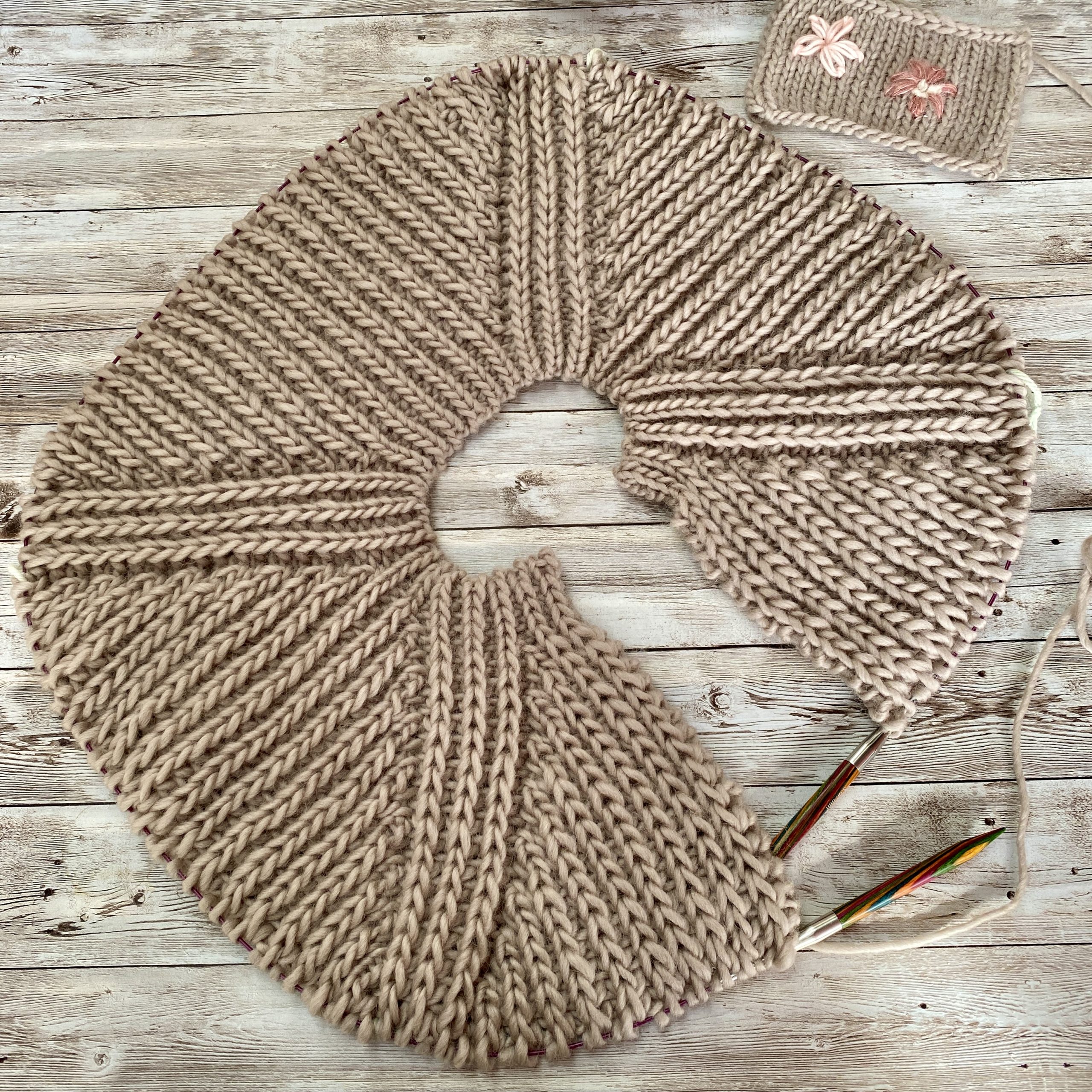
Half Brioche Stitch

Cable and Texture Abbreviations in Knitting
| Abbreviation | Meaning | Example | Notes / Variants |
|---|---|---|---|
| C2B / C2F | Cable 2 Back / Cable 2 Front | C2B at cable panel | C2B: Slip 1 stitch to cable needle, hold at back, knit 1, knit 1 from cable needle. C2F: Slip 1 stitch to cable needle, hold at front, knit 1, knit 1 from cable needle. These are the smallest cable crosses, often used for subtle texture or ribbing. |
| C4B / C4F | Cable 4 Back / Cable 4 Front | C4B in large cable | C4B: Slip 2 stitches to cable needle, hold at back, knit 2, knit 2 from cable needle. C4F: Slip 2 stitches to cable needle, hold at front, knit 2, knit 2 from cable needle. These are classic cable stitches for panels and motifs. |
| C6B / C6F | Cable 6 Back / Cable 6 Front | C6F for big texture | C6B: Slip 3 stitches to cable needle, hold at back, knit 3, knit 3 from cable needle. C6F: Slip 3 stitches to cable needle, hold at front, knit 3, knit 3 from cable needle. Used for dramatic, wide cables. |
| c2l / c2r | Cross 2 Left / Cross 2 Right | c2r at marker | c2l: Cross two stitches to the left (same as C2F). c2r: Cross two stitches to the right (same as C2B). These are often used for small twists or ribbing without a cable needle. |
| cb / cf | Cable Back / Cable Front | cb in pattern | cb: Cable stitches held at the back (right-leaning twist). cf: Cable stitches held at the front (left-leaning twist). These are general terms for larger cables, often used interchangeably with C4B/C4F or C6B/C6F. |
| FC | Front Cross | FC in panel | FC: Place stitches on cable needle and hold in front, then knit or purl the next stitches, then work stitches from cable needle. This creates a left-leaning cable or twist. |
| LC / RH | Left Cross / Right Hand | LC for cable left | LC: Left cross (same as C4F, C6F, or FC). RH: Right hand (sometimes used for right-leaning cables, but less common). LC is a standard abbreviation for left-leaning cables. |
| kbl / ptbl / tbl / tfl | Knit/Purl Through Back/Front Loop | kbl for twisted rib | kbl: Knit through back loop. ptbl: Purl through back loop. tbl: Through back loop. tfl: Through front loop. These create twisted stitches for ribbing or texture. |
| RT / LT | Right/Left Twist | RT in buttonhole | RT: Right twist (crosses stitches to the right, similar to a cable). LT: Left twist (crosses stitches to the left). These are small, cable-like twists often used in ribbing or decorative motifs. |
| pop | Popcorn Stitch | Pop at end panel | Pop: Popcorn stitch, a bobble-type stitch that creates a round, textured bump. Used for 3D texture and decorative details. |
| T2B / T2F | twist two back/front | K8, T2B, rep across | Small cable crosses: twist next two stitches, cable needle held back (T2B) or front (T2F), creates tight, neat cables |
C2B / C2F, C4B / C4F, C6B / C6F c2l / c2r cb / cf FC (Front Cross) LC / RH kbl / ptbl / tbl / tfl RT / LT pop (Popcorn Stitch)Key Details for Each Abbreviation
These cable abbreviations are true classics, think of them as the heart of any cable project. The number simply tells you how many stitches will be twisted, while "B" (back) and "F" (front) share if the cable needle goes behind or in front of your work. Two-stitch twists (C2B/C2F) give tidy, subtle texture, while the larger C4 and C6 versions make bold, dramatic cables perfect for statement knits. Just remember: holding in the back leans your cable to the right, and in the front leans to the left, like giving your stitches a gentle nudge in their dance.
These little cable crosses are like secret ingredients for subtle ribbing or tiny motifs. c2l (cross 2 left) is just like the "front" cable, and c2r (cross 2 right) matches the "back" cable. Many knitters skip the cable needle and just twist the stitches for a speedy finish, don’t be afraid to experiment!
These terms pop up when the pattern swings into bigger, bolder cable territory. cb means your cable needle takes a spot at the back, giving your cable a rightward lean. cf puts it out front for a leftward twist. You'll often find these in wide cable panels or dramatic columns.
FC stands for front cross, a classic move in cable knitting. Just slip those stitches onto a cable needle and let them rest in front for a moment, then work the others - before bringing back those waiting stitches for a satisfying finish. This creates that signature leftward twist in your cables - so graceful!
LC (left cross) is a friendly shorthand for any cable that leans to the left - often thought of as interchangeable with C4F or FC. RH (right hand) is rarer, but can point to a right-leaning cable in some designer patterns. These little signals help you spot which way your cables will travel!
These abbreviations spice up your knits by adding twists and texture! kbl (knit through back loop) and ptbl (purl through back loop) create twisted, sturdy stitches - great for playful ribbing patterns. "tbl" and "tfl" simply mean to work your stitch through the back or front loop. Use these twists for elastic edges or to add dimension to motifs or cuffs.
RT (right twist) and LT (left twist) mimic tiny cables - no cable needle needed! They cross two stitches over for a quick pop of texture, perfect for jazzing up ribbing, lace, or anywhere you want a subtle twist. They’re easy, snappy, and instantly add interest to your project.
The popcorn stitch is a joyful, bumpy stitch that brings knits to life with playful, three-dimensional texture. Whenever you see "pop," get ready for cozy, round bobbles dotting your scarves, sweaters, or mittens - it’s like adding sprinkles to your knitting cake!
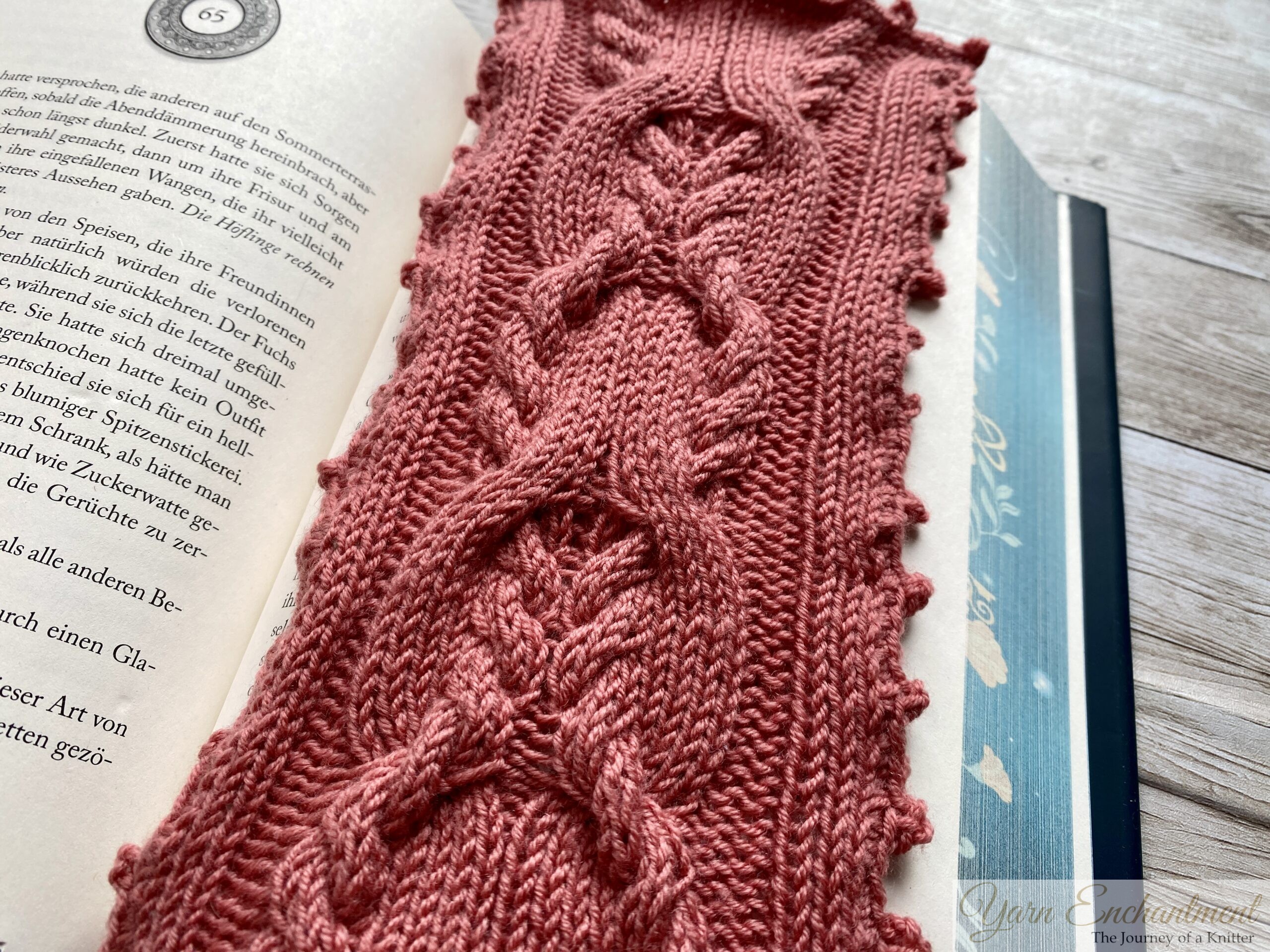
Cable stitch pattern

Colorwork Abbreviations
| Abbreviation | Meaning | Example Pattern Snippet | Notes / Variants |
|---|---|---|---|
| MC | Main color | CO with MC, change to CC at stripe | The primary yarn shade in your project - background, base, or featured throughout. |
| CC | Contrast color | Add CC in chart, knit motif | The color used for motifs, or pattern design. Patterns may use CC1, CC2, CC3 for multiple accents. |
| CA / CB | Color A, Color B | Knit border in CA, motif in CB | Sometimes used instead of MC/CC or in multi-color designs; CA for first contrast, CB for second. |
| col | Color | col 1 for base, col 2 for accent | Used in charts - especially older or European patterns. “col” may refer to any colorwork section. |
| st st (in col) | Stockinette stitch (in color) | Work 6 rows st st in CC | Specifies stitches or rows knit in a certain shade. Sometimes appears as "st st (MC)". |
| intarsia | Intarsia technique | CO 50, work intarsia motif in CC | Colorwork method where colors are worked in blocks, not carried across the back - each colored section uses its own yarn bobbin or ball. |
| Fair Isle / stranded | Fair Isle or stranded knitting | Fair Isle chart: alternate MC and CC each round | Traditional colorwork using multiple colors per row, with unused yarn strands (“floats”) carried loosely across the back of the work. |
| floats | Floats (stranded colorwork) | Catch floats every 4 sts | The loose strands on the back from carrying colors - you may need to “catch” floats in large areas to avoid snagging. |
| mosaic / slip-stitch | Mosaic or slip-stitch colorwork | Slip st in MC for mosaic pattern | Patterns worked by slipping stitches and changing yarn colors, creating geometric motifs without carrying strands in the back. |
| duplicate stitch | Decorative embroidery | Duplicate stitch motif in CC on MC base | Overlay method for adding new color motifs after knitting is complete, “embroidered” with a tapestry needle. |
| RC / LC | Right cross / left cross (colorwork cables or motifs) | RC with CC, LC with MC | Sometimes used in colorwork cable patterns to indicate direction and shade |
MC and CC are the backbone of almost all modern colorwork - from bold graphic sweaters to delicate Nordic mittens. “CA, CB, CC1, CC2” are handy for multi-color projects - keep a chart or yarn guide close so you never lose track of which is which. Techniques like mosaic, intarsia, and Fair Isle may mix their own abbreviations - always check the pattern key and look up unfamiliar chart symbols before starting a new project. “Floats” (loose strands) can make your work beautifully warm, but catching too few or too many can affect stretch - use a gentle touch and check your floats every few stitches for optimal comfort and fit. Tips for Using Colorwork Abbreviations
Colorwork


Common Stitch & Texture Abbreviations
| Abbreviation | Meaning | Example Pattern Snippet | Notes / Variants |
|---|---|---|---|
| st st / stst | Stockinette stitch | K1 row, P1 row, rep for st st | The classic, smooth fabric: knit all stitches on the right side, purl on the wrong side. Creates a “V” pattern; very flexible and popular in garments. |
| g st / g. st | Garter stitch | Knit every row for g st | Knit every row (or purl every row) - creates squishy, bumpy horizontal ridges. Nice for scarves, edgings, and textured effects. |
| seed | Seed stitch | K1, P1 rep across for seed | Alternate knit and purl stitches, switching every row - yields a pebbly, bumpy fabric that lies flat and resists curling. |
| moss | Moss stitch | K1, P1 twice, rep for moss | Like seed but with each stitch repeated twice before switching - often seen in UK or vintage patterns, close cousin to seed stitch. |
| rib / ribbing | Rib stitch (e.g., K2, P2) | K2, P2 rib, work for cuff | Alternating columns of knit and purl stitches - creates stretchy fabric perfect for edges, cuffs, hats, and fitted pieces. |
| lace | Lace knitting | YO, k2tog to form lace | A category: lace uses yarn overs and decreases to create open, airy patterns - abbreviations vary by motif but commonly include YO, SSK, k2tog, etc. |
| cable | Cable stitches | C4B, C4F in cable panel | Twisted or crossed groups of stitches that form raised, decorative patterns (see earlier cable/twist abbreviations). |
| bobble | Bobble / popcorn stitch | K5, MB (make bobble) | Creates a 3D, rounded bump - usually involves knitting several times into the same stitch and gathering. |
| slip st | Slip stitch | sl1, K1 across row | Move stitch from left needle to right without working it; used for mosaic, decorative texture, or making edges neater. |
| rev st st | Reverse stockinette | P all RS, K all WS | The “back side” of stockinette; purl side as right side, makes bumpy horizontal fabric (sometimes used for contrast in cables or motifs). |
| k1b / p1b | Knit/purl one below | k1b: knit into row below; p1b: purl into row below | Adds extra texture and density, common in brioche or double-knitting. |
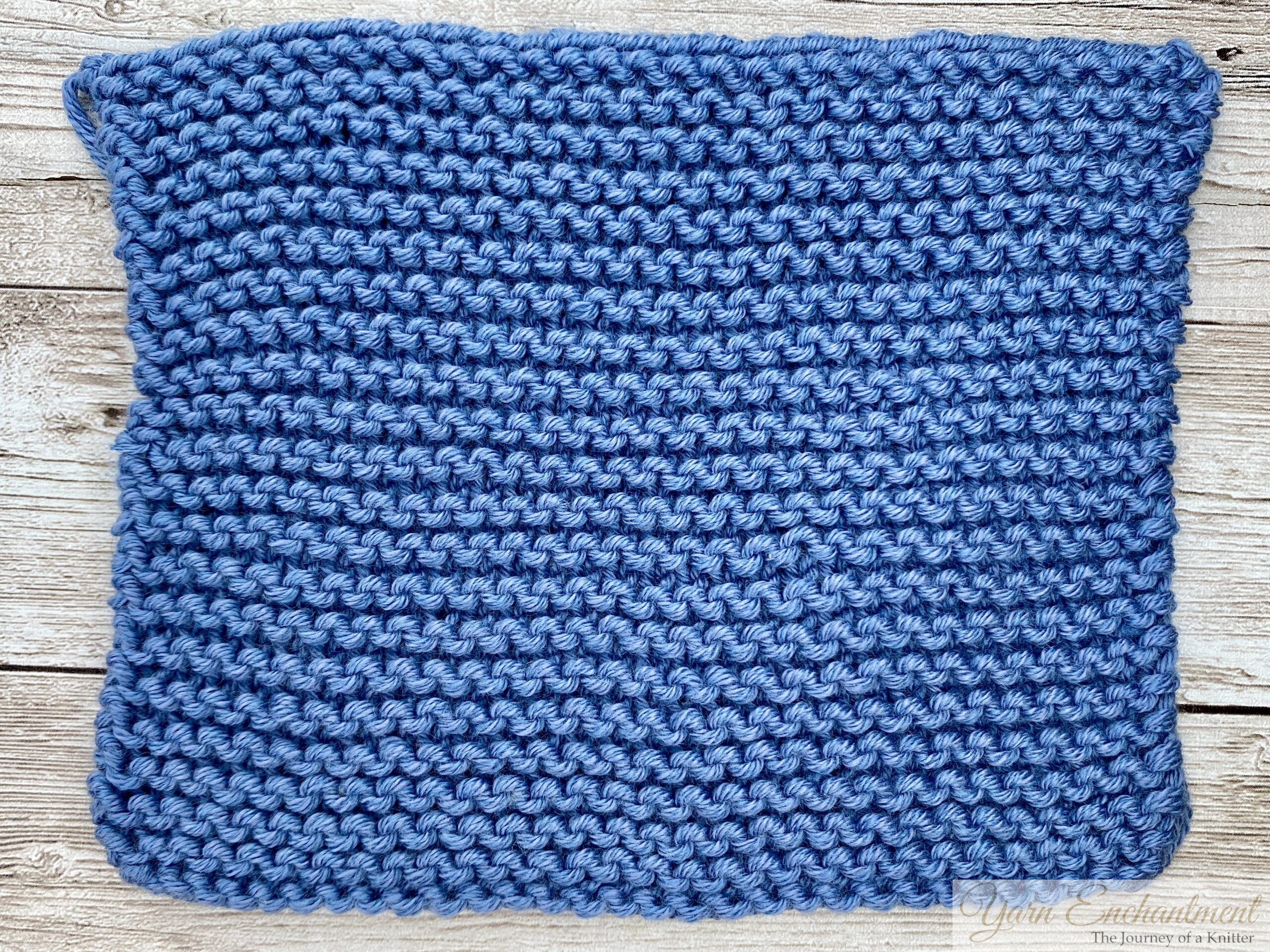
Garter stitch

Special Techniques & Advanced Abbreviations
| Abbreviation | Meaning | Example Pattern Snippet | Notes / Variants |
|---|---|---|---|
| w&t | wrap and turn (German Short Rows) | K7, w&t (wrap stitch, turn work) | For "w&t wrap and turn," you work to the turning point, then wrap the next unworked stitch, turn your work, and this prevents holes at the turning point - a classic method for short row shaping, often used in sock heels and garment construction. Patterns may tell you to "work the wraps" on the return row, meaning you pick up the wrap so it doesn't form a gap. |
| DS | double stitch (German Short Rows) | After turning, pull up stitch by both legs, creating a DS | For "DS double stitch (German Short Rows)," you turn your work at the turning point, then slup the last worked stitch to create a double stitch (DS). You pull a little on this stitch so that both legs becomes visible.This double stitch replaces the traditional wrap and turn and is visually obvious due to its double leg. |
| mds | make double stitch | At short row turn, pull yarn over needle to create mds | See DS; this phrase is designer-specific and means forming a double stitch for short rows, especially in European or modern patterns. |
| YO2 / yo2 | yarn over twice / yarn over two times | YO2 at lace motif | Means wrap the yarn twice around needle for a larger, double eyelet. Common in lace, shawl points, or dramatic increases. On next row, work into each loop separately for two stitches from one |
| BO / CO | bind off / cast on | End row: BO all sts; Start: CO 24 sts | The classic start and finish abbreviations for any project. |
| YO | yarn over | K5, YO, knit to end | Standard increase: pass yarn over needle to make new stitch (eyelet in lace, simple increase elsewhere). |
| yrn | yarn round needle | Purl row: yrn for eyelet | Especially used for lace increases between purl stitches; different from YO, requires a 'round' move of the yarn. Quick tip: always check the stitch before and after yrn for proper direction and effect |
| LTCO | long tail cast-on | Wrap yarn, LTCO 24 sts | Cast on using a long tail for even edges, favored for sweaters, hats, or anywhere stretch is needed. |
| st inc | stacked increases | K6, st inc, SB2 | Not as common, but “stacked increase” means working multiple increases at a single spot, sometimes rapidly for sculptural shaping (seen in some modern or Japanese patterns) |
| SB2 | slip back two | SB2 to left needle | Special in shaping: after creating two new stitches in a single spot (stacked increases), SB2 puts them back on your left needle for further manipulation |
Elastic Bind of


Essential Knitting Tools & Notions Abbreviations
| Abbreviation | Meaning | Example Pattern Snippet | Notes / Variants |
|---|---|---|---|
| dpn | Double-pointed needles | Used for socks, mittens, hats, or any small circumference knit, lets you knit in the round with multiple short needles. | |
| circ | Circular needles | Cast on for hat on circ | Looped needles joined by a cable, great for projects in the round, flat knitting with lots of stitches, or magic loop method. |
| cn | Cable needle | Sl 2 sts to cn, hold at back | Small, usually curved tool for holding stitches while crossing cables, can be metal, wood, or plastic. |
| mm / cm / in | Millimeters, centimeters, inches | Work piece to 40 cm, switch to 4 mm needles | Used for needle sizing (mm for UK/Europe, US numbers for US) and measuring your project size. |
| g / oz | Grams, ounces | 100g skein, use 2 oz wool | Refers to yarn weight. Yarn balls often list both (100g/3.5oz), especially when mixing brands/countries. |
| no | Number | CO 22 no. stitches | Often written as "no." in older or international patterns, simply means “number” of stitches, rows, needles, etc.. |
| m / mrk / pm | Marker, place marker | K6, pm, continue | Handy tool for marking repeats, edges, increases/decreases, or special points in your knitting like BOR/BORM. |
| BOR / BORM | Beginning of round (marker) | Join in round, pm = BOR | “Beginning of round” marker (BORM) is placed at the starting point of circular/round knitting so you always know where a round starts, critical for seamless projects and tracking pattern transitions. |
| EON / EOR | End of needle / end of row | K until EOR, turn | Signifies the final stitch on a needle or row, sometimes used in multi-needle or dpn projects, or for row counting. |
| beg | Beginning | Beg of row, beg patt | Starts section; used everywhere from setup rows to pattern repeats. |
| rem | Remaining | Sl next st, 12 sts rem | This means that after you have worked a specific pattern repeat, there are a certain number of stitches remaining on your needles. |
| rep / reps | Repeat(s) | Rep row 3 six times | Indicates repeating a row, sequence, section, or motif, essential for measured patterns and repetitive textures. |
| st / sts | Stitch(es) | 18 sts in row 6 | Used to show stitch counts, sometimes paired with “marker” after increases/decreases. |
| MC / CC | Main color / contrast color | CO with MC, switch to CC | Used in colorwork patterns, MC is your base shade, CC(s) are for stripes, motifs, or designs. |
| k / p | Knit / purl | k4, p4 | Basics, every pattern will use these. Most stitch sequences are just creative mixes of knit and purl. |
| CO / BO | Cast on / bind off | CO 80 sts, BO all | "CO" starts a project, "BO" finishes it. Some designers use “cast-off” for BO, especially UK English. |
| sl / sm | Slip / slip marker | sl1, k1, sm | “sl” means slip a stitch without working it; “sm” is slip marker (move marker to next needle position). |
| RS / WS | Right side / wrong side | RS facing, work lace | “RS” is the side shown when wearing or displaying the project, “WS” is the back/reverse (often less decorative). |
| alt | alternate | alt rows: K row, P row | Indicates alternating rows, colors, or stitches (“alt K, P rows” or “alt col MC/CC”). |
| approx | approximately | Work approx 10 cm | Used for measurements, lengths, yardage, or stitch count when exact accuracy isn’t crucial. Often appears in “approx 50g yarn” or “approx width”. |
| bet | between | pm bet every 8 sts | Signals placement of markers or changes “between” stitches, rows, or pattern sections. |
| beg | beginning | beg of row; beg with MC | Refers to starting a section, row, or color - appears in setup instructions (“beg with col A”) or repeats. |
| cont / cont. | continue | cont in patt for 6 rows | Directs continuation of pattern, such as continuing a repeat or maintaining stitch texture for a set length. |
| dec / inc | decrease / increase | dec 1 st at each end; inc 2 sts | Standard for shaping, repeated decreases/increases are typically laid out as “dec x sts,” “inc every RS row,” etc. |
| foll / foll. | follow / following | foll chart for motif | Used for directions (follow chart, follow written instructions, follow shaping sequence). |
| meas | measure(s) | meas work until 18 cm | Appears in instructions for finished width/length and blocking. |
| prev | previous | repeat as prev row | Refers to the row, stitch, or section that was just completed; e.g. “repeat as for prev 6 rows”. |
| rem | remaining | 6 sts rem at armhole | Indicates how much remains after a repeat, decrease, or shaping, e.g. “work until 12 sts rem |
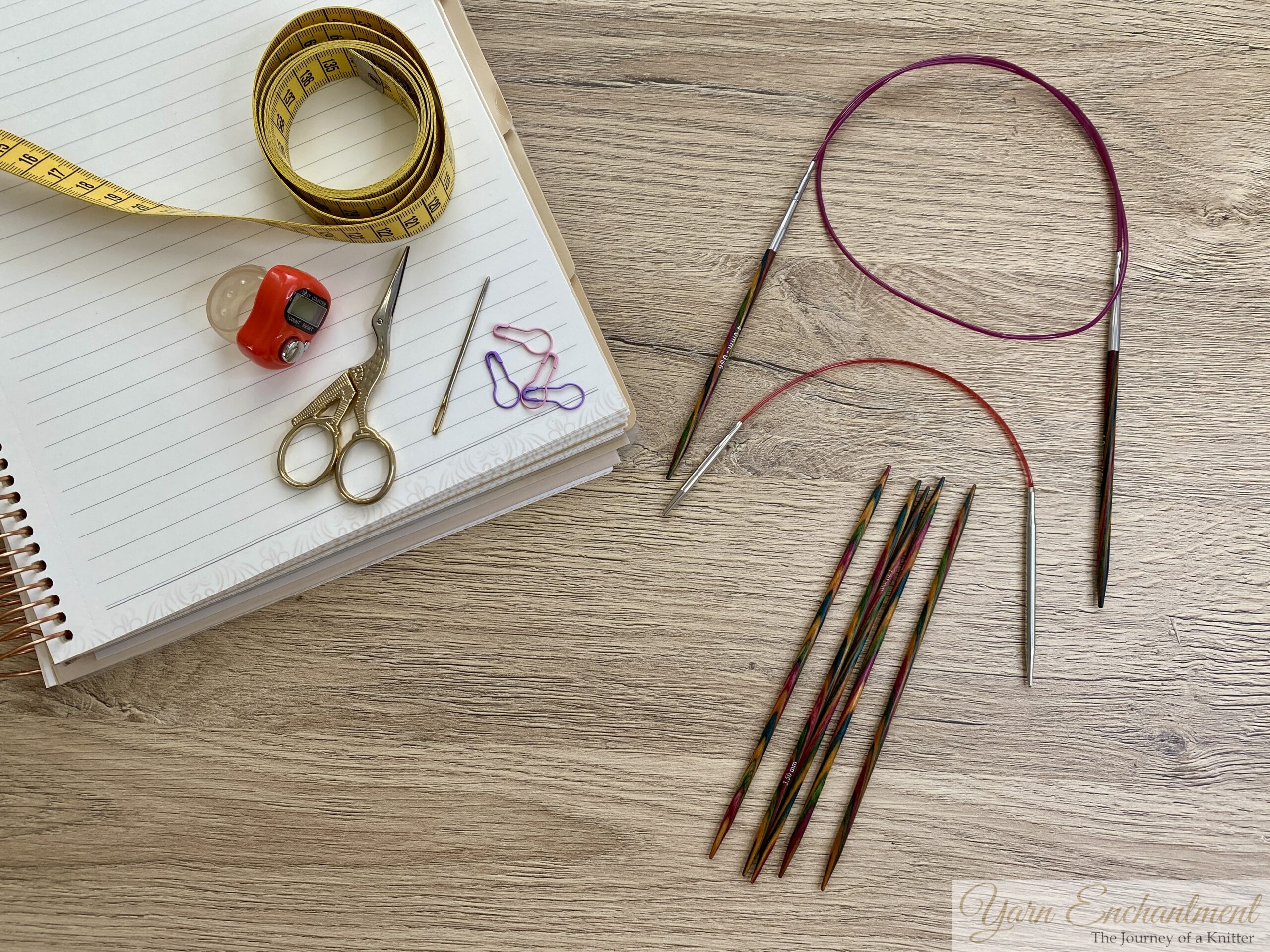
Knitting tools

Vintage Decrease Terms & Notes
If you love exploring older patterns, you might come across some wonderfully old-fashioned terminology. Here are a few vintage decrease terms knitters might stumble upon, along with their modern equivalents:
- Narrow (N): You’ll see "narrow" used for decreases, especially in British and European vintage patterns; it usually means "knit two together" (k2tog).
- Widen (W): A call to "widen" a stitch meant to increase, much like today’s "make one" (M1).
- Seam (S): Not the sewing kind - vintage patterns sometimes say to "seam" a stitch, which actually means to purl it.
- WON/WRN: "Wool over needle" or "wool round needle" for what we now call a "yarn over" (YO).
- Together (Tog): Instead of abbreviations, many older patterns would simply spell out “together” for decreases.
- PSSO Variants: "Pass over slipped st" or "p.s.o." can appear instead of today's PSSO.
Patterns from decades past are bursting with character and creative terminology. If you ever find yourself puzzled by an unfamiliar abbreviation, remember that a quick check in a glossary, or a quick search in the internet, will usually sort things out.
- B (Begin, Back): Sometimes used as shorthand for beginning or back, though not exclusive to decreases.
- SSK/SSP: Rare in very old patterns; you may instead see "slip one, knit one, pass" written out in full, or just "slip, knit, pass" for left-leaning decreases.
Usage Notes
- Many early patterns (pre-1960s) use descriptive text rather than abbreviations, e.g. “knit two together at the end of the row to narrow” instead of "K2tog".
- Vintage terms may also come with UK/US regional differences: "cast off" vs. "bind off", "tension" vs. "gauge", or "slip st" vs. "ss" for slip stitch.
- Abbreviation style and formatting can vary greatly, full words, initials, or even special symbols.
Even if old patterns seem confusing at first, it’s worth taking a closer look, sometimes they contain real hidden gems just waiting to be knitted.
True and Tried Tips for Using Knitting Abbreviations
Keep a reference handy, seriously, it’ll save you headaches. Print out or bookmark a good abbreviation (maybe mine :)) chart so you can quickly check those odd pattern shorthands as you knit.
Before you even cast on, read through the whole pattern, including the abbreviation glossary if there is one. You’ll pick up on any unusual stitches or terms, which beats getting stuck halfway through a row wondering what “bp2togtbl” means.
Lots of designers make up their own lingo, so don’t assume every pattern uses the same abbreviations. Always peek to see if there’s a little list or sidebar with explanations, especially with vintage patterns.
When you run into a string of abbreviations jammed together (like “K2, YO, SSK, K3,YO, K2tog”), slow down and take it step by step. Try reading the instruction aloud or working through it stitch by stitch instead of all at once, it feels much less overwhelming, promise.
Don’t underestimate the power of tools like stitch markers and row counters. They’re a game-changer with repeat-heavy patterns or anything that throws a lot of letters at you. Mark your place so you can focus on the knitting, not just on deciphering a new line.
Practice really does help, every time you meet a new abbreviation, you’ll get a little faster at reading patterns. If you’re just starting, try projects labeled “beginner” to get comfortable with the basics before graduating to the alphabet soup. 😄
There’s no shame in looking things up! Tons of websites and knitting apps have searchable glossaries, and YouTube is packed with videos that break down every abbreviation and stitch in real time.
Remember, not all abbreviations mean the same thing everywhere, US and UK terms can be totally different. If something seems off, try to find out what region the pattern is from.
And when all else fails? Don’t be shy! Online knitting groups, Ravelry forums, or even your local yarn shop are full of people happy to help explain a confusing abbreviation or walk you through a tricky instruction.
One last trick, highlight each abbreviation on its own, especially when working through lace knitting patterns like “K2, YO, SSK, K3,YO, K2tog" It makes a big difference in keeping track of your place and reduces mistakes. Or, try scribbling notes directly on your paper pattern (or inside your knitting app). Flag the confusing bits, set reminders for repeats, or jot down translations for rare or old-school terms. Your future self will definitely thank you for making things easier!
Knitting Abbreviation FAQs
1. What are the most common knitting abbreviations and what do they mean?
You’ll see a few abbreviations pop up in nearly every pattern: K (knit), P (purl), CO (cast on), BO (bind off), K2tog (knit two together), SSK (slip slip knit), and YO (yarn over) are the usual suspects. Learn these and you’ll be off to a great start.
2. How can I tell what a specific abbreviation means in a new pattern?
Most designers tuck a glossary or list of abbreviations at the beginning or end of a pattern. Check those notes, they can save a lot of confusion, especially if the designer uses a quirky or non-standard shorthand.
3. What do increases and decreases look like as abbreviations?
For increases, you’re likely to see things like M1, M1L, M1R, and KFB (knit front and back). Decreases show up as K2tog, SSK, SSP, and P2tog (that’s purl two together).
4. Why do some patterns use different abbreviations for the same stitch?
There’s really no universal “knitting language”- abbreviations can change depending on where the pattern comes from, the designer, or even what decade it’s from. For example, what’s called “bind off” in the US is “cast off” in the UK, and “gauge” in the US is “tension” on the other side of the pond.
5. Are chart symbols different from written abbreviations?
Yes! Chart symbols are used to visually show the stitch pattern (usually in grids), while written abbreviations spell everything out line by line. You’ll usually get two separate keys, one for the chart, one for the written version.
6. What should I do if I don’t understand an abbreviation?
First, check the pattern’s glossary, most designers are good about including one. If it’s not there, a quick look at a trusted online knitting abbreviations list can help. And never hesitate to ask in a knitting forum or community; chances are, someone else has wondered the same thing.
7. How do I handle vintage or international abbreviations?
Some older or non-local patterns can throw you a curveball with their terminology. Look up online guides that compare vintage and modern terms or check for regional differences. Context clues in the pattern itself can help too.
8. What does “rep” or “cont” mean?
“Rep” just means repeat (so do those instructions again), and “cont” means continue (keep going as you were).
Conclusion
Hope this guide makes your knitting projects feel less mysterious and a lot more fun! If you have any questions about a specific abbreviation, or if there’s a shorthand you always see and want explained, just let me know, I’m happy to help. And if you spot an abbreviation that’s missing, or you want to see one added, leave a comment below or send a quick message.
Until then, happy knitting, and thanks so much for reading!
A Little Way to Say Thanks
Yarn Enchantment is my cozy hobby corner on the internet. If something here made your knitting day easier or you simply enjoy reading my posts and would like to say thank you, you can leave a small Ko-fi tip - but only if you truly want to.
My patterns and tutorials stay free for everyone, always. Every little tip just goes toward new yarn and a cup of tea for my cozy knitting evenings.
☕ Support me on Ko-fiYou Might Also Like


 |
|
Join the Cozy Corner Newsletter
Hello, creative soul. Welcome to the Yarn Enchantment Newsletter, a little space where we celebrate all things cozy, crafty, and full of heart. Think of this as your friendly crafting companion, a soft dose of inspiration delivered straight to your inbox, just for you. Each newsletter brings you: ✨ Notifications about new patterns and tutorials – easy knitting patterns and beginner crochet projects you won’t find anywhere else 🧶 Practical yarn tips for new crafters, plus advice on the best yarn for fall, blankets, and handmade gifts 💌 Small stories and adventures from my own workbench, because crafting is as much about the journey as the finished piece Whether you’re knitting by the fire, looking for your next creative spark, or simply wanting a quiet moment with your hooks and needles, this newsletter is here to cheer you on. Crafting isn’t just about the final project. It’s about the joy, the peace, and the stories we weave along the way. So grab a cup of tea or coffee, settle in, and join me. Together we’ll make a little magic, one stitch and one story at a time. I’m so glad you’re here. Let’s create something beautiful together. Sign up below to receive your first email, and feel free to leave a comment on the blog if there’s a topic you’d love to see covered. Your ideas might just become our next newsletter feature. |


