Knitting vs Crocheting: Which Hobby Should You Choose?
May 13, 2025
How to Knit the Picot Edge Stitch | Simple & Decorative Border Tutorial
May 25, 2025Knitted Cast-On Tutorial for Beginners: Step-by-Step Guide

Originally published on May 17, 2025
The knitted cast-on is hands down one of the easiest and most versatile ways to start a knitting project. When I first started knitting, I would’ve saved myself so much frustration. It’s especially great for beginners because it’s simple, forgiving, and creates a nice stretchy edge that works for all kinds of projects.
When I was just starting out, I didn’t know this method even existed. I went to my local craft store, and the owner showed me some basics. She also taught me the long-tail cast-on. The long-tail cast-on is super popular for a reason, but as a beginner, I found it really tricky. I was constantly second-guessing myself: Did I leave enough yarn? What happens if I drop it? Will I be able to pick it back up again? I spent way too much time stressing over measuring the tail and not enough time actually knitting.
It wasn’t until much later that I discovered the knitted cast-on, and I immediately wished someone had shown me this method when I first started knitting! It gives you a stretchy edge that’s perfect for things like ribbing or lacework.
In this tutorial, I’m going to walk you through the knitted cast-on step by step so you can feel confident using it in all your projects. Trust me, once you try it, you might just fall in love with how easy it is!
  |
Knitted Cast-On |
Table of Contents
- What Is the Knitted Cast-On?
- Why Choose the Knitted Cast-On?
- Step-by-Step Instructions for the Knitted Cast-On
- Tips for Success
What is the Knitted Cast-On?
The knitted cast-on is one of many methods used to start a knitting project by creating the initial row of stitches on your needle. Unlike other cast-on techniques, such as the long-tail or cable cast-on, the knitted cast-on uses a knitting motion (Inserting the needle into a loop and wrapping the yarn) to form each stitch. This makes it intuitive for beginners who are already familiar with the basic knit stitch.
It’s often recommended for:
- Beginners learning how to cast on.
- Projects that require a stretchy or flexible edge, like ribbed cuffs or lacework.
- You can substitute the backwards cast on where you need to add stitches mid-project for it (e.g., casting on for the underarm stitches).
Why Choose the Knitted Cast-On?
- Ease of Use: The knitted cast-on mimics the motion of the knit stitch, so if you’ve already learned the knit stitch, this cast-on will feel natural for you.
- Beginner Projects: Its simplicity makes it a go-to choice for learning how to cast on.
- Stretchy Edge: While not as stretchy as some specialized cast-ons (like the German twisted or tubular cast-on), the knitted cast-on provides enough elasticity for most projects.
- Lace Knitting: The flexibility of the edge complements delicate, openwork designs.
- Versatility: It works well for both flat and circular knitting.
- No Special Calculation needed: Unlike the long-tail cast-on, this method eliminates the need to calculate the tail length beforehand, making it especially convenient for projects that require a large number of stitches. (If you want to learn an Easy Trick on how you never run out of yarn while using the long tail cast on, I wrote a blog post about it so be sure to read it later ;) )
Step-by-Step Instruction Knitted Cast-On
Here’s a step-by-step guide to performing the knitted cast-on:
Step 1: Create a Slip Knot
- Make a slip knot and place it on your needle. This will count as your first stitch. Use your fingers to hold the yarn tail out of the way.
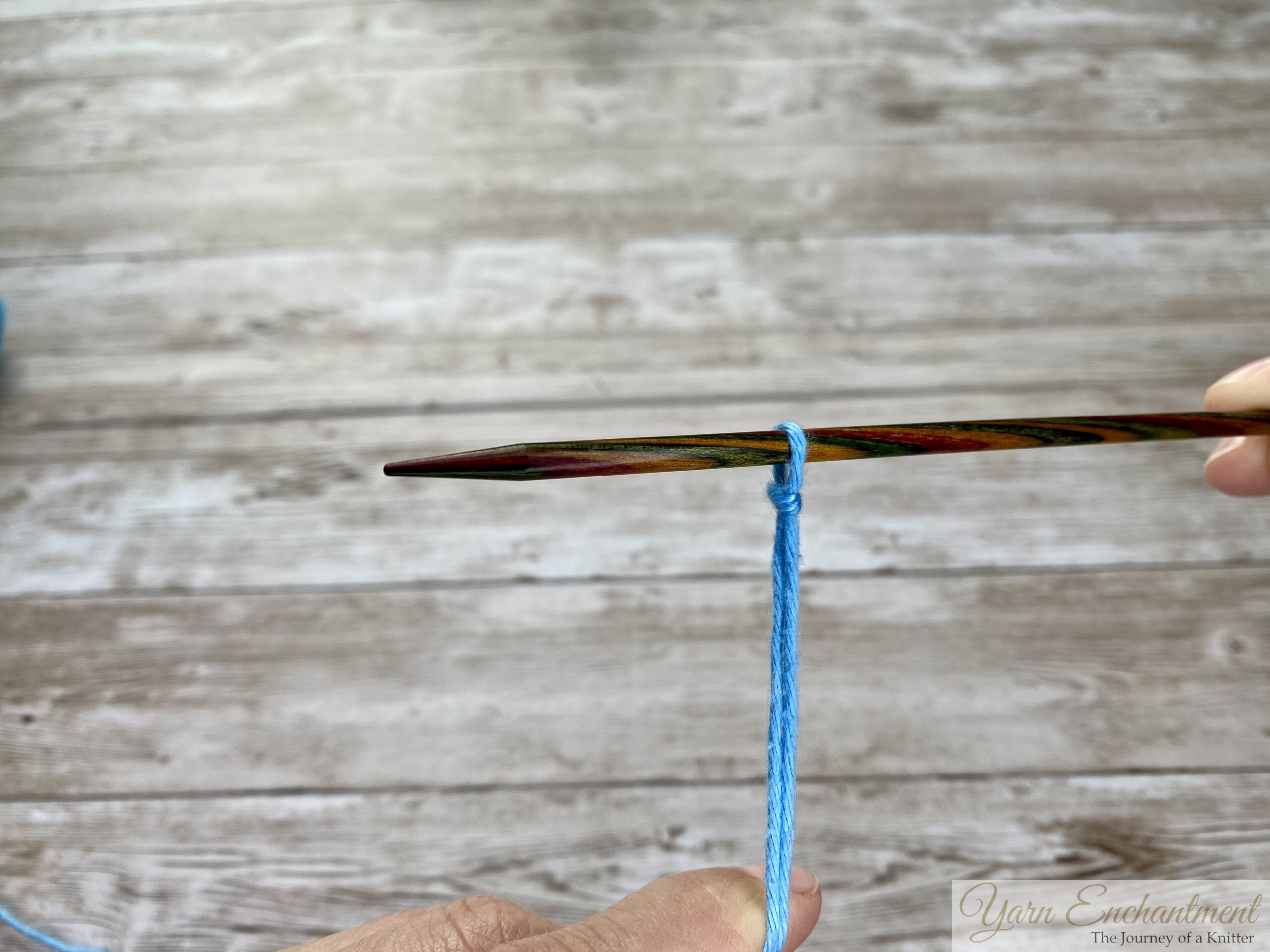  | 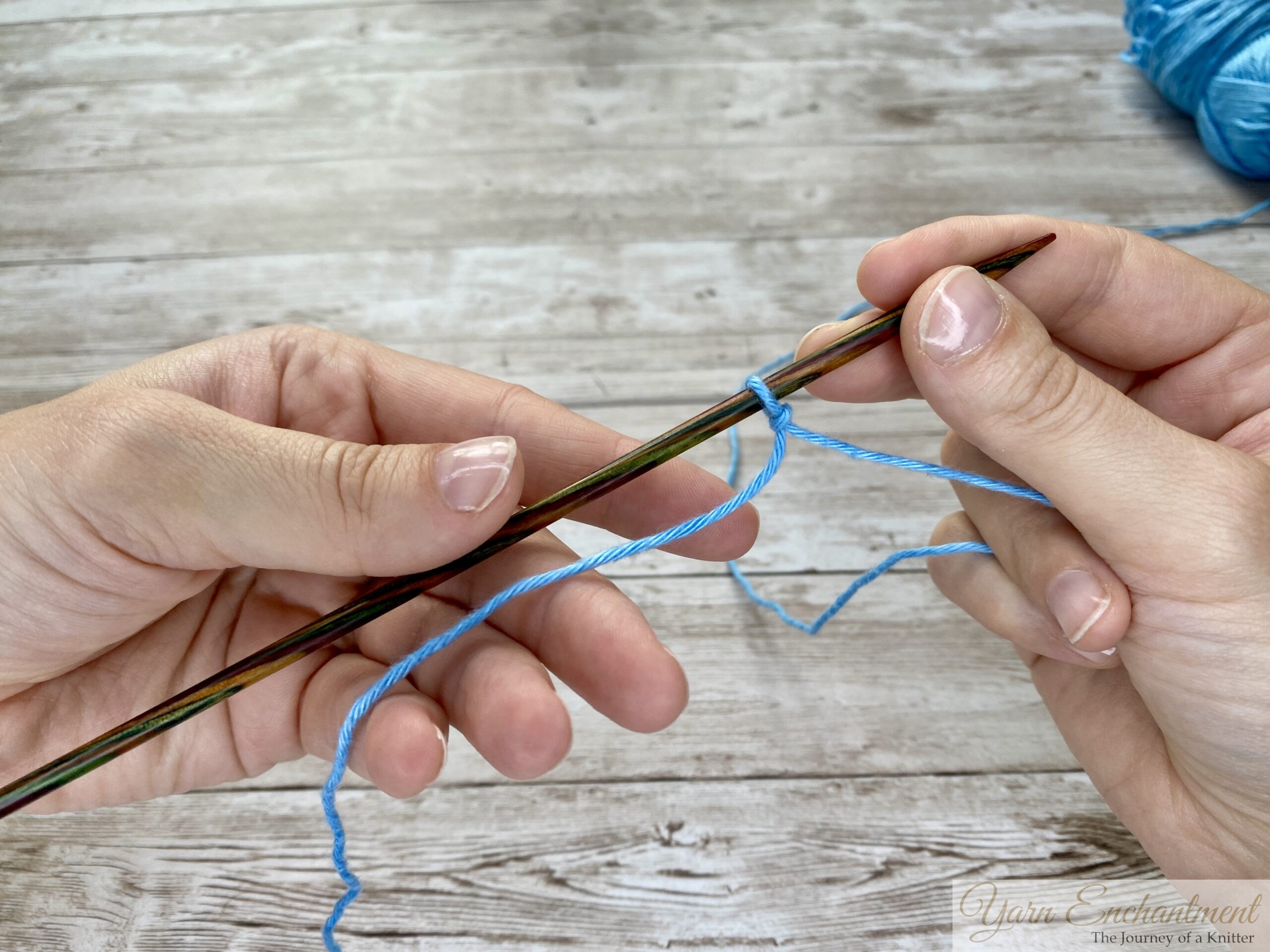  |
Make a slip knot and place it on your needle. | Use your fingers to hold the yarn tail out of the way. |
Step 2: Insert the Needle
- Insert the tip of the right-hand needle into the slip knot as if to knit.
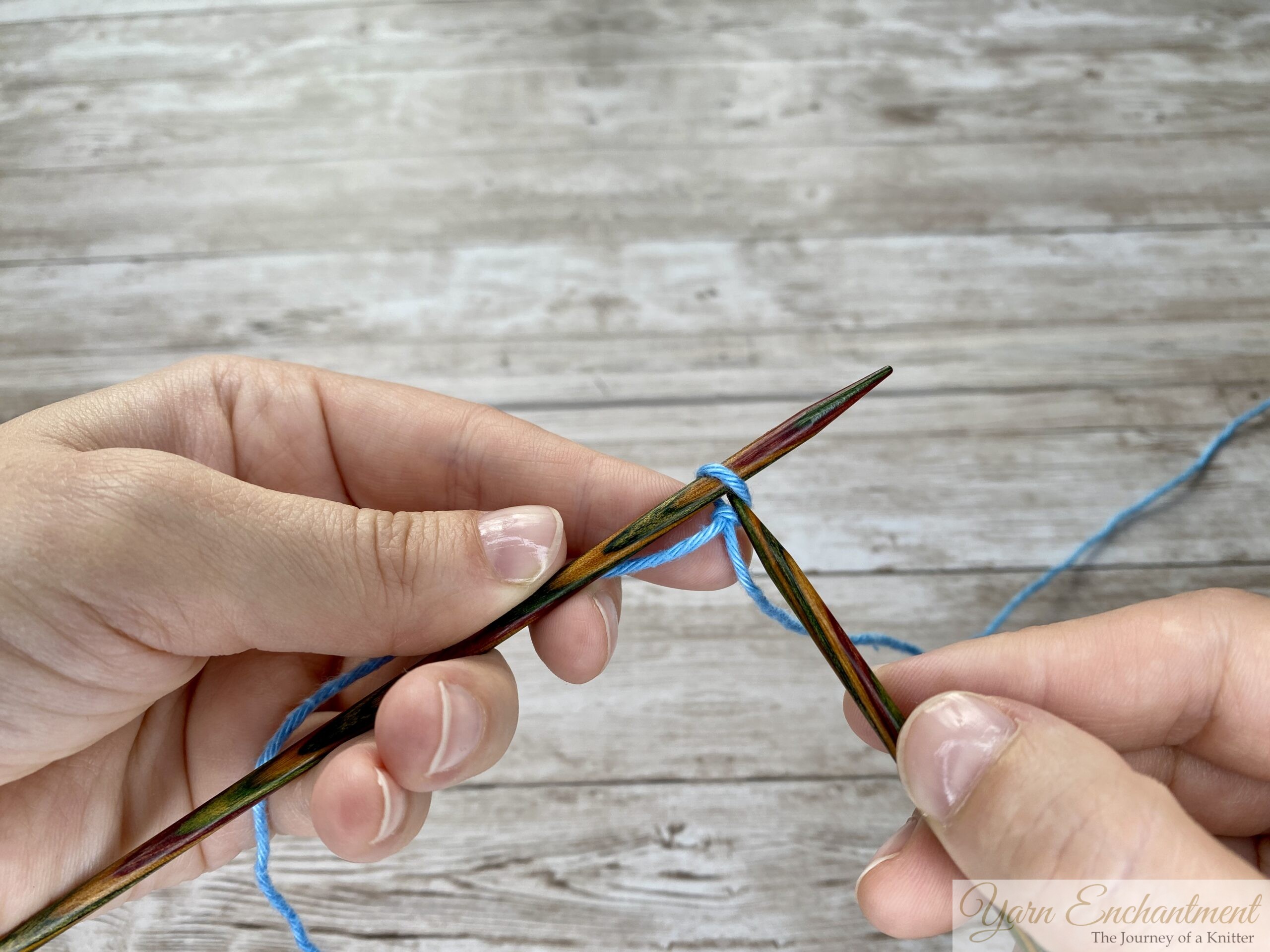  | 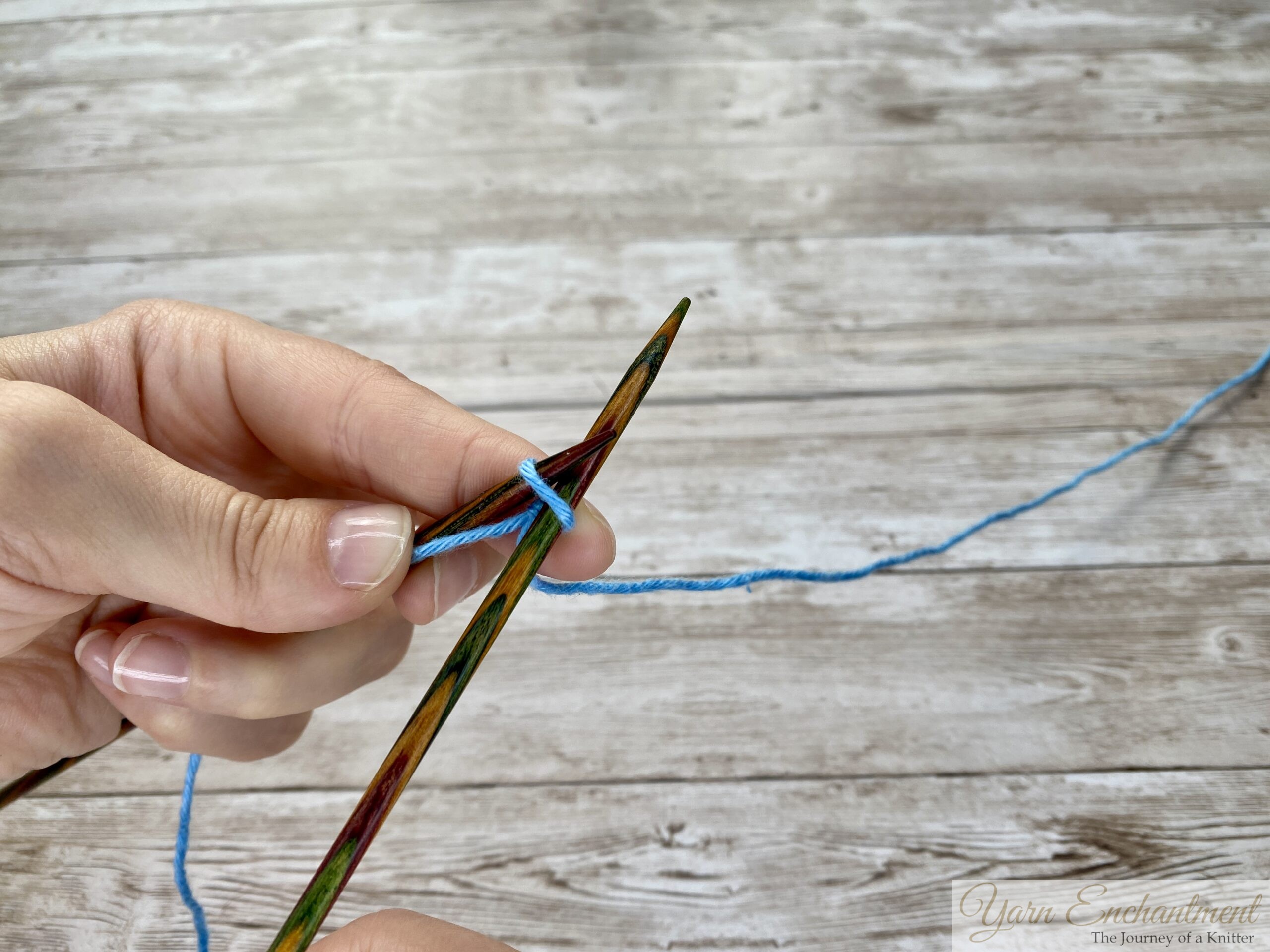  |
Insert the tip of the right-hand needle... | ...into the slip knot as if to knit. |
Step 3: Wrap the Yarn
- Wrap the yarn around the right-hand needle, just like you would when making a knit stitch.
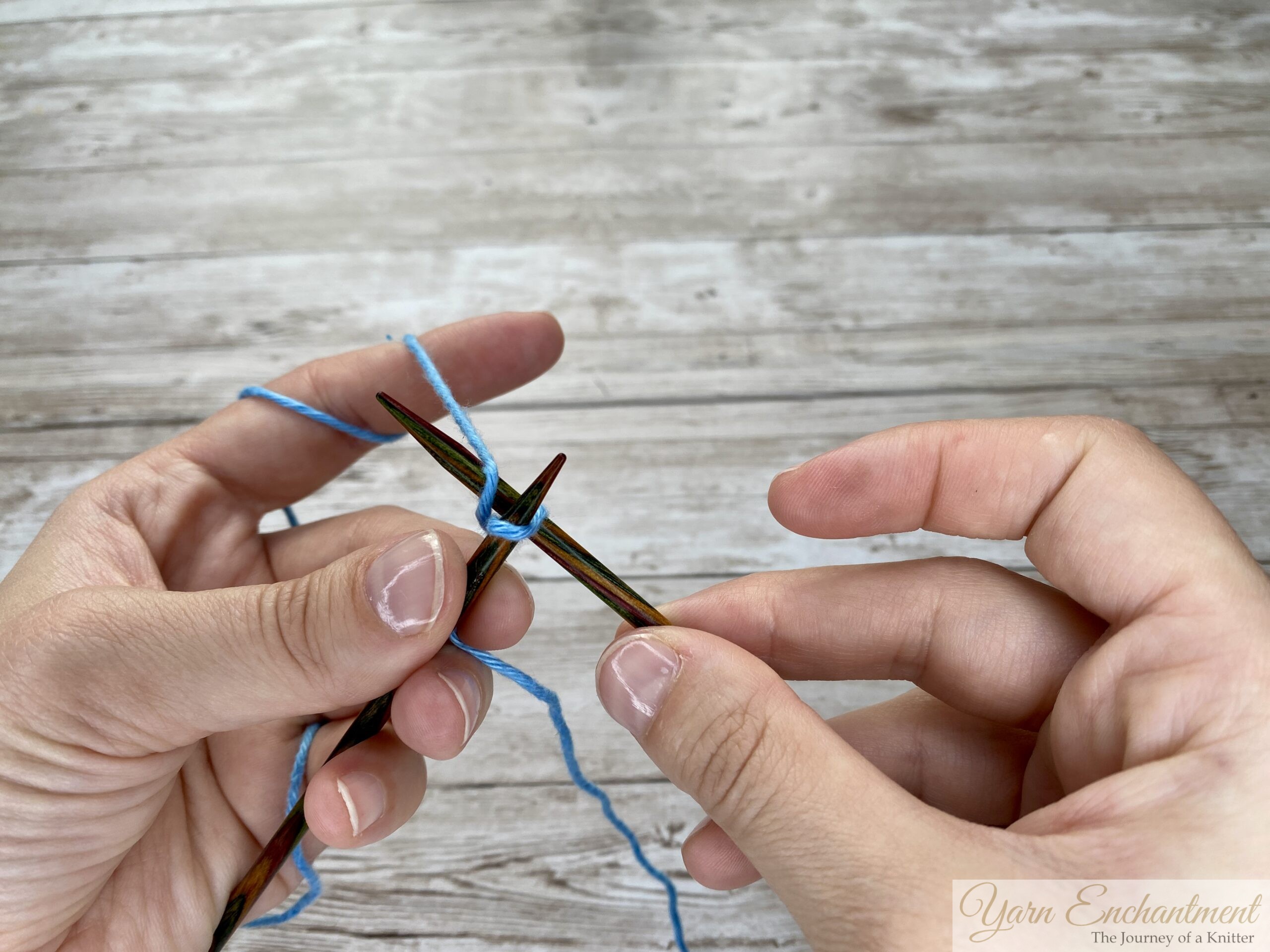  |
Wrap the yarn around the right-hand needle, just like you would when making a knit stitch. |
Step 4: Pull Through a Loop
- Gently pull the wrapped yarn through the slip knot, and pull up a big loop, but do NOT slide the original stitch off the needle. Instead, tilt the right needle to the right and insert the left needle into the loop you’ve pulled up, and leave the loop on the left needle.
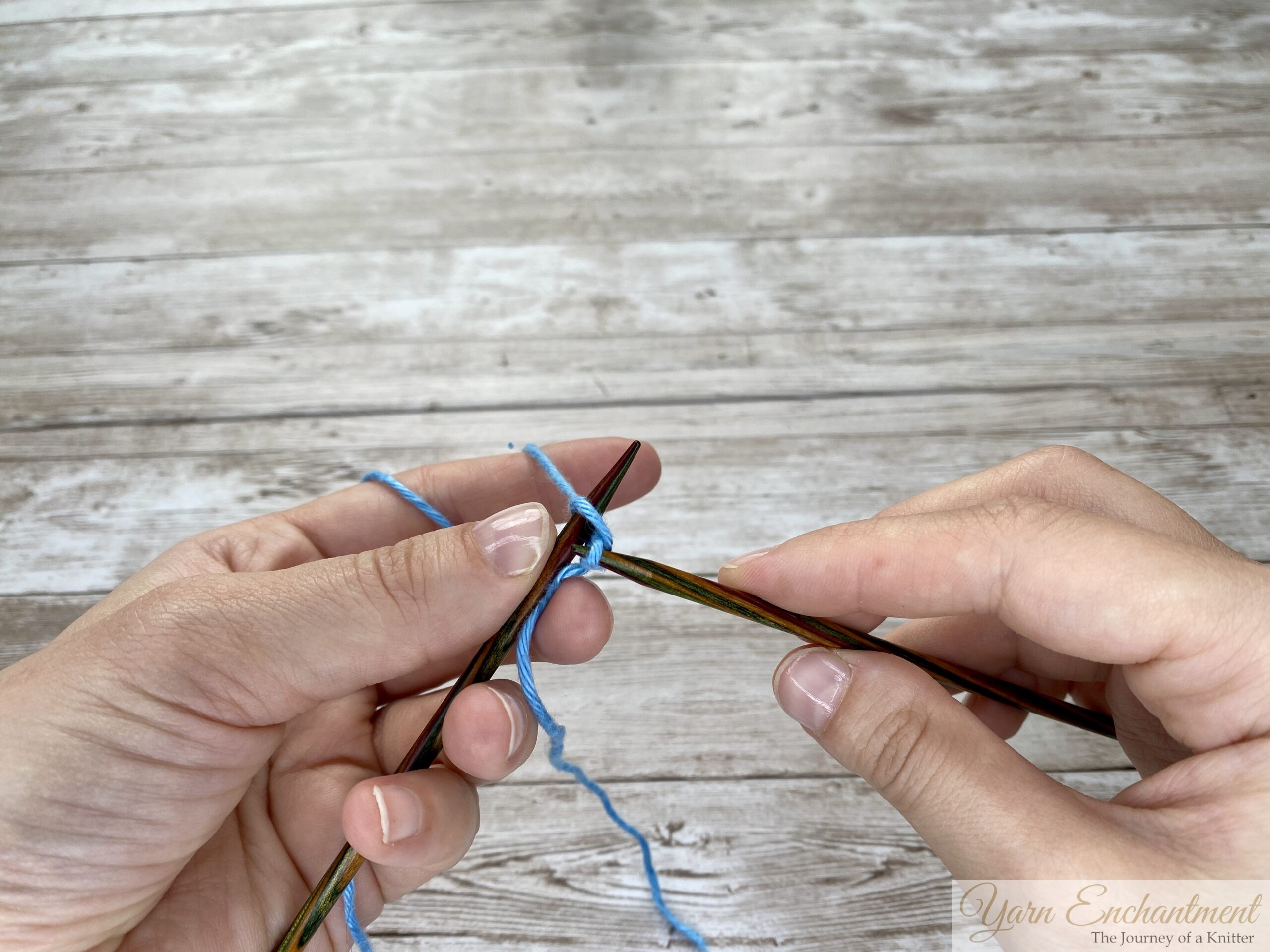  | 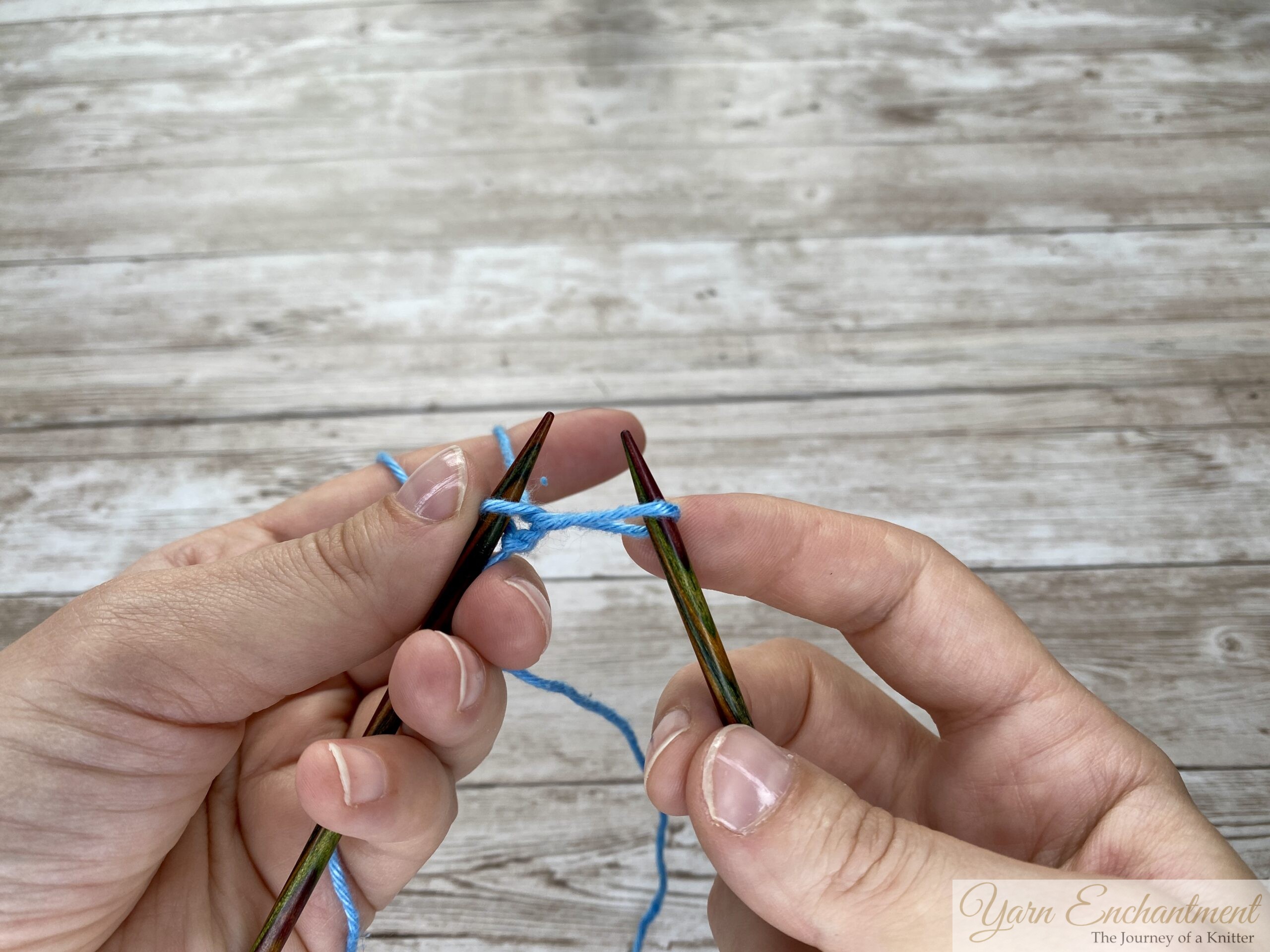  | 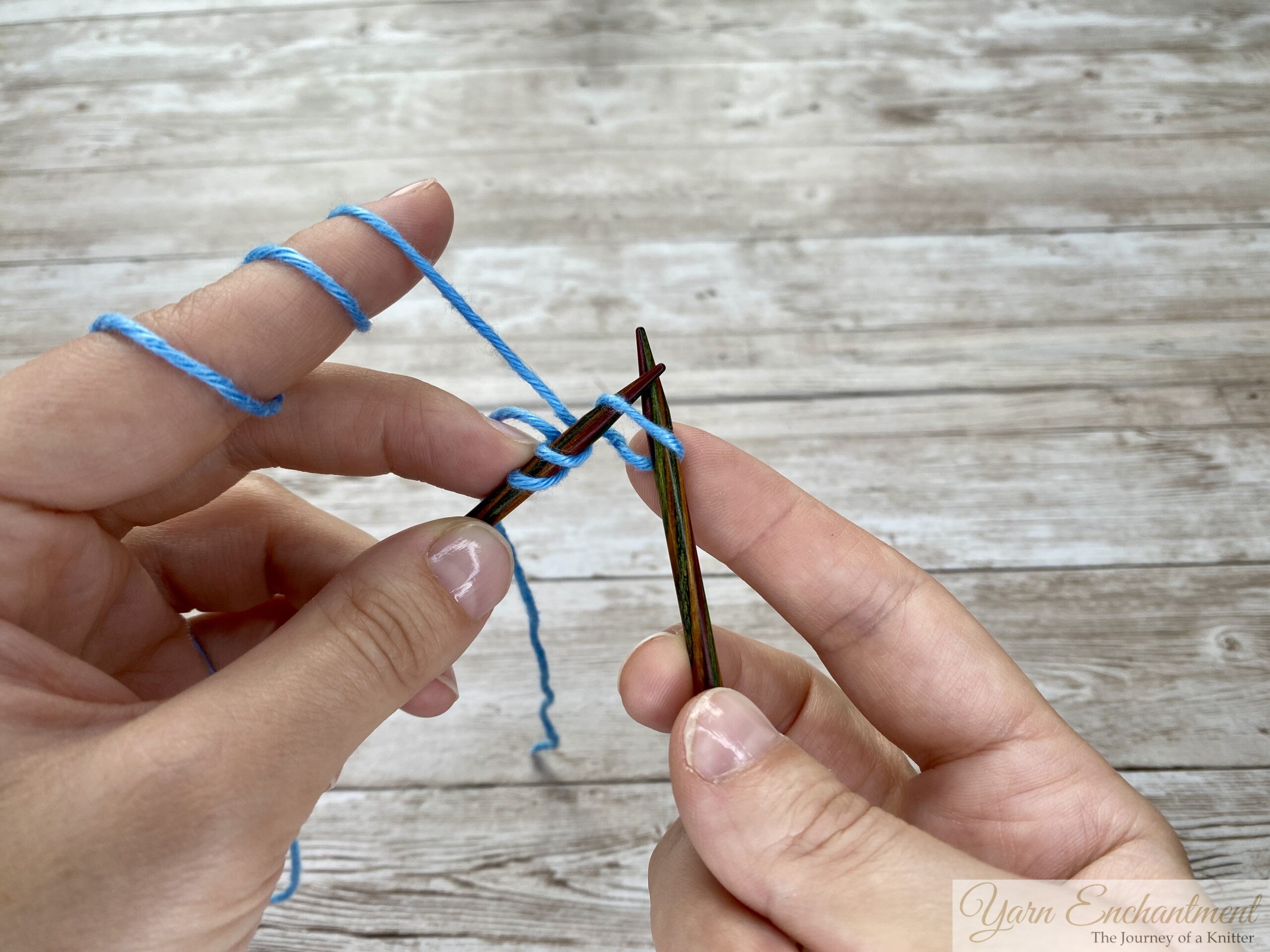  |
Gently pull the wrapped yarn through the slip knot... | ...pull up a big loop and tilt the right needle to the right | Insert the left needle into the loop you’ve pulled up, and leave the loop on the left needle |
Step 5: Repeat
- Continue inserting the right-hand needle into the last stitch on the left-hand needle, wrapping the yarn, and pulling through a new loop. Each time, place the new loop onto the left-hand needle.
Tip: There’s no need to remove the right needle from the stitch. Simply leave it in place, wrap the yarn around, and keep going with the knitted cast-on.
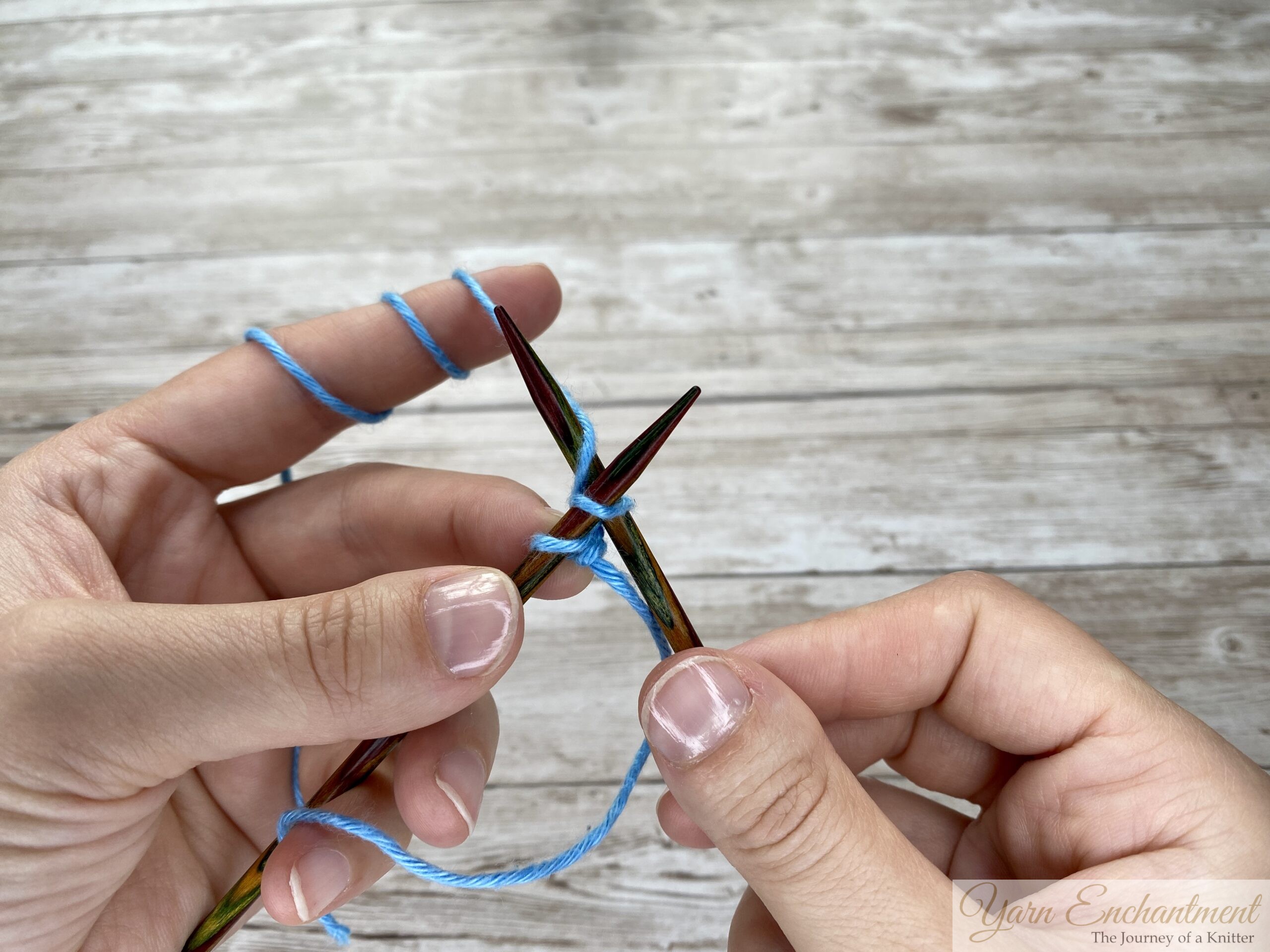  | 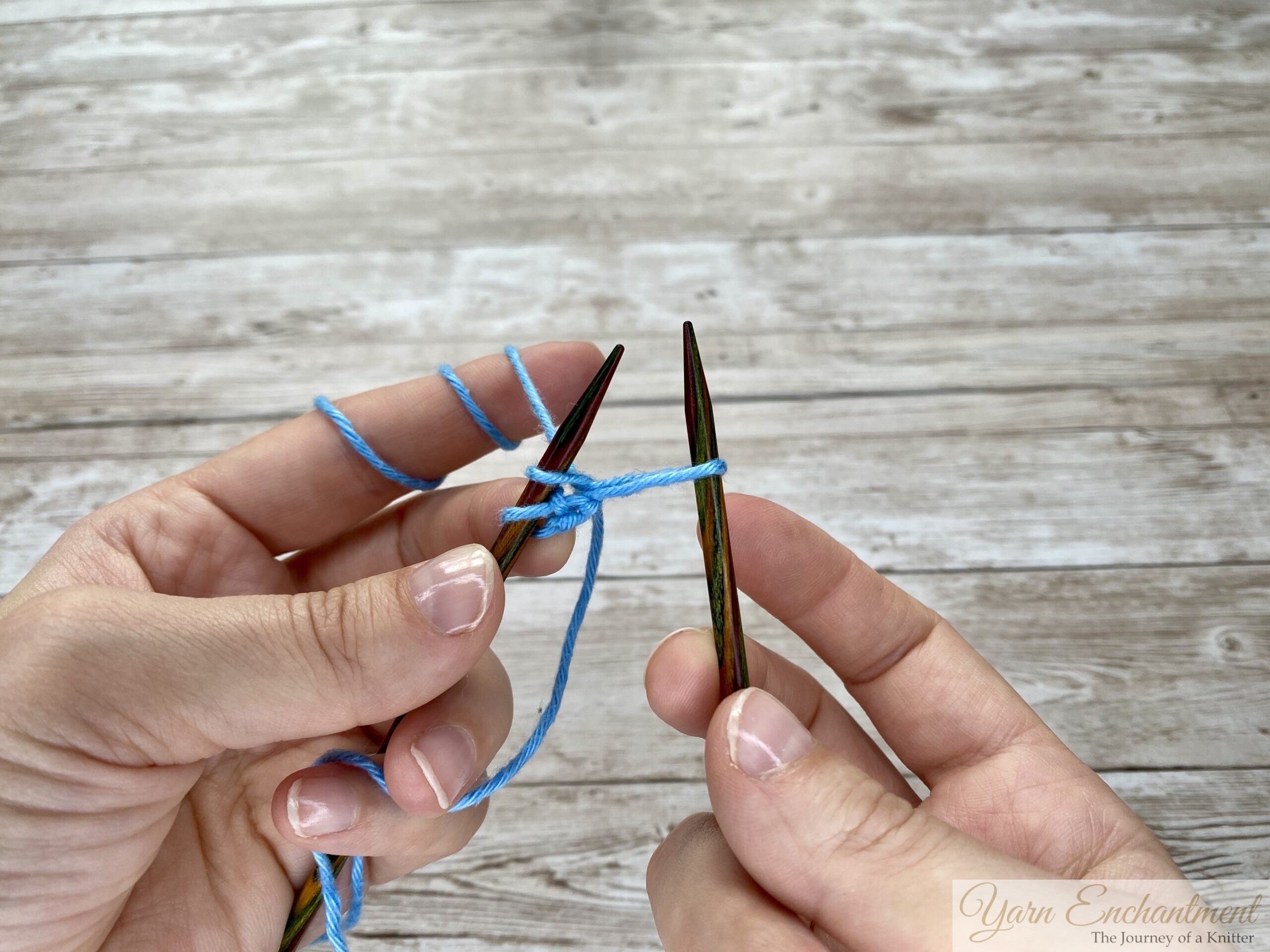  | 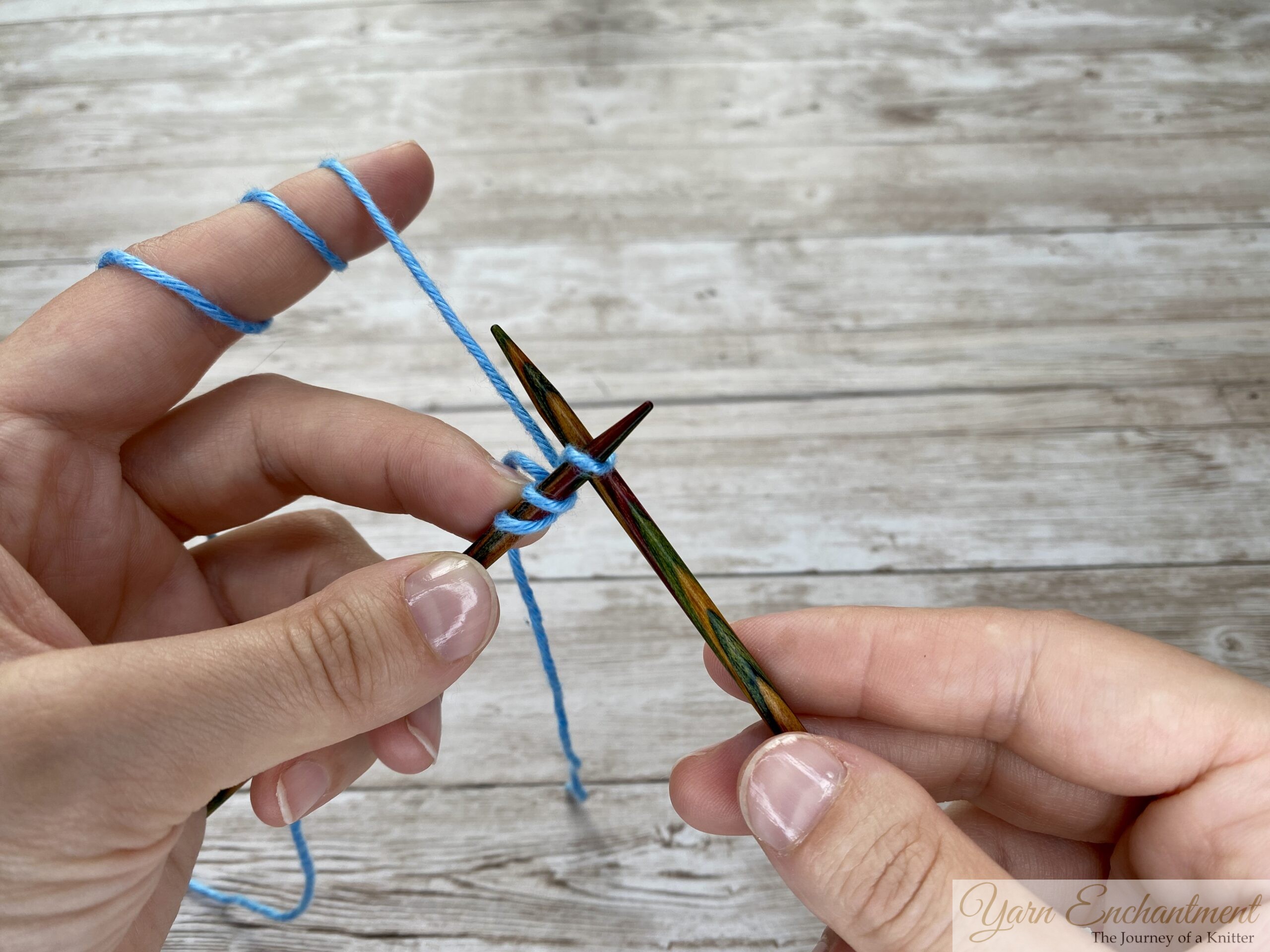  |
Continue: Insert the right-hand needle into the last stitch and wrap the yarn around the right-hand needle | Pull the wrapped yarn through this stitch, pull up a big loop and tilt the right needle to the right | Insert the left needle into the loop you’ve pulled up, leave the loop on the left needle. Tip: There’s no need to remove the right needle from the stitch. Simply leave it in place, wrap the yarn around, and keep going with the knitted cast-on. |
Step 6: Count Your Stitches
- Keep repeating until you have the desired number of stitches on your needle.
When you have finished your cast on, just start knitting the first row.
|
When you have the stitches you need on your needle, start knitting your first row or round |
The Right and Wrong Side of My Knitting
- Yarn Tail Indicator: When your yarn tail is on the left, it’s a good indicator that you’re looking at the right side of your knitting project while working flat.
- Cast-On Edge: You can also determine the sides by examining your cast-on edge. The way the stitches sit on the needle or how they appear along the edge can help you differentiate the right side from the wrong side.
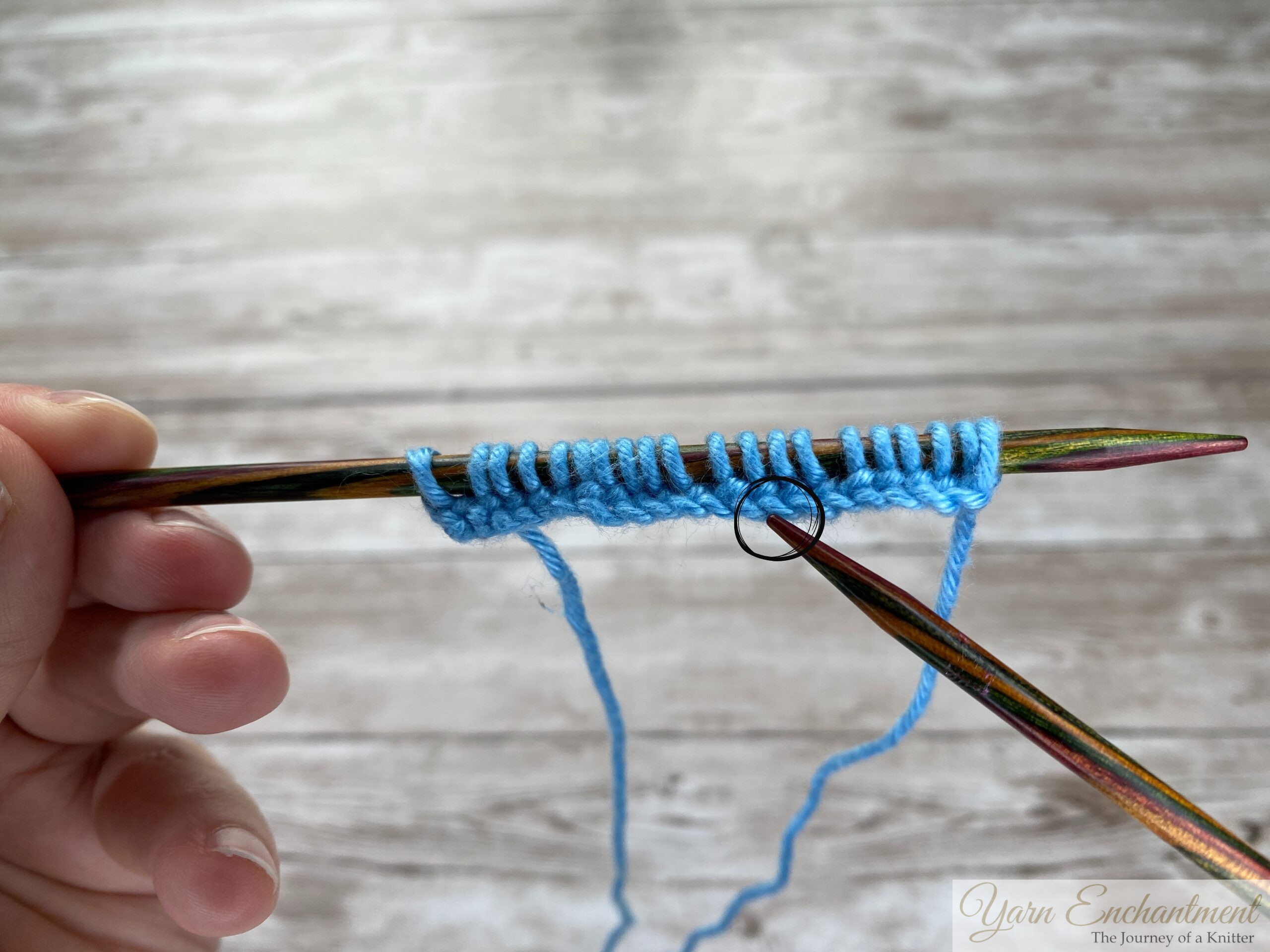  |   |
On the Right Side: You’ll notice small, subtle waves forming along the fabric. (I circled the little wave in the picture) | On the Wrong Side: You’ll already notice small purl bumps forming along the fabric. These bumps are a clear sign that you’re looking at the wrong side of your work. (Here, the purl bumps are circled to help you identify them.) |
Tips for Success
Pros and Cons of the Knitted Cast-On
Pros:
- Beginner-friendly and easy to learn.
- Creates a soft, flexible edge.
- No extra tools or complex techniques required.
Cons:
- May not be as firm or structured as other cast-ons (e.g., the long-tail or cable cast-on).
- Not ideal for projects requiring a very tight or decorative edge. (e.g. 1 row button hole)
- Can look slightly looser than other cast-ons, especially if your tension varies.
Alternatives to the Knitted Cast-On
While the knitted cast-on is a very easy and fast to learn method, there are other cast-on methods worth exploring depending on your project needs:
- Long-Tail Cast-On: The Long-Tail Cast-On provides a balanced, sturdy edge and is widely used because of its versatility.
- Cable Cast-On: The Cable Cast-On creates a firmer, more structured edge, ideal for items like button bands.
- German Twisted Cast-On: Offers maximum stretch, making it great for toe-up socks or top-down hats.
- Provisional Cast-On: The Provisional Cast-On is used when you need to pick up live stitches later (e.g., for hems or borders).
|
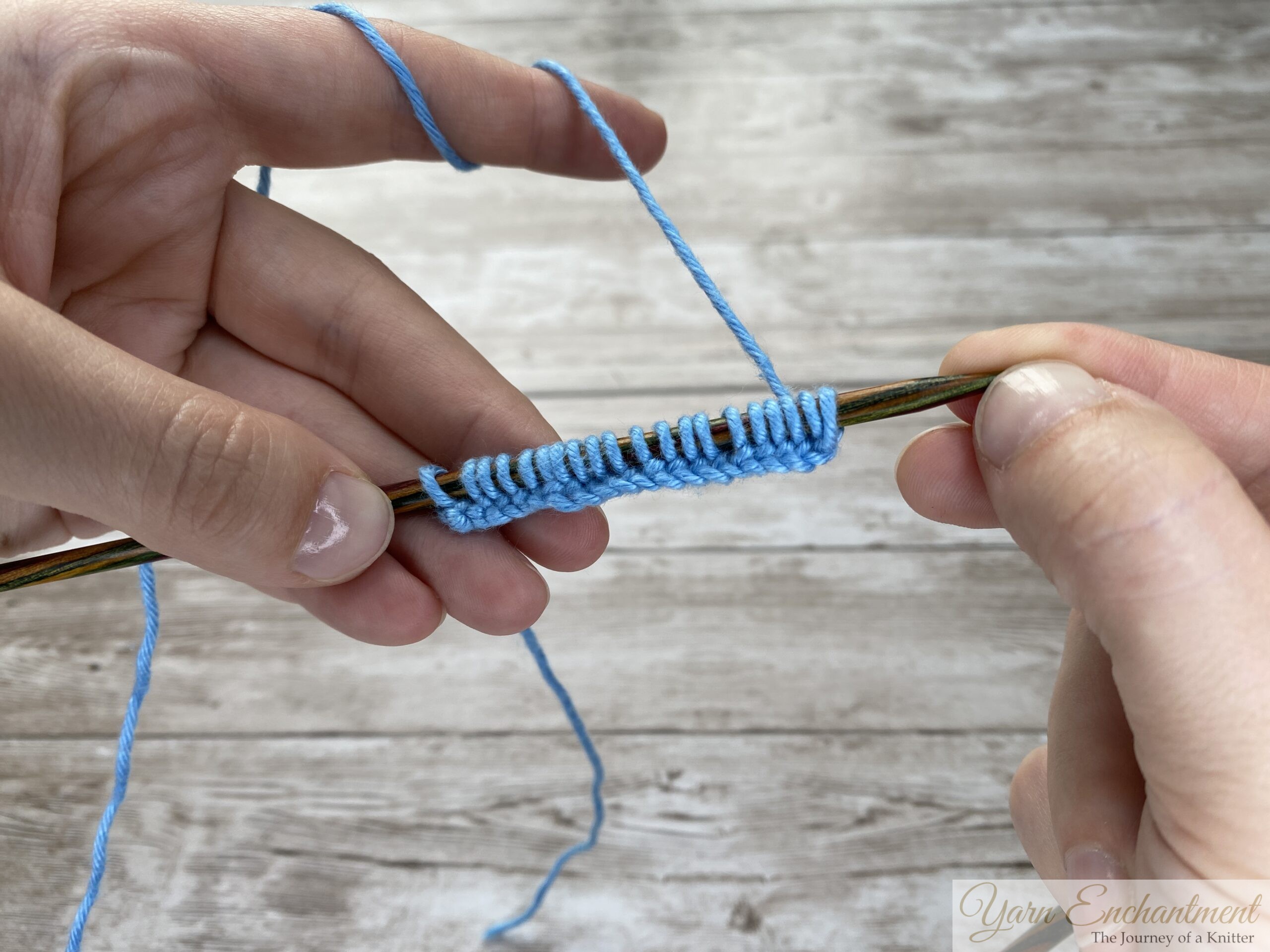
A finished knitted cast-on |
Conclusion
The knitted cast-on is one of those techniques that every knitter should have in their back pocket. It’s super easy to learn, and because it’s so similar to the knit stitch, even beginners can pick it up without much trouble. What I love about it is how versatile it is - you can use it for just about anything, from starting a new project to adding stitches for your underarm stitches. Whether you’re casting on for the first time or looking for a simple way to tweak your work mid-project, the knitted cast-on has got your back.
A Little Way to Say Thanks
Yarn Enchantment is my cozy hobby corner on the internet. If something here made your knitting day easier or you simply enjoy reading my posts and would like to say thank you, you can leave a small Ko-fi tip - but only if you truly want to.
My patterns and tutorials stay free for everyone, always. Every little tip just goes toward new yarn and a cup of tea for my cozy knitting evenings.
☕ Support me on Ko-fi
You Might Also Like


 |
|
Join the Cozy Corner Newsletter
Hello, creative soul. Welcome to the Yarn Enchantment Newsletter, a little space where we celebrate all things cozy, crafty, and full of heart. Think of this as your friendly crafting companion, a soft dose of inspiration delivered straight to your inbox, just for you. Each newsletter brings you: ✨ Notifications about new patterns and tutorials – easy knitting patterns and beginner crochet projects you won’t find anywhere else 🧶 Practical yarn tips for new crafters, plus advice on the best yarn for fall, blankets, and handmade gifts 💌 Small stories and adventures from my own workbench, because crafting is as much about the journey as the finished piece Whether you’re knitting by the fire, looking for your next creative spark, or simply wanting a quiet moment with your hooks and needles, this newsletter is here to cheer you on. Crafting isn’t just about the final project. It’s about the joy, the peace, and the stories we weave along the way. So grab a cup of tea or coffee, settle in, and join me. Together we’ll make a little magic, one stitch and one story at a time. I’m so glad you’re here. Let’s create something beautiful together. Sign up below to receive your first email, and feel free to leave a comment on the blog if there’s a topic you’d love to see covered. Your ideas might just become our next newsletter feature. |