


3D Flower Granny Square Tutorial: Step-by-Step Crochet Guide
April 13, 2025
Is This Image Real? 10 Signs a Crochet or Knitting Image is AI-Generated
April 22, 2025Provisional Cast-On (Open Cast-On) Over a Spare Cable
 Over a Spare Cable )
Originally published on April 16, 2025
Not long ago, I shared a blog post about the Provisional cast-on with a crochet hook - but let me tell you, I’ve discovered a way easier method for working the provisional cast-on. No waste yarn, no frustration, and no hassle. In this tutorial, I’ll show you how to use the cable of your circular needle to keep live stitches secure and simplify your knitting process. Whether you’re a beginner or an experienced knitter, this technique will save you time and effort.
(P.S. If you're more of a visual learner, I’ve included a YouTube tutorial at the end of this post!)
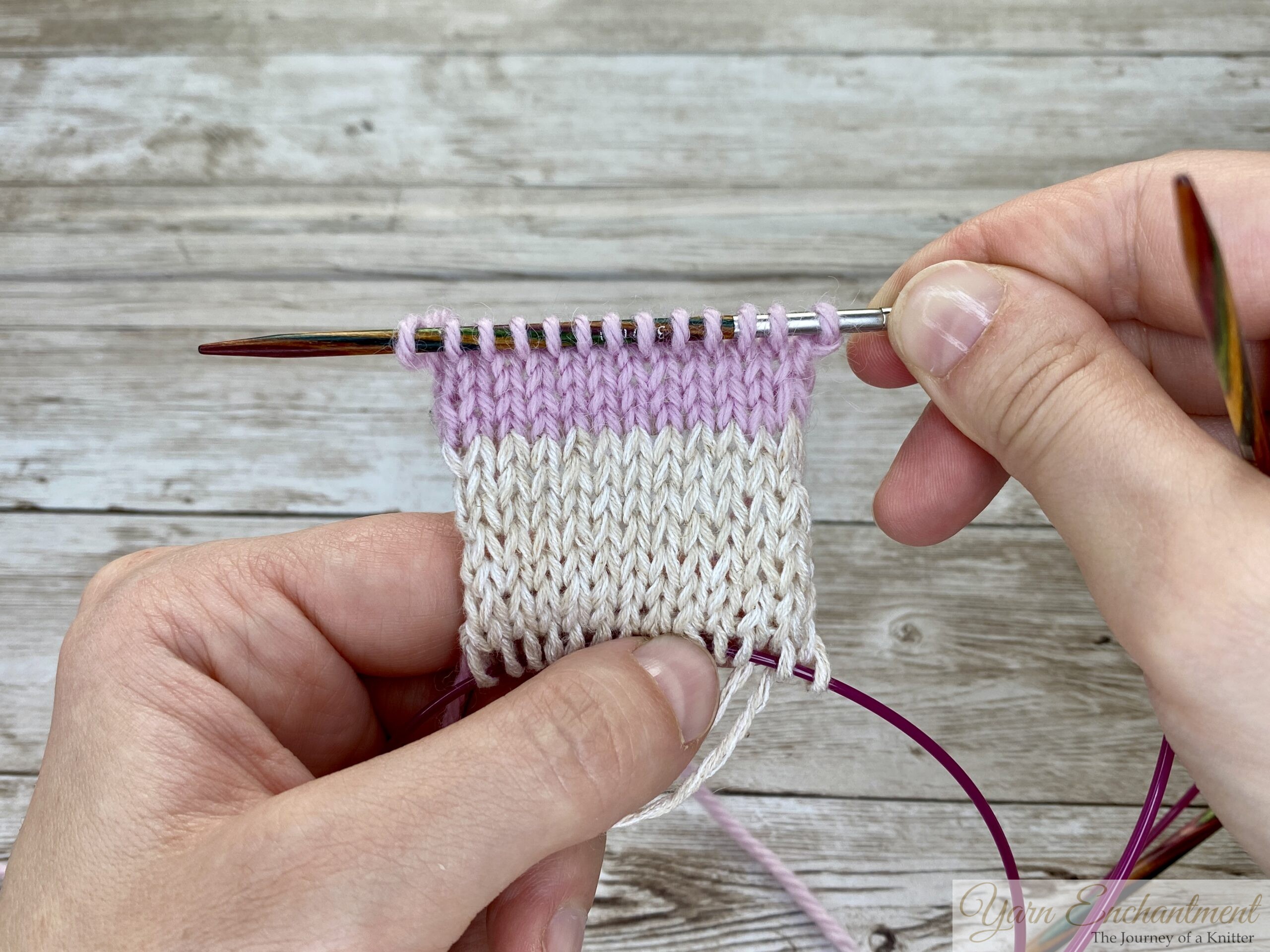  |
I used two different colors to show you the transion better! |
Why Learn the Provisional Cast-On?
So, what exactly is a provisional cast-on? Think of it as a way to "pause" your knitting project while keeping your stitches live for later use. This technique is especially handy when working on seamless joins, hems, or reversible designs. Instead of casting on permanently, you can come back to those stitches later and continue knitting in the opposite direction - or even join them seamlessly for a double-folded edge or a picot edge.
This post focuses on a unique twist to this classic technique: using the cable of a circular knitting needle instead of waste yarn. Not only does this eliminate the need for extra materials, but it also makes the process quicker and easier. Plus, there’s less risk of accidentally dropping or unraveling stitches - a true win-win!
I used this cast on for my newest knitting project; I had to cast on over 200 stitches, and I saved so much time with this method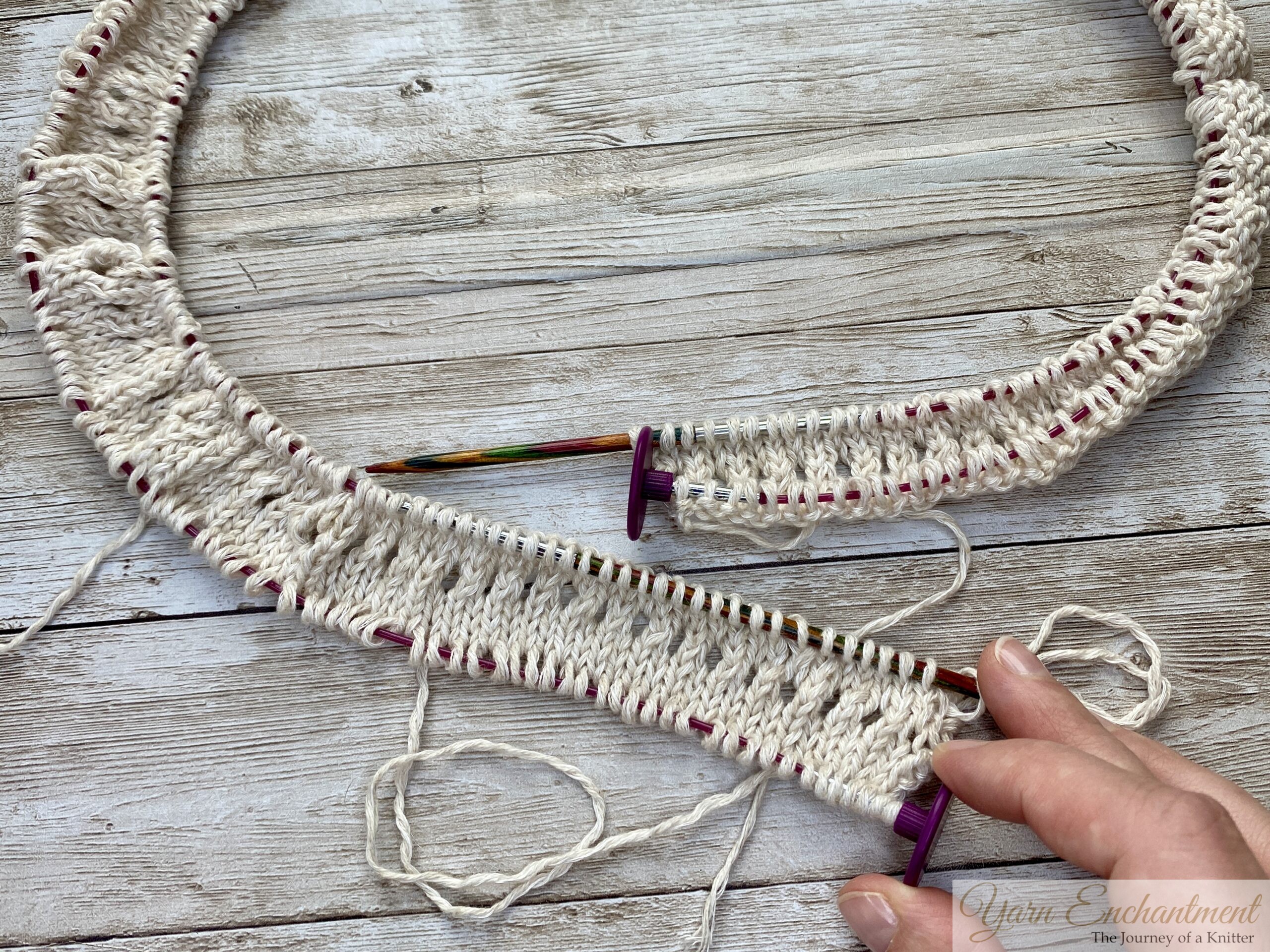

A Little History: The Open Cast-On
This provisional cast-on is also known as the Open Cast-On. Years ago, knitters worked this technique over waste yarn, which kept the live stitches secure until they were ready to use them. The method we’re exploring today is essentially the same, but with one key difference: instead of waste yarn, we’ll be using a spare cable.
I’ve also seen tutorials where knitters work the Open Cast-On with a Barber Cord or stitch saver. And yes, those methods work too! But why bother with waste yarn or stitch savers when you can skip the extra step entirely? By using a spare cable, you save yourself the hassle of picking up stitches later - it’s faster, cleaner, and just as effective.
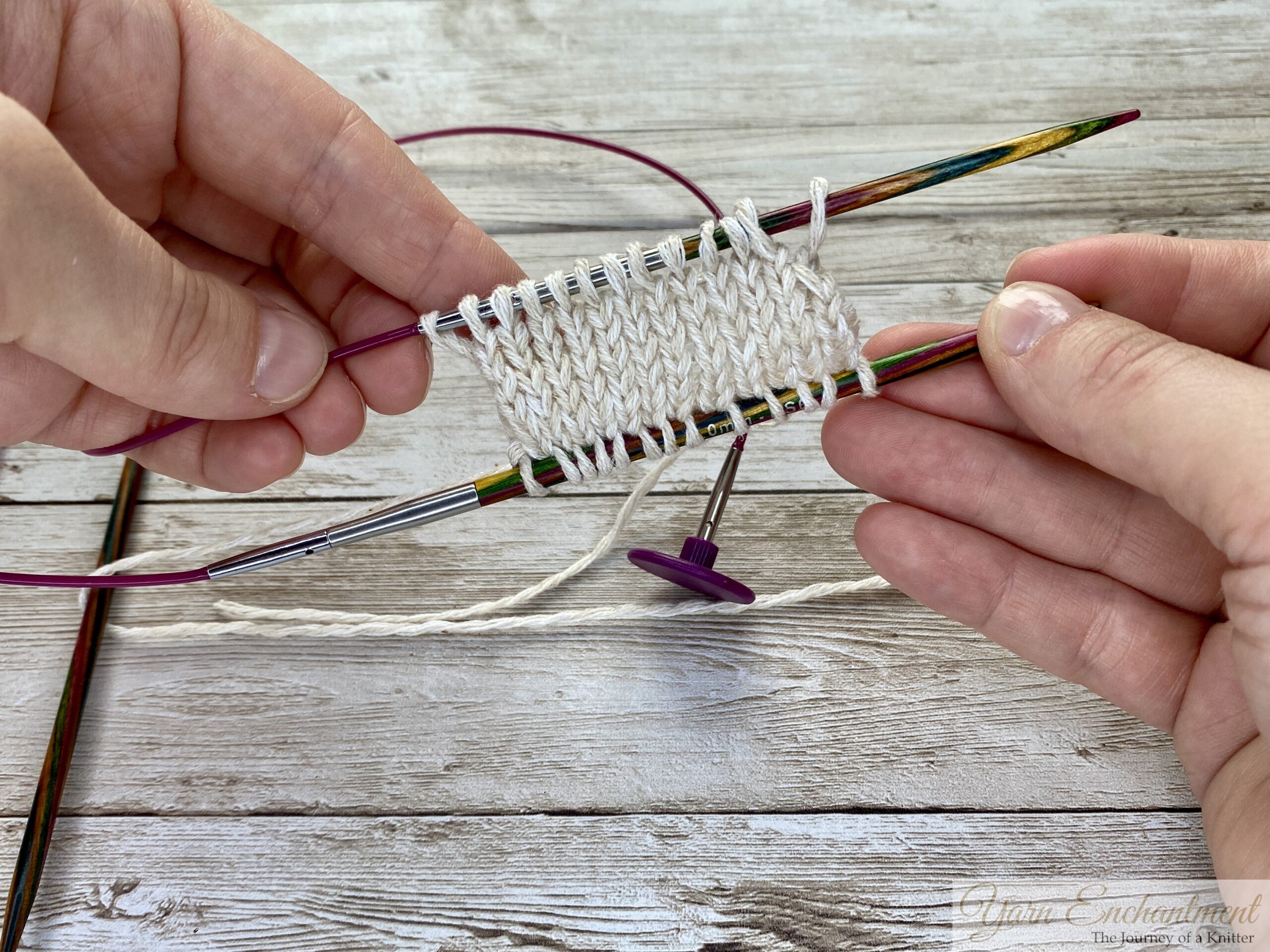  |
The provisional Cast on can be easily slipped onto the knitting needle. |
What You’ll Need
Here’s what you’ll need to get started:
- A circular knitting needle with a flexible cable
- A spare cable or spare circular knitting needle (optional)
- Working yarn: The yarn you plan to use for your project
- Stoppers for your cables
- Another pair of knitting needles
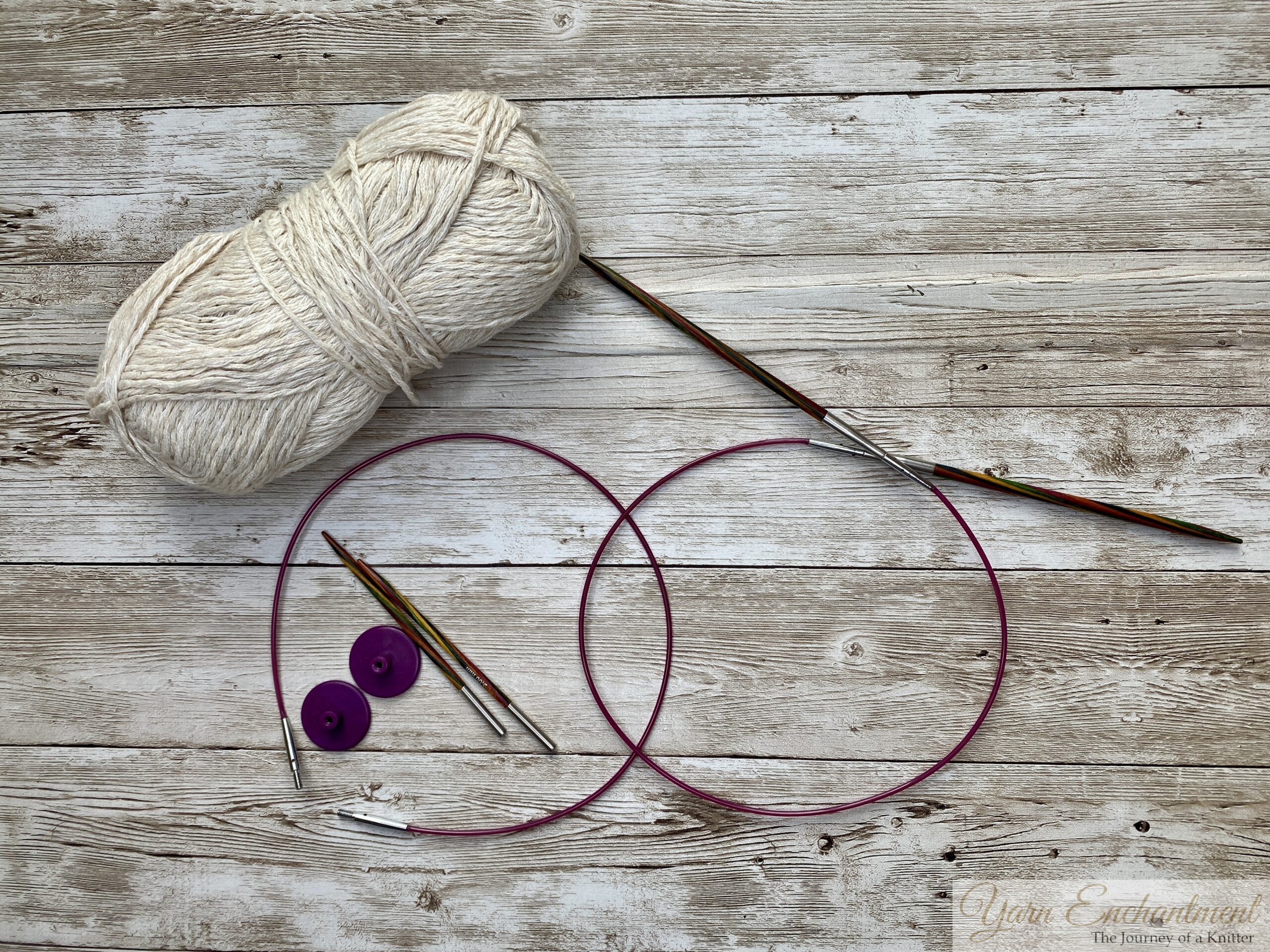  |
Materials needed |
Step-by-Step Instructions
Step 1: Set Up Your Tools
Before we dive into casting on, let’s get everything ready. This step is very important for ensuring your live stitches stay secure and your process goes smoothly.
- Attach Stoppers: Start by attaching stoppers to the ends of your spare cable. These stoppers are a lifesaver - they prevent your live stitches from slipping off, even if you’re casting on a large number of stitches.
- Optional Tip: If you’re using two circular needles instead of a spare cable, consider adding stitch stoppers to both ends for extra security.
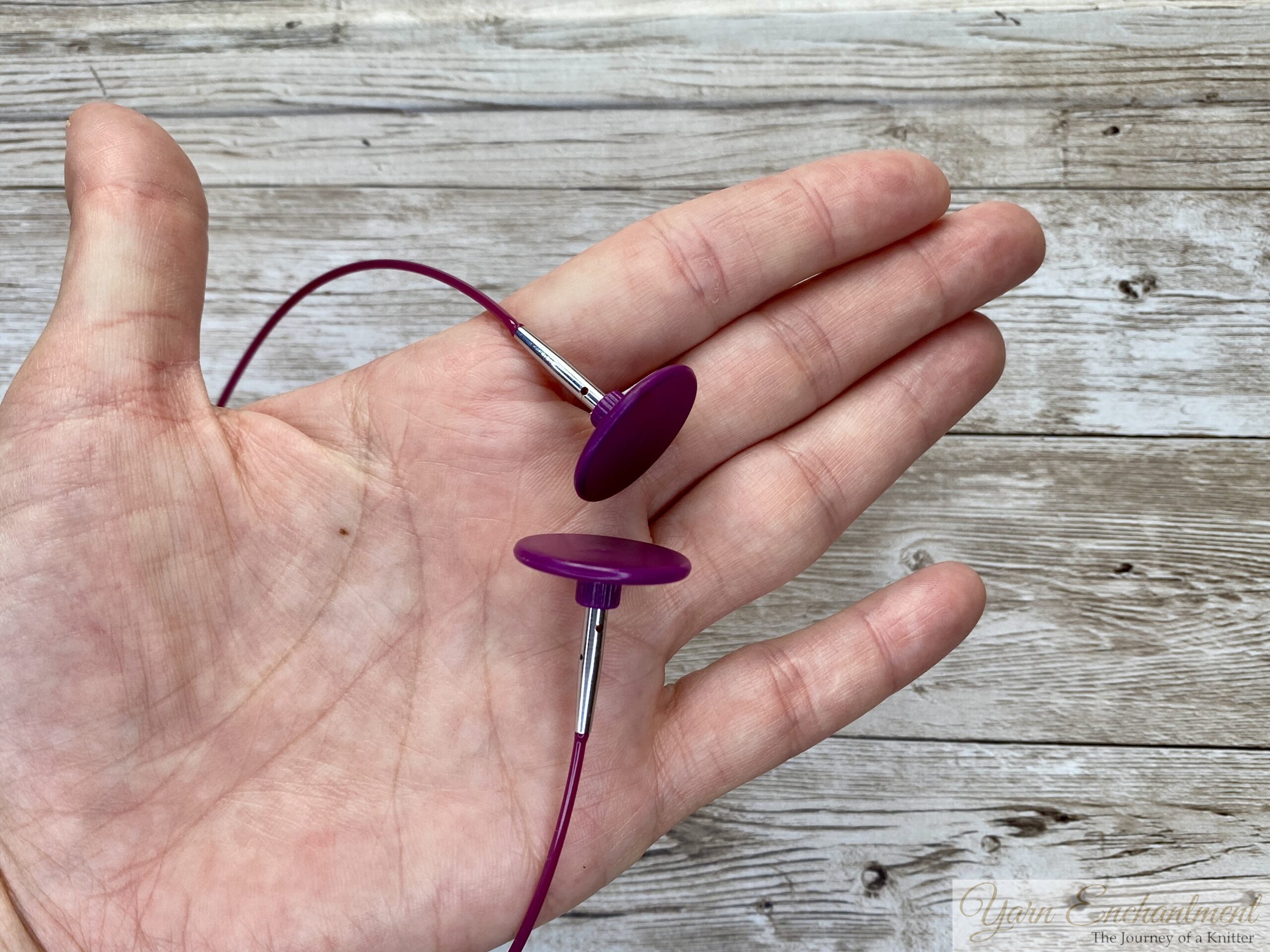  |
Attaching the stoppers is a very important step |
Step 2: Start Casting On
Now that everything’s set up, let’s begin casting on! Here’s how to do it step by step:
- Create a Slipknot:
Begin by creating a slipknot with your working yarn and placing it onto your knitting needle. Be sure to leave enough of a tail so you can weave it in later. - Position the Spare Cable:
Place your spare cable underneath your knitting needle. Hold the cable steady with one hand while using your needle to grab the yarn and create loops. - Create Your First Loop:
- Bring your needle under the cable, grab the yarn, and pull it back to the front to create your first loop.
- Work a yarn over (you can go either front to back or back to front - it doesn’t matter).
- Repeat the Process:
Continue alternating between creating loops on the needle and wrapping yarn overs. Here’s the rhythm:- Go under the cable, grab the yarn, and bring it back to the front.
- Work another yarn over.
- Repeat until you’ve cast on the desired number of stitches.
Tip:
Keep an eye on your tension as you go. Consistent tension will help your stitches look neat and even when you pick them up later.
Click on any image to view it in a larger size!
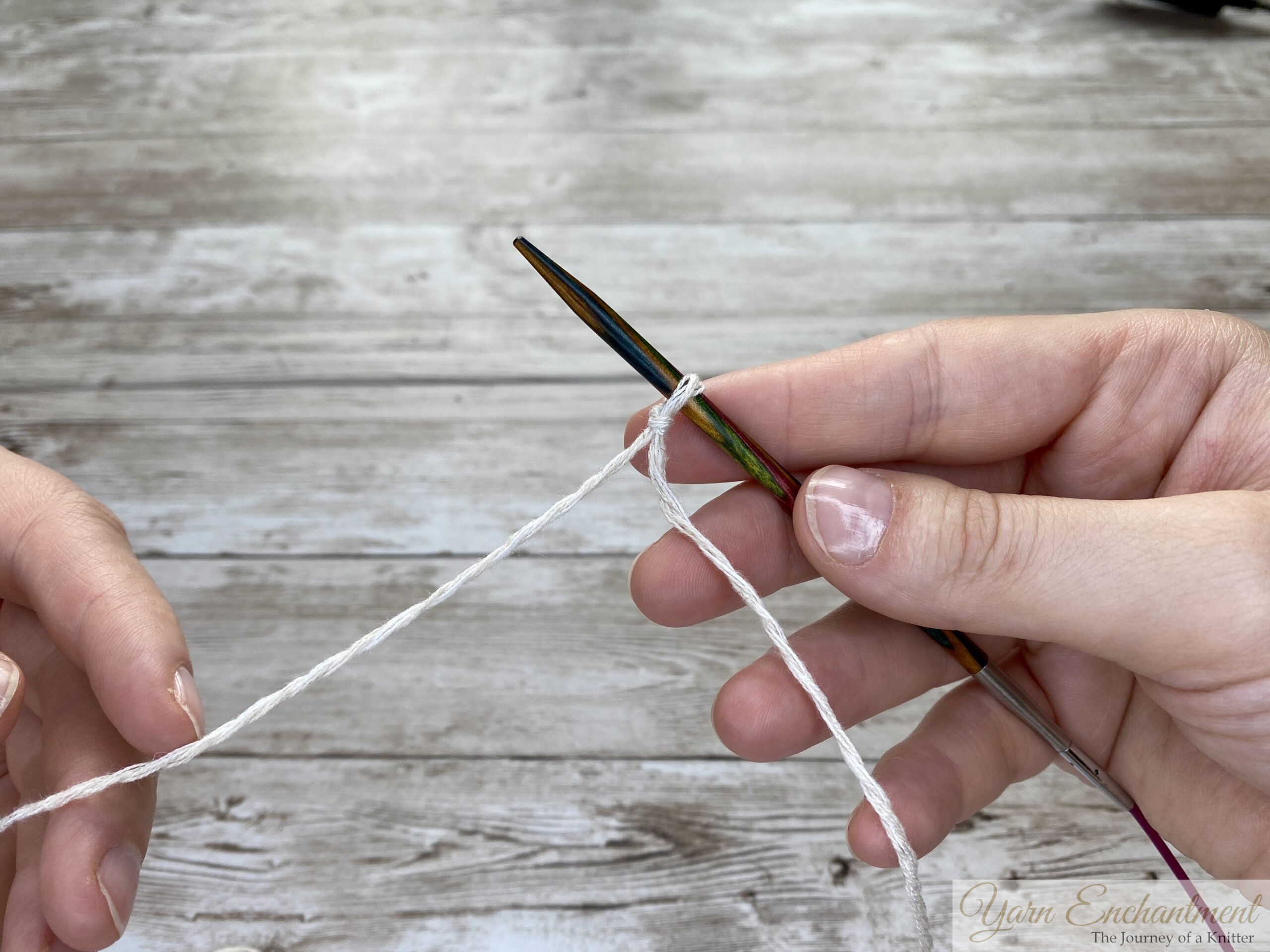  | 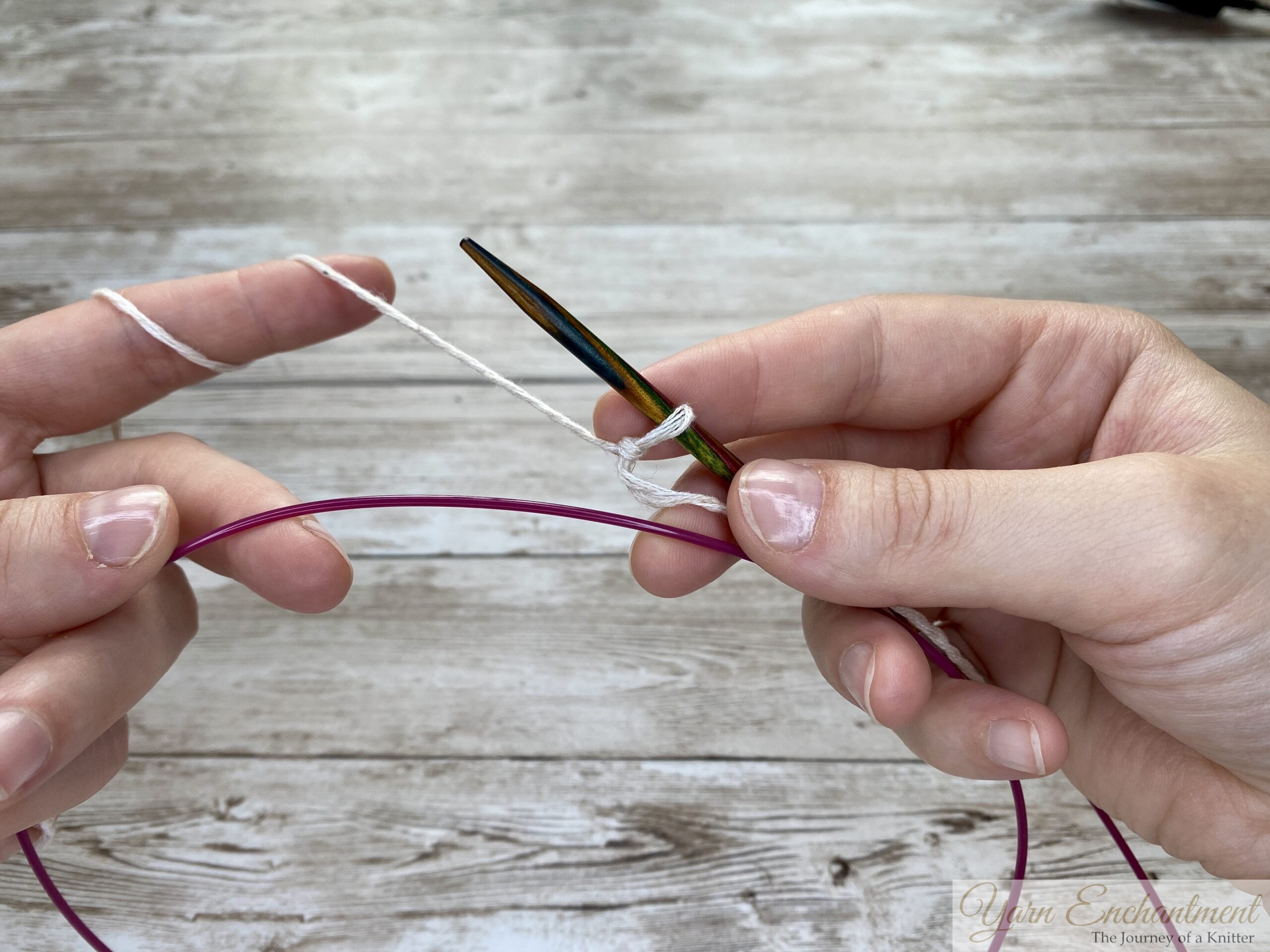  | 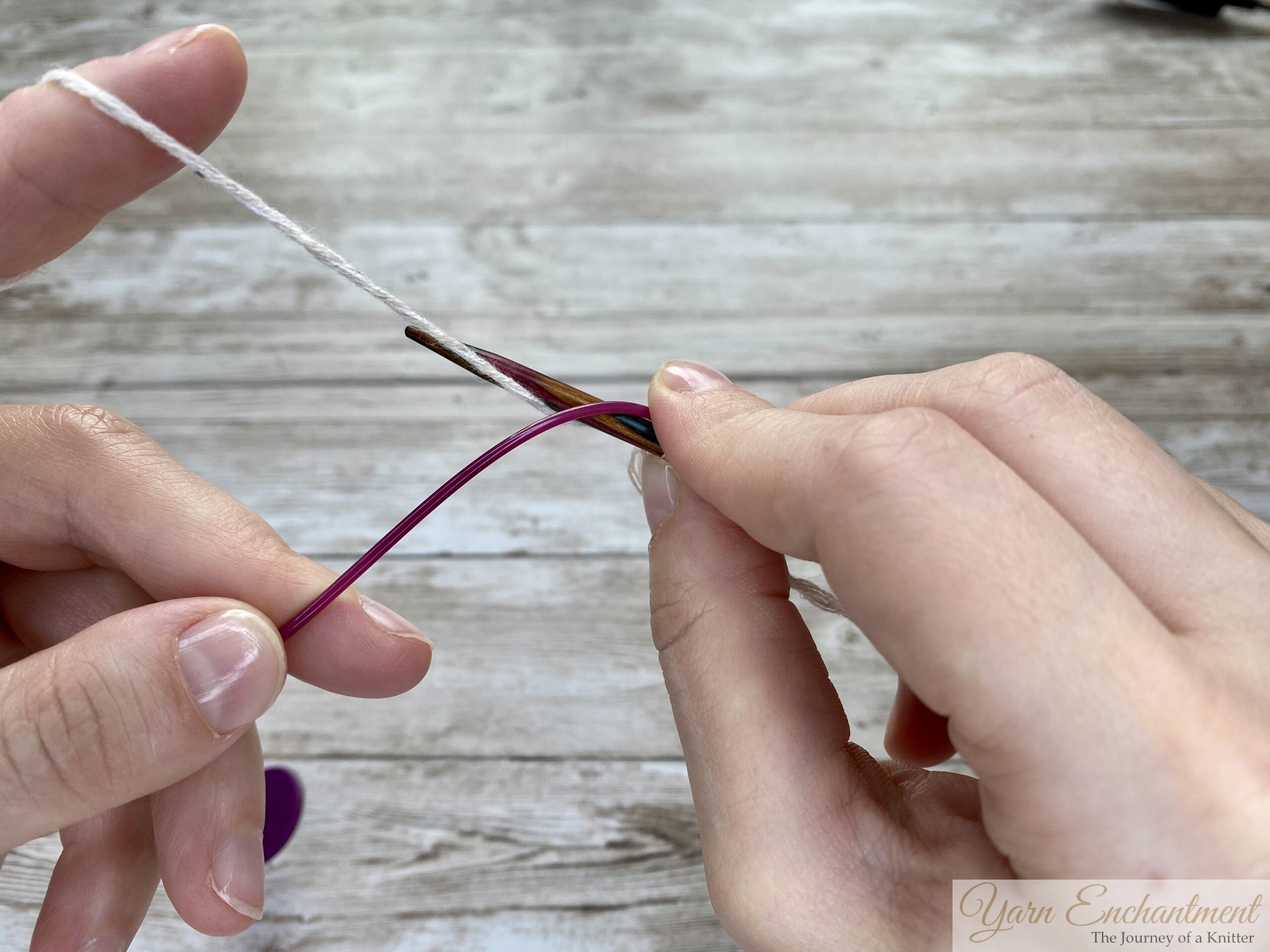  |
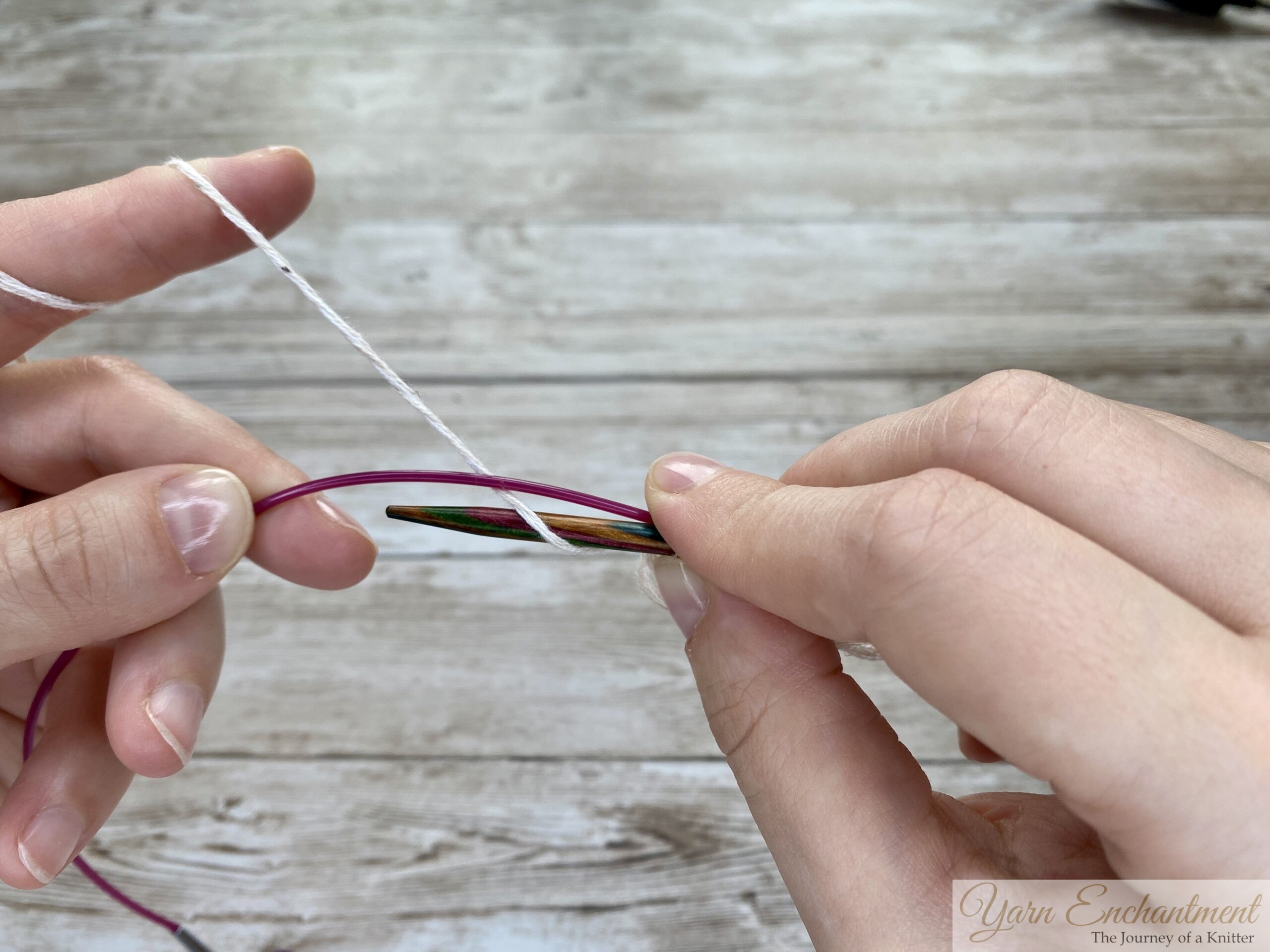
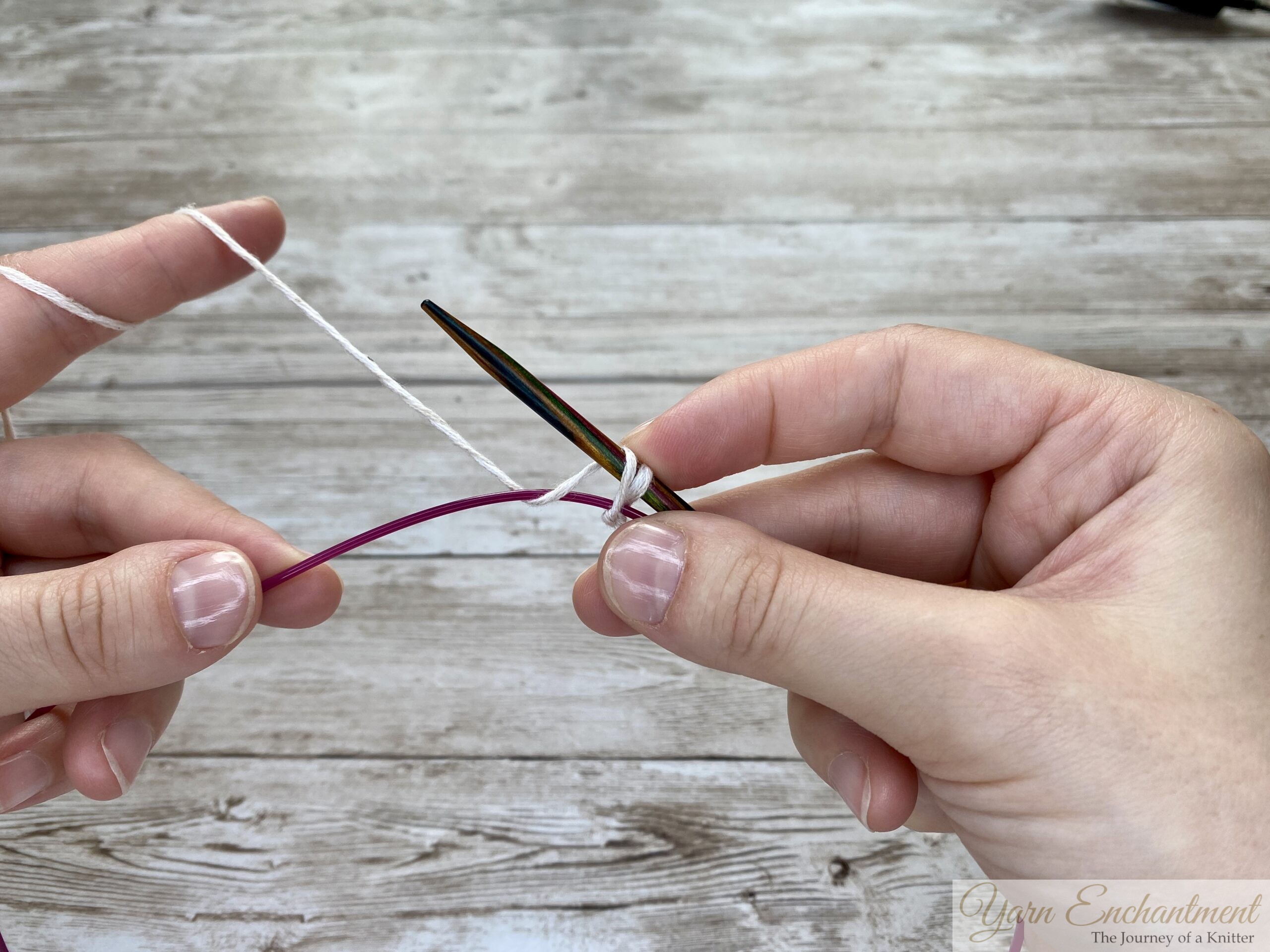
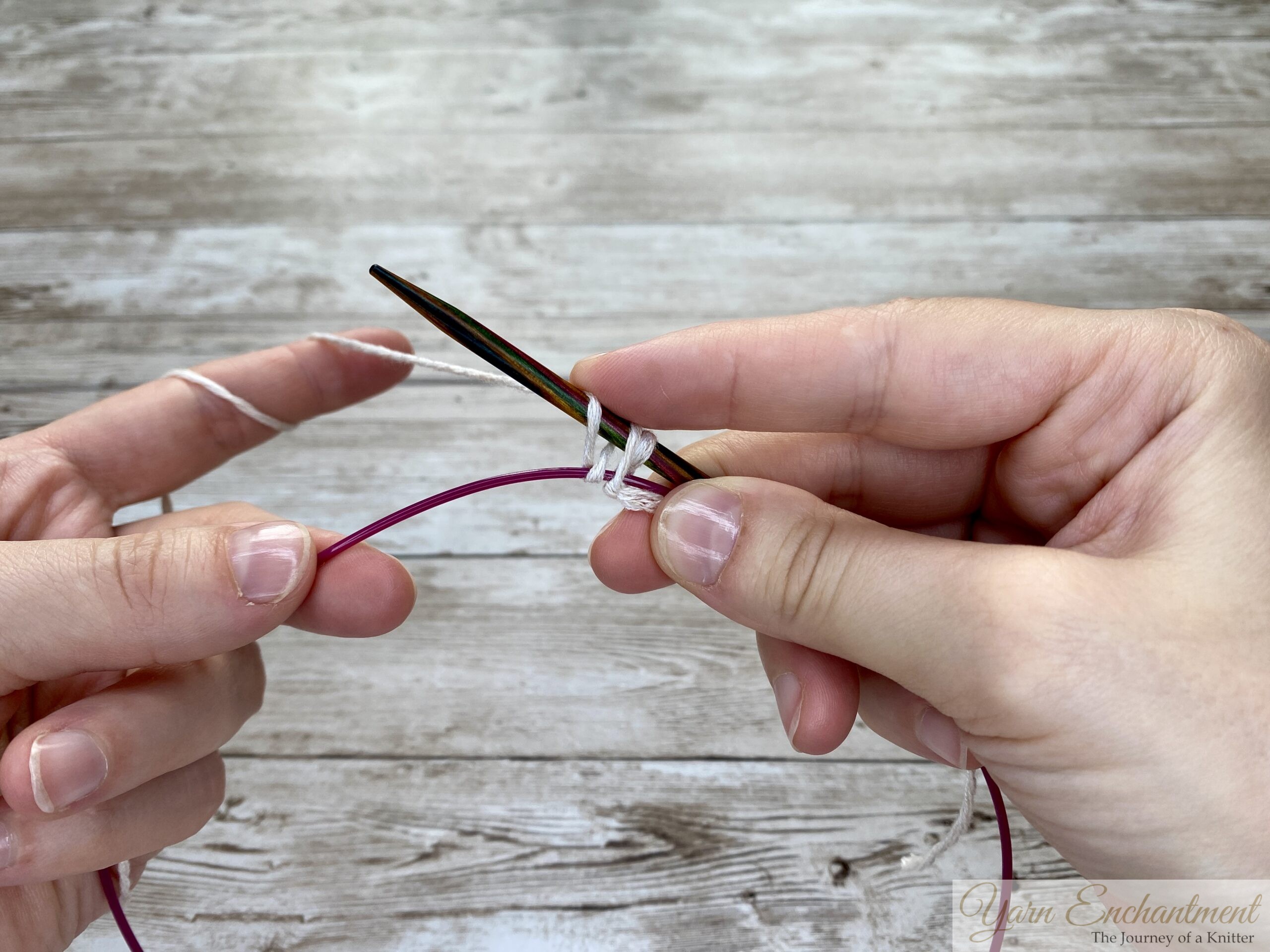
Begin by creating a slipknot with your working yarn and placing it onto your knitting needle | Place your spare cable underneath your knitting needle. Hold the cable steady with your hands | Bring your needle under the cable, grab the yarn,... |
  |   |   |
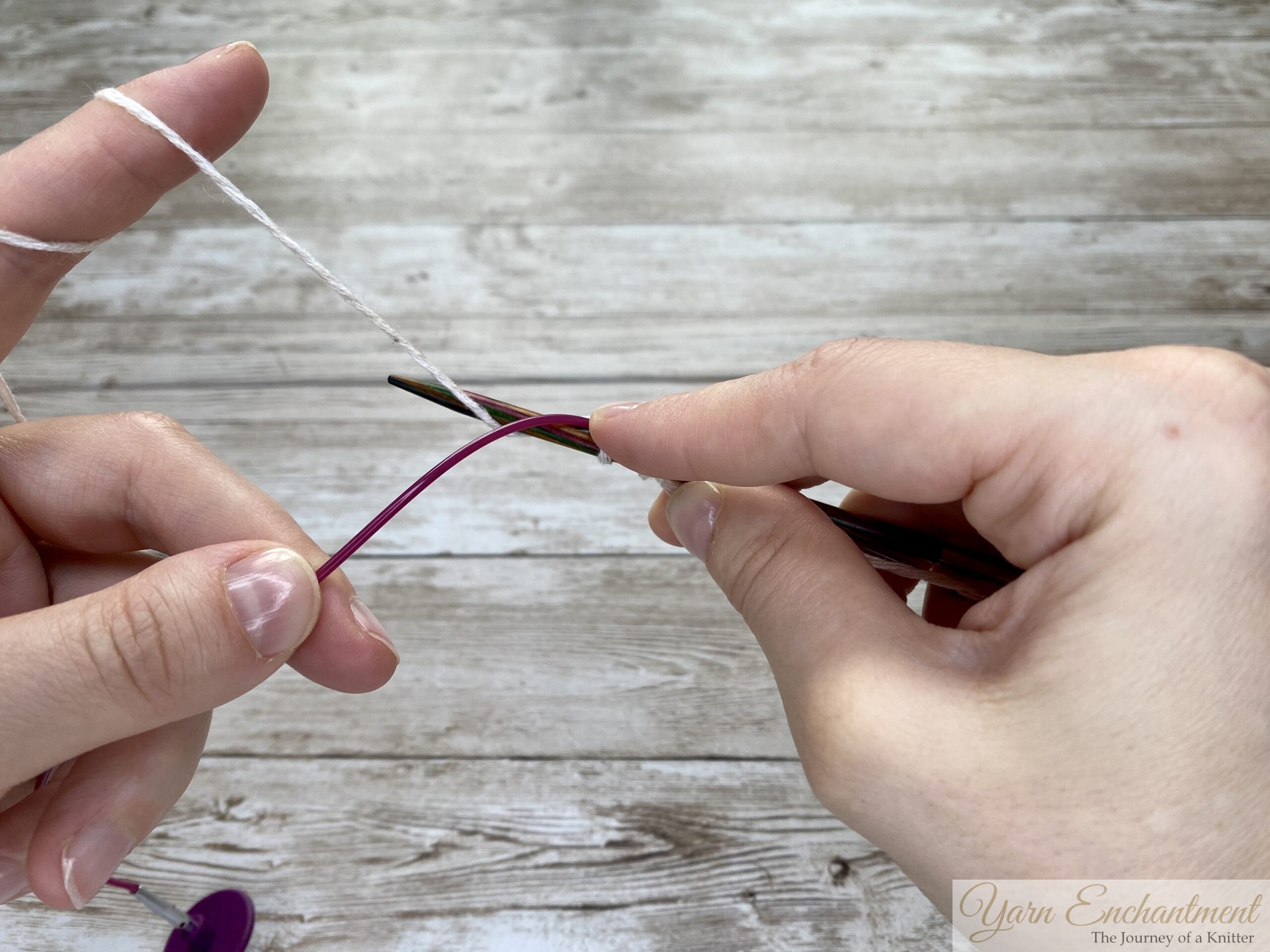
...and pull it back to the front | You have created your first loop | Work a yarn over (you can go either front to back or back to front) |
  | 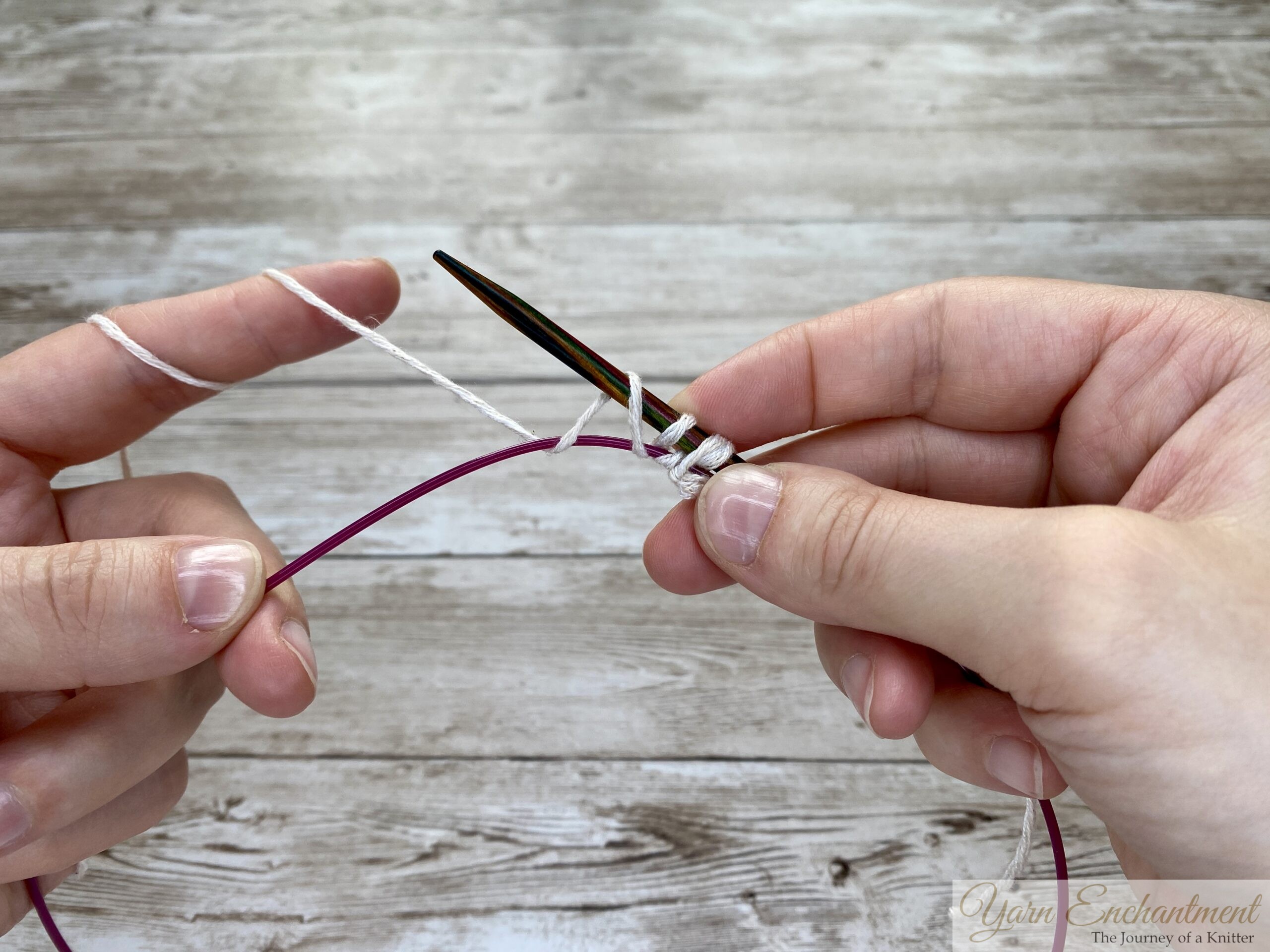  | 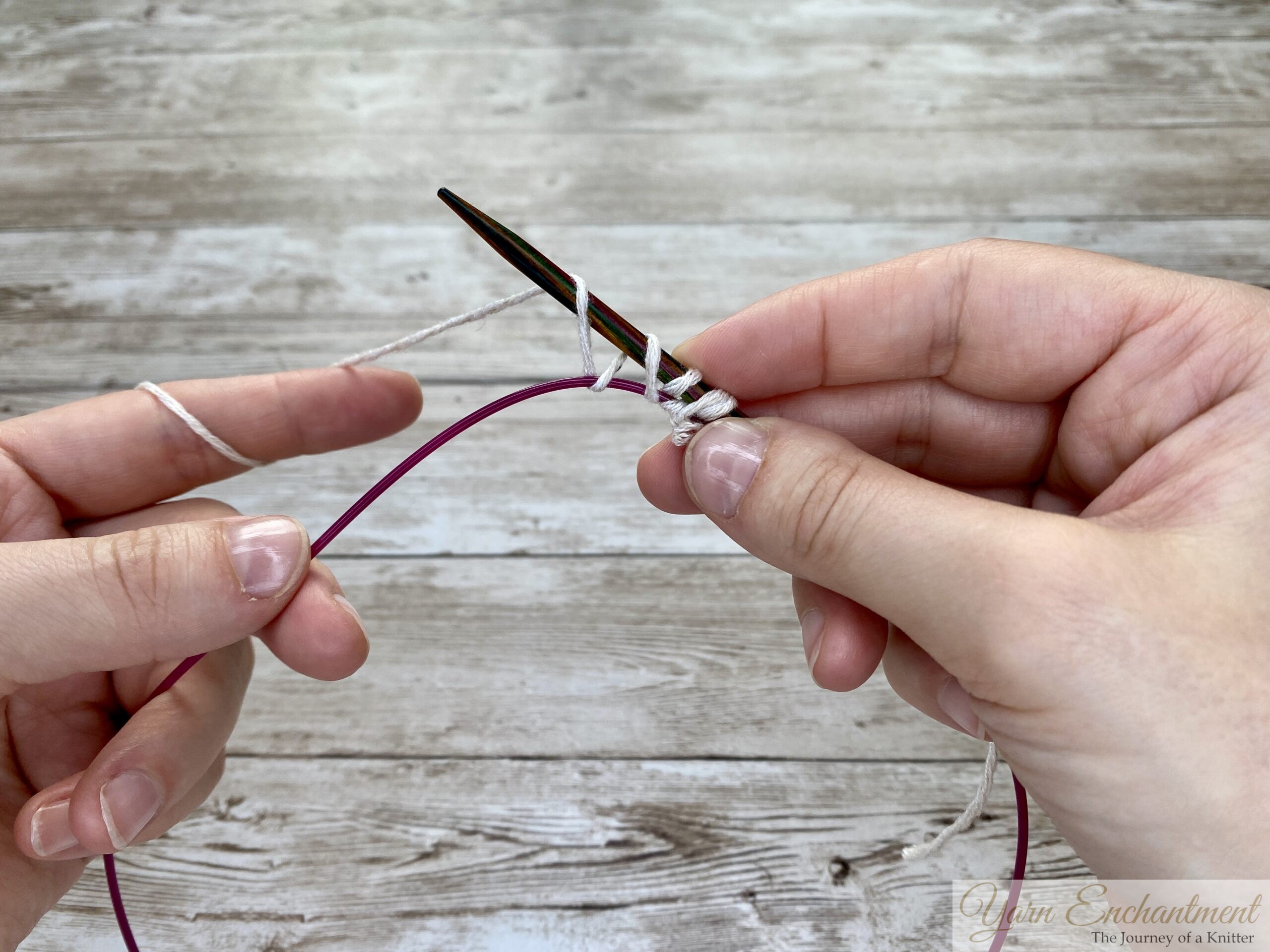  |
Continue: Go under the cable, grab the yarn... | ...and bring it back to the front | Work another yarn over. Repeat until you’ve casted on the desired number of stitches. |
Step 3: Anchor the Last Stitch
When you reach the end of your cast-on row, there’s one final step to secure your work:
- If your last stitch is a yarn over, anchor it by bringing the working yarn underneath the cable and then threading it between the cable and the needle. This locks everything in place and prevents your stitches from unraveling.
- When your last stitch was created by grabbing the yarn underneath the cable, then you don't need to worry about securing your loop, you can simply turn around your work and start knitting or purling.
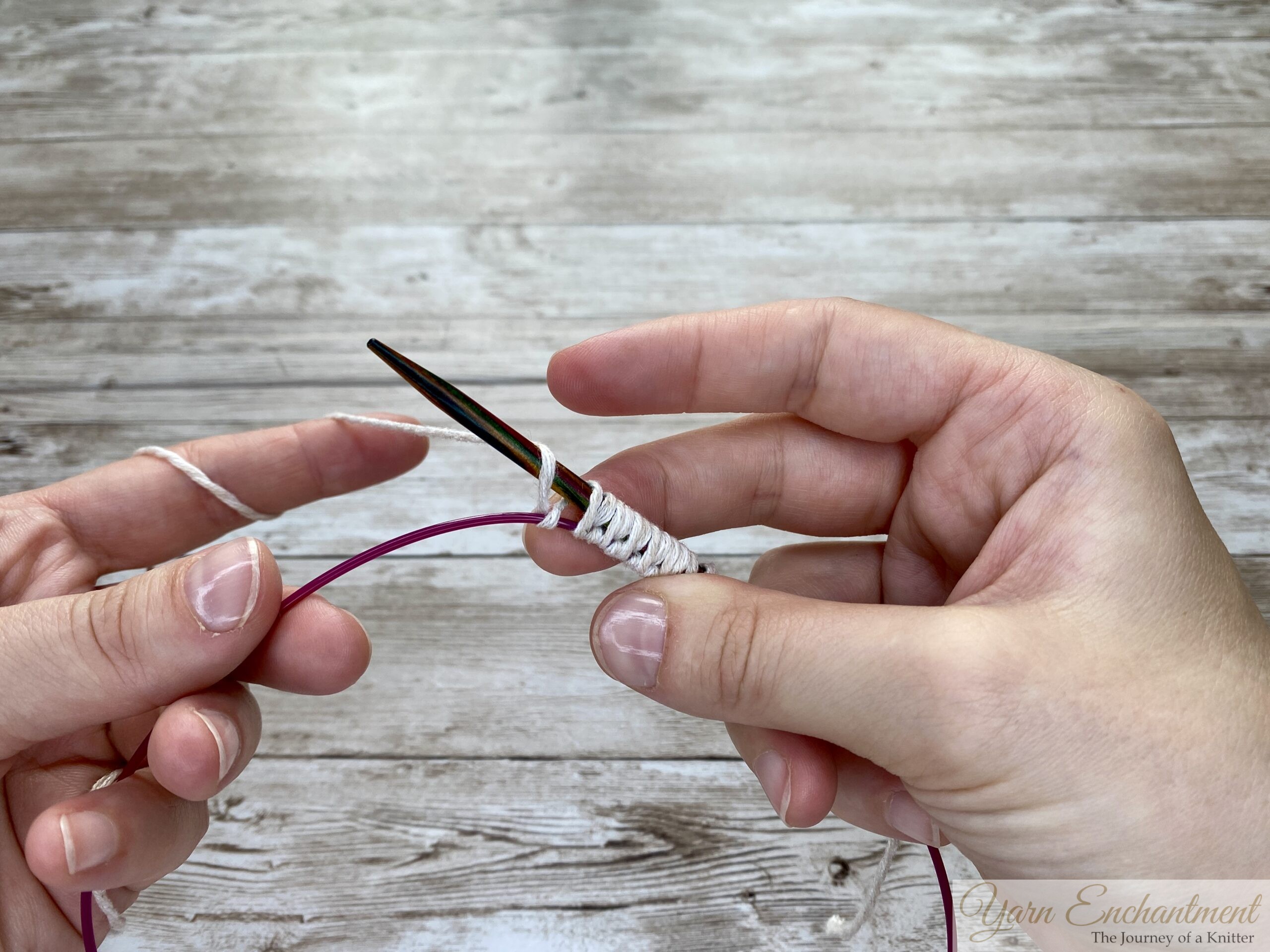  | 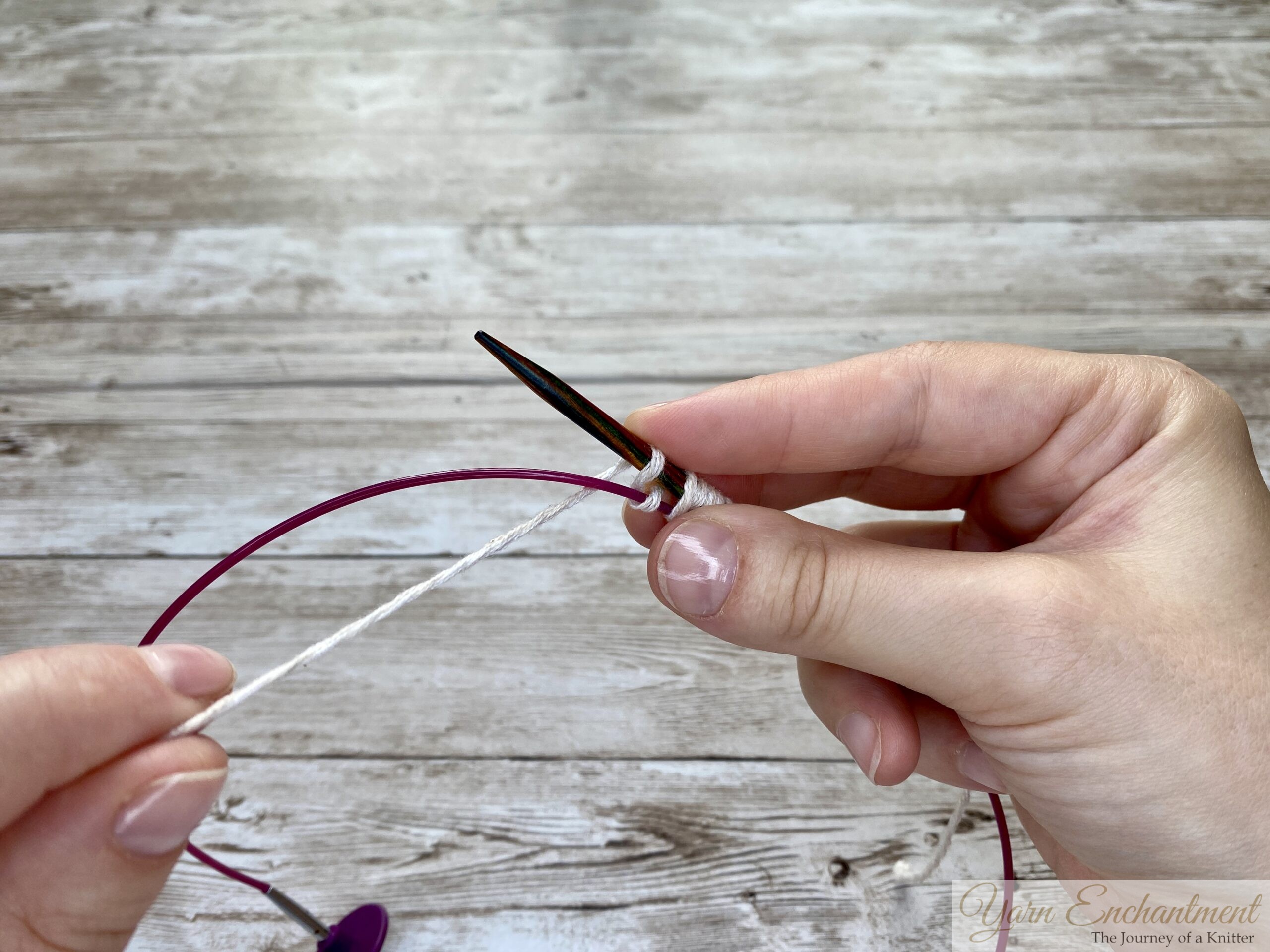  | 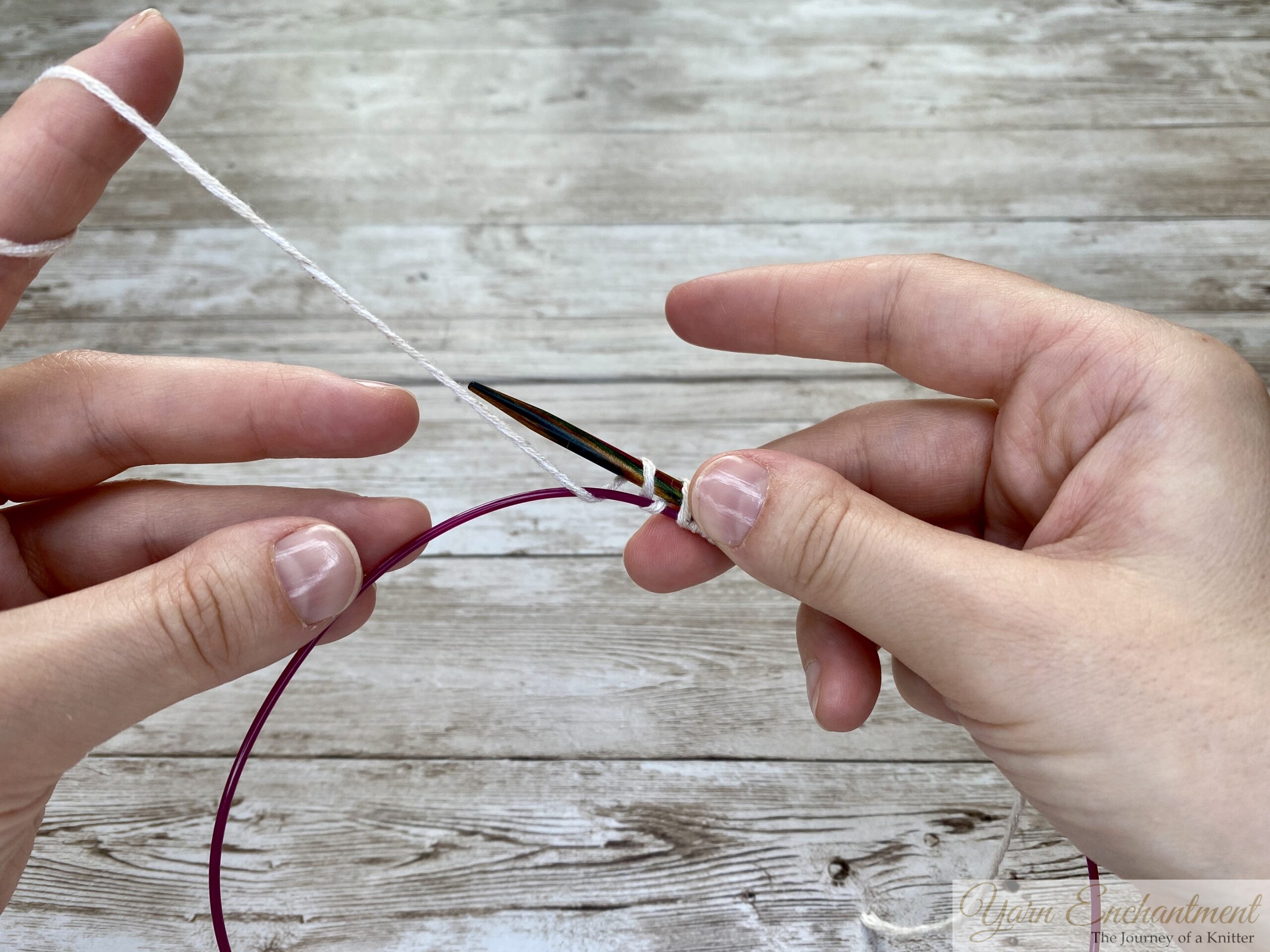  |
If your last stitch is a yarn over, you have to anchor it | Bring the working yarn underneath the cable | Then bring it between the cable and the needle. This locks everything in place and prevents your stitches from unraveling. You also made your last loop on the spare cable |
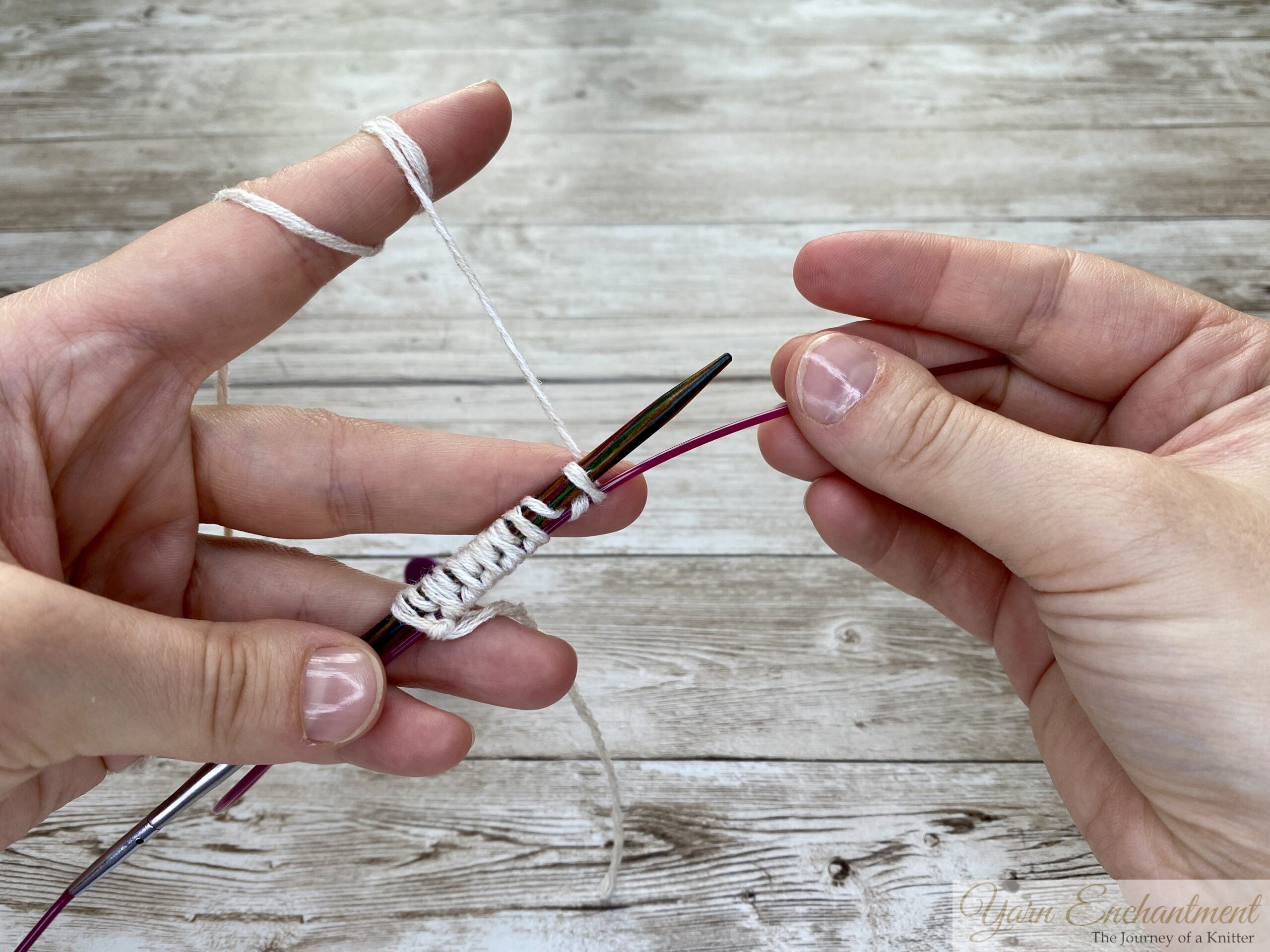  | 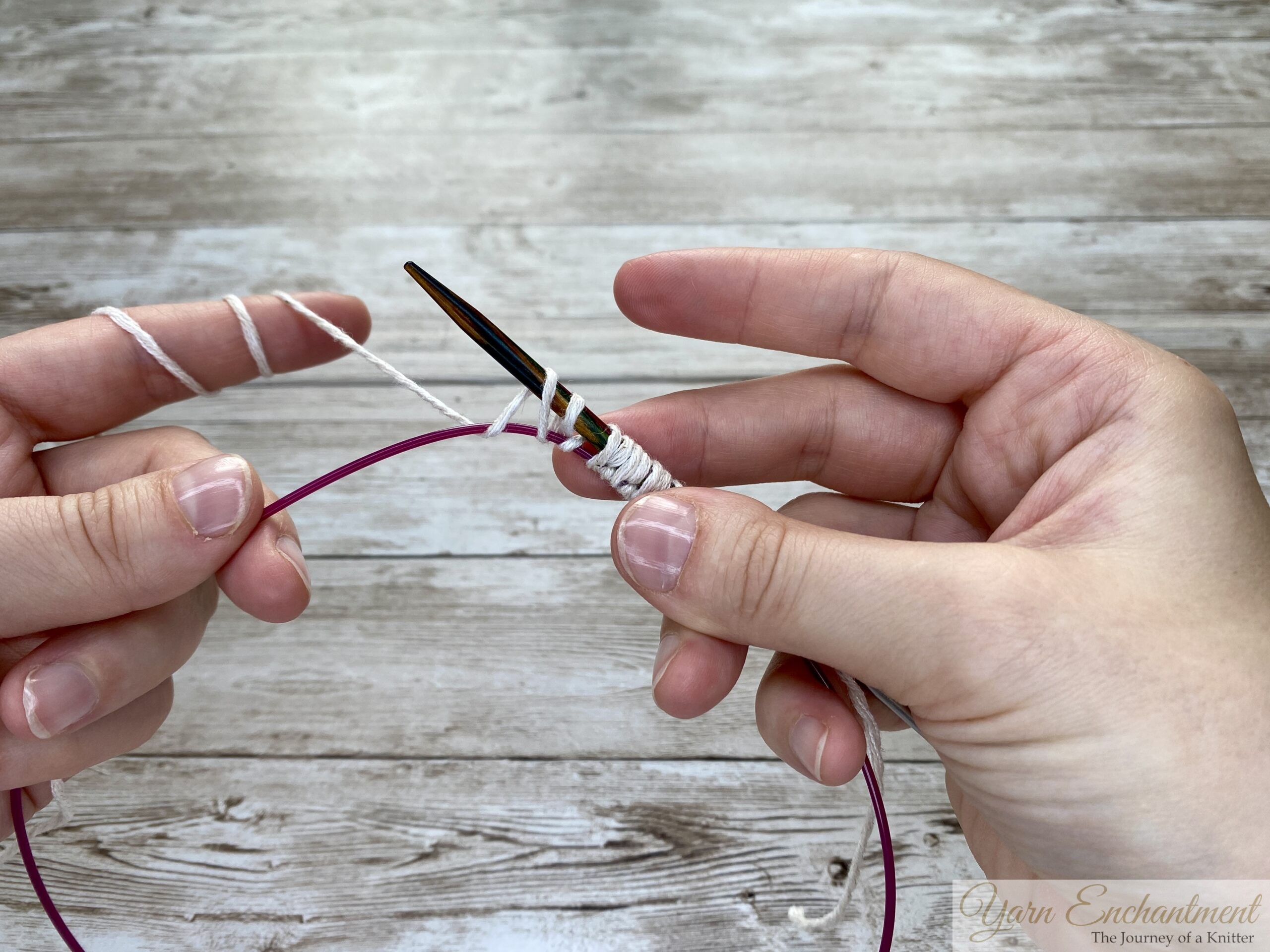  | 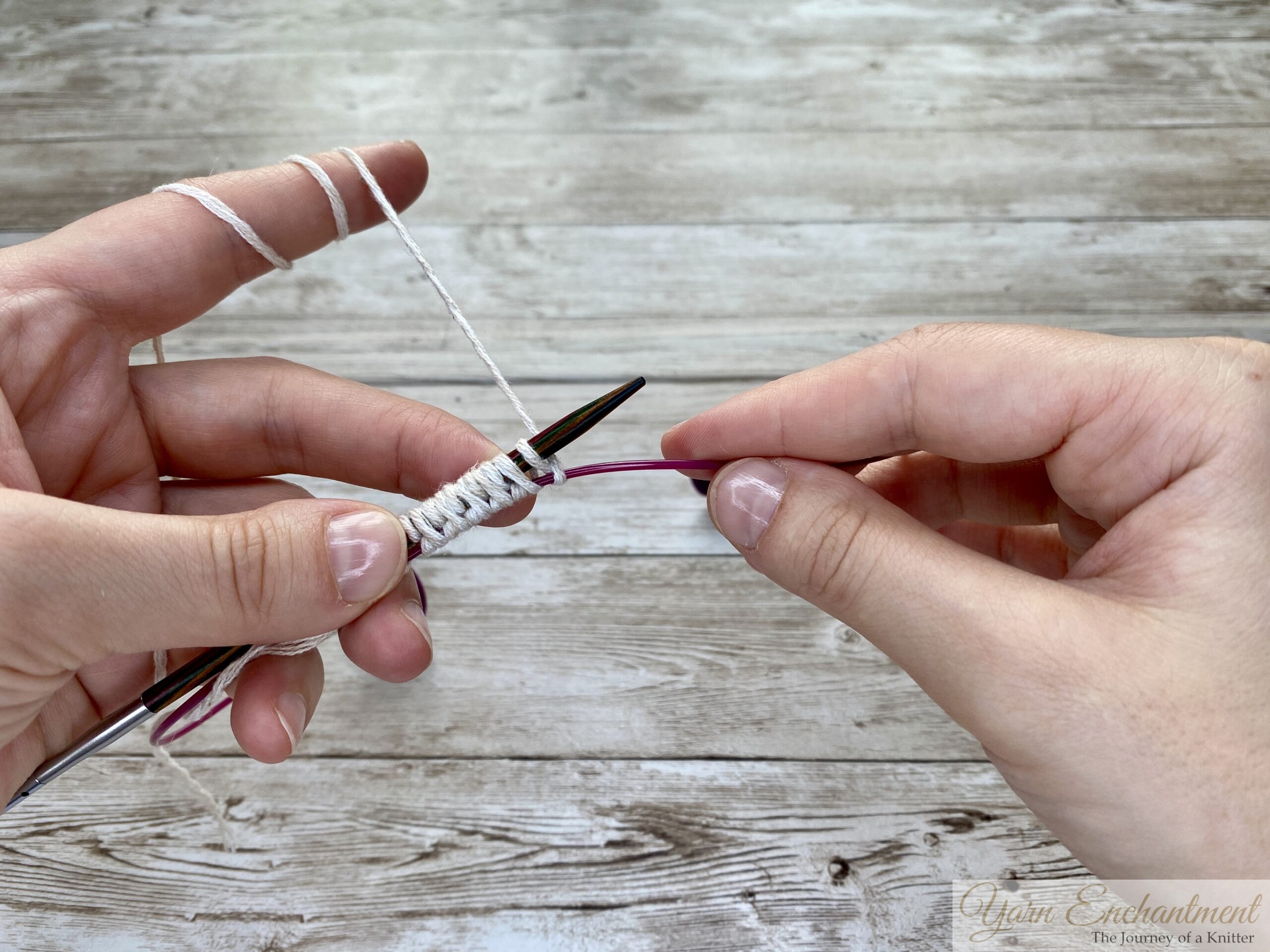  |
After you've secured your yarn over, this is what the back of your cast on should look like. | When your last stitch was created by grabbing the yarn underneath the cable, then you don't need to worry about securing your loop... | ...you can simply turn around your work and start knitting your row |
Now you’re ready to turn your work and start knitting or purling the first row. Don’t worry if it feels a little awkward at first - just knit as you normally would.
Note:
At the end of this row, you can decide whether to knit or unravel the slipknot. It’s totally up to you! If you unravel it, remember that the slipknot doesn’t count as a stitch.
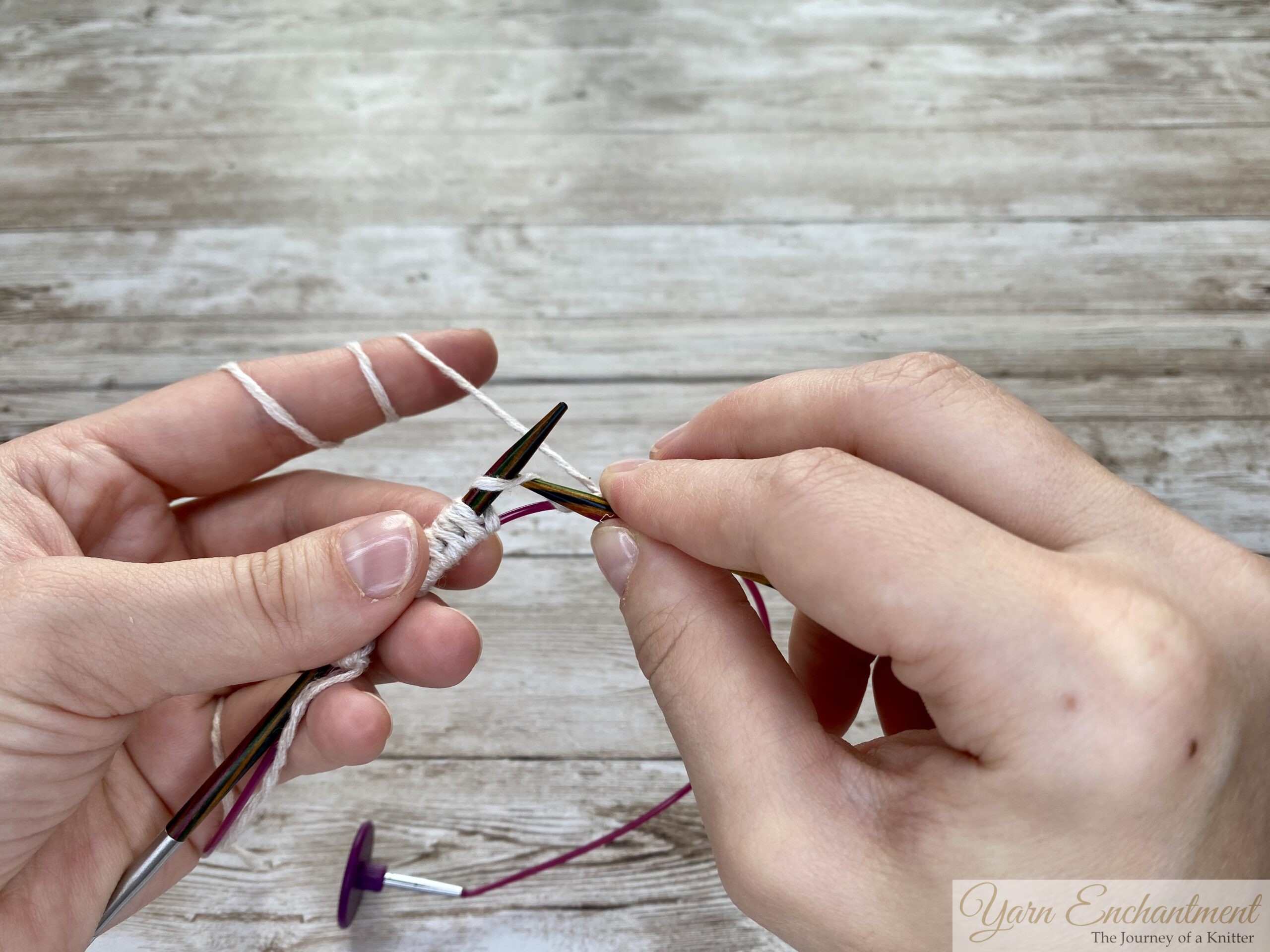  |
Start knitting your row |
Undoing Your Provisional Cast-On: No Stress, Just Stitch Awareness
One of the best things about this provisional cast-on method is that you don’t have to worry about “undoing” your cast-on and accidentally losing a stitch. With traditional methods (like using waste yarn), there’s always that moment of panic when you pull out the waste yarn - will all the stitches come out neatly, did I split my stitches, or will one slip away? But with this method, your live stitches are safely held on the cable of your circular needle, so no drama there!
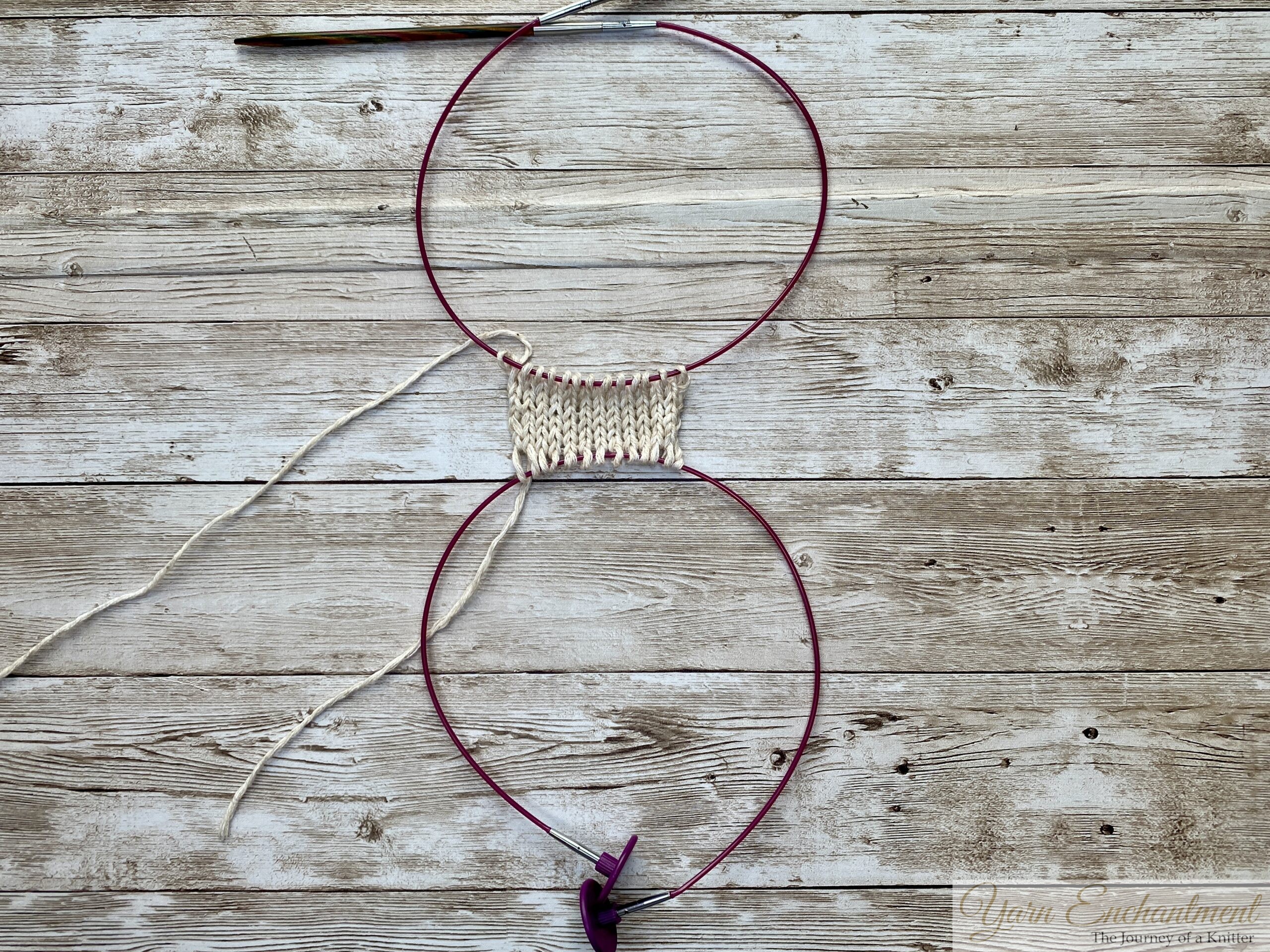  | 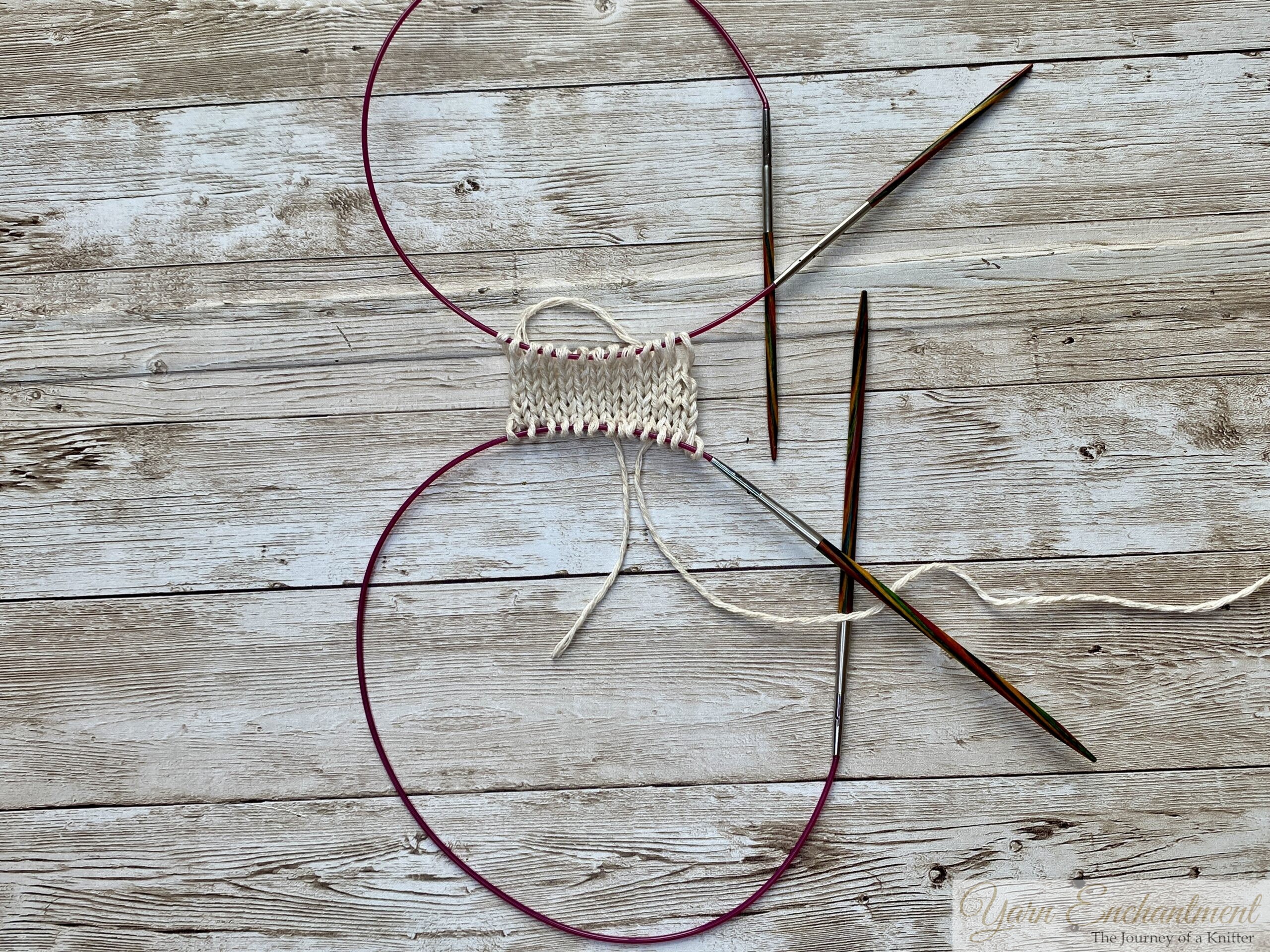  |
I knitted a few rows for this swatch; below, you can see the provisional cast-on on the spare cable | In order to "undo" our cast on, we have to remove the stoppers and attach another pair of knitting needles. And that's it, it really is that easy! |
Twisted Stitches
However, there is one thing you’ll need to watch out for: every other stitch will appear twisted. Don’t panic - it’s not a mistake, and it’s super easy to fix! Here’s what’s happening and how to handle it:
What Does “Twisted Stitch” Mean?
When you knit your live stitches from the cable, you might notice that every other stitch has its right (leading) leg at the back instead of the front. This just means the stitch is sitting on the needle in a slightly different orientation. If you were to knit into these stitches normally, they’d end up twisted, and your work wouldn’t look as seamless as you’d like. I am planning to write a blog post about this topic because it is a large topic and I don't want to leave it out!
How to Fix It
The good news is that fixing this is incredibly simple! All you need to do is knit (or purl) through the back loop for those twisted stitches. Here’s how:
- Identify the Twisted Stitches: Look closely at each stitch as you pick it up. If the right leg is at the back of the needle instead of the front, that stitch is twisted.
- Knit Through the Back Loop: Instead of knitting into the front of the stitch as usual, insert your needle into the back loop of the stitch first, then knit it as normal. This untwists the stitch and keeps your work looking clean and seamless.
- Repeat as Needed: Continue checking each stitch as you go. You’ll likely find that every other stitch needs this little adjustment.
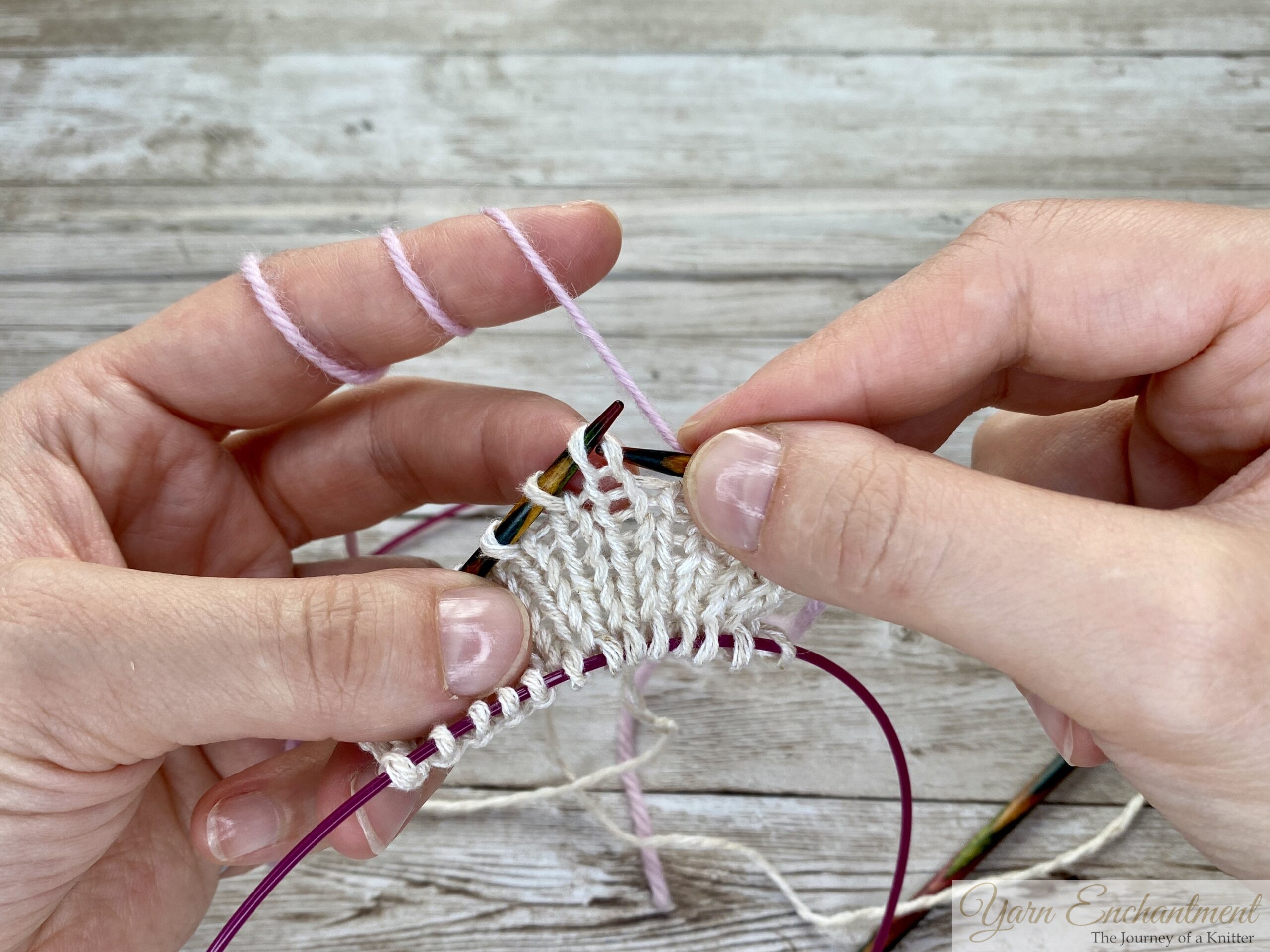  | 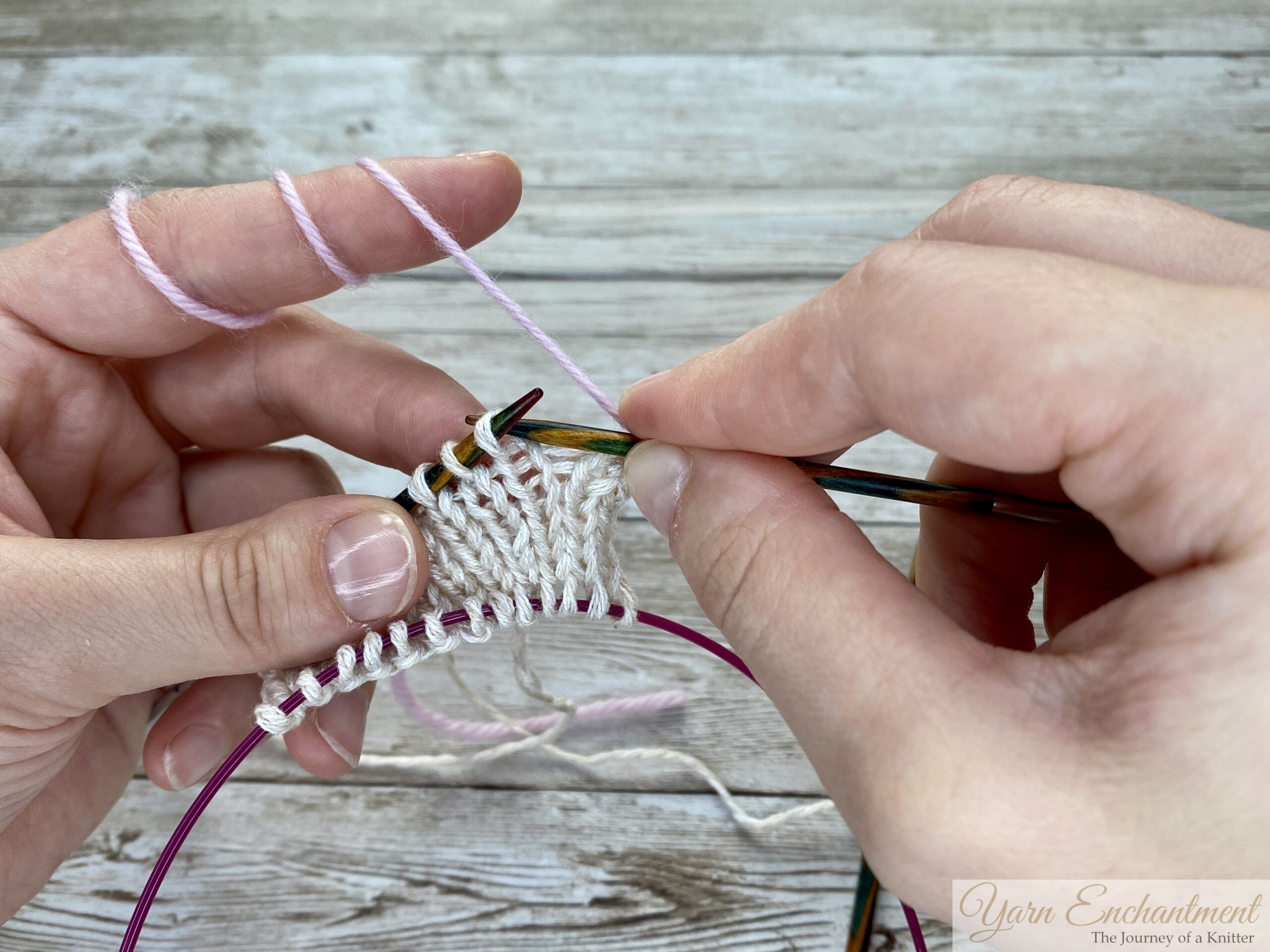  |
Look closely at your stitch as you pick it up. If the right leg is at the back of the needle instead of the front, that stitch is twisted. | Instead of knitting into the front of the stitch as usual, insert your needle into the back loop of the stitch first, then knit it. |
How to Create a Folded Edge with the Provisional Cast-On
Now, let me show you how to use it to create a beautiful folded edge. This technique is perfect for hems, cuffs, or any project where you want a folded edge.
Step 1: Remove the Stoppers
Once you’ve finished knitting your project and are ready to create the folded edge, start by removing one of stoppers from your spare cable. If you’re using two circular needles, simply take off one stitch stopper.
Step 2: Fold your work in Half
Fold your knitting in half so that the wrong sides are facing each other. This creates the foundation for your folded edge.
Step 3: Knit the Stitches Together
Now comes the fun part - knitting the stitches together to create the folded edge!
Knit the First Pair of Stitches
- Insert your working needle into the first stitch on the front needle and the corresponding stitch on the back needle.
- Knit these two stitches together as one.
Check for Twisted Stitches
- If the stitch at the back is twisted (meaning the right leg is at the back instead of the front), simply knit it through the back loop.
Simplify for Beginners
- If you’re new to this technique, here’s an easier way: Slip the stitch purlwise from the back needle onto the front needle. Then, knit both stitches together as one. If your stitches are twisted, untwist them before bringing it onto the front needle. I showed this in the video tutorial, so for more information, check out the video.
Once you’ve finished knitting your project and are ready to create the folded edge, start by removing one of stoppers from your spare cable, and attach a knitting needle.
Fold your knitting in half so that the wrong sides are facing each other. This creates the foundation for your folded edge.
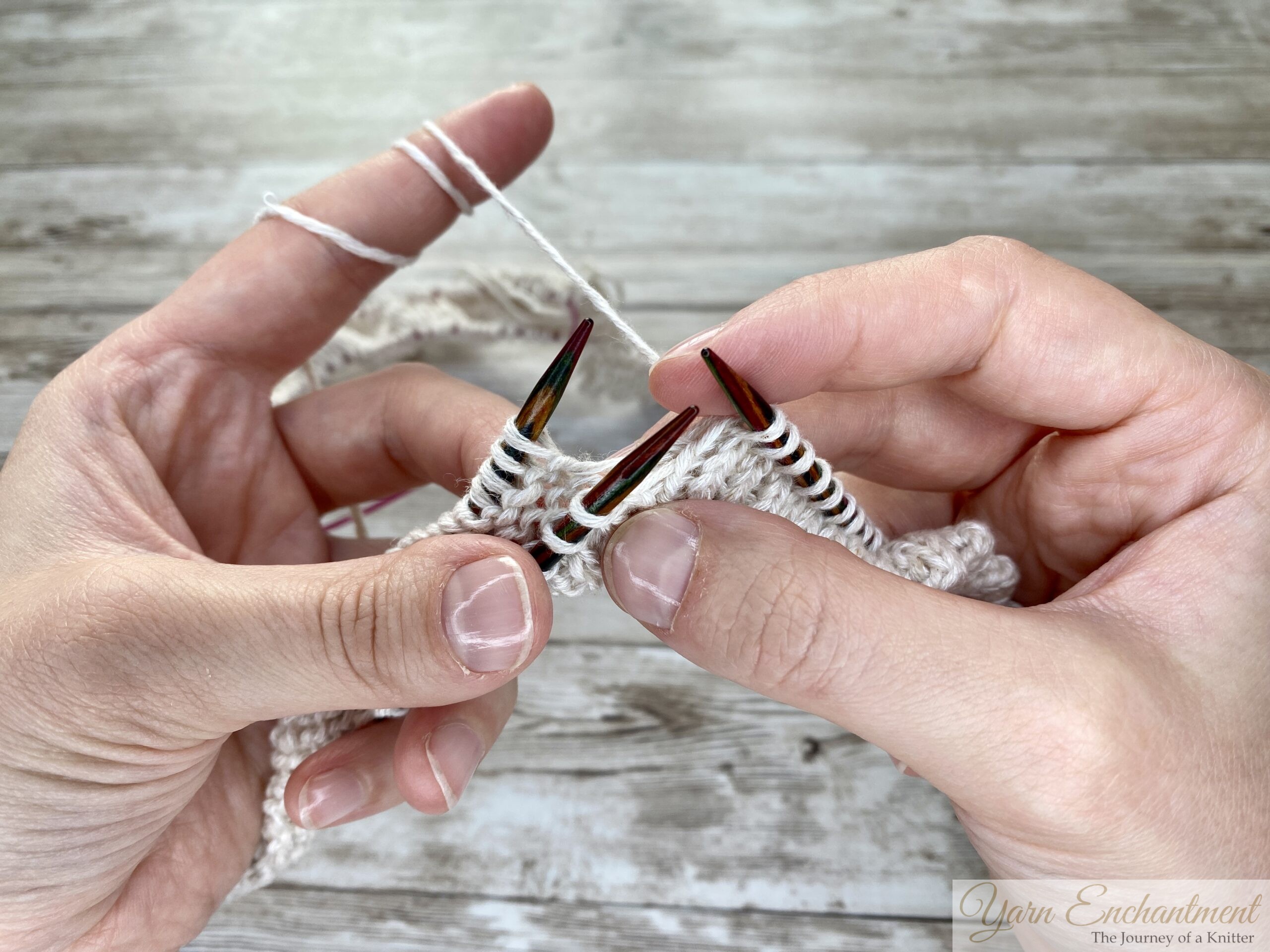

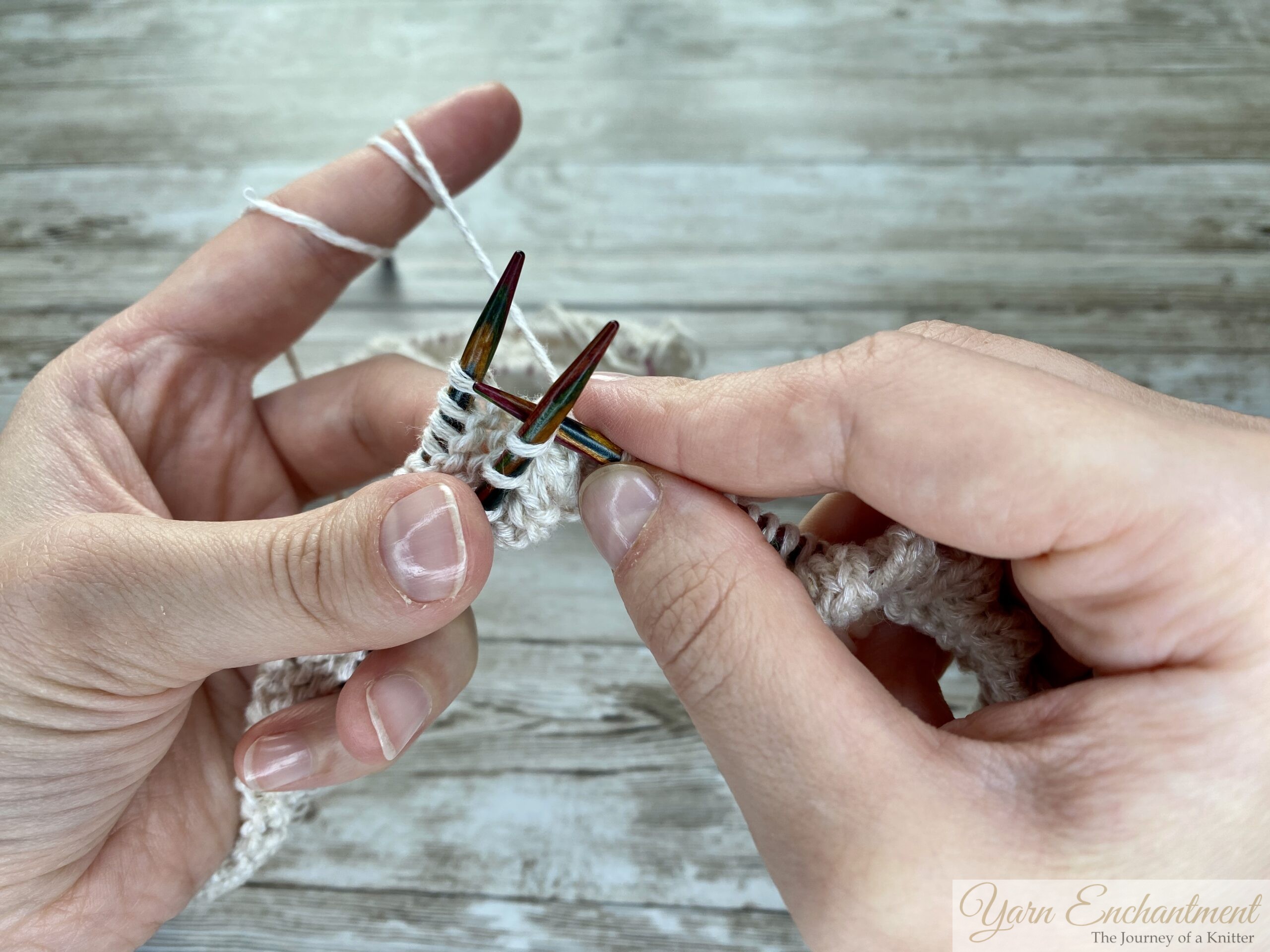

Insert your working needle into the first stitch on the front needle and the corresponding stitch on the back needle.
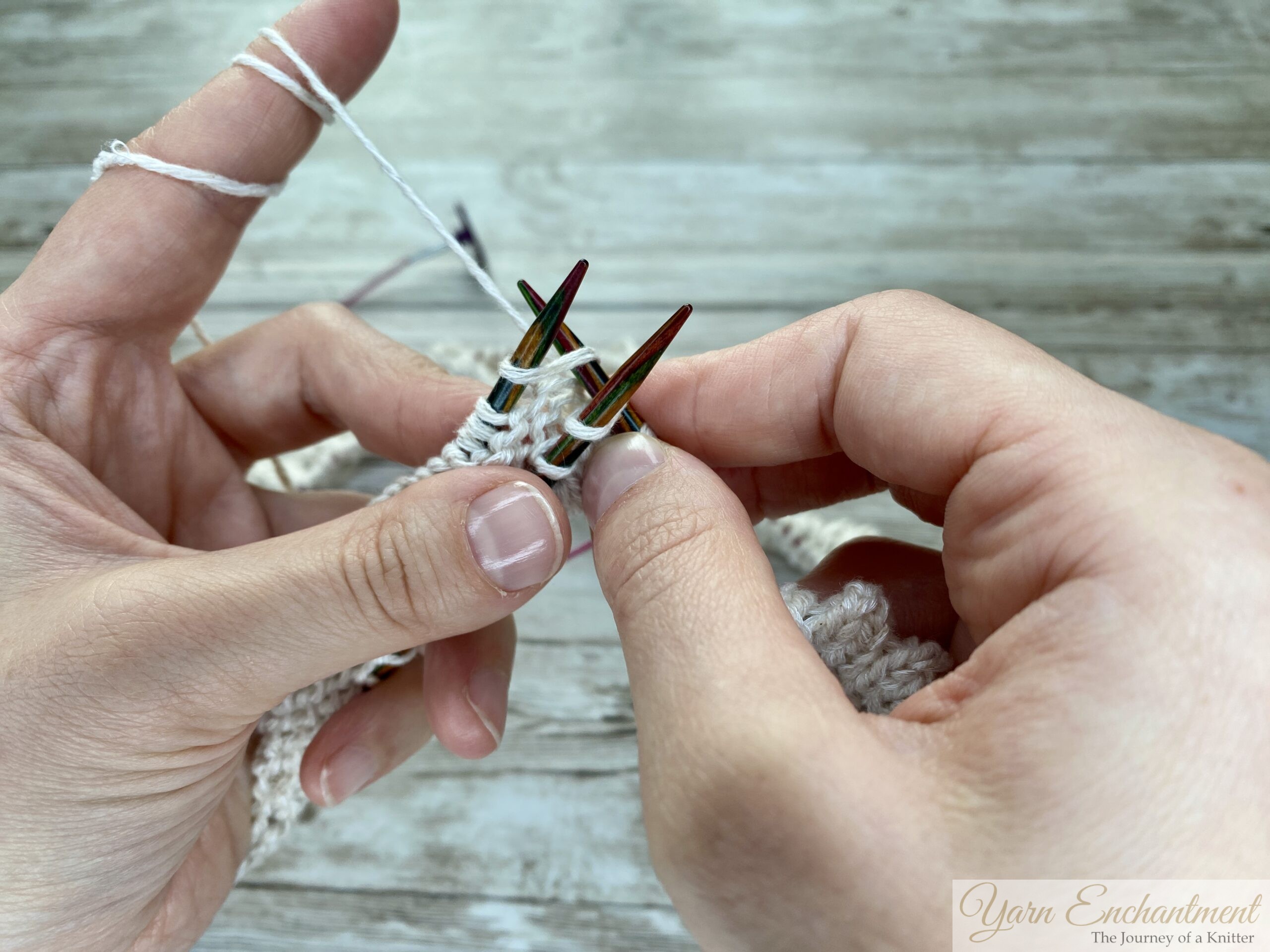  | 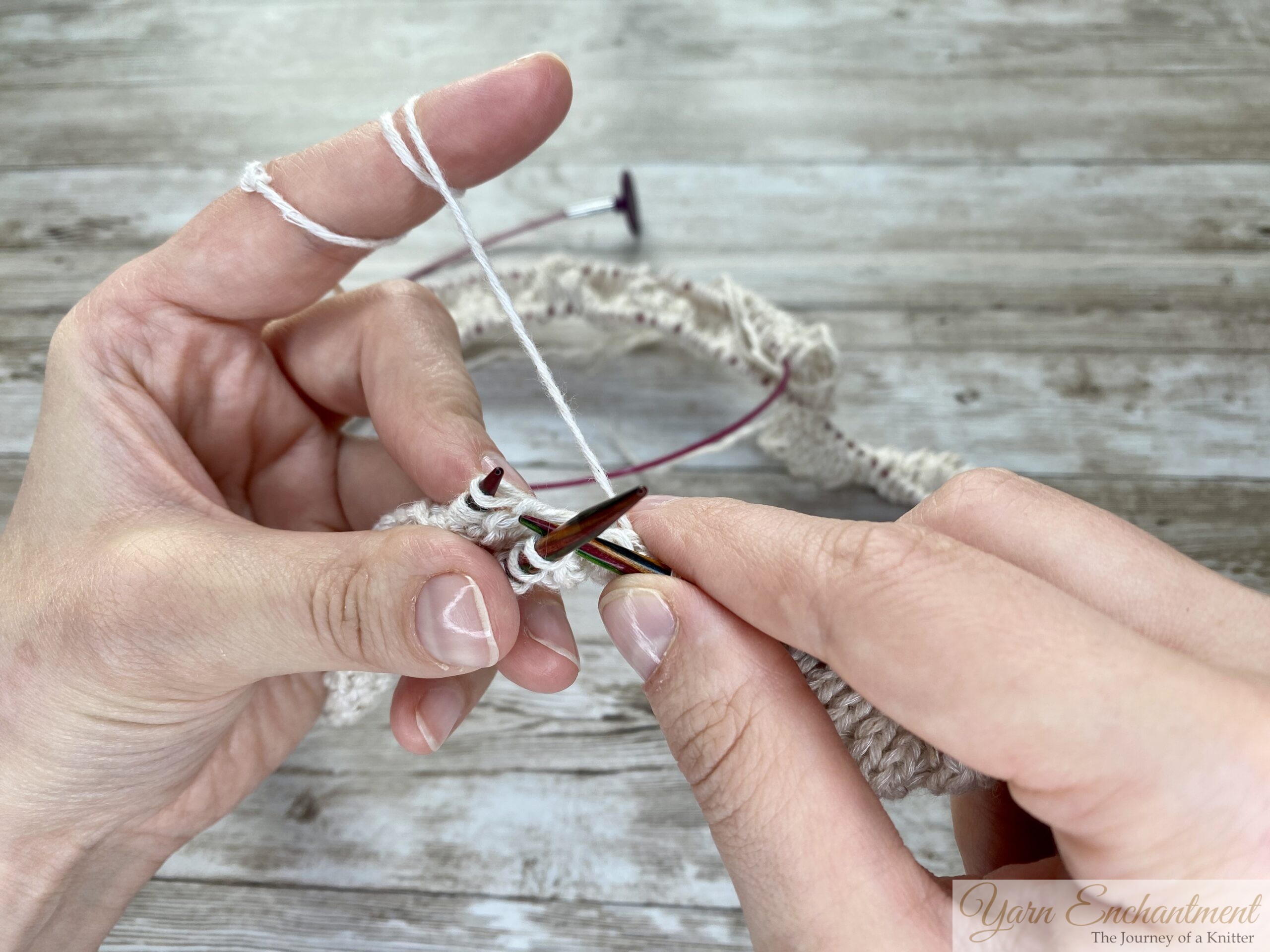  | 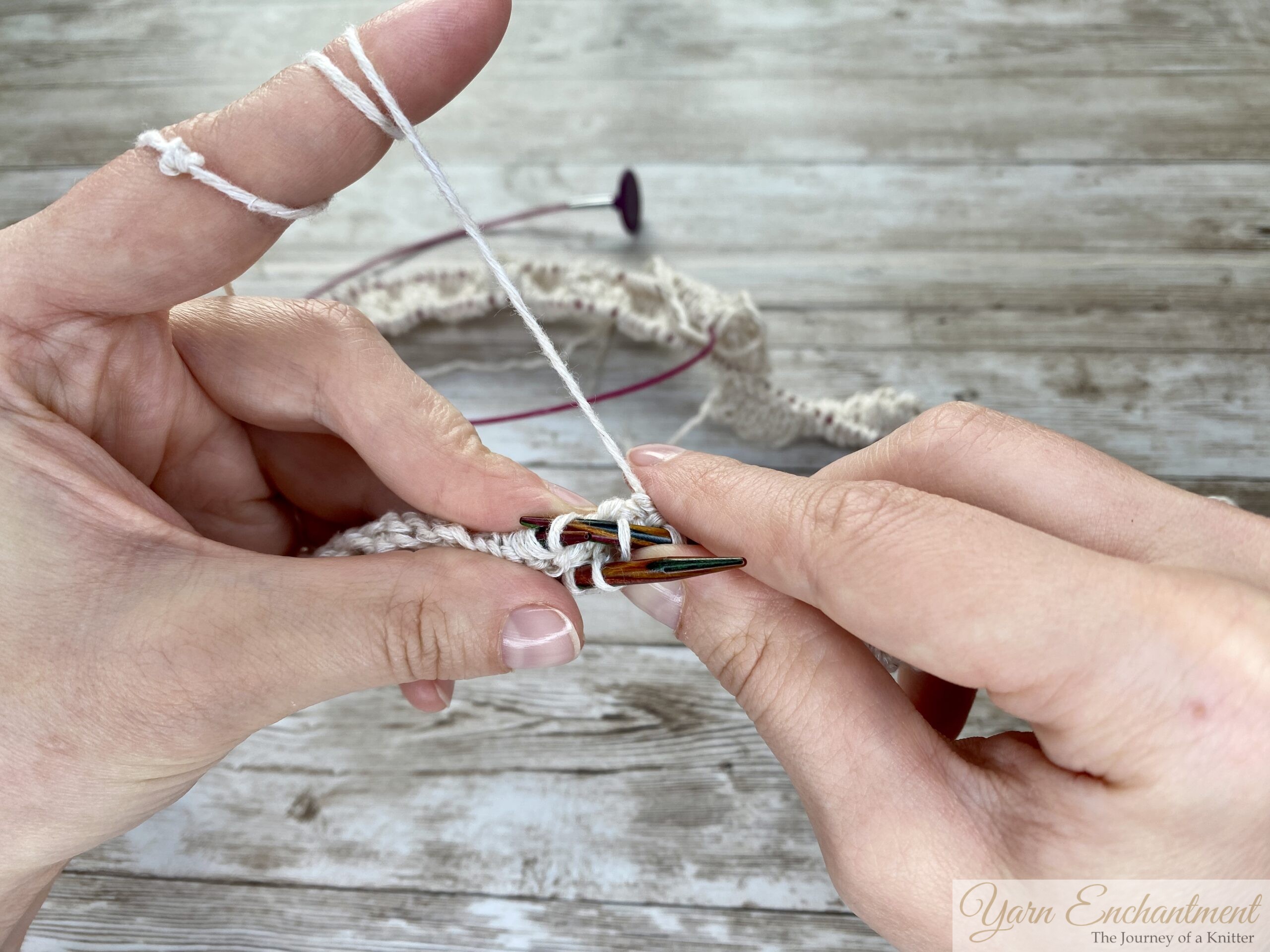  |
Knit these two stitches together as one. | If the stitch at the back is twisted (meaning the right leg is at the back instead of the front)... | ..simply knit it through the back loop. |
Tips Here are a few tips to make your provisional cast-one:
Practice makes all the difference
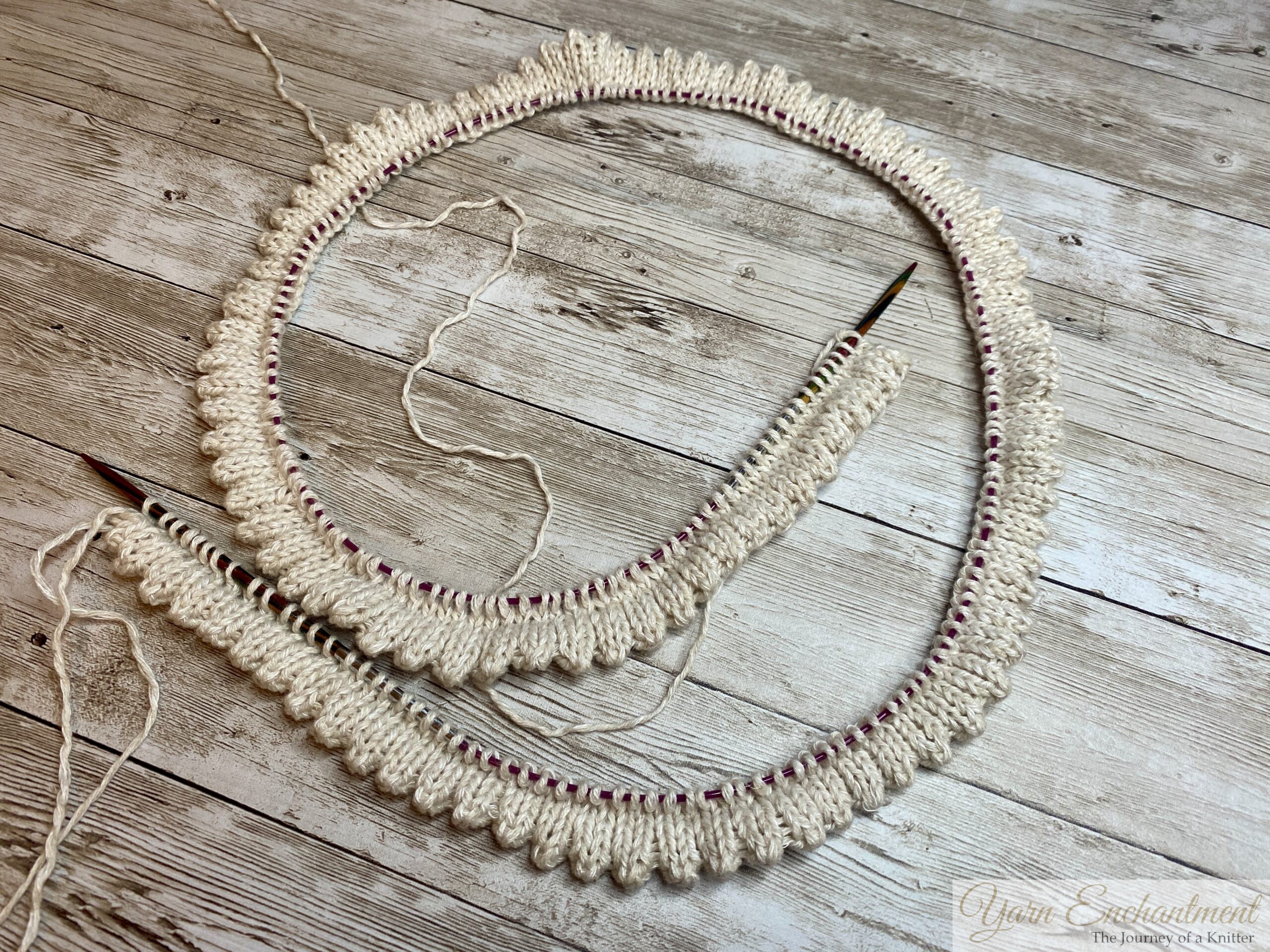
One of the benefits of this method is its simplicity. By using the cable of your needle instead of waste yarn, you save time and reduce clutter. Plus, it’s easier to manage since the stitches stay securely on the needle until you’re ready to use them. I casted on 221 stitches with this method, and it was so easy to create the folded edge because it was no hassle at all. This method has become one of my favorites. This approach is incredibly versatile - you can use it anywhere you’d typically use a traditional provisional cast-on, like Judy’s Magic Cast-On or a crochet hook method. It’s faster, cleaner, and works like a charm every time.
I worked a double folded edge with over 200 stitches using this provesionl cast-on
I really hope this guide helps you feel confident about trying the provisional cast-on over the spare cable. Whether you’re working on a summer top with a double folded edge, a comfy sweater, or anything in between, this method will give your project that polished, professional look - plus, it’s so quick and easy once you get the hang of it! If you found this tutorial helpful, I’d love to hear from you - drop a comment below and let me know how it went! And if you’re more of a visual learner, don’t forget to check out the YouTube video I made. It’s a step-by-step walkthrough that’ll show you exactly how it’s done. Until next time, happy knitting PS: Don’t be afraid to experiment. You’ve got this! Yarn Enchantment is my cozy hobby corner on the internet. If something here made your knitting day easier or you simply enjoy reading my posts and would like to say thank you, you can leave a small Ko-fi tip - but only if you truly want to. My patterns and tutorials stay free for everyone, always. Every little tip just goes toward new yarn and a cup of tea for my cozy knitting evenings.
Why Use the Cable of a Needle?

Final Thoughts
A Little Way to Say Thanks
You Might Also Like


 |
|
Join the Cozy Corner Newsletter
Hello, creative soul. Welcome to the Yarn Enchantment Newsletter, a little space where we celebrate all things cozy, crafty, and full of heart. Think of this as your friendly crafting companion, a soft dose of inspiration delivered straight to your inbox, just for you. Each newsletter brings you: ✨ Notifications about new patterns and tutorials – easy knitting patterns and beginner crochet projects you won’t find anywhere else 🧶 Practical yarn tips for new crafters, plus advice on the best yarn for fall, blankets, and handmade gifts 💌 Small stories and adventures from my own workbench, because crafting is as much about the journey as the finished piece Whether you’re knitting by the fire, looking for your next creative spark, or simply wanting a quiet moment with your hooks and needles, this newsletter is here to cheer you on. Crafting isn’t just about the final project. It’s about the joy, the peace, and the stories we weave along the way. So grab a cup of tea or coffee, settle in, and join me. Together we’ll make a little magic, one stitch and one story at a time. I’m so glad you’re here. Let’s create something beautiful together. Sign up below to receive your first email, and feel free to leave a comment on the blog if there’s a topic you’d love to see covered. Your ideas might just become our next newsletter feature. |


