
Yarn Over Increase: Invisible vs. Eyelet (Directional M1L/M1R)
July 17, 2026
PetiteKnit Sophie Scarf: Tips & Tricks
July 26, 2026How to Spot AI-Generated Crochet & Knitting in 2026

Originally published on July 21, 2026
Hello everyone! In this blog post I want to talk about something that is on my mind lately. I already wrote a complete post about this topic but it seems that it is not enough anymore so I want to write an update here about fake crochet patterns and AI generated crafting images.
If you have been wondering how to spot AI crochet patterns or detect fake knitting images, you are in the right place.
I was not much on the internet the last few months. But recently I have been spending more time on Pinterest and YouTube again. And I have to say, I am shocked.
There is so much AI generated content now and it has become so good. You see a YouTube thumbnail with a gorgeous stitch pattern and the title says "You won't believe how easy this stitch pattern is!" The picture looks amazing. You click on the video excited to learn. And then you realize the complicated pattern is gone and you are just looking at a simple seed stitch. Okay, I exaggerated a little bit there 😄. But you get what I mean.
It feels like we are getting more and more betrayed and scammed. It is getting so difficult to see what is real and what is not.
It is 2026, and the AI problem in our crafting world has become much more complicated.
Last year, I wrote a post about spotting AI-generated images on Pinterest. The signs were simple: check the hands, look for weird text, examine the stitches. But in just over a year, everything has changed. The AI has gotten smarter, the scams have gotten more sophisticated, and now even major companies are embracing the technology in ways that betray the trust of the crafting community.
This is not just about wasting time on fake patterns anymore. It is about a fundamental shift in how the crafting industry operates, and we need to talk about it.
Is This Image Real? How to Spot AI-Generated Crochet and Knitting Patterns on Pinterest
How to Spot AI-Generated Crochet & Knitting in 2026

The New Reality: Why the Old Rules No Longer Work
AI-generated images used to be easy to spot. There were too many fingers, warped backgrounds, strange nonsensical text, and other visual artifacts that gave the game away. But AI has improved dramatically. A lot of AI-generated images now look convincing enough to fool even careful observers.
I am really good at determining whether an image is AI generated or not. But even I partly rely on tools now to see if it is fake or not.
That means we can no longer rely on the old tricks. Spotting AI in 2026 requires a different approach. It is not just about zooming in to find six fingers anymore. It is about asking the right questions and using the right tools to detect AI knitting images and fake crochet patterns.
How to Spot AI-Generated Crafting Images in 2026
I do this all the time now. It has become a habit and I thought, why not share my little routine with you? That way you can protect yourself too when you are trying to spot fake crochet patterns or detect AI knitting images.
1. Start with Where It Came From
Before I even look closely at a picture for a pattern, I ask myself one simple question. Where did this come from? Is there a real person behind it? A photographer or designer with a name I can actually find? If I cannot trace where an image originated, that is my first red flag.
For websites and social media pages, here is what you can do:
- Check Facebook's Page Transparency. It tells you when a page was created and where it is managed from. (I can't do that because I'm not on social platforms anymore)
- Look for disclosure labels. Some brands are now required to tell you when they use AI.
- If a page is brand new with no history, I would get suspicious right away. 🚩
-
When I see a pattern for example on Pinterest I always search for it on Ravelry, Ravelry is one of the biggest knitting communities and has almost every pattern, so I always look there for the pattern to check if its actually exists.
2. Run a Reverse Image Search
This is my favorite trick. It is so simple and it works almost every time. Just right click on the image and choose "Search with Google Lens." The search will show you if that image has been published before and whether trusted sources have confirmed it is real.
Google and OpenAI have also started hiding metadata inside AI images. That metadata can show up as little labels during image searches. You can also visit websites like Content Credentials. Upload the image there and they will check it for evidence of AI creation.
3. Use Free AI Detection Tools
There are several free tools that can help. I keep a little list on my bookmarks bar.
- Hive Moderation
- AI or Not
- Image Whisperer
- AI detectors from Hugging Face
- SynthID from Google Deepmind
You upload your suspicious image and they give you an estimate of how likely it was made by AI. But do not rely on them alone. They are not perfect. Use them as one clue among many.
4. Check for Hidden Watermarks
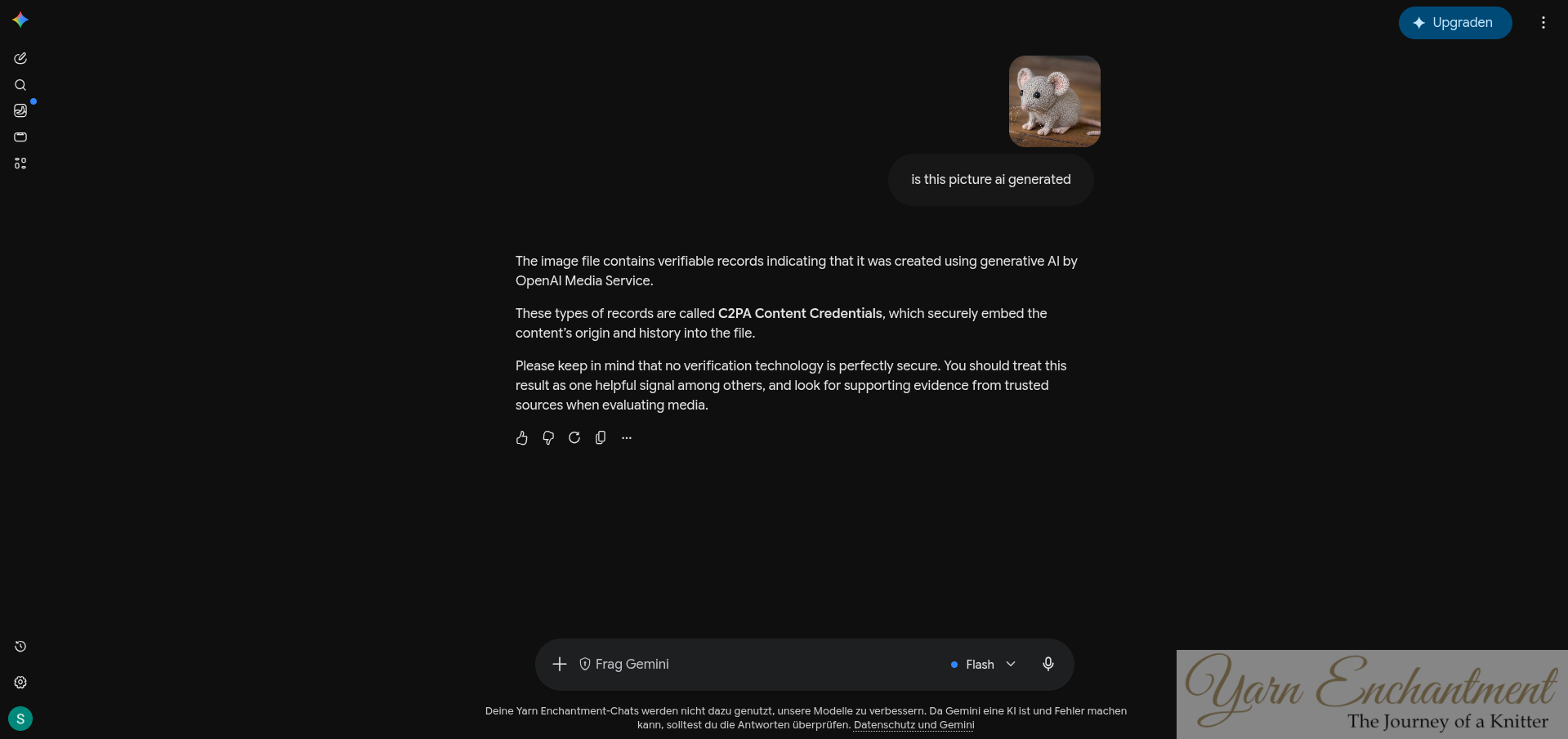
This one feels a bit like detective work. Kind of like that CSI guy with the sunglasses. What was his name again? I always forget. But I love that feeling of investigating and figuring things out. Google uses a system called SynthID. It stamps invisible watermarks into images created by their Gemini model. You can upload an image to Gemini and ask if it was made by AI. The system will detect its own watermark if it is there.
Other tools like Dall-E and Midjourney often add visible watermarks too. So keep an eye out for those.
5. Look Beyond the Main Subject
AI can fool you with the main subject. The blanket looks beautiful. The stitches look perfect. But the background often tells the real story. AI generated scenes can have weird errors. Staircases that lead nowhere. Walls that do not connect properly. These happen because AI is imitating patterns, not understanding real world physics.
When I look at crafting images, I check for these things:
- Tools or supplies that do not make any sense for the craft shown
- Yarn strands that blend together in unnatural ways or split where they should not
- Background elements that feel disconnected from the main subject, like a floating table or a chair that makes no sense.
- If there are people involved in the image, I check whether they have all fingers and also how the skin looks, as well as whether any tools that they may hold look awkward
6. Watch for Multiple Red Flags
One weird thing does not mean the image is fake. But when several red flags show up together, I get very suspicious.
What to Look For With Your Own Eyes
Even though AI is getting really good, there are still some things it struggles with. Here is what I check every time when I am trying to spot fake crochet patterns or detect AI knitting images.
Hands. Still a weak point. Look for unnatural finger positions, extra fingers, missing knuckles, or hands that merge into objects.
Teeth. Often rendered as one solid white blob instead of individual teeth.
Ears. Frequently misshapen or in the wrong position.
Facial features. Look for asymmetry or features that do not quite align properly.
AI also makes mistakes with textures. Skin that looks too smooth, almost like plastic. Hair that blends unnaturally into the background. Repetitive patterns that look like a computer made them. Yarn that has no fuzziness or variations in tension.
Lighting is another giveaway. Light sources that do not match the shadows. Reflections that make no sense. Shadows that fall in impossible directions. Reflections in eyes that show different light sources from the scene.
And always check the background. Look for distorted text on books, labels, or tags. Impossible architecture like staircases leading nowhere or walls that do not connect. Objects that seem to melt at the edges. Things that blend into each other in impossible ways.
Symmetry. Real handmade items have subtle imperfections. AI images tend to be too perfectly symmetrical. Real crochet and knitting have personality.
You can see here that AI still struggles with getting the hands right. This woman only has three fingers on her left hand. I also think the skin looks too smooth and something about it just does not feel right. I generated this picture myself and added a watermark so it will not get stolen.


How the Experts Detect AI Images
I know some of this sounds technical. But I promise I will explain it in plain English. So here we go.
What the Pros Use
There are special computer programs that can spot things our eyes cannot see. These tools have been trained on millions of real and fake images. They look at tiny details at the pixel level. Way smaller than we can see. And they find patterns that give AI away. These AI detection tools can help you spot fake images and avoid scams.
Then there is forensic analysis. It sounds fancy but it just means looking at the technical details. Things like lighting that does not match the shadows. Reflections that make no sense. Compression patterns that look different in AI images. Think of it like a detective examining evidence. They see things we would normally miss.
Every digital image has hidden data attached to it. Like a digital fingerprint. This data can tell you when the image was created. What software was used. Whether it has been edited. And if it was made by AI. There is a system called C2PA that adds a digital signature to images. Kind of like a stamp that proves where an image came from.
And as mentioned before, Google uses SynthID, which stamps invisible watermarks into images made by their AI.
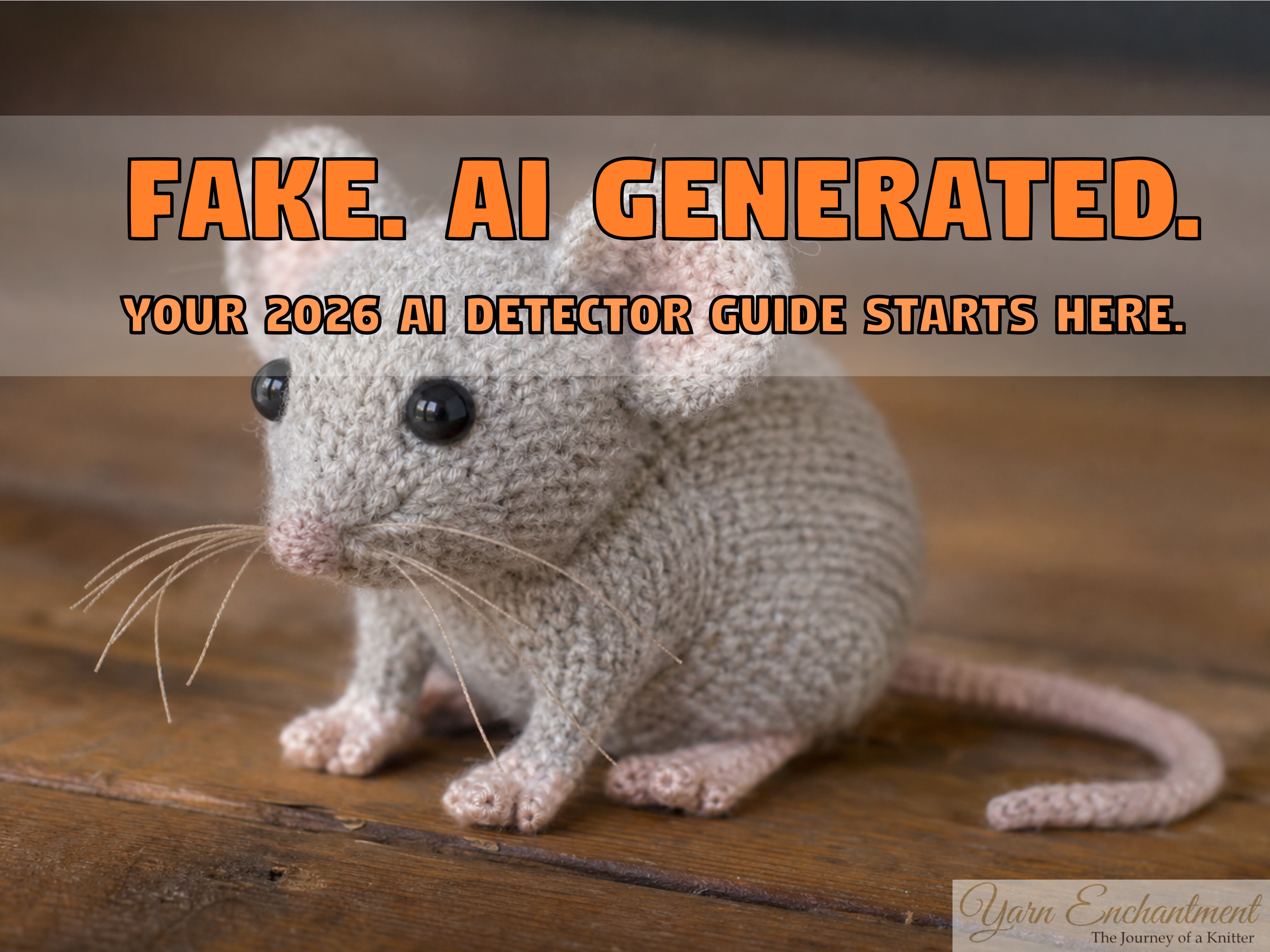
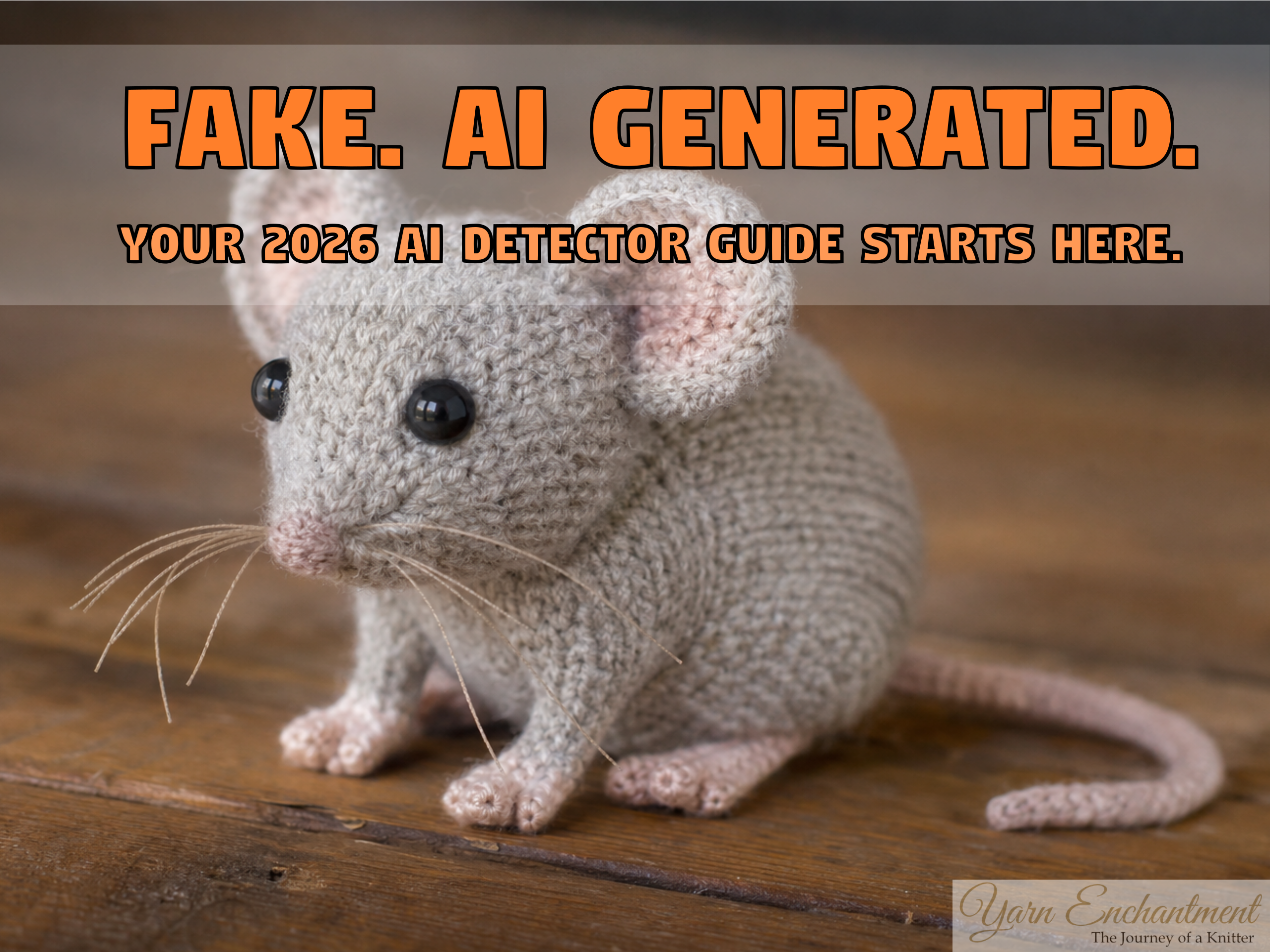
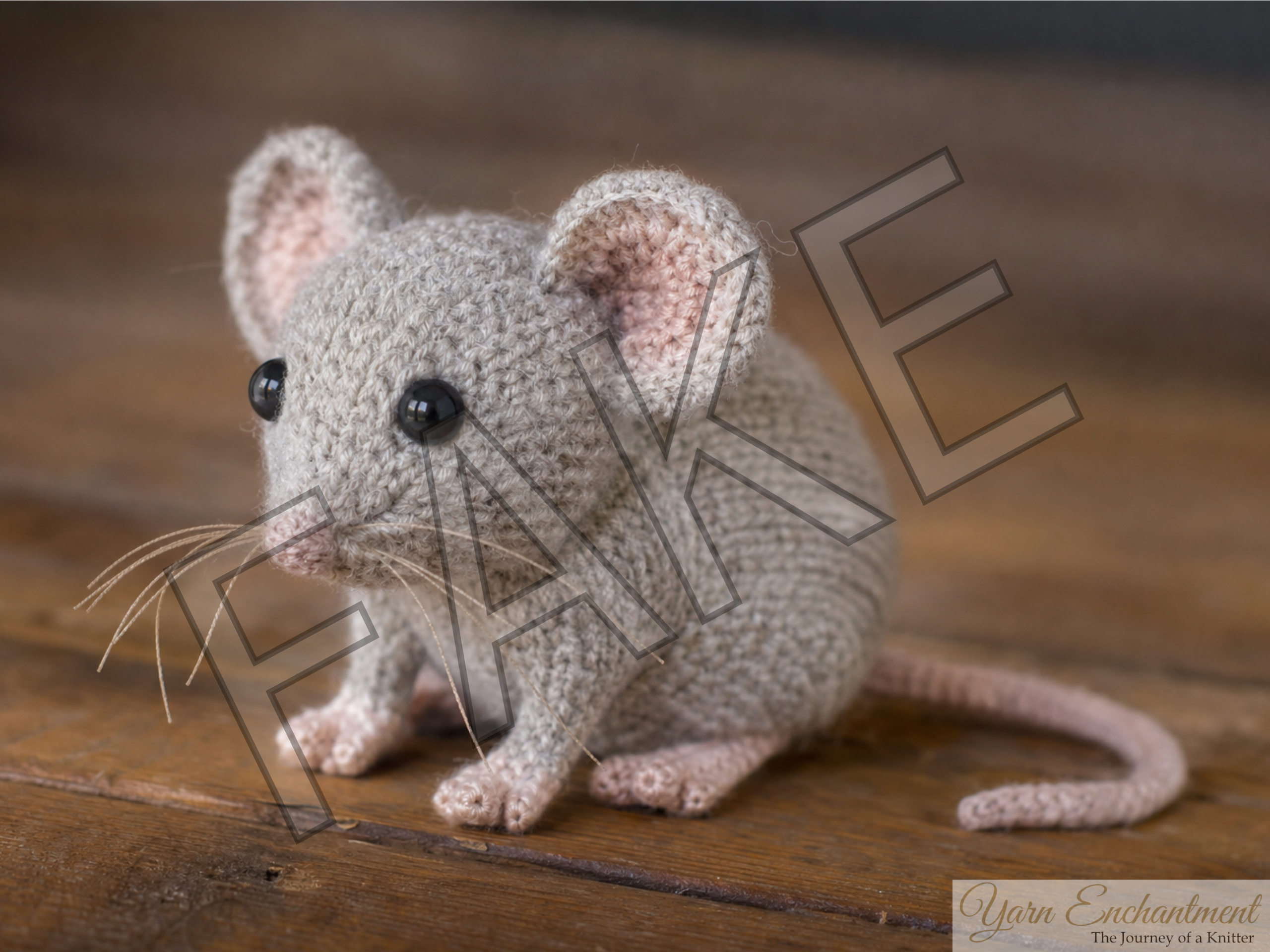
I generated this picture with OpenAI. It looks so realistic. The knit structure is incredibly detailed, and you can even see the reflection of the photographer in the eyes. It would be very difficult to tell that this image is not real. That is why I marked it with a watermark. I do not want anyone to abuse this picture for any purpose.
I uploaded this picture to Gemini and asked if it was AI generated. It said yes, it is. And that is exactly how you can protect yourself from scams.


The 2026 Reality: Our Eyes Are Not Enough Anymore
Here is the most important thing to understand.
By 2026, looking at an image with your own eyes is often not enough. AI models have gotten so good that the errors are much more subtle. They are harder to spot with the naked eye.
So we need to change how we do things.
Start with your eyes. Look for the telltale signs. But do not stop there. Use the tools I mentioned earlier. Check the metadata. Verify the source. If you cannot verify where an image came from, treat it with extreme skepticism. Use reverse image search. Google Lens can show you if an image appears elsewhere and whether it has been verified.
What About AI-Generated Text?
This post is mostly about images. But I want to mention something else that matters. Many AI-generated crochet or knitting patterns come with written descriptions. The same detection challenges apply to text.
Big AI companies are starting to add invisible watermarks to AI-generated text. These are subtle patterns in word choice that you cannot see, but special scanners can detect.
Google DeepMind has SynthID that does this. OpenAI developed a method but paused it. Anthropic and Meta have not released anything yet.
These watermarks are not perfect, a 2026 study found that paraphrasing can remove watermarks almost completely. Even before anyone tries to remove them, the detection rates are not great. Researchers also found that watermarks can be stolen. An attacker can figure out the watermarking rules for under $50. Then they can either fake watermarks or remove them.
So watermarks are helpful but they are not a silver bullet. Do not rely on them as definitive proof.
What does this mean for you?
It means that if you are reading a pattern description and it feels a little "off," it might be AI. But it might also be a real person who is not a native English speaker, or who is just not a great writer. The best way to avoid AI-generated knitting or crochet patterns is still the same. Use trusted sources. Follow verified designers and platforms like Ravelry. Check creator histories. Look for progress photos, social media presence, and community recognition. Be skeptical. If you cannot verify where something came from, do not buy it.
What We Can Do Together
I will keep doing what I do best. I am pretty good at spotting AI slop. If I need to, I will write an updated guide each year to help you spot fake images and avoid scams.
The best thing we can do is support real designers and real brands that value craft over automation. When you choose to make cozy handmade gifts for your loved ones using yarn from trusted sources, you are making a statement. You are saying that human hands matter.
So let me ask you this. Have you ever been fooled by an AI generated product photo? Or worse, have you ever spent money on a pattern that turned out to be completely fake? I would love to hear your thoughts in the comments below. Share this post if you believe in supporting real crafters. Let us keep our community authentic one stitch at a time.
Stay safe on the internet. Let no one deceive you. And if you are ever really uncertain about anything, you can always write me an email. I will always write back and help you as best as I can.
Until next time, happy crafting!
Your 2026 AI Survival Kit
- Be skeptical. Apply the new and old clues to every inspiring image you see.
- Research the source. Check where images come from and whether they are verifiable.
- Use reverse image search. Google Lens is your friend.
- Use AI detection tools. Hive Moderation, AI or Not, and others can help, but do not rely on them alone.
- Look for multiple red flags. No single sign is definitive, but several together are telling.
- Research the designer or company. Before buying, look for a real person with a history and progress photos.
- Support the community. The best way to fight AI scams is to support real designers and brands that value craft over automation.
A Little Way to Say Thanks
Yarn Enchantment is my cozy hobby corner on the internet. If something here made your knitting day easier or you simply enjoy reading my posts and would like to say thank you, you can leave a small Ko-fi tip - but only if you truly want to.
My patterns and tutorials stay free for everyone, always. Every little tip just goes toward new yarn and a cup of tea for my cozy knitting evenings.
☕ Support me on Ko-fi
You Might Also Like


 |
|
Join the Cozy Corner Newsletter
Hello, creative soul. Welcome to the Yarn Enchantment Newsletter, a little space where we celebrate all things cozy, crafty, and full of heart. Think of this as your friendly crafting companion, a soft dose of inspiration delivered straight to your inbox, just for you. Each newsletter brings you: ✨ Notifications about new patterns and tutorials – easy knitting patterns and beginner crochet projects you won’t find anywhere else 🧶 Practical yarn tips for new crafters, plus advice on the best yarn for fall, blankets, and handmade gifts 💌 Small stories and adventures from my own workbench, because crafting is as much about the journey as the finished piece Whether you’re knitting by the fire, looking for your next creative spark, or simply wanting a quiet moment with your hooks and needles, this newsletter is here to cheer you on. Crafting isn’t just about the final project. It’s about the joy, the peace, and the stories we weave along the way. So grab a cup of tea or coffee, settle in, and join me. Together we’ll make a little magic, one stitch and one story at a time. I’m so glad you’re here. Let’s create something beautiful together. Sign up below to receive your first email, and feel free to leave a comment on the blog if there’s a topic you’d love to see covered. Your ideas might just become our next newsletter feature. |


