
How to Use a Lifeline in Knitting: The Ultimate Safety Net
September 10, 2026Continental vs English Knitting: Is Speed Really a Factor?

Originally published on September 18, 2026
Today I want to share some thoughts with you. It's just me thinking out loud about something I keep seeing.
You all know that I'm not on any kind of social media besides YouTube and Pinterest. But even so, every few months the same conversation pops up in my feed: you must switch from English knitting to Continental to knit faster. Or: hold your yarn this way, use Norwegian purling for an even fabric... If you knit English, Continental, or anything in between, you're doing it right.
I think it's lovely when people share their tips, and I do it too. "Here's what works for me," "my favorite technique," or "how to" tutorials are one of the nicest things about the knitting community. But somewhere along the way, "here's my tip" quietly turned into "you should," and then into "you must."
But why? Why do we need to bend our comfortable knitting style just to improve our speed?
I do understand why people want to switch. Faster knitting means more finished projects, and in a world obsessed with productivity, it's easy to believe that fast must be better. But I don't think speed should ever be the reason you change your style. In fact, I don't think "it's faster" is a good enough reason on its own, not for English knitting, and not for Continental either.
Continental vs English Knitting: Is Speed Really a Factor?

Knitting Is Not a Race
At some point, we started treating knitting like a competitive sport. We talk about stitches per minute, speed knitting, and "productivity hacks" for our hobbies. But knitting was never supposed to be about finishing first.
The goal behind knitting, at least for me, is not speed. It's the process. The rhythm of the needles. The feel of the yarn running through your fingers. The calm that comes from making something slowly, stitch by stitch. The satisfaction of turning a ball of string into something useful and beautiful.
If I'm always trying to go faster, I miss all of that. Imagine going on a hike to relax and enjoy the lovely view along the way, seeing the animals, the flowers, smelling the fresh air. If you rushed to finish the hike as fast as possible, you'd miss all of the beautiful things along the way. And the same goes for knitting. I turn a meditative craft into another task to optimize. And honestly, I already have enough of those.
If you rush the hike, you miss views like this one. Egelsee in Carinthia, about an hour's walk from my front door, and worth every slow step. 

I Knit Continental, and I Still Think This
I'm a Continental knitter. I grew up here in Austria, and Continental is simply the standard. It's how your mother teaches you, how the ladies at the wool shop knit, how everyone in the knitting circle does it. In all my years of knitting here, not once has anyone told me I should try something else. Nobody questions your style. Nobody pressures you. You knit the way everyone knits, and that's that.
And that's exactly why the pressure catches my attention when it shows up. Because it doesn't come from any knitter I've ever met. It comes from the feed. And I don't think that's a coincidence: "your knitting is fine, carry on" doesn't get clicks, but "stop knitting English!" does. I don't think anyone means harm by it. But I do think it leaves knitters feeling like their way of knitting is somehow wrong.
I've been on the other side of the question, too. I actually tried to learn English knitting, because someone told me you have to purl English style, the purl stitches are supposedly so much more even that way. For me, that wasn't true at all. I dropped stitches constantly, and I could only manage knit stitches in English style.
And that's when it hit me: the problem was never the technique. It was the "you have to."
Is Continental Knitting Really Faster? The Speed Myth
The big claim is that Continental is faster than English. And yes, for many knitters, Continental can be quick, especially for knit stitches. But Continental vs English knitting speed isn't the simple contest people make it out to be.
Don't just take my word for it. Look at an actual speed knitting competition. In 2008, at the World Speed Knitting Championship, Hazel Tindall from Shetland knitted 262 stitches in three minutes. And she knits English. Lever knitting, specifically, with the yarn held in her right hand. The Continental knitter she was up against, Miriam Tegels from the Netherlands, managed 243.
So no, Continental isn't automatically faster. It can be fast. English can be fast. Lever knitting can be astonishingly fast. It all depends on the hands doing the knitting.
And that's really the point. What matters isn't which style is "supposed" to be quicker. It's your muscle memory, the gait your hands have built over years of knitting. A runner doesn't change their stride because someone online said a different one is faster. They build on what their body already knows.
Plenty of English knitters who flick, keeping the yarn in the right hand and barely moving their fingers, are incredibly fast. Some are faster than many Continental knitters. And some Continental knitters find purling slow or fiddly, which evens things out.
If speed is truly your goal, you might get further by refining the style you already know than by switching to a whole new method. Because when you switch styles, you're not just learning a new hand position. You're retraining years of muscle memory. That takes time, patience, and a lot of dropped stitches. Sometimes it's worth it. Often it isn't.
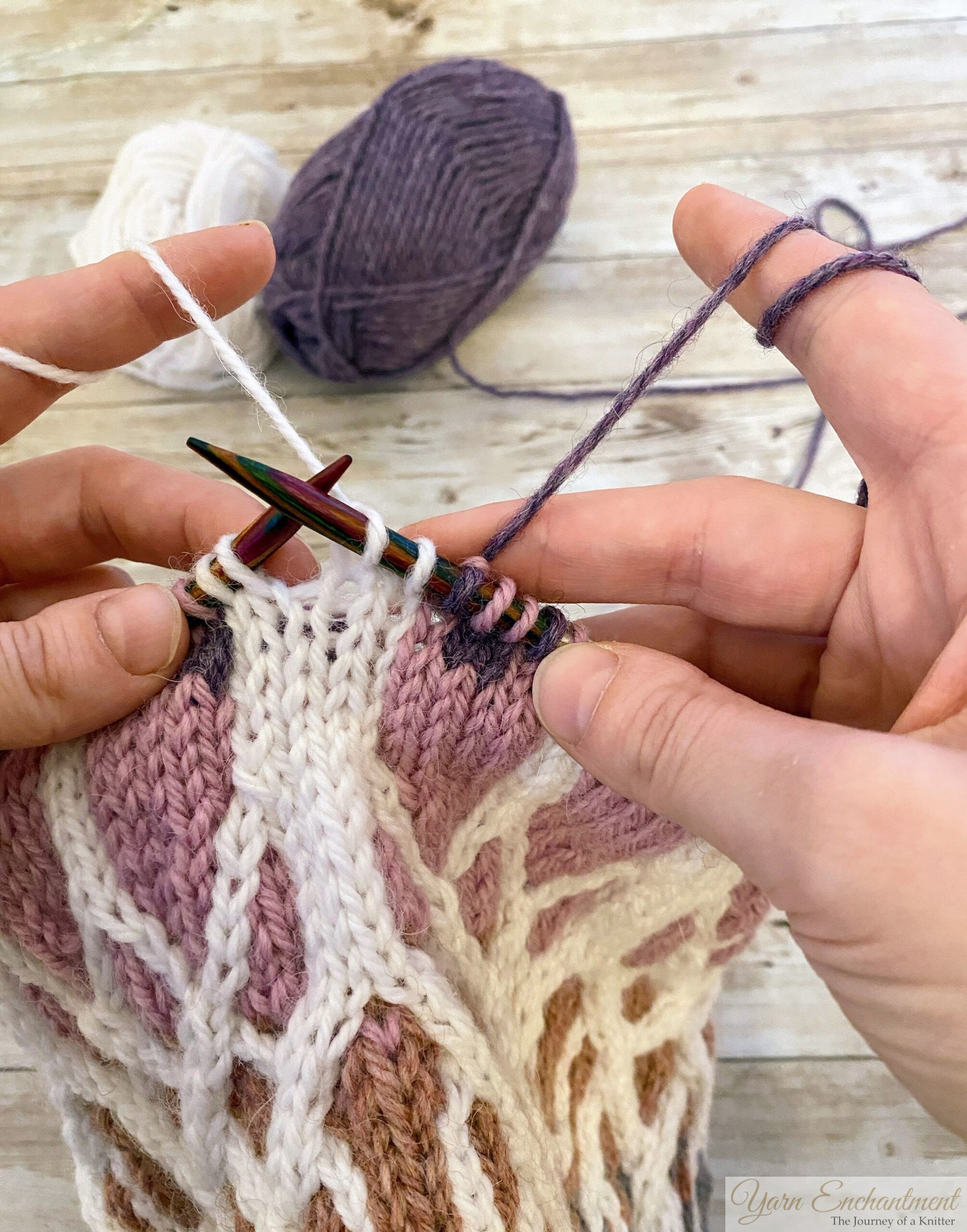
One color in each hand. This is the only reason I ever learned English knit stitches, and it was worth it.

Knitting Tension Problems When Switching Styles
When you change how the yarn travels through your hands, you change your tension. That's one of the most common knitting tension problems when switching styles. Your gauge can shift, your stitches can look different, and your fabric can come out tighter or looser than before.
That means re-swatching, adjusting needle sizes, and sometimes reworking patterns. Not a dealbreaker if you're curious and want to learn, but a real cost if you're switching only because someone online said it's faster.
Always check your gauge. Switching styles changes how the yarn travels through your hands, and that means your stitches per inch can change too. Re-swatching isn't a setback, it's just part of the process.


Discomfort Isn't a Given, but Forcing a New Style Can Cause It
Some people switch to Continental hoping it will be easier on their hands. That can be true for some. But Continental isn't automatically ergonomic, and English isn't automatically painful. Any style can cause strain if you're tense, gripping too hard, or repeating awkward motions.
If English knitting hurts, it's worth exploring other styles, adjusting your posture, trying different needles, or taking breaks. But switching styles as a cure-all, without addressing the root cause, can just move the problem somewhere else.
Joy Matters More Than Speed
A fast technique you dread using is slower than a slow technique you love. If a new style makes you tense, frustrated, or unhappy, you won't want to knit. You'll avoid it. You'll put the project down. And then what's the point of being "faster"?
Knitting should fit into your life, not turn your life into a speed trial.
This is the part I never want to rush. No timer, no counting stitches per minute. Just knitting.


When Switching Knitting Styles Might Make Sense
I'm not saying no one should ever try a new style. There are good reasons to:
-
You're curious and enjoy learning new techniques.
-
You have hand or wrist pain and want to find a more comfortable method.
-
You want to knit colorwork with one yarn in each hand. (I learned English style knit stitches for that reason.)
-
You want to expand your skills, not because you feel pressured.
Those are all valid. But "the internet said it's faster" isn't a good enough reason on its own.
Conclusion: Your Knitting Style Is Your Story
If you knit English and you love it, you don't need to switch. If you knit Continental and it feels like home, stay there. If you flick, throw, or purl Norwegian style, wonderful.
Your style is valid. Your pace is valid. The goal of knitting is not to finish first. It's to make something with your hands, to calm your mind, to enjoy the process, and to create something that carries a little bit of you in every stitch.
So keep your yarn where it feels right. Keep your rhythm. Keep your joy.
I know I'm a small voice on the internet. But if this post reaches even one knitter who has been quietly wondering whether they're doing it wrong, I hope it helps you unclench your shoulders, pick your needles back up, and smile. Your knitting was never wrong.
And yes, you know I'm a little critical of everything I see online. That's exactly why I love this little corner of the internet: it's where I get to share my own, personal opinion. And where I'd love to hear yours. So tell me in the comments: which style do you knit, and have you ever felt pressured to switch?
Until next time, happy knitting, at whatever speed you like!
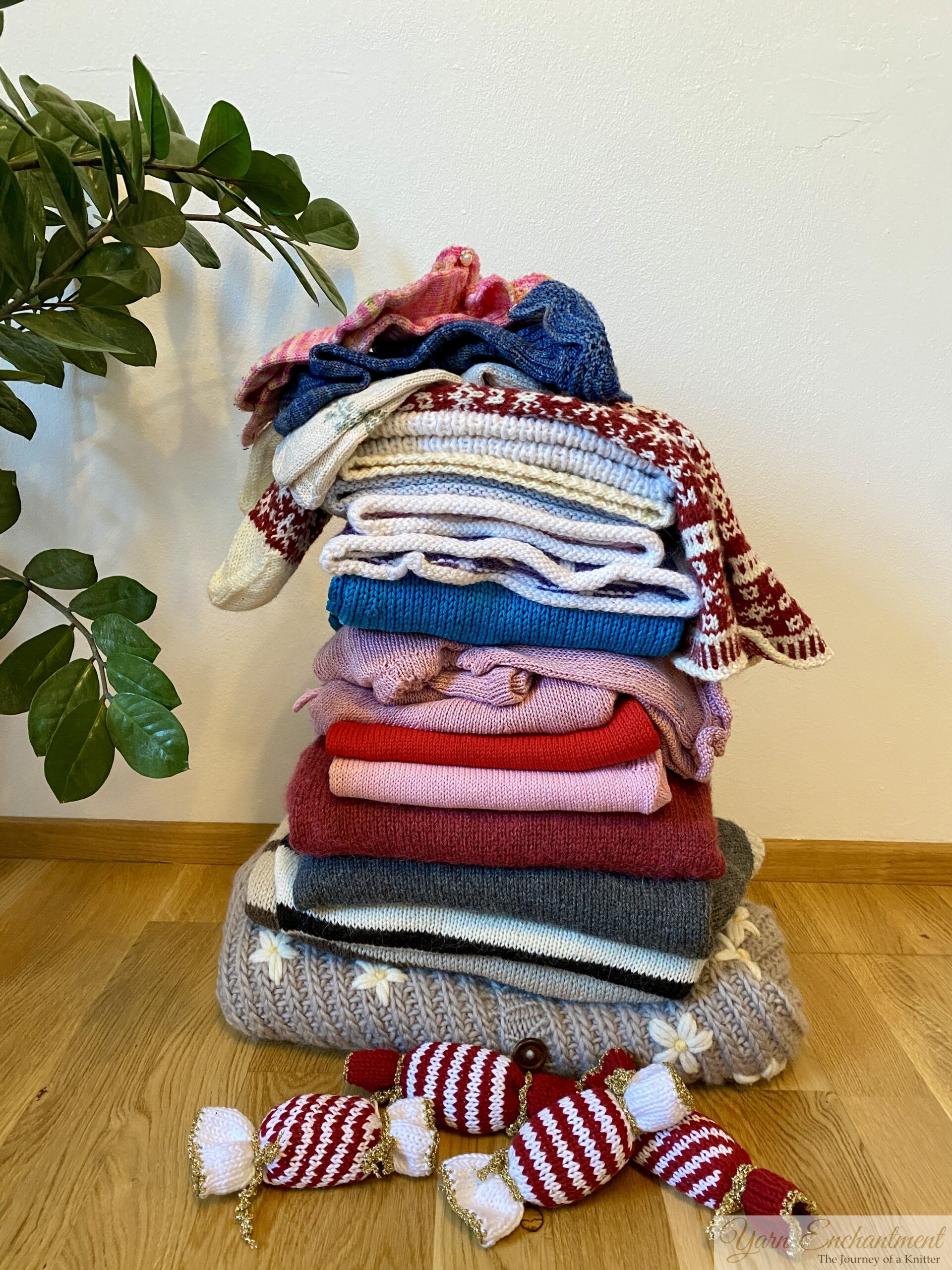
Every single one of these was made slowly. A few rows at a time, in between everything else. And they all got finished eventually.

A Little Way to Say Thanks
Yarn Enchantment is my cozy hobby corner on the internet. If something here made your knitting day easier or you simply enjoy reading my posts and would like to say thank you, you can leave a small Ko-fi tip - but only if you truly want to.
My patterns and tutorials stay free for everyone, always. Every little tip just goes toward new yarn and a cup of tea for my cozy knitting evenings.
☕ Support me on Ko-fiYou Might Also Like


 |
|
Join the Cozy Corner Newsletter
Hello, creative soul. Welcome to the Yarn Enchantment Newsletter, a little space where we celebrate all things cozy, crafty, and full of heart. Think of this as your friendly crafting companion, a soft dose of inspiration delivered straight to your inbox, just for you. Each newsletter brings you: ✨ Notifications about new patterns and tutorials – easy knitting patterns and beginner crochet projects you won’t find anywhere else 🧶 Practical yarn tips for new crafters, plus advice on the best yarn for fall, blankets, and handmade gifts 💌 Small stories and adventures from my own workbench, because crafting is as much about the journey as the finished piece Whether you’re knitting by the fire, looking for your next creative spark, or simply wanting a quiet moment with your hooks and needles, this newsletter is here to cheer you on. Crafting isn’t just about the final project. It’s about the joy, the peace, and the stories we weave along the way. So grab a cup of tea or coffee, settle in, and join me. Together we’ll make a little magic, one stitch and one story at a time. I’m so glad you’re here. Let’s create something beautiful together. Sign up below to receive your first email, and feel free to leave a comment on the blog if there’s a topic you’d love to see covered. Your ideas might just become our next newsletter feature. |


