Cats’ Love
February 4, 2024
Mirror Hearts
February 11, 2024Color Work Chronicles: Stranded Colorwork 101
)
Originally published on February 9, 2024
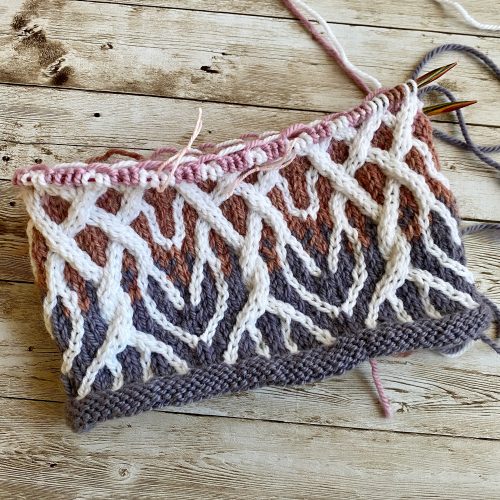
Combining Colorwork and Cables
I’m currently working on a design that combines both colorwork and cable knitting, and let me tell you, it’s been quite the adventure! Along the way, I’ve realized just how intricate and fascinating the world of colorwork really is. This got me thinking: why not start a series where I can share some of the tips and tricks I’ve picked up over the years while working with multiple strands of yarn?
I wouldn’t call myself an expert, but my knitting journey has definitely been full of trial and error. One of the biggest challenges has been figuring out how to hold my yarn and maintain the right tension, especially when juggling multiple colors. Through those moments of frustration (and a lot of practice), I’ve discovered some really helpful techniques that have made the process so much smoother.
I’m so excited to share what I’ve learned with all of you, hopefully, it’ll make your own colorwork projects a little easier and a lot more fun!
What Is Stranded Colorwork?
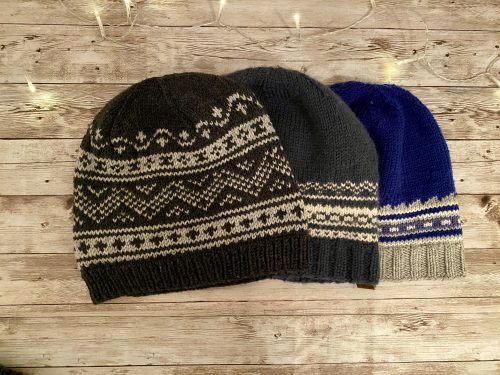
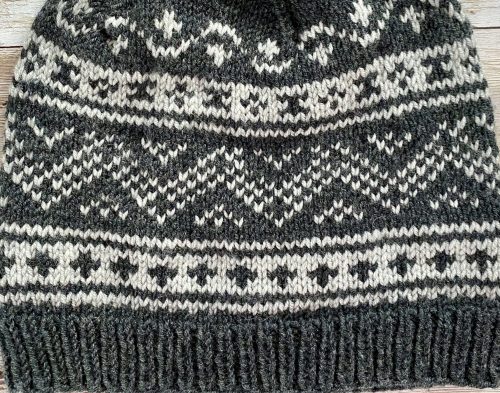
Stranded color work knitting, also known as Fair Isle knitting (named after the traditional knitting style of Fair Isle in Scotland), involves working with multiple colors of yarn in the same row to create intricate patterns and designs. Fair Isle knitting has a rich history dating back centuries. It is believed to have originated in the Fair Isle community, where it was used to create warm and durable garments for protection against the harsh climate. The distinctive patterns and motifs of Fair Isle knitting have become iconic in the world of knitwear.
Key Techniques for Successful Stranded Colorwork
Technique: In this technique, two or more colors of yarn are carried along the back of the work while knitting. Typically, only two colors are used per row, with the unused color strands carried behind the work. The colors not in use are stranded across the back of the work, creating floats.
1.Managing Floats
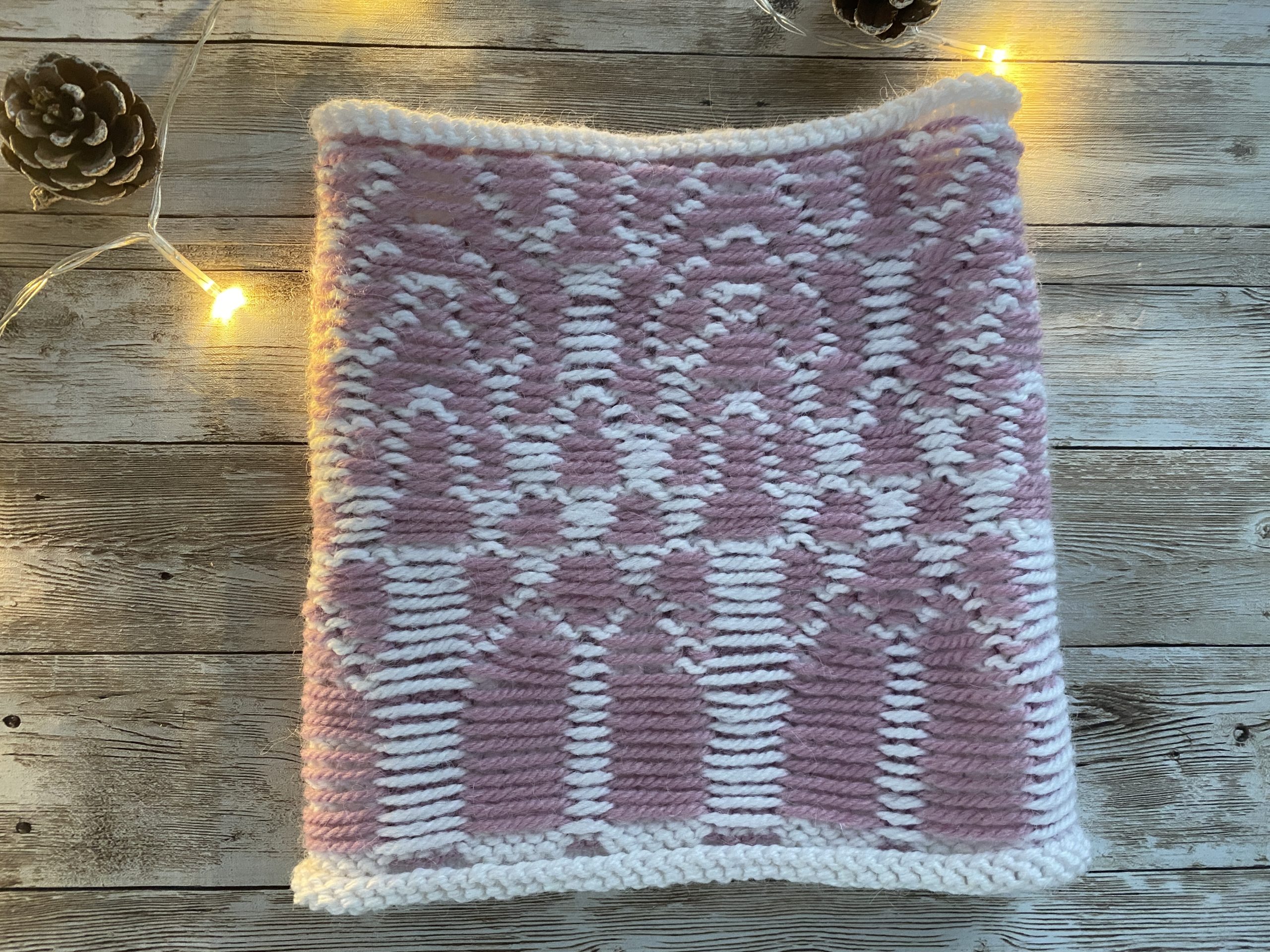
Floats are the strands of yarn that are carried behind the work when not in use. It's important to manage float tension to prevent them from becoming too loose or too tight, which can affect the elasticity and appearance of the fabric. To prevent the floats from getting too long, you typically catch the floats every fourth or fifth stitch. You can also use a technique named “Ladder back Jacquard” to catch the floats in the back of the work. This technique is very useful when there is a large gap between the two color sections.
- Catching Floats: To prevent floats from getting too long, catch them every fourth or fifth stitch. Alternatively, try the Ladder Back Jacquard technique, which is especially helpful for larger gaps between color sections.
 |
 |
2. Understanding Yarn Dominance
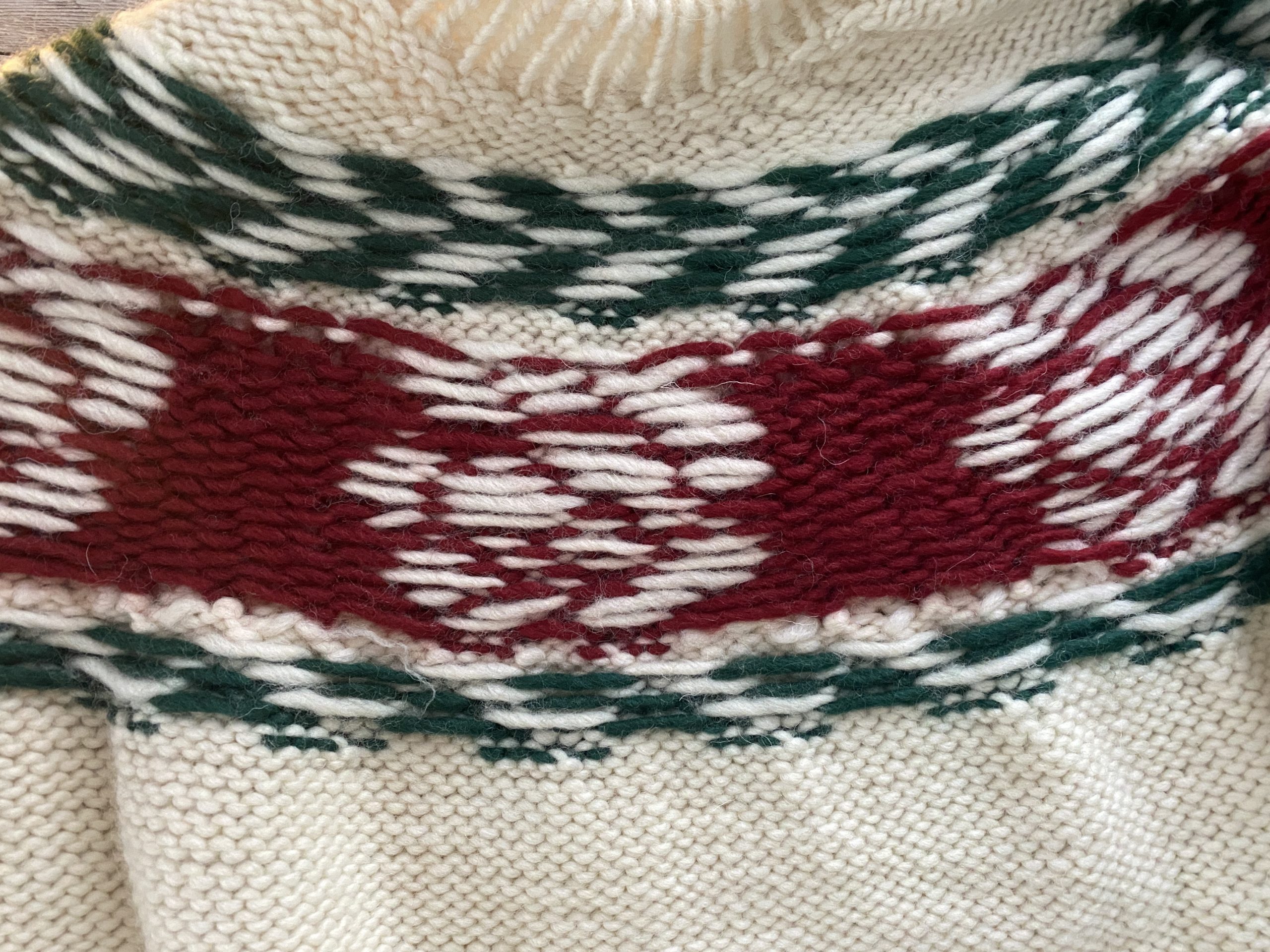
Yarn Dominance: In stranded color work, one color is typically dominant over the other. This means that one color tends to visually stand out more than the other. Yarn dominance can impact the appearance of the pattern, especially when working with motifs and designs. Usually, the yarn on your left will be dominant over the one on your right. The yarn on your right rides closest to your needle, and the yarn on your left travels from underneath to make a taller stitch.
- Why It Matters : Yarn dominance impacts the appearance of your pattern, especially when working with intricate motifs.
- How It Works : The yarn on your left will usually dominate because it travels from underneath to make a taller stitch, while the yarn on your right rides closest to your needle.
3. Choosing the Right Colors
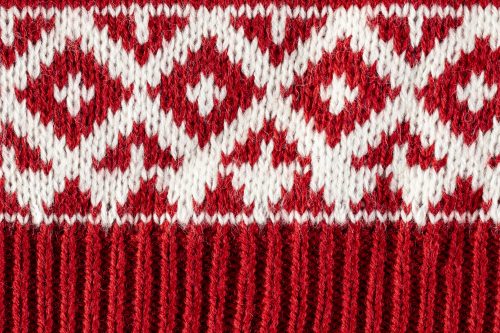
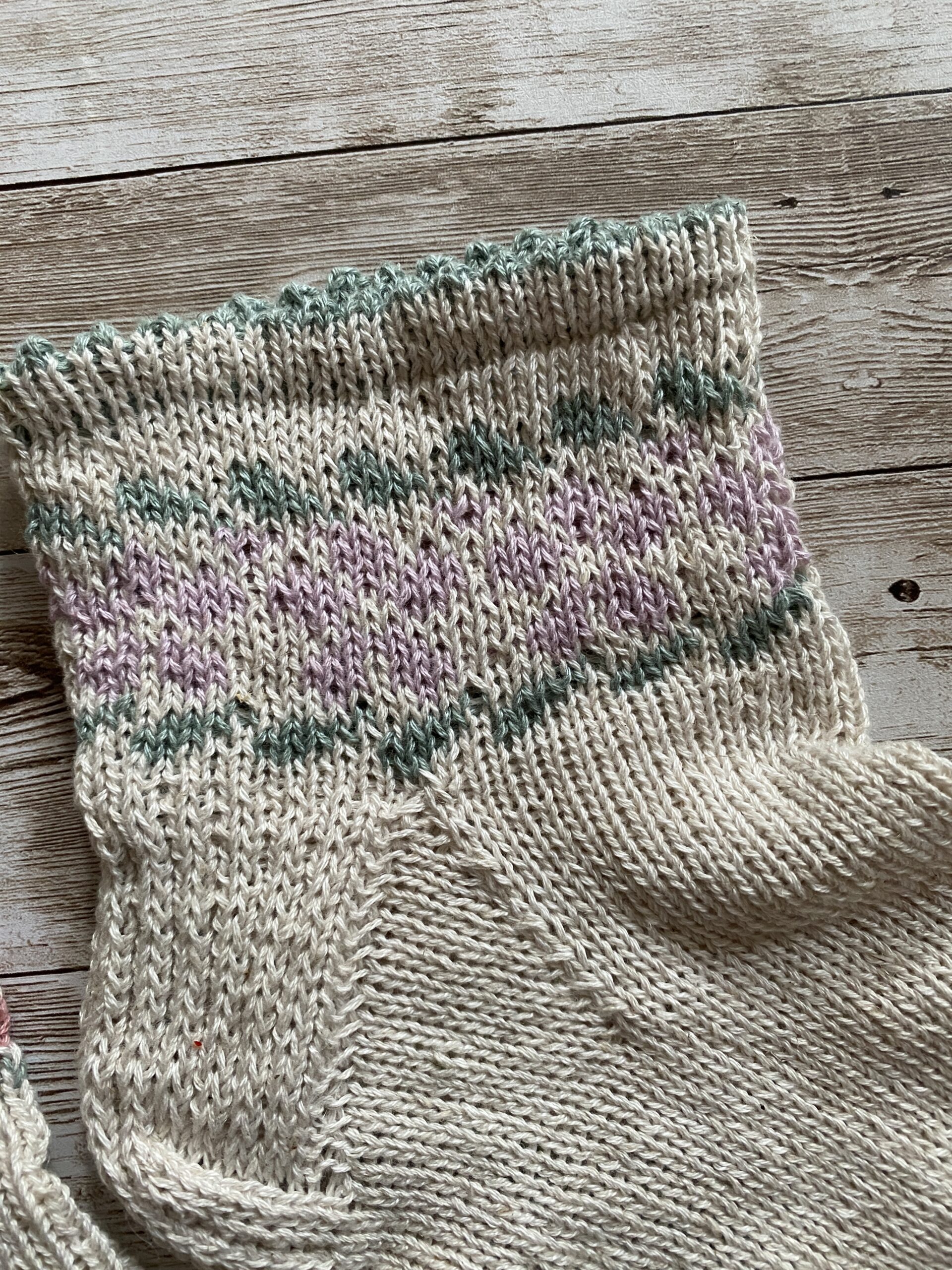
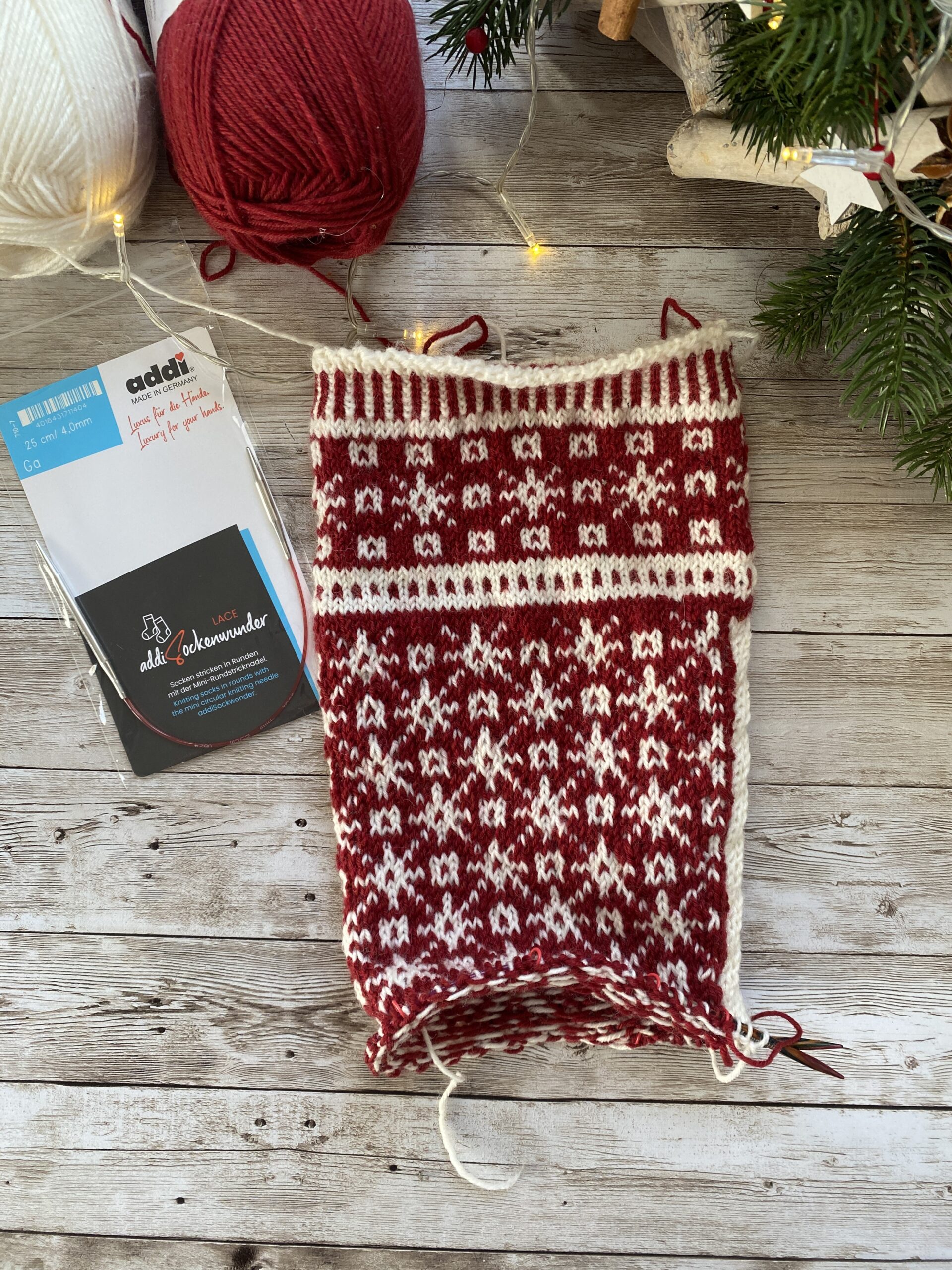
Color Selection: Choosing yarn colors with sufficient contrast is important for the success of stranded color work patterns. Colors that are too similar may result in a muddled or indistinct design, while high-contrast colors can make the pattern pop.
- High Contrast: Colors with strong contrast make your patterns pop.
- Low Contrast: Colors that are too similar may result in a muddled or indistinct design.
Experiment with different combinations to find what works best for your project.
Here’s a little trick I love: If you’re trying to figure out how much contrast there is between your yarn colors, grab your phone and switch to the black-and-white filter. Lay your skeins next to each other and snap a quick photo (or just view them through the camera). It’s amazing how much easier it is to see the difference between shades when you take the color out of the equation!
I talk more about this in my No Mow blog post if you’re curious to dive deeper into how I use this trick in my projects.
 |
 |
|
Low Contrast Colors that are very similar |
High Contrast Colors with strong contrast |
Tools and Techniques for Success
Pattern Design: Stranded color work allows for the creation of intricate and colorful patterns, including geometric shapes, motifs, and pictorial designs. Traditional Fair Isle patterns often feature motifs inspired by nature, such as flowers, animals, and geometric shapes.
Needle Choice: Using circular or double-pointed needles is common for stranded color work, as they allow for easy manipulation of multiple yarn colors. Some knitters prefer using needles with sharp tips for better control when working complex stitch patterns.
Tension: Achieving consistent tension is crucial in stranded color work to ensure an even fabric and prevent puckering or distortion of the design. Practice and proper tension management are key to mastering this technique.
Stay Tuned for More Tips!
I hope this overview has provided valuable insights and inspiration for your own knitting projects. Remember, while learning techniques like tension control and color selection require practice and patience, the joy of creating intricate and vibrant designs makes it all worthwhile. Stay tuned for the next installment in our series, where we'll explore techniques and delve deeper into the art of stranded color work.
Until then, happy knitting!
A Little Way to Say Thanks
Yarn Enchantment is my cozy hobby corner on the internet. If something here made your knitting day easier or you simply enjoy reading my posts and would like to say thank you, you can leave a small Ko-fi tip - but only if you truly want to.
My patterns and tutorials stay free for everyone, always. Every little tip just goes toward new yarn and a cup of tea for my cozy knitting evenings.
☕ Support me on Ko-fi
You Might Also Like


 |
|
Join the Cozy Corner Newsletter
Hello, creative soul. Welcome to the Yarn Enchantment Newsletter, a little space where we celebrate all things cozy, crafty, and full of heart. Think of this as your friendly crafting companion, a soft dose of inspiration delivered straight to your inbox, just for you. Each newsletter brings you: ✨ Notifications about new patterns and tutorials – easy knitting patterns and beginner crochet projects you won’t find anywhere else 🧶 Practical yarn tips for new crafters, plus advice on the best yarn for fall, blankets, and handmade gifts 💌 Small stories and adventures from my own workbench, because crafting is as much about the journey as the finished piece Whether you’re knitting by the fire, looking for your next creative spark, or simply wanting a quiet moment with your hooks and needles, this newsletter is here to cheer you on. Crafting isn’t just about the final project. It’s about the joy, the peace, and the stories we weave along the way. So grab a cup of tea or coffee, settle in, and join me. Together we’ll make a little magic, one stitch and one story at a time. I’m so glad you’re here. Let’s create something beautiful together. Sign up below to receive your first email, and feel free to leave a comment on the blog if there’s a topic you’d love to see covered. Your ideas might just become our next newsletter feature. |